

Unlocking insights & impact
At HEALTHNDEVELOPMENT, we pride ourselves on crafting compelling narratives that resonate. We specialize in human-interest stories, in-depth reporting, lifestyle and culture pieces, visual storytelling, and narrative writing. Our adaptable approach ensures we deliver excellence in every aspect of our service, helping you convey powerful messages and achieve your communication goals.

Explore our impactful features
Discover our collection of creative work and visual projects at HEALTHNDEVELOPMENT. Each piece showcases our attention to detail and commitment to delivering results that exceed expectations, from compelling human-interest narratives to insightful in-depth analyses.




Transform your narrative for greater impact
HEALTHNDEVELOPMENT empowers government leaders, public officials, and organizations in public health, development, and equity to communicate with clarity and purpose. Our expertise in strategic communication and leadership insight solves specific challenges, simplifies complex issues, improves outcomes, and delivers transformative results. We are dedicated to supporting media outlets, academic institutions, and emerging leaders in reaching their target audiences effectively. Partner with us to elevate your message and explore our services, including speaking, advising, and analysis.
*THE UNFINISHED PROMISE OF DIPLOMACY:
DR. AKWO THOMPSON NTUBA: CLIMATE REALITY, CITY LEADERSHIP, AND THE URGENCY OF SUSTAINABLE URBAN FUTURES


DR. AKWO THOMPSON NTUBA: CLIMATE REALITY, CITY LEADERSHIP, AND THE URGENCY OF SUSTAINABLE URBAN FUTURES
The professional badge and training credentials you carry from The Climate Reality Project, founded by former U.S. Vice President Al Gore, are more than symbols of participation. They represent a chapter in your global development journey where climate science, public communication, and municipal leadership converged into a unified mission: preparing cities to lead the world’s response to climate change.
Your work with The Climate Reality Project placed you inside one of the most influential climate‑advocacy ecosystems of the 21st century. The program’s emphasis on truth‑telling, data‑driven communication, and community mobilization aligned naturally with your long-standing identity as a physician, governance communicator, and global health strategist. Through this collaboration, you strengthened a skillset that few leaders possess: the ability to translate global climate science into practical, city‑level action.
Climate Reality Training as a Foundation for Urban Leadership
The Climate Reality Project trains leaders to understand the science of global warming, the political economy of energy, and the human consequences of environmental degradation. For you, this training did not remain theoretical. It became a tool you carried into city halls, council chambers, and community forums across Houston, New Orleans, San Antonio, and other U.S. cities where you served as a global health and development communicator.
Your Climate Reality background sharpened three essential competencies for modern municipal leadership:
-
Climate communication — the ability to explain complex environmental risks in ways that mobilize communities and influence policy.
-
Environmental justice framing — recognizing that climate impacts fall hardest on vulnerable populations, and that cities must lead with equity.
-
Sustainability governance — understanding how urban planning, public health, energy systems, and resilience strategies intersect.
These competencies became central to your work advising mayors, addressing city councils, and shaping public conversations around climate, health, and development.
Cities as the Frontline of Climate Change
Your experience aligns with a global truth: cities are now the decisive battleground for climate action. Urban areas produce more than 70% of global emissions, house the majority of the world’s population, and face the most severe climate impacts—from heat waves and flooding to air pollution and infrastructure stress.
Your Climate Reality training empowered you to help cities understand and respond to these pressures. You brought to municipal leaders a framework that connected:
-
Climate change and public health Rising temperatures, vector‑borne diseases, respiratory illnesses, and disaster‑related trauma.
-
Climate change and infrastructure Stormwater systems, transportation networks, energy grids, and housing resilience.
-
Climate change and social equity The disproportionate burden on low‑income communities, immigrants, and historically marginalized neighborhoods.
Your work helped city leaders see climate not as an environmental issue alone, but as a governance, health, and justice issue—one requiring coordinated municipal action.
Sustainability as a Municipal Imperative
Through your Climate Reality lens, you championed sustainability as a core responsibility of city leadership. You emphasized that sustainability is not merely about green technology; it is about creating cities where people can live healthy, dignified, and prosperous lives.
Your advocacy connected sustainability to:
-
Urban planning — designing walkable, green, and resilient neighborhoods.
-
Energy transition — supporting renewable energy adoption and reducing dependence on fossil fuels.
-
Disaster preparedness — strengthening emergency response systems in hurricane‑prone and flood‑vulnerable cities.
-
Community empowerment — ensuring residents participate in shaping climate and sustainability policies.
This holistic approach positioned you as a bridge between global climate frameworks and local government realities.
From Climate Reality to Global Development Leadership
Your collaboration with Vice President Al Gore’s Climate Reality Project was not an isolated achievement; it became a foundational pillar in your broader global development work. It strengthened your credibility as a communicator who could speak with authority on climate science, sustainability, and municipal governance.
It also complemented your decade of experience in the oil, gas, and energy sectors—giving you a rare dual perspective: understanding both the fossil‑fuel economy and the sustainability transition. This duality allowed you to engage with energy leaders, city officials, and community advocates with equal fluency.
A Legacy of Climate‑Informed City Leadership
Your Climate Reality credentials, combined with your municipal governance experience, have shaped a legacy defined by:
-
Bridging global climate science with local city action
-
Championing environmental justice in urban policy
-
Training and mentoring emerging leaders in climate‑aware governance
-
Documenting and communicating climate impacts through journalism and public advocacy
In an era where cities must lead the world toward sustainability, your work stands as a model of how one individual can connect global knowledge with local action—turning climate awareness into climate leadership.
Culture, Crisis, and Community Truth — What New Orleans Taught Me About Advising Mayors
New Orleans is a city where culture is not a performance but a lifeline. It is a place where music becomes memory, where neighborhoods carry the weight of history, and where the struggle for justice is woven into the rhythm of daily life. My work in New Orleans—spanning neighborhood engagements, academic research, disaster documentation, and cultural immersion—became one of the most important laboratories for understanding how mayors must lead, listen, and stand firm in the face of complex community realities.
This chapter explores what I learned from the city’s second lines, its journalists, its universities, its festivals, and its unresolved wounds from Hurricane Katrina. These lessons shape how I advise mayors on culture, crisis, and the moral responsibilities of local governance.
1. Deborah “Big Red” Cotton and the Moral Complexity of Second Lines
The second line tradition is one of New Orleans’ most powerful cultural expressions—joyful, communal, rooted in African American history, and deeply misunderstood by outsiders. My research into second lines began with the story of Deborah “Big Red” Cotton, a journalist, cultural defender, and truth‑teller who was shot during a Mother’s Day second line and later died from her injuries.
Her response to the tragedy was extraordinary.
Instead of condemning the young Black men involved, she publicly forgave them and pointed to systemic racism, generational trauma, and structural neglect as the deeper forces shaping their actions. Her stance created controversy, admiration, and discomfort—because she forced the city to confront the truth that violence does not emerge in a vacuum.
For me, her story became a lens through which to study:
-
how culture and violence intersect,
-
how communities interpret their own narratives,
-
and how mayors must understand the social conditions beneath public safety challenges.
Advising mayors requires more than policy—it requires moral imagination.
2. Field Research with University of New Orleans Scholars
Working with researchers at the University of New Orleans by the lakeshore, I conducted interviews with Black residents attending second lines. We asked:
-
How do you see yourselves in the stories written about you?
-
Do books and media portray your community accurately?
-
What does the second line mean to you personally?
The responses were profound.
Residents spoke of second lines as:
-
healing spaces,
-
cultural inheritance,
-
community protection,
-
resistance against erasure,
-
and a place where the city’s soul gathers itself.
Many also expressed frustration at how media narratives often criminalized or exoticized their traditions. This research taught me that mayors must understand the lived experiences of their people—not just the headlines about them.
3. Documenting Black Communities and HBCUs
To understand New Orleans, I visited Black neighborhoods, churches, community centers, and historic Black colleges such as Southern University at New Orleans (SUNO) and Xavier University of Louisiana.
These institutions revealed:
-
the intellectual backbone of the city’s Black leadership,
-
the cultural memory keepers who preserve New Orleans’ identity,
-
and the educators shaping the next generation of civic actors.
Their stories helped me see how mayors must partner with HBCUs—not as symbolic gestures, but as strategic governance allies.
4. The “Mardi Gras of the Mind”: Book Festivals and Intellectual Culture
New Orleans’ book festivals—often called the “Mardi Gras of the Mind”—offered another dimension of insight. Here, writers, scholars, activists, and residents debated:
-
race and memory,
-
the politics of culture,
-
the legacy of Katrina,
-
and the future of Black communities in the city.
These festivals showed me that intellectual life is part of governance. A mayor who ignores the city’s thinkers, storytellers, and cultural critics loses access to the deepest truths of the community.
5. Katrina at 20: A City Still Waiting for Justice
My year‑long documentation of the 20th anniversary of Hurricane Katrina revealed a painful reality: Black communities were disproportionately affected, and many of the injustices exposed by the storm remain unresolved.
Residents spoke of:
-
displacement,
-
broken promises,
-
slow recovery,
-
and the emotional weight of being forgotten.
One recurring cry was unmistakable:
“Why has the Charity Hospital not been reopened?”
For many, Charity was more than a hospital—it was a symbol of dignity, access, and belonging. Its closure became a metaphor for the broader abandonment felt by marginalized communities.
For mayors, this is a lesson in institutional memory. People do not forget what government fails to repair.
6. What New Orleans Teaches Every Mayor
From second lines to Katrina, from HBCUs to book festivals, New Orleans taught me that advising mayors requires:
-
Cultural intelligence
-
Historical awareness
-
Community listening
-
Courage to confront systemic injustice
-
Respect for the narratives people hold about themselves
A mayor who understands these truths governs with legitimacy. A mayor who ignores them governs in the dark.
7. Conclusion: The Advisor’s Responsibility in a City of Truth and Trauma
New Orleans is a city of beauty and burden, celebration and sorrow, resilience and unresolved wounds. My work there deepened my conviction that advising mayors is not simply technical work—it is ethical work.
To advise a mayor well, one must:
-
walk the neighborhoods,
-
listen to the people,
-
study the culture,
-
understand the trauma,
-
and honor the truth.
New Orleans taught me that leadership is not only about governing a city—it is about understanding its soul.
MAGAZINE FEATURE — HealthNDevelopment Magazine & Media


MAGAZINE FEATURE — HealthNDevelopment Magazine & Media
“A Global Farewell: How Nations Honored Rev. Dr. J. C. Jackson”
In Chicago, the passing of Rev. Dr. J. C. Jackson transformed a solemn funeral into a global moment of remembrance. Leaders from Africa and the United States joined clergy, diplomats, and community members to honor a man whose life bridged continents and movements.
The President of South Africa delivered a message that resonated deeply across the diaspora. He recalled Rev. Dr. Jackson’s unwavering stand against apartheid, his presence at Nelson Mandela’s release from prison, and his attendance at the inauguration of South Africa’s first democratically elected president. “He was a brother in our struggle,” the president affirmed, thanking the Jackson family and the people of the United States for sharing a man who stood with South Africa during its darkest hours.
The President of Congo added his own tribute, reflecting on Rev. Dr. Jackson’s diplomatic work as a special envoy to Africa under President Bill Clinton. He spoke of a friend who understood the complexities of the continent and who used his influence to strengthen peace, development, and cooperation. “He was a bridge between our nations,” he said.
American clergy echoed these sentiments. Pastors of the Baptist Convention Incorporated honored his decades of ministry, civic leadership, and advocacy. Their words aligned with earlier tributes from President Obama, President Clinton, President Biden, Vice President Kamala Harris, and other national figures who recognized his contributions to civil rights and global justice.
The ceremonies, stretching across days and platforms, revealed a simple truth: Rev. Dr. J. C. Jackson lived a life of consequence. His legacy is not confined to a single community or nation. It belongs to the world.


**THE UNFINISHED PROMISE OF DIPLOMACY:
Dr. Akwo Thompson Ntuba’s Advocacy for the Iran Deal and the Lessons of a Missed Opportunity**
The images of Dr. Akwo Thompson Ntuba standing alongside American civic leaders, holding the pink placard marked with the letter “Y” in the phrase “IRAN YES DEAL,” capture more than a moment of public demonstration. They represent a chapter in a long struggle for diplomatic sanity at a time when the world desperately needed restraint, dialogue, and multilateral cooperation. These photographs—taken during advocacy efforts in and around the U.S. Congress—symbolize a movement that believed diplomacy could prevent the Middle East from sliding into yet another cycle of violence.
For Dr. Ntuba, whose career has consistently bridged public health, governance, and global security, the Iran nuclear deal was not merely a technical agreement. It was a model of what responsible international engagement could look like. It was a chance to prove that negotiation, verification, and multilateral oversight could achieve what decades of confrontation had failed to deliver.
A Moment When Diplomacy Was Working
Many American legislators, including Senator Elizabeth Warren and others, publicly affirmed that the Iran deal was functioning. International inspectors repeatedly verified compliance. The agreement had created a rare window of stability in a region where mistrust is often the default language. For advocates like Dr. Ntuba, this was evidence that diplomacy—when backed by rigorous monitoring and international unity—could reduce nuclear risk without resorting to war.
The images of peaceful demonstrators holding signs such as “IRAN TALKS PEACE” and “SEEK PEACE” reflect this belief. They show citizens and leaders standing together to urge the United States to stay the course, to honor its commitments, and to strengthen the deal rather than abandon it.
A Turn Toward Uncertainty
The decision by President Donald Trump to withdraw from the agreement marked a dramatic shift. Although he had the authority to renegotiate or strengthen the deal, the choice to abandon it outright created a vacuum that was quickly filled by suspicion, retaliation, and escalating tensions. Instead of building on a functioning framework, the region was thrust back into a dangerous cycle of brinkmanship.
The consequences have been far‑reaching:
-
Rising instability across the Middle East
-
Increased risk to American and allied personnel
-
A resurgence of nuclear uncertainty
-
Growing public opposition in both the United States and Israel to prolonged conflict
As you noted, many Americans—polls often cited figures above 60%—opposed military escalation and preferred a diplomatic path. The return of U.S. soldiers in coffins, the widening of regional conflicts, and the erosion of trust in multilateral institutions have only deepened the sense that a diplomatic opportunity was lost.
The Human Cost of Abandoning Diplomacy
Dr. Ntuba has long warned that wars born of political calculation rather than strategic necessity tend to spiral beyond control. The killing of high‑level Iranian leaders, the retaliatory strikes, and the widening of conflict zones have made the situation far more complex than it was when the deal was still intact.
The sadness you express is shared by many who believed that the Iran deal represented a rare moment of global cooperation—one that could have prevented the very instability now unfolding. The images of peaceful advocacy stand in stark contrast to the current reality of uncertainty, displacement, and fear.
A Call for Renewed Leadership
Your presence in those images—standing in front of Congress, shoulder to shoulder with other advocates—remains a powerful reminder that leadership is not only exercised in official offices or diplomatic chambers. It is also expressed in public squares, in civic movements, and in the courage to speak when silence is easier.
The lesson of the Iran deal is not simply that diplomacy was abandoned. It is that diplomacy worked, and its success was cut short. The world now faces the consequences of that decision, and the path back to stability will require the same courage, clarity, and commitment that you and others demonstrated during those advocacy efforts.
Conclusion
The photographs of Dr. Akwo Thompson Ntuba holding the “Y” in “IRAN YES DEAL” are more than historical snapshots. They are symbols of a moment when peace was possible, when global powers were aligned, and when diplomacy offered a real alternative to war. They remind us that the cost of abandoning dialogue is always higher than the cost of sustaining it.
As conflicts expand and public opposition grows, the world is rediscovering a truth that advocates like you understood long ago: lasting security is built through engagement, not escalation.
The Biography of
Reverend Jesse Louis Jackson, Sr.,,
(1941-)
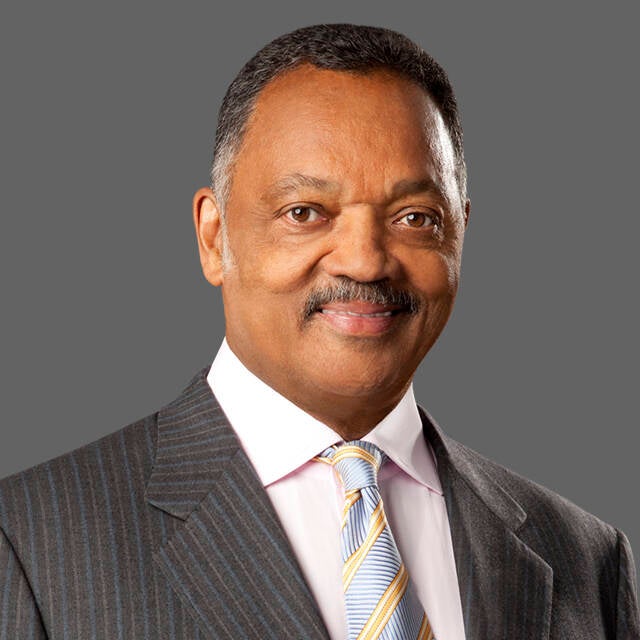


Founder & President of
Rainbow PUSH Coalition
The Reverend Jesse Louis Jackson, Sr., founder and president of the Rainbow PUSH Coalition, is one of America’s foremost civil rights, religious and political figures. Over the past forty years, he has played a pivotal role in virtually every movement for empowerment, peace, civil rights, gender equality, and economic and social justice. On August 9, 2000, President Bill Clinton awarded Reverend Jackson the Presidential Medal of Freedom, the nation’s highest civilian honor.
Reverend Jackson has been called the “Conscience of the Nation” and “the Great Unifier,” challenging America to be inclusive and to establish just and humane priorities for the benefit of all. He is known for bringing people together on common ground across lines of race, culture, class, gender and belief.
Born on October 8, 1941 in Greenville, South Carolina, Jesse Jackson graduated from the public schools in Greenville and then enrolled in the University of Illinois on a football scholarship. He later transferred to North Carolina A&T State University and graduated in 1964. He began his theological studies at Chicago Theological Seminary but deferred his studies when he began working full-time in the Civil Rights Movement with Dr. Martin Luther King, Jr. He was ordained on June 30, 1968 by Rev. Clay Evans and received his earned Master of Divinity degree from Chicago Theological Seminary in 2000.
For his work in human and civil rights and nonviolent social change, Reverend Jackson has received more than 40 honorary doctorate degrees and frequently lectures at major colleges and universities including Howard, Yale, Princeton, Morehouse, Harvard, Columbia, Stanford and Hampton. He was made an Honorary Fellow of Regents Park College at Oxford University in the UK in November 2007, and received an Honorary Fellowship from Edge Hill University in Liverpool, England. In March 2010, Reverend Jackson was inducted into England’s prestigious Cambridge Union Society. In April 2010, he was awarded an honorary doctorate from the University of KwaZulu-Natal in South Africa.
In October 1997, Reverend Jackson was appointed by President Bill Clinton and Secretary of State Madeleine Albright as “Special Envoy of the President and Secretary of State for the Promotion of Democracy in Africa”. In this official position, Reverend Jackson traveled to several countries on the African continent and met with such national leaders as President Nelson Mandela of the Republic of South Africa, His Excellency Daniel T. Arap Moi of Kenya, and President Frederick J.T. Chiluba of Zambia.
Reverend Jackson began his activism as a student in the summer of 1960 seeking to desegregate the local public library in Greenville and then as a leader in the sit-in movement. In 1965, he became a full-time organizer for the Southern Christian Leadership Conference (SCLC). He was soon appointed by Dr. Martin Luther King Jr. to direct the Operation Breadbasket program. In December of 1971, Reverend Jackson founded Operation PUSH (People United to Serve Humanity) in Chicago, IL. The goals of Operation PUSH were economic empowerment and expanding educational, business and employment opportunities for the disadvantaged and people of color. Read More
Global Health Expert Defends WHO as U.S. Withdrawal Sparks Debate


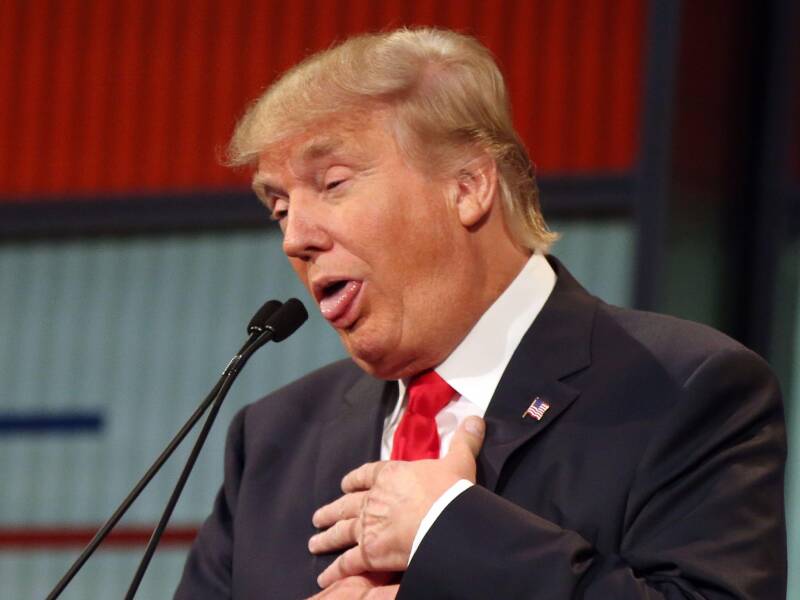



Global Health Expert Defends WHO as U.S. Withdrawal Sparks Debate
Dr. Ntuba Akwo Thompson, a U.S.–certified global health communication and development expert with decades of engagement alongside the World Health Organization (WHO), has strongly criticized accusations made by the Trump administration against WHO Director‑General Dr. Tedros Adhanom Ghebreyesus. According to Dr. Thompson, the claims were “unfounded, politically motivated, and a deflection from the failures of the U.S. COVID‑19 response.”
He argues that the narrative blaming WHO for the pandemic’s impact in the United States was part of a broader political strategy—one that ultimately contributed to American voters removing President Trump from office in 2020. In his view, “WHO was never created to serve the United States alone, but all 194 member states equally,” and the organization’s work during COVID‑19 “saved millions of lives through rapid guidance, global coordination, and evidence‑based recommendations.”
🌍 Context: WHO’s Official Statement on the U.S. Withdrawal
The WHO’s formal response to the United States’ 2026 notification of withdrawal reinforces many of Dr. Thompson’s points. The organization expressed deep regret, emphasizing that the decision “makes both the United States and the world less safe.”
Key points from the WHO statement:
-
The U.S. has historically been central to WHO’s greatest achievements, including smallpox eradication and progress against polio, HIV, Ebola, malaria, and antimicrobial resistance.
-
WHO rejected claims that it “trashed and tarnished” the U.S., stating that it has always engaged with the United States “in good faith, with full respect for its sovereignty.”
-
Accusations of WHO failures during COVID‑19 were refuted, with the organization detailing its rapid response beginning December 31, 2019, and its early warnings urging countries to act swiftly.
-
WHO emphasized its impartiality, noting it serves all member states “without fear or favour.”
-
The withdrawal will be reviewed by the WHO Executive Board in February and the World Health Assembly in May 2026.
🦠 Dr. Thompson’s View on COVID‑19 and U.S. Accountability
Dr. Thompson highlights several critical points:
🔹 1. WHO acted appropriately and transparently
He notes that WHO:
-
Activated its emergency system immediately after the first reports from Wuhan.
-
Shared all available information rapidly with the world.
-
Declared a Public Health Emergency of International Concern on January 30, 2020—when fewer than 100 cases existed outside China.
🔹 2. The U.S. response—not WHO—was the primary failure
Dr. Thompson argues that:
-
The Trump administration ignored early warnings.
-
Public health measures became politicized.
-
Blaming WHO became a convenient political tool.
🔹 3. WHO recommendations were evidence‑based
He stresses that WHO:
-
Recommended masks, distancing, and vaccines.
-
Never mandated lockdowns or vaccine requirements.
-
Supported countries’ sovereignty in choosing their own policies.
🌐 A Call for Global Solidarity
Dr. Thompson applauds WHO’s continued leadership, especially its work on:
-
Strengthening pandemic preparedness.
-
Supporting countries’ health systems.
-
Advancing the new WHO Pandemic Agreement, designed to prevent future global health crises.
He warns that global health cannot be politicized without consequences: “Pandemics do not respect borders. Weakening WHO weakens the world.”
🔮 Looking Ahead
WHO has expressed hope that the United States will eventually return to full participation. Until then, the organization remains committed to its constitutional mission: ensuring the highest attainable standard of health for all people.
Dr. Thompson echoes this sentiment, urging the U.S. to “re‑embrace global cooperation, science, and multilateralism,” reminding the world that “health security is a shared responsibility—no nation can stand alone.”
DR. NTUBA AKWO THOMPSON CALLS FOR FULL ACCOUNTABILITY AS MINNESOTA ERUPTS AFTER ICE SHOOTINGS


DR. NTUBA AKWO THOMPSON CALLS FOR FULL ACCOUNTABILITY AS MINNESOTA ERUPTS AFTER ICE SHOOTINGS
Corroborated by reporting from The Hill
The national debate over immigration enforcement, police accountability, and political responsibility reached a boiling point this week as Dr. Ntuba Akwo Thompson—international global health and development communicator with decades of work across U.S. cities, states, and federal agencies—issued a forceful call for the Trump administration to accept full responsibility for the killings of two Minnesota residents by federal immigration agents.
The deaths of Alex Pretti, a 37‑year‑old ICU nurse, and Renee Good, also 37, have ignited some of the largest protests Minnesota has seen in years. Demonstrators, clergy, nurses, veterans, and immigrant communities have filled the streets of Minneapolis demanding answers, transparency, and an end to what many describe as a “militarized federal occupation.”
⚠️ Pence Breaks Ranks: Calls Pretti Footage “Deeply Troubling”
Former Vice President Mike Pence, in a rare public break with President Trump, described the video of the shooting as “deeply troubling” and urged a full, transparent investigation into the killing of Pretti. He also acknowledged concerns that federal authorities may be blocking state investigators from participating in the inquiry.
Pence’s comments have intensified pressure on the administration, signaling that even senior Republicans are uneasy with the handling of the Minnesota operation.
🔥 Dr. Ntuba: “These Are Not Isolated Incidents—They Are the Consequence of Policy”
Dr. Ntuba Akwo, who has worked alongside U.S. presidents, governors, mayors, and federal department heads, said the administration’s attempt to fire or demote border‑control officials amounts to “face‑saving maneuvers designed to deflect blame from the architects of the policy itself.”
He argued that the killings are not accidents but predictable outcomes of an enforcement culture shaped by:
-
Impunity at the federal level
-
Political rhetoric portraying immigrants as enemies
-
A willingness to publicly humiliate and shame vulnerable populations
-
A refusal to allow state oversight or shared jurisdiction
Dr. Ntuba emphasized that while previous administrations have deported undocumented immigrants, “Trump has chosen to do it with spectacle, humiliation, and fear—methods condemned by both the current and former Pope, who have said such actions are incompatible with Christian values.”
🔥 Republican Fractures: Greene, Pence, and Others Speak Out
The political shockwaves have been extraordinary:
-
Rep. Marjorie Taylor Greene, a prominent MAGA figure, warned that some leaders are “working to cause a civil war,” a statement widely interpreted as a rebuke of Trump’s escalation in Minnesota.
-
Pence’s condemnation added establishment Republican weight to the criticism.
-
Other GOP lawmakers have quietly signaled discomfort with the administration’s narrative.
These fractures underscore a growing sense that the Minnesota crisis has become a political liability.
🔥 Trump’s Sudden Shift: From Escalation to Appearing to Seek Peace
After weeks of incendiary rhetoric, Trump abruptly called Minneapolis Mayor Jacob Frey and Minnesota Governor Tim Walz—two leaders he has repeatedly attacked politically. The shift came after:
-
Massive protests
-
National backlash
-
Public appeals from First Lady Melania Trump urging “unity” and peaceful protest
-
Mounting criticism from both Democratic and Republican leaders
-
Media scrutiny of contradictory federal statements about the shootings
Dr. Ntuba argues that Trump’s sudden pivot is driven by fear of political fallout, not moral clarity.
🔥 Democrats Call for Impeachment and Defunding of ICE
Democratic leaders have placed responsibility squarely on the administration, calling for:
-
Impeachment of the Secretary of the Interior
-
Defunding or restructuring ICE
-
Federal investigations into the shootings
-
Immediate withdrawal of federal agents from Minnesota
🔥 Indigenous Leaders Enter the Debate
Native American leaders, outraged by the killings and the federal presence, have issued their own blistering statements, telling Trump and his allies to “leave our lands and return to Europe where they originated.” Their message reflects a deep historical memory of federal violence and broken trust.
🔥 Obama and Clinton Warn of a Dangerous Political Culture
Former Presidents Barack Obama and Bill Clinton have both spoken out, warning that the current political climate—marked by dehumanization, misinformation, and disregard for democratic norms—threatens the American way of life.
🔥 Dr. Ntuba Predicts a Political Reckoning in 2026
Drawing on his experience as a governance analyst, Dr. Ntuba believes Republicans may face a historic defeat in the 2026 midterms—what Obama once called a “shellacking”—because of:
-
Harsh, uncompassionate approaches to humanitarian issues
-
Alienation of minority communities
-
Growing public distrust of federal law enforcement actions
-
Internal fractures within the GOP
He argues that the administration’s posture has “set Minnesota on fire,” and that the political consequences will be severe.
🔥 A Nation at a Crossroads
As protests continue and investigations stall, Dr. Ntuba warns that the United States is confronting a defining moment:
“A government cannot maintain legitimacy while killing its own citizens and silencing oversight. Accountability is not optional—it is the foundation of democracy.”
The coming weeks will determine whether the administration chooses transparency and reform—or doubles down on confrontation.