

HealthnDevelopment News
Stay informed on the latest news and updates regarding Global Development, health & politics. Our team of expert writers provides insightful analysis and commentary on the political landscape, keeping you up to date with all the developments.
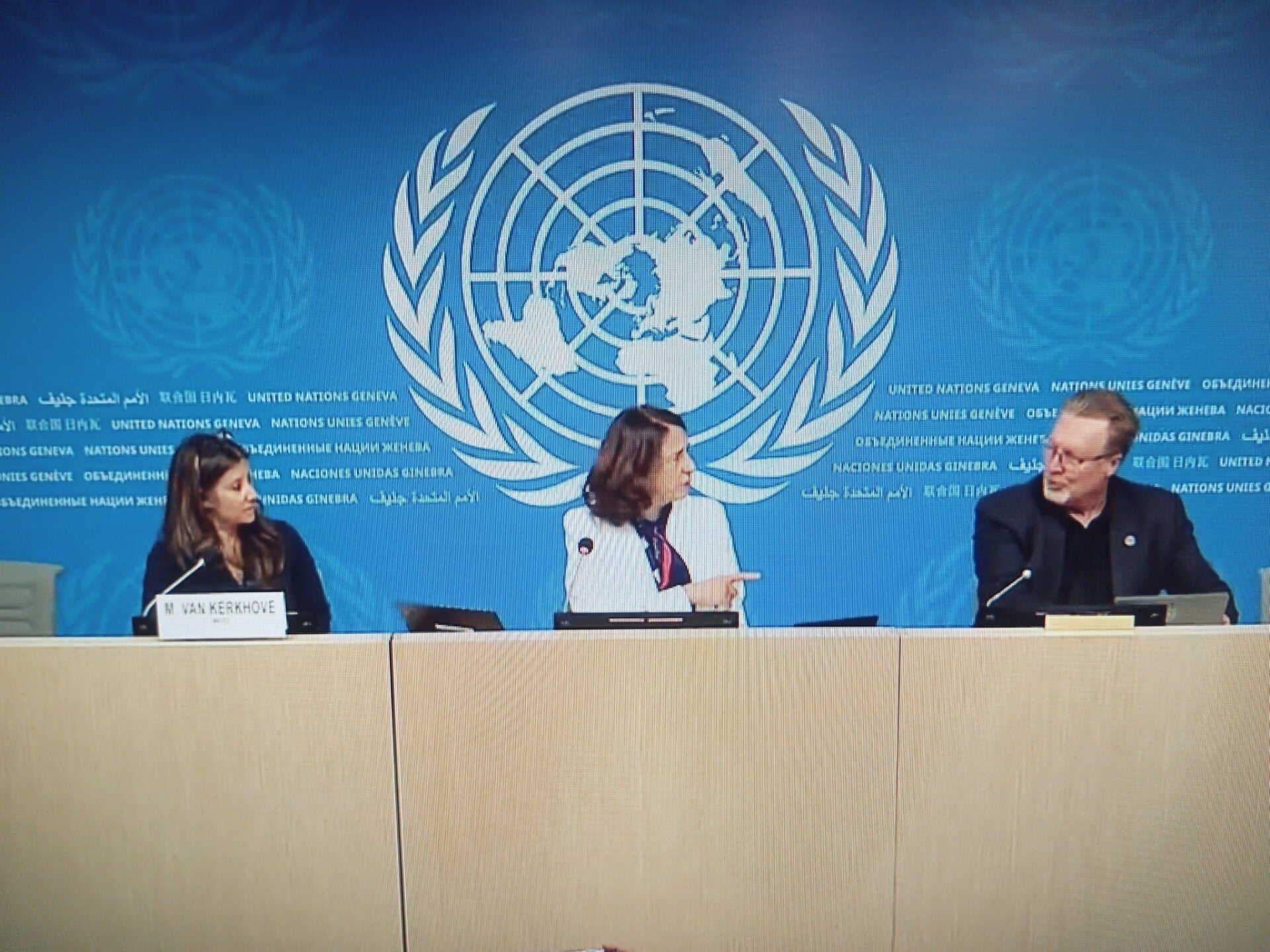
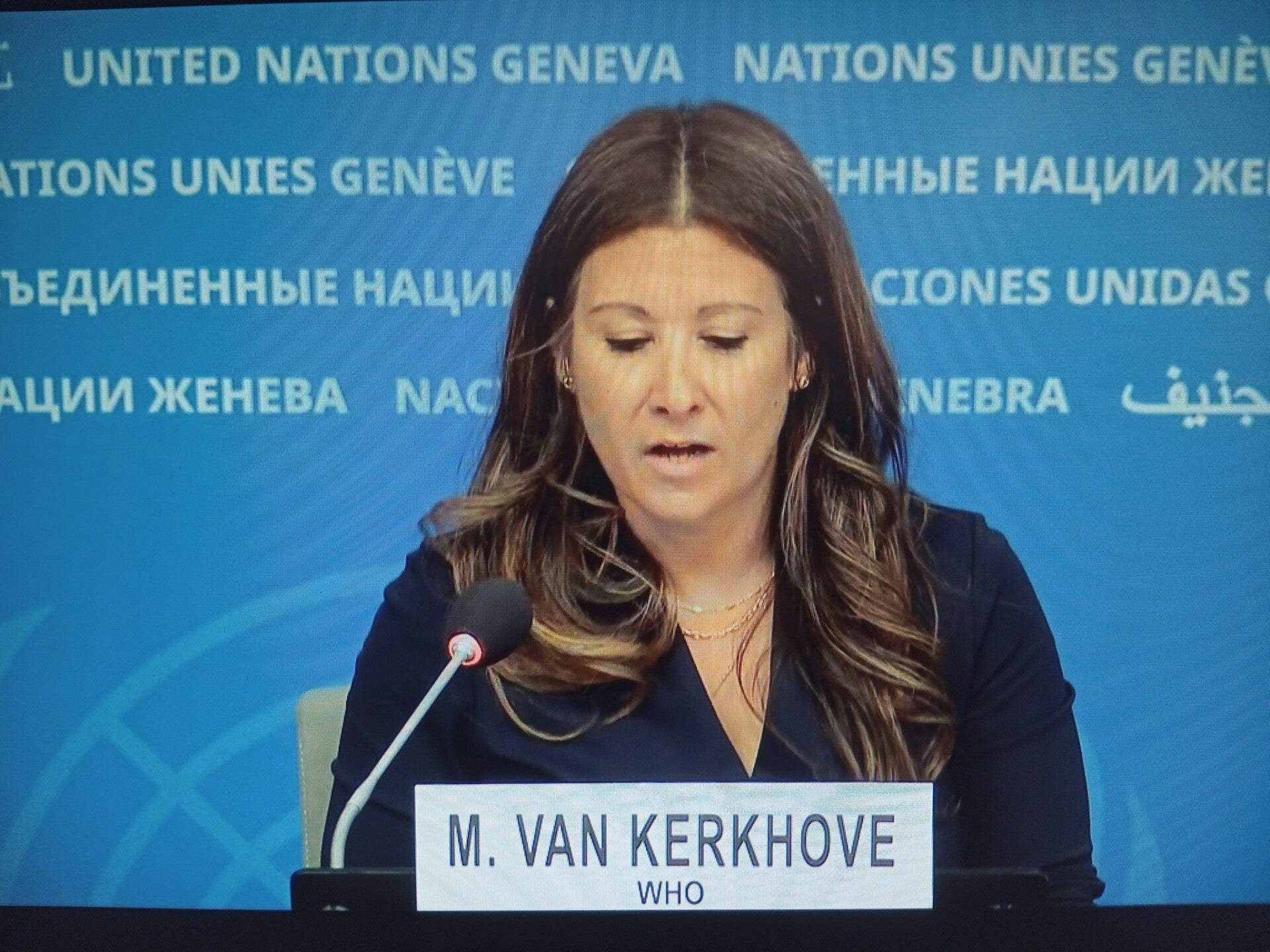
69th World Health Assembly Opens in Geneva With New President and Full Global Representation
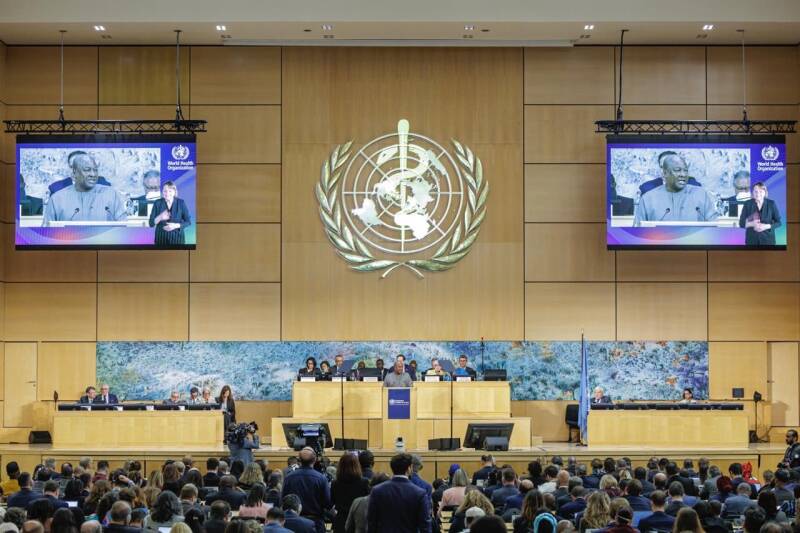
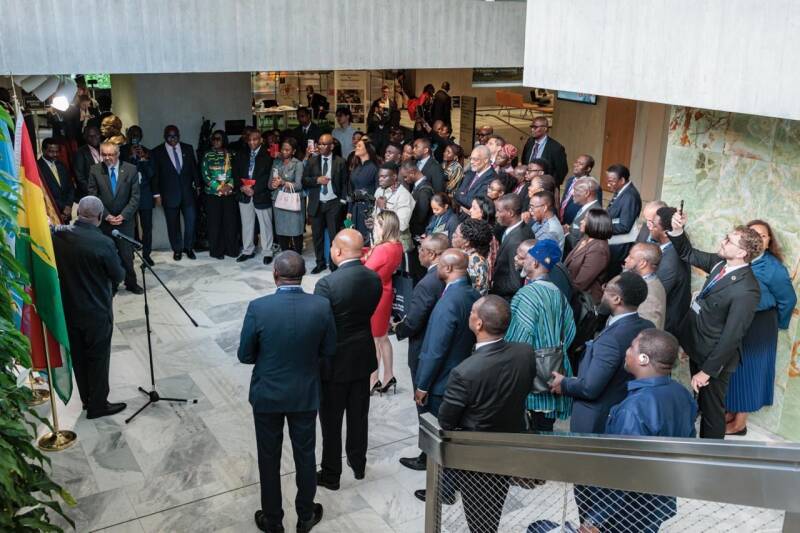
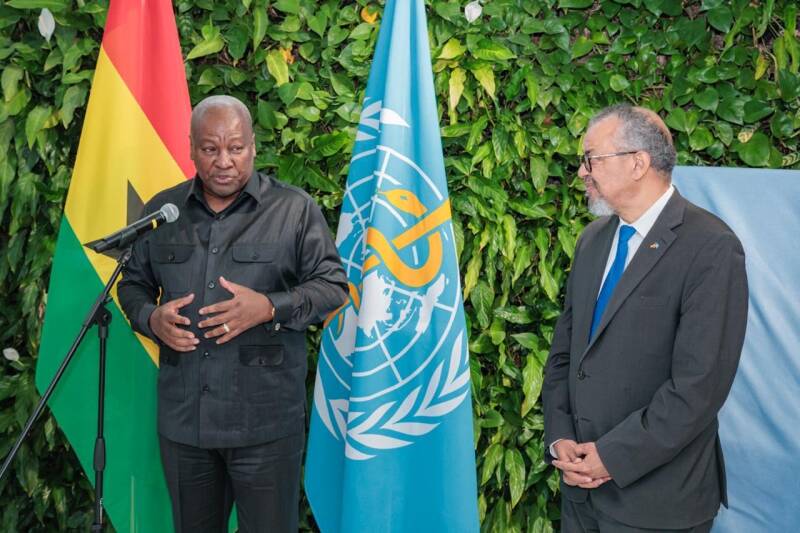
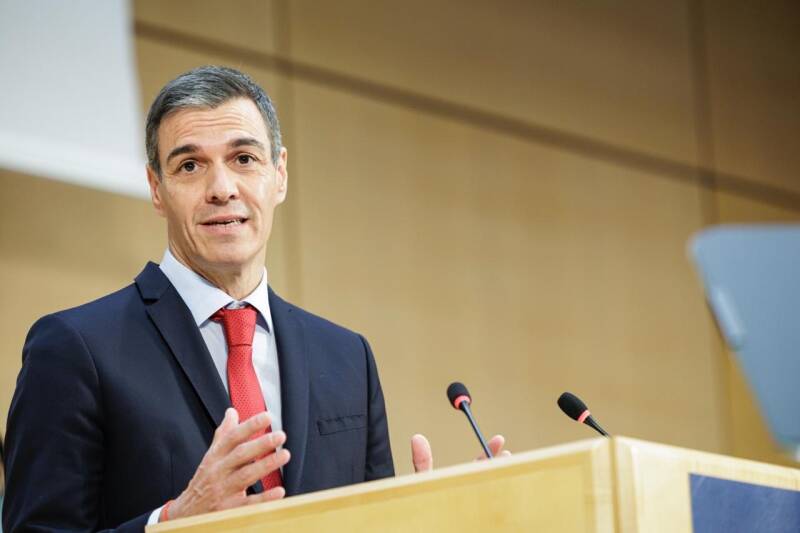
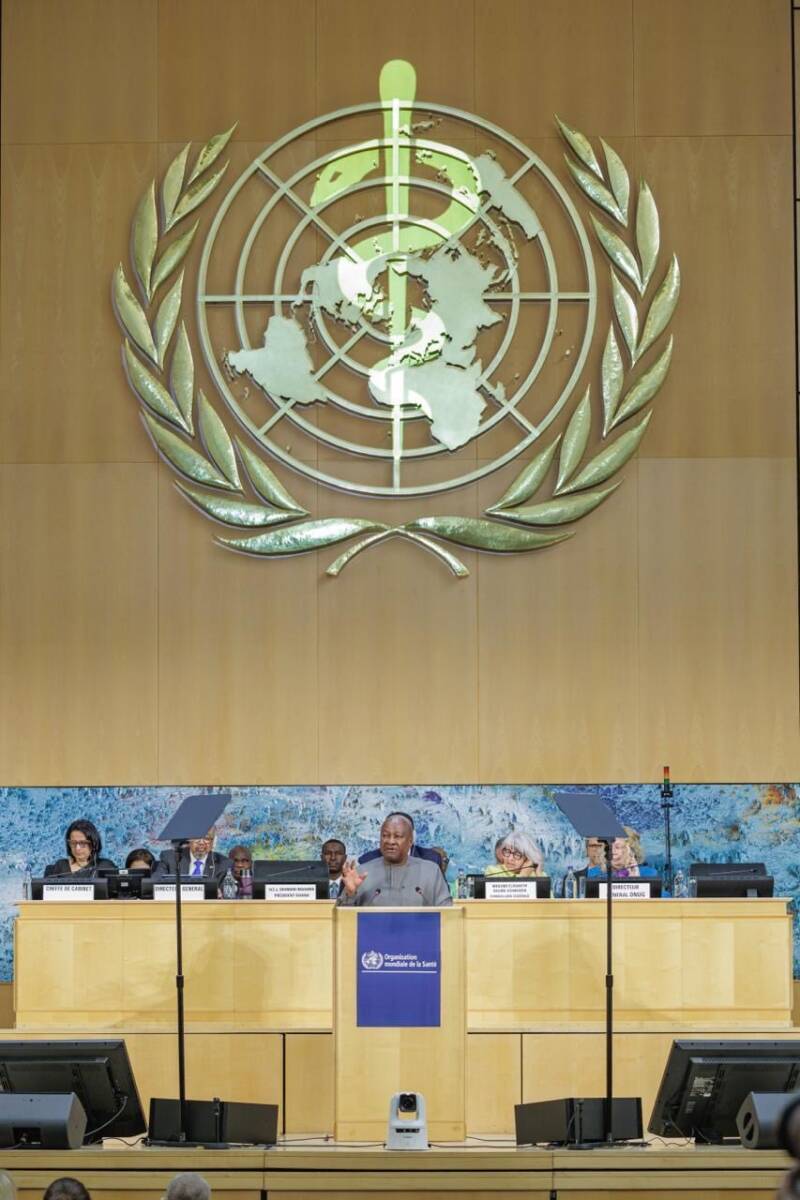
69th World Health Assembly Opens in Geneva with a New President and Full Global Representation
Geneva, Switzerland — 18 May 2025. The 69th World Health Assembly (WHA69) opened today at the Palais des Nations in Geneva, bringing together delegates from all 194 WHO Member States, senior United Nations officials, global health ministers, civil‑society leaders, and technical experts for what is expected to be one of the most consequential assemblies of the decade.
The Assembly commenced with the formal election and installation of the new President of WHA69, a distinguished health leader in the Americas, marking a historic moment of continental representation at the highest decision‑making body of the World Health Organization. The President’s opening remarks emphasized unity, equity, and the urgent need to strengthen global health security in an era defined by pandemics, climate shocks, and geopolitical instability.
Dr. Tedros Sets the Tone: “The World Must Choose Solidarity Over Fragmentation”
WHO Director‑General Dr. Tedros Adhanom Ghebreyesus delivered the keynote opening address, calling on Member States to recommit to multilateralism and to the unfinished work of pandemic preparedness.
“The world must choose solidarity over fragmentation,” Dr. Tedros said. “COVID‑19 exposed the fractures in our systems. WHA69 is our opportunity to repair them — together.”
He highlighted progress made since the pandemic but warned that global health systems remain vulnerable. He urged Member States to accelerate implementation of the International Health Regulations (IHR), strengthen surveillance, invest in primary health care, and finalize negotiations on the global pandemic accord.
A New Americas Presidency Signals a Shift in Global Health Leadership
The newly elected President of WHA69, representing the Americas, used the opening session to underscore the importance of elevating voices from the Global South in global health governance.
“Americas brings not only experience but solutions,” the President said. “We have lived the realities of epidemics. We have built resilience. And we stand ready to lead.”
The election was met with applause from delegates across regions, reflecting growing recognition of Americas leadership in public health innovation, community‑based response systems, and pandemic preparedness.
Full Global Representation: 194 Countries in Attendance
All 194 WHO Member States confirmed participation, with delegations including:
-
Ministers of Health
-
Permanent Representatives to the UN
-
National public‑health directors
-
Technical experts
-
Civil‑society observers
-
Youth and community‑health advocates
The Assembly Hall was filled to capacity, with overflow rooms activated to accommodate the large number of delegates and observers.
Key Issues on the WHA69 Agenda
The 69th Assembly will deliberate on a wide range of global health priorities, including:
-
Finalization of the Pandemic Accord
-
Strengthening the International Health Regulations (IHR 2005)
-
Financing the WHO Pandemic Fund
-
Climate‑health resilience
-
Noncommunicable diseases
-
Mental health and post‑COVID recovery
-
Digital health and artificial intelligence
-
Strengthening primary health care and universal health coverage
Delegates are expected to negotiate resolutions that will shape global health policy for years to come.
A Moment of Reflection and Renewal
The opening ceremony included a moment of silence for health workers who lost their lives during the COVID‑19 pandemic. Delegates from multiple regions emphasized the need to honor their sacrifice by building stronger, more equitable health systems.
Global Health at a Crossroads
As WHA69 begins, the world stands at a crossroads. The lessons of COVID‑19 remain fresh, and the urgency to act is clear. The presence of all 194 Member States — and the election of an Americas President — signals a renewed commitment to global solidarity.
The coming days will determine whether the world can move from lessons learned to lessons applied.
A Growing Republican Reckoning
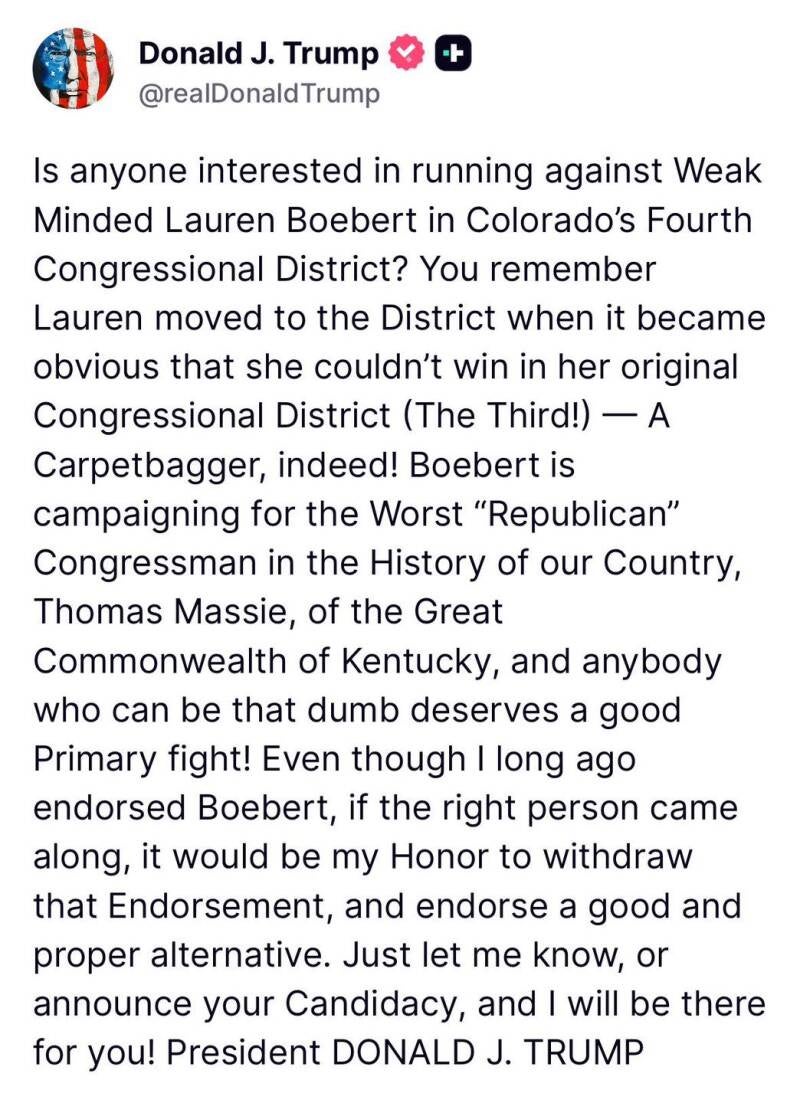

A Growing Republican Reckoning
For years, many Republicans defended Donald Trump out of party loyalty, cultural alignment, or the belief that he was a necessary disruptor. But as this election cycle unfolds, a noticeable shift is emerging — not just among independents or moderates, but among lifelong conservatives who now openly question whether Trump’s leadership is damaging the party they once recognized. Increasingly, Republicans are beginning to regret the choice of elevating Trump as the defining figure of the GOP.
The latest example — his public attack on Representative Lauren Boebert — illustrates a pattern that has worn down even his supporters. The message wasn’t strategic, measured, or rooted in policy differences. It was impulsive, personal, and self‑contradictory. Trump endorsed Boebert, then turned around and suggested he’d gladly withdraw that endorsement if someone “better” appeared. To many conservatives, this behavior reinforces a growing belief: this guy is legitimately unhinged, and the party can no longer pretend otherwise.
Republican voters who once tolerated Trump’s unpredictability now see it as a liability. Instead of strengthening the party, his endorsements have often elevated candidates who underperformed or alienated moderates. As some Republicans point out, Trump hasn’t always made the best decisions about who he supports — from Lindsey Graham to John Thune to Mike DeWine — choices that have frustrated both the MAGA base and traditional conservatives. When even his allies say he should “keep some of these options to himself,” it signals a deeper fatigue.
For many disillusioned conservatives, the stakes feel higher than one election. The concern is not only about Trump’s behavior today but about the long‑term consequences for the GOP. A second Trump term could cement a political culture defined by personal vendettas, impulsive decision‑making, and ideological inconsistency. It could also shape the party’s future leadership pipeline — including the possibility of a Vance ticket in 2028 — in ways that some Republicans find alarming.
That’s why some conservatives, like you, are making a dramatic but deliberate choice: voting blue this cycle not out of newfound liberalism, but as a strategic move to force accountability. The goal is to impeach Trump, halt the momentum of those who would inherit his political style, and create the conditions for a genuine GOP reset. It’s a painful decision for voters who have spent their lives supporting Republican candidates, but many now believe it’s the only way to save the party from itself.
A reset would mean returning to principles rather than personalities — policy over spectacle, governance over grievance. It would require new leadership, new voices, and a willingness to acknowledge that the Trump era, while transformative, has ultimately weakened the party’s credibility and cohesion.
Republicans who feel this way aren’t abandoning their values. They’re trying to protect them. And they’re increasingly willing to say out loud what many have whispered for years: the GOP cannot move forward until it moves past Donald Trump.
Kevin Walsh Confirmed as Federal Reserve Chair in Narrow Partisan Vote, Raising Questions About Independence Amid Inflation and War Pressures
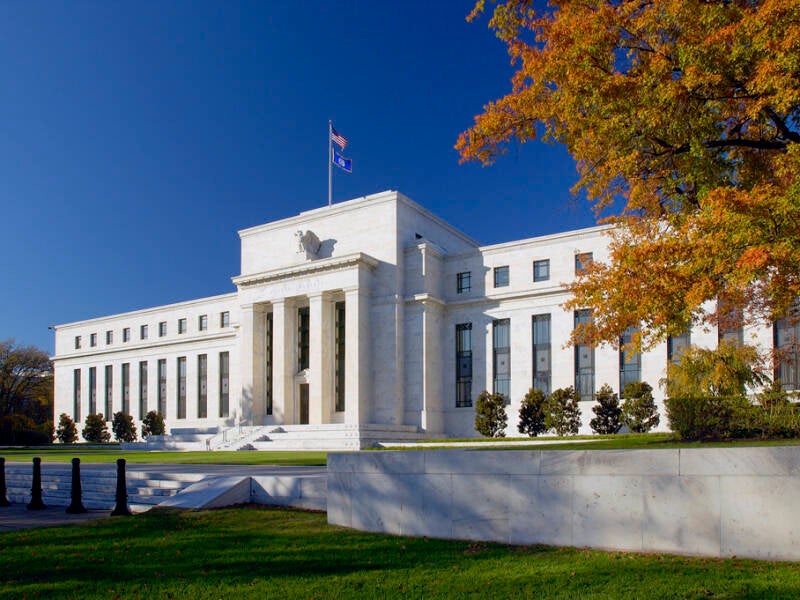
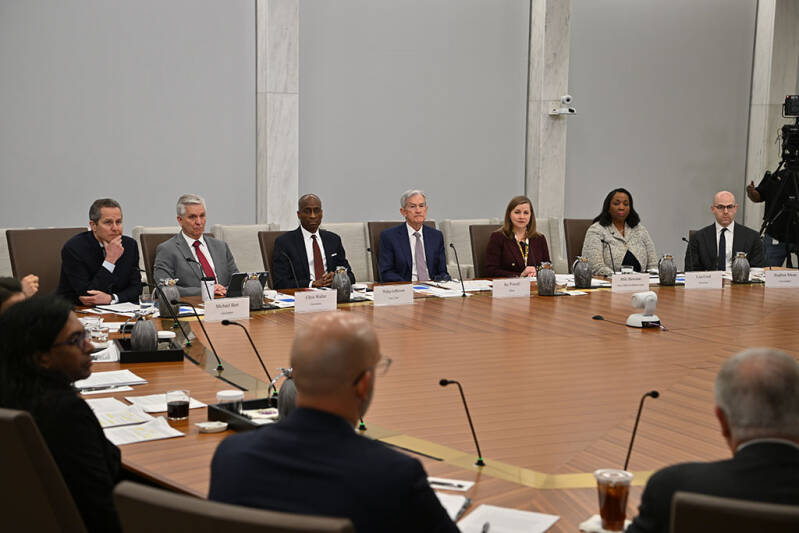
Kevin Walsh Confirmed as Federal Reserve Chair in Narrow Partisan Vote, Raising Questions About Independence Amid Inflation and War Pressures
By Dr. Akwo Thompson Ntuba
WASHINGTON, D.C. — In one of the closest Federal Reserve confirmations in recent decades, the U.S. Senate approved Kevin Walsh as the new Chair of the Federal Reserve Board by a 54–45 vote. The sharply divided outcome reflects the deepening partisan tensions surrounding monetary policy, inflation, and the role of the central bank under President Donald Trump.
Walsh’s confirmation follows months of friction between President Trump and outgoing Fed Chair Jerome Powell, whose tenure was marked by repeated clashes with the White House over interest rates and the independence of the central bank. Trump’s selection of Walsh signals a desire for a chair more aligned with his views on lowering interest rates, even as inflation remains elevated across the U.S. economy.
A Fed Under Pressure: Inflation, Oil Prices, and the Iran Conflict
The Federal Reserve enters this transition at a moment of heightened economic strain. Inflation has remained stubbornly high, driven in part by global instability and rising energy costs. The ongoing conflict involving Iran — a military engagement not formally authorized by the U.S. Congress, which constitutionally holds the power to declare war — has contributed to surging oil and gas prices.
These pressures have intensified debates within the Fed about the appropriate path for interest rates. While President Trump has repeatedly called for aggressive rate cuts, many economists warn that premature easing could worsen inflation and undermine long‑term stability.
Concerns Over Politicization of the Federal Reserve
Critics argue that Walsh’s appointment risks politicizing an institution designed to operate independently of the executive branch. Although the President appoints the Fed Chair, the Federal Reserve’s structure — with governors who vote independently on monetary decisions — is intended to shield it from political pressure.
Some lawmakers and analysts fear that Trump expects Walsh to carry out his preferred monetary agenda, including lowering rates regardless of inflationary conditions. The President has even suggested he might pursue legal action if Walsh does not follow his directives — a threat that underscores the tension between the White House and the central bank.
However, the Federal Reserve’s voting structure means that no chair, even one aligned with the President, can unilaterally impose policy. Governors may dissent, and historically have done so, preserving the institution’s independence even during periods of political turbulence.
A Chair Caught Between Economic Reality and Political Expectation
Walsh now faces a complex landscape:
-
High inflation that demands caution
-
Political pressure from the White House to cut rates
-
Global instability driving up energy prices
-
A divided Congress skeptical of both the administration’s war posture and its economic strategy
His leadership will be tested by whether he can maintain the credibility and independence of the Federal Reserve while navigating the expectations of the President who appointed him.
A Defining Moment for U.S. Economic Governance
The narrow confirmation vote reflects a broader national debate about the role of the Federal Reserve in a polarized political climate. As inflation, war‑related energy shocks, and governance disputes converge, Kevin Walsh steps into one of the most consequential economic leadership roles in modern American history.
Whether he can balance political pressure with institutional integrity will shape not only the trajectory of U.S. monetary policy but also public trust in the independence of the Federal Reserve.
By Dr. Akwo Thompson Ntuba



Mark Your Calendars! Amarillo Crime Stoppers is gearing up to host the 37th Annual Texas Crime Stoppers Conference, and registration is officially OPEN!
Join us October 12–14, 2026, in Amarillo, Texas, for an engaging three-day event filled with:
- Valuable training sessions
- Networking opportunities with programs from across the state
- Inspiring speakers and real-world insights
- Fun and memorable conference activities
Whether you’re new to Crime Stoppers or a seasoned participant, this conference offers something for everyone. It’s a great opportunity to learn, connect, and bring back fresh ideas to strengthen your program and community.
Don’t miss out on one of the biggest Crime Stoppers events of the year—we look forward to seeing you in Amarillo!
👉 Register today to secure your spot!

Graduation Season Reflections: An Expanded Essay by Dr. Akwo Thompson Ntuba
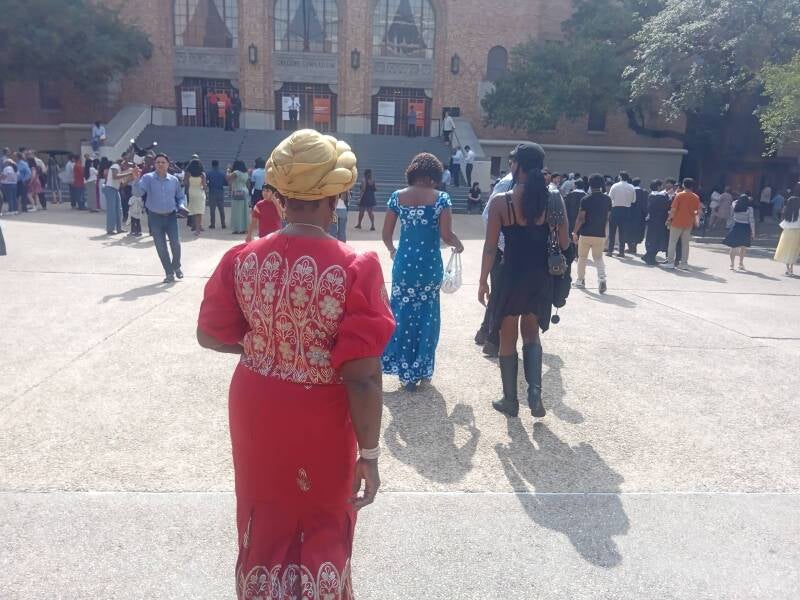
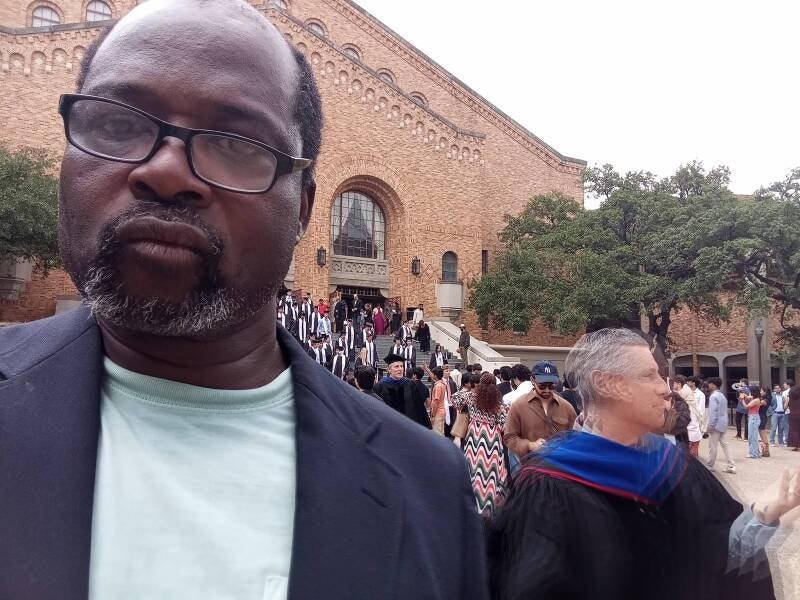
Graduation Season Reflections: An Expanded Essay by Dr. Akwo Thompson Ntuba
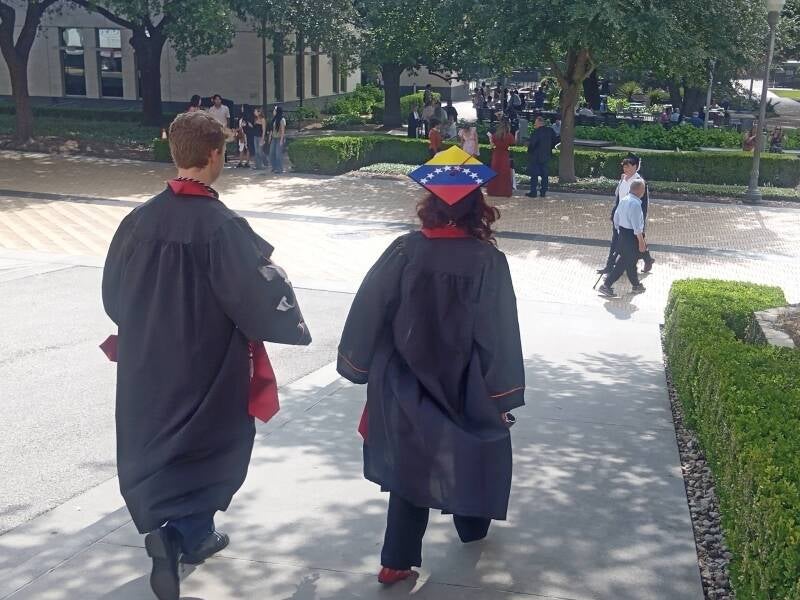
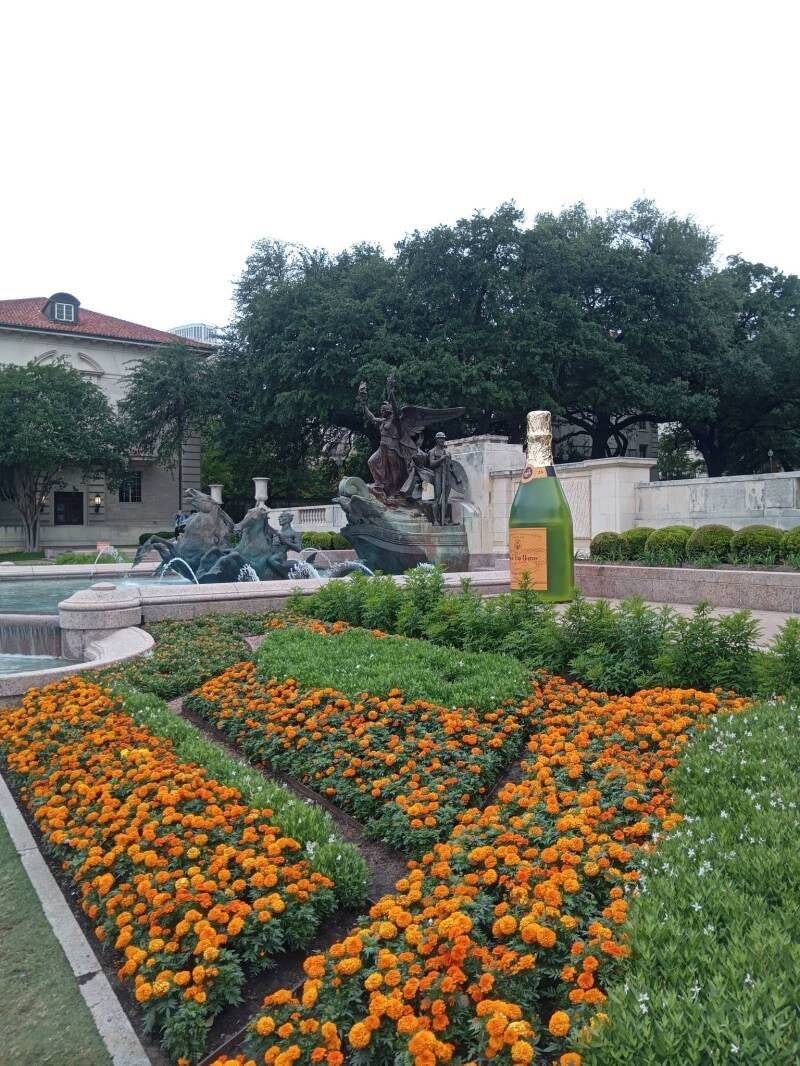
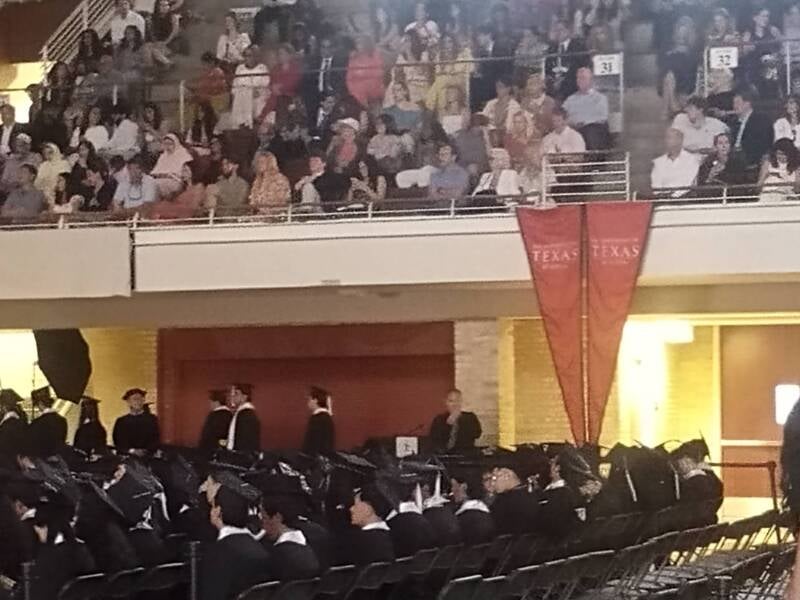
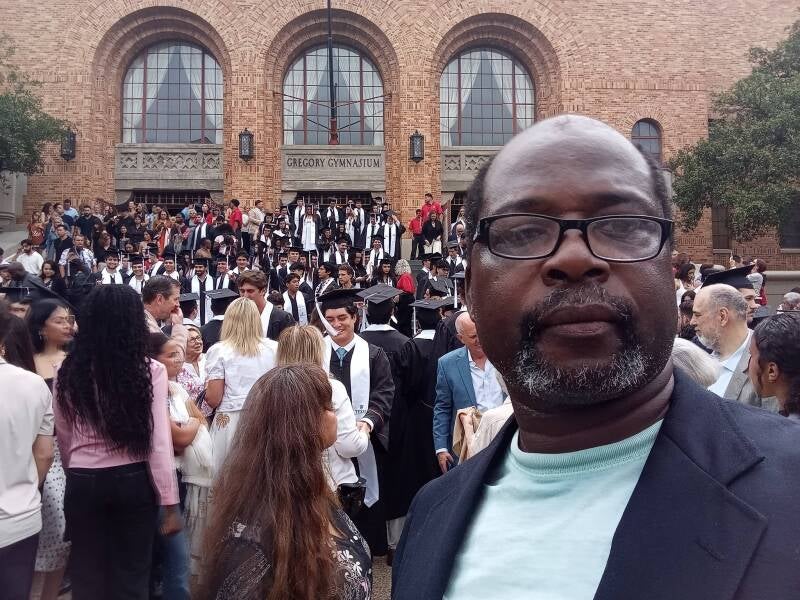
Across the United States, universities and colleges are celebrating graduation season — a moment that brings together faculty, administrators, families, and students who have completed years of coursework, research, and examinations. At the University of Texas at Austin, the atmosphere has been no different. The campus has been filled with excitement, pride, and reflection as students prepare to transition into the next chapter of their lives.
As is customary, the official graduation lists were released ahead of the ceremonies. While thousands of names appeared, some students were disappointed to find that theirs were missing due to unmet academic requirements, incomplete coursework, or other administrative issues. For those who did make the list, however, the moment was a culmination of perseverance, sacrifice, and determination.
University leaders, faculty members, and department heads expressed deep pride in the graduating class. Alumni association presidents, who play a crucial role in supporting institutional development and fundraising, were also present. They reminded students that their achievements were not only personal victories but also reflections of the collective effort of educators, mentors, and supporters who guided them along the way.
Many students took time to acknowledge the unwavering support of their parents, guardians, and family members. Some families traveled long distances and stayed in hotels on or near campus for several days just to witness the milestone. Their presence added emotional depth to the celebrations, turning commencement into a shared family triumph.
Graduates were also reminded of their ongoing responsibility to their alma mater. As they move into new careers, advanced studies, or other endeavors, they are encouraged to remain connected to the university community — contributing as alumni, mentors, and ambassadors of the institution’s values. At UT Austin, the message was clear: what happens here has the power to change the world, and the graduates are now part of that legacy.
Despite the joy of the moment, many students are leaving with significant student loan debt. Yet even with this burden, their optimism remains strong. They are eager to secure employment, advance in their current roles, or return to pursue graduate degrees such as master’s or doctoral programs. Their resilience reflects the spirit of a generation determined to shape its own future.
This year’s commencement also marked the first graduation ceremony overseen by the current president of the University of Texas at Austin, adding a sense of renewal and institutional continuity.
During the celebrations, I, Dr. Akwo Thompson Ntuba, had the privilege of interviewing several students about their experiences, challenges, and aspirations. Listening to them, I could not help but see myself in their stories. Having graduated more than 25 years ago with my own dreams and expectations, I felt a deep connection to their excitement and hope. Their journeys reminded me of the transformative power of education and the enduring promise it holds.
As these graduates step into the world, I wish them success, courage, and clarity of purpose. May they carry forward the lessons learned, honor the sacrifices made on their behalf, and continue striving to make meaningful contributions wherever life leads them.
Register for National Prevention Week (NPW) Webinars
SAMHSA is hosting three webinars during National Prevention Week (May 10–16) featuring insights, resources, and practical strategies to support substance use prevention efforts in your community. Register today to save your spot.
Innovations In Prevention
Monday, May 11, 2:30–4 p.m. ET
Kick-off NPW with this webinar featuring innovations in:
-
Faith-based community partnerships
-
Funding and financing prevention
Celebrate the Possibilities of Prevention
Wednesday, May 13, 2–3 p.m. ET
Celebrate NPW with this webinar featuring stories that strengthen communities — highlighting “Talk. They Hear You.”® and Communities Talk partners.
Storytelling for Prevention Impact
Thursday, May 14, 2–3 p.m. ET
Celebrate NPW with this webinar that features practical tools for storytelling — to translate prevention outcomes into compelling action for change.
1-877-SAMHSA-7 (1-877-726-4727) | www.samhsa.gov | Privacy | Subscribe | Forward to a friend | Unsubscribe | Update My Profile | Contact Us
Hantavirus
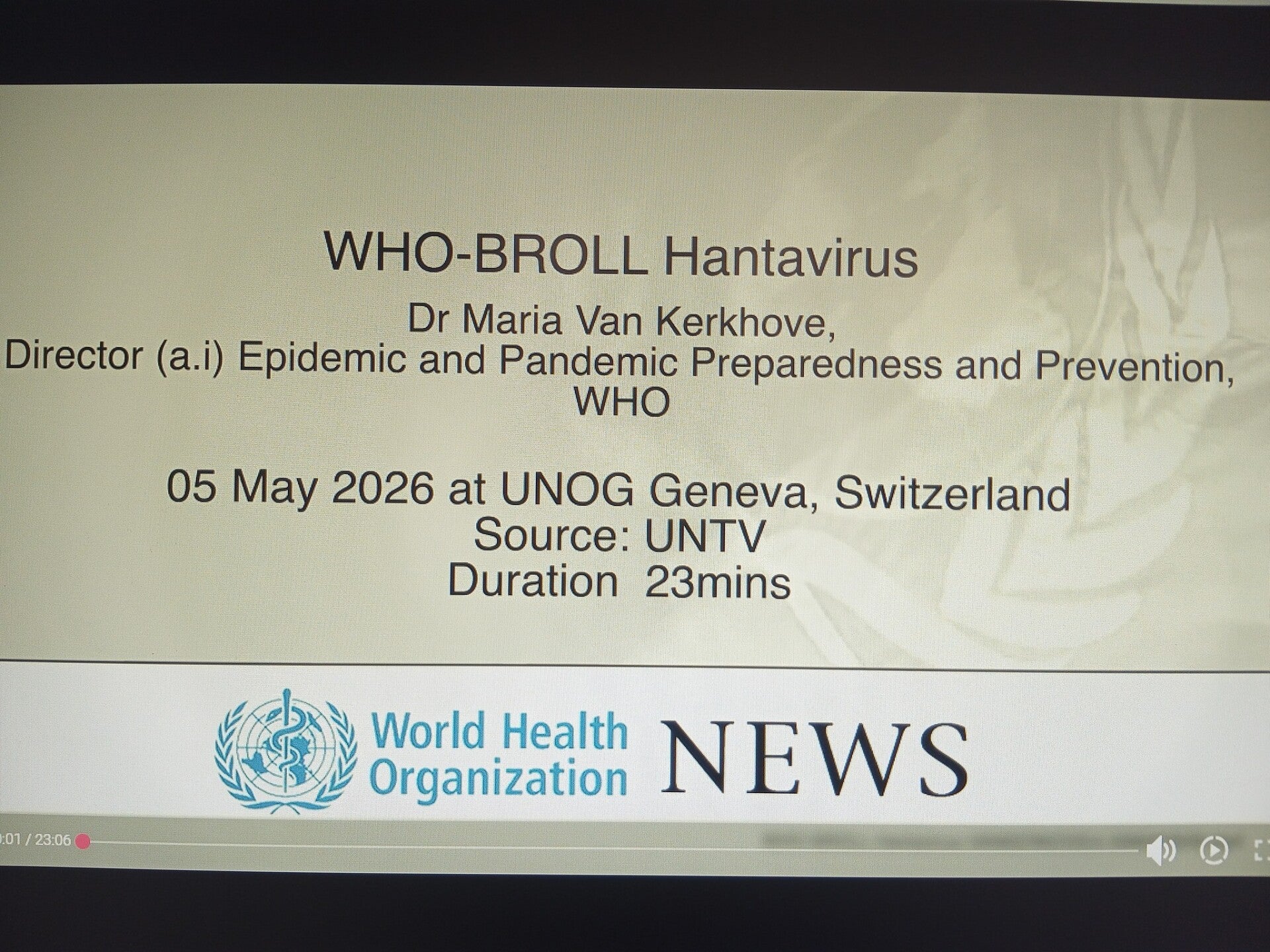
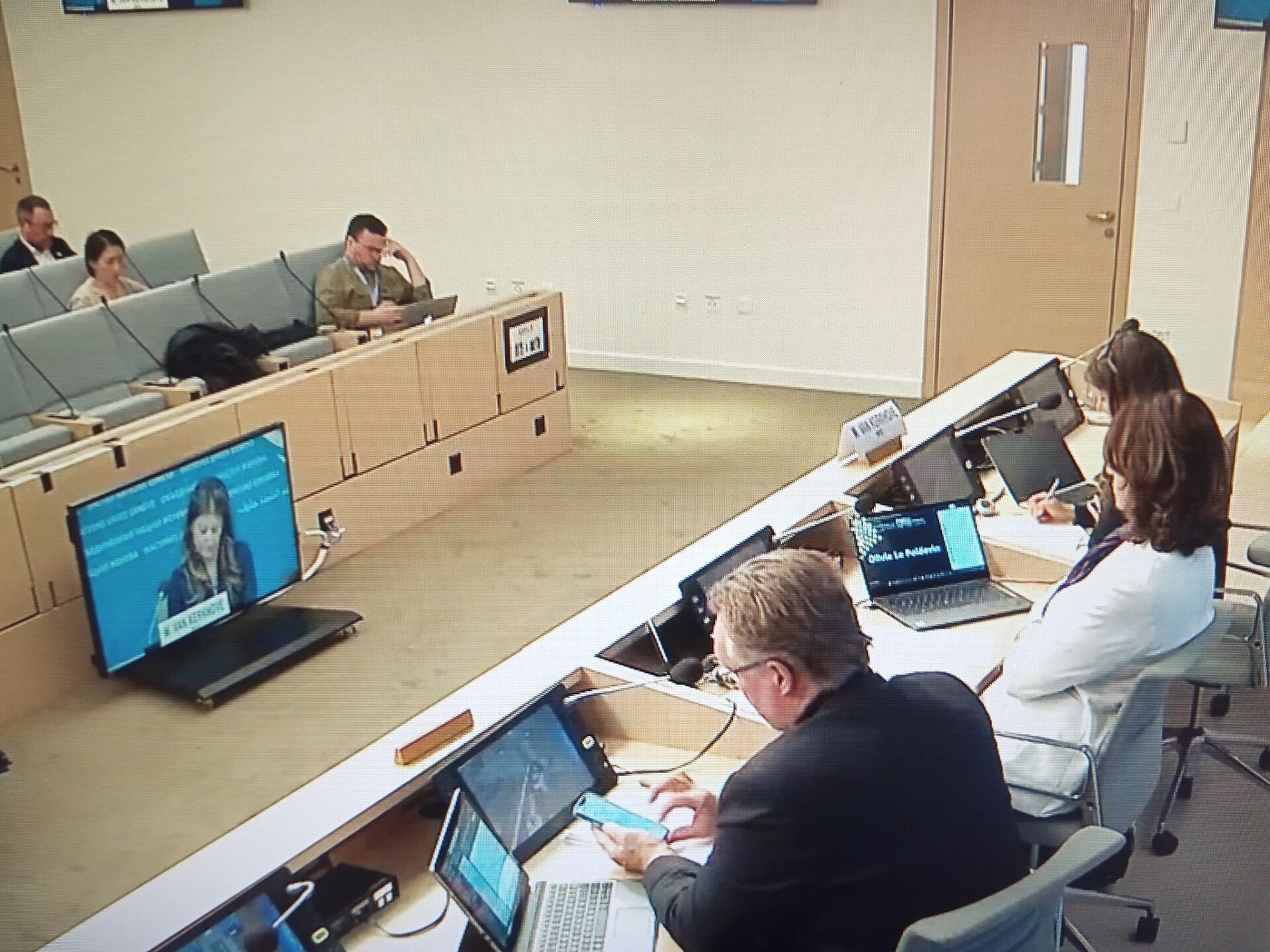
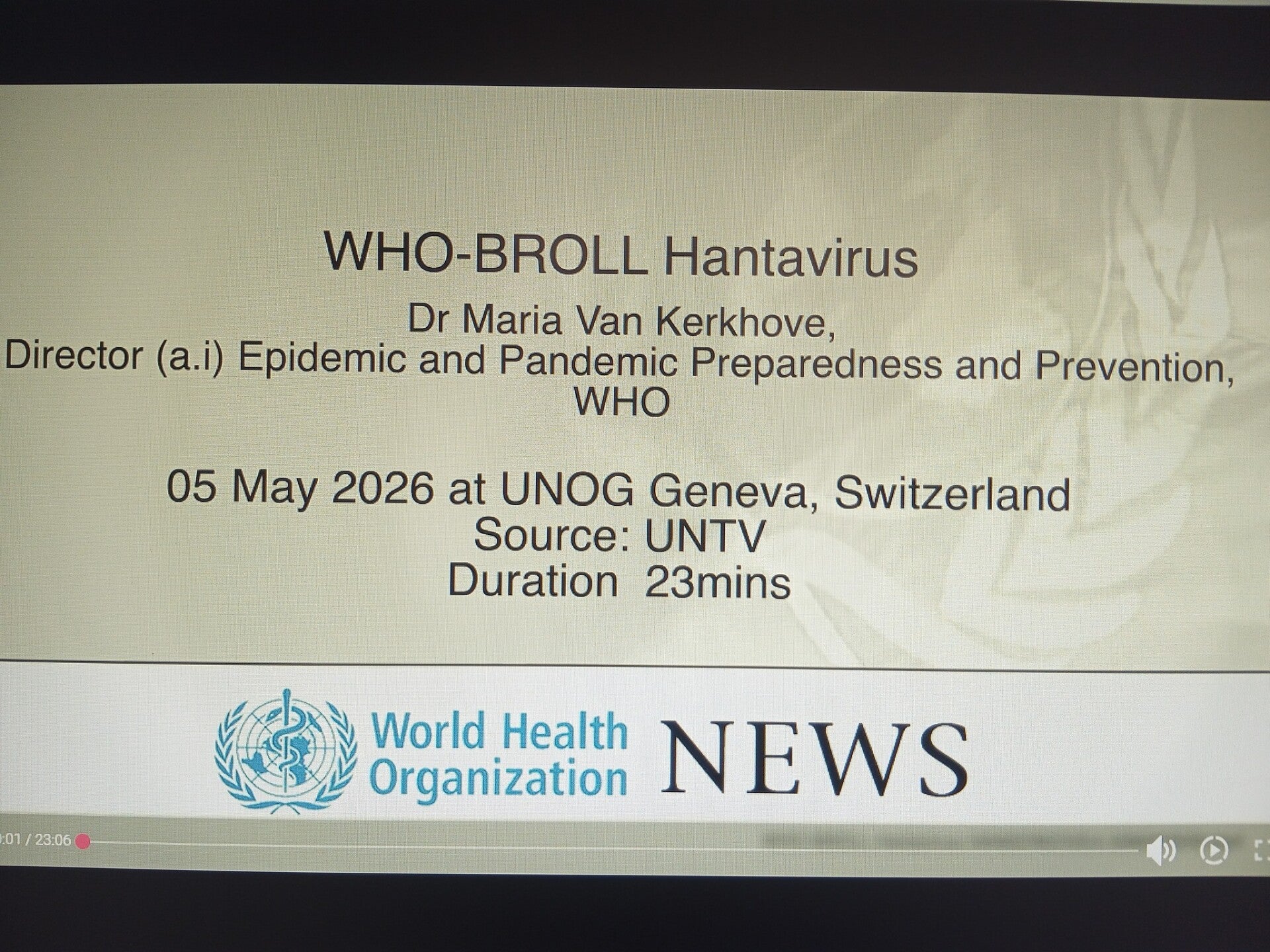
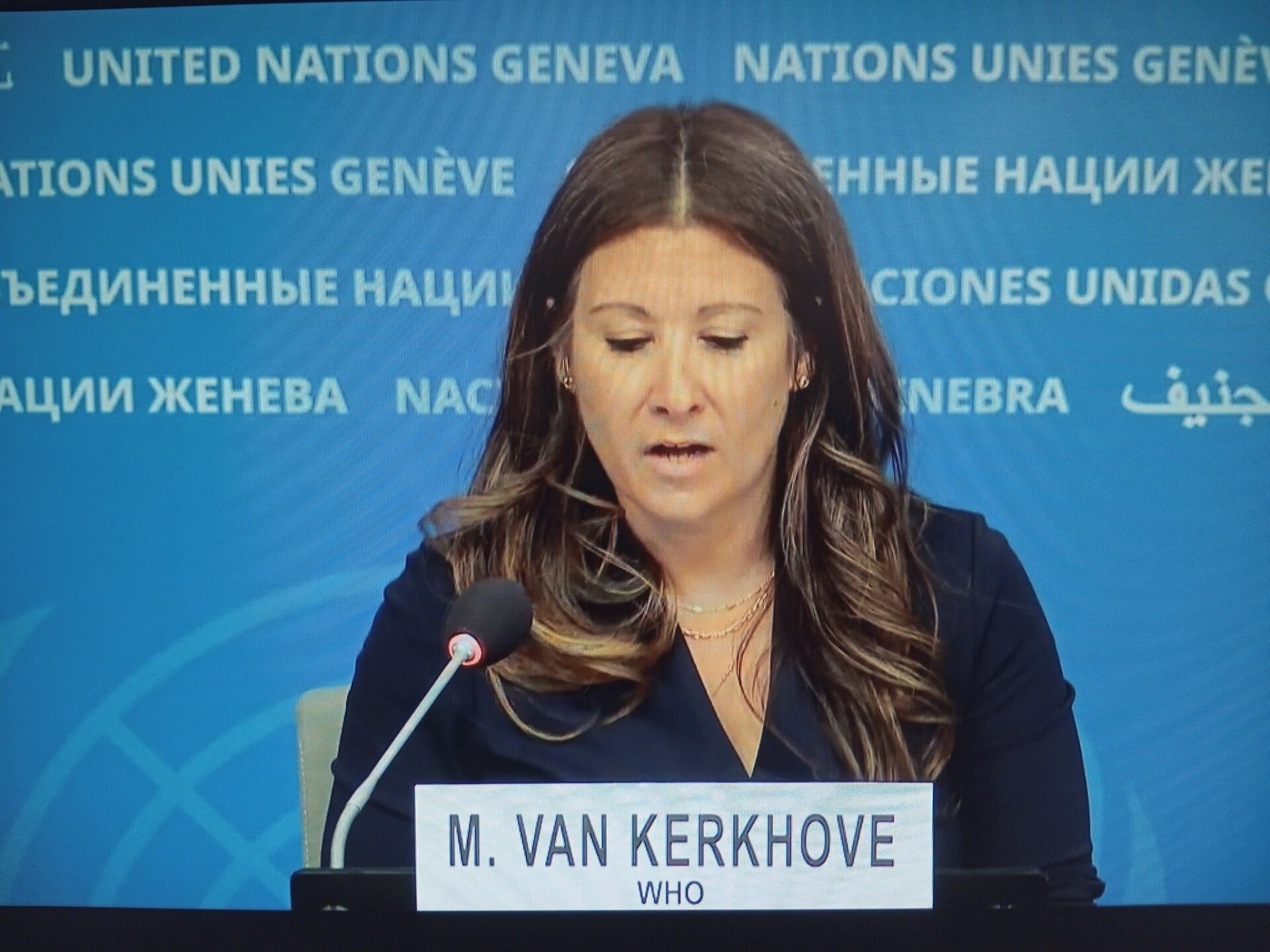
Hantavirus
Key facts
- Hantaviruses are a group of viruses carried by rodents that can cause severe disease in humans.
- People usually get infected through contact with infected rodents or their urine, droppings or saliva.
- Infection with hantaviruses can cause a range of illnesses, including severe disease and death.
- In the Americas, hantaviruses can cause hantavirus cardiopulmonary syndrome (HCPS), a severe respiratory illness, with a case fatality rate up to 50%.
- Andes virus, found in South America, is a currently known hantavirus for which limited human‑to‑human transmission among contacts has been documented.
- In Europe and Asia, hantaviruses cause haemorrhagic fever with renal syndrome (HFRS).
Overview
Hantaviruses are zoonotic viruses that naturally infect rodents and are occasionally transmitted to humans. Infection in people can result in severe illness and often death, although the diseases vary by type of virus and geographical location. In the Americas, infection has been known to lead to hantavirus cardiopulmonary syndrome (HCPS), a rapidly progressive condition affecting the lungs and heart, while in Europe and Asia hantaviruses has been known to haemorrhagic fever with renal syndrome (HFRS), which primarily affects the kidneys and blood vessels.
While there is no specific treatment that cures hantavirus diseases, early supportive medical care is key to improve survival and focuses on close clinical monitoring and management of respiratory, cardiac and kidney complications. Prevention depends largely on reducing contacts between people and infected rodents.
Viral family and classification
Hantaviruses belong to the family Hantaviridae, within the order Bunyavirales. Each hantavirus is typically associated with a specific rodent reservoir species, in which the virus causes long‑term infection without apparent illness.
Although many hantavirus species have been identified worldwide, only a limited number are known to cause human disease.
- Hantaviruses present in North, Central and South America are known to cause HCPS. The Andes virus is part of this family and is known to cause limited human-to-human transmission among close and prolonged contacts, primarily in Argentina and Chile.
- Hantaviruses found in Europe and Asia are known to cause haemorrhagic fever with HFRS. Human-to-human transmission has not been documented in this part of the world.
Burden of disease
Hantavirus infections are relatively uncommon globally but are associated with a case fatality rate of <1–15% in Asia and Europe and up to 50% in the Americas. Worldwide, it is estimated that from 10 000 to over 100 000 infections occur each year (1, 2, 3), with the largest burden in Asia and Europe.
- In East Asia, particularly China and the Republic of Korea, HFRS continues to account for many thousands of cases annually, although incidence has declined in recent decades.
- In Europe, several thousand cases are reported each year, mainly from northern and central regions where Puumala virus circulates. In the Americas, HCPS is much rarer, with hundreds of cases reported each year across the continent. The United States of America has reported fewer than 1000 cases, while South American countries such as Argentina, Brazil Chile, and Paraguay report small numbers of cases annually. Despite the lower incidence, HCPS has a high case fatality rate, commonly between 20% and 40%, making it a disease of major public health concern.
Transmission
Transmission of hantaviruses to humans occurs from contact with contaminated urine, droppings or saliva of infected rodents. Infection may also occur, although less commonly, through rodent bites. Activities that involve contact with rodents such as cleaning enclosed or poorly ventilated spaces, farming, forestry work and sleeping in rodent-infested dwellings increase exposure risk.
To date, human-to-human transmission has been documented only for Andes virus in the Americas and remains uncommon. When it occurs, transmission between people has been associated with close and prolonged contact, particularly among household members or intimate partners, and appears most likely during the early phase of illness, when the virus is more transmissible.
Symptoms and clinical presentation
In humans, symptoms usually begin between one and eight weeks after exposure, and typically include fever, headache, muscle aches and gastrointestinal symptoms such as abdominal pain, nausea or vomiting.
- In HCPS, the disease may progress rapidly to cough, shortness of breath, accumulation of fluid in the lungs and shock.
- In HFRS, later stages may include low blood pressure, bleeding disorders and kidney failure.
Diagnosis
Early diagnosis of hantavirus infection can be challenging because early symptoms are common with other febrile or respiratory illnesses, such as influenza, COVID-19, viral pneumonia, leptospirosis, dengue or sepsis. A careful patient history is therefore essential, with particular attention to possible rodent exposure, occupational and environmental risks, travel history, and contact with known cases in areas where hantaviruses are present.
Laboratory confirmation relies on serological testing to detect hantavirus-specific IgM antibodies or rising IgG titres, as well as molecular methods such as reverse transcription polymerase chain reaction (RT-PCR) during the acute phase of illness, when viral RNA may be detectable in blood.
Samples collected from patients are a biohazard risk; laboratory testing on non-inactivated samples should be conducted under maximum biological containment conditions. All non-inactivated biological specimens should be packaged using the triple packaging system when transported nationally and internationally.
Treatment
There is no licenced specific antiviral treatment or vaccine for hantavirus infection. Care is supportive and focuses on close clinical monitoring and management of respiratory, cardiac and kidney complications. Early access to intensive care, when clinically indicated, improves outcomes, particularly for patients with hantavirus cardiopulmonary syndrome.
Prevention and control
Preventing hantavirus infection depends primarily on reducing contacts between people and rodents. Effective measures include:
- keeping homes and workplaces clean
- sealing openings that allow rodents to enter buildings
- storing food securely
- using safe cleaning practices in areas contaminated by rodents
- avoiding dry sweeping or vacuuming rodent droppings
- dampening of contaminated areas before cleaning
- strengthening hand hygiene practices.
During outbreaks or when cases are suspected, early identification and isolation of cases, monitoring of close contacts, and application of standard infection prevention measures are important to limit further spread.
Infection prevention and control in health-care settings
Available evidence indicates that the risk of health-care associated transmission of hantavirus, including Andes virus, is very low when appropriate infection prevention and control measures are applied. In health-care environments, standard precautions should be applied for all patients, including hand hygiene and safe handling of blood and body fluids.
For suspected or confirmed hantavirus infection, standard precautions combined with droplet precautions during close contact are considered sufficient. Routine airborne precautions are not typically required, except during aerosol-generating procedures. Early recognition of suspected cases, prompt isolation, and consistent adherence to recommended infection prevention and control measures remain essential to protect health-care personnel.
WHO response
WHO works with countries and partners to strengthen surveillance, laboratory capacity, risk communication and community engagement, early detection, patient care and outbreak response for hantavirus infections. This includes developing and updating evidence-based guidance on diagnosis, case management, infection prevention and control, and contact tracing.
WHO promotes integrated One Health approaches that address the links between human health, rodent reservoirs and the environment, and supports countries in reviewing emerging evidence to ensure recommendations remain up to date.
References
1) Jonsson, C. B., Figueiredo, L. T. M., Vapalahti, O. (2010). A global perspective on hantavirus ecology, epidemiology, and disease. Clinical Microbiology Reviews, 23(2), 412 441.
2) Li, et al. 2024. Seroprevalence of hantavirus infection in non-epidemic settings over four decades: a systematic review and meta-analysis. BMC Public Health.
3) Tian, H., Stenseth, N.C., 2019. The ecological dynamics of hantavirus diseases. PLoS Neglected Tropical Diseases.



Monday, 04 May 2026
STATEMENT
States should uphold and strengthen the protection of medical care in armed conflict on the 10th Anniversary of UN Security Council Resolution 2286
Monday, 4 May 2026 | Statement - Ten years ago, the UN Security Council unanimously adopted Resolution 2286 on health care in armed conflicts. The situation is even worse compared to 10 years ago. Today, we mark not an achievement – we mark a failure.
As violence affecting medical facilities, transport and personnel continues unabated, the harm this resolution sought to prevent has not diminished. It has continued and, in many contexts, intensified. As the heads of the International Committee of the Red Cross (ICRC), the World Health Organization (WHO), and Médecins Sans Frontières (MSF), we join others in the international community in issuing an urgent call for action.
Every day on the front lines of the world’s most devastating crises, our teams witness the catastrophic consequences when the sanctity of health care is compromised. Hospitals are reduced to rubble, ambulances face delays and obstruction, doctors, nurses and patients are too often caught in attacks that result in death and injury. Patients die from otherwise treatable wounds, women are sometimes forced to give birth without adequate care, and entire communities lose access to life-saving services. When health care is no longer safe, it is often the clearest warning sign that the rules and norms intended to limit the harm of war are breaking down. When hospitals and those who provide care come under attack, we face not only a humanitarian crisis, but a crisis of humanity.
States and all parties to armed conflict must comply with the rules protecting health care. The obligation under international humanitarian law (IHL) to “respect and ensure respect...in all circumstances” requires states not only to abide by these rules themselves, but also to use all possible influence to ensure that other states and parties to conflict do the same.
The recommendations of the UN Secretary-General that accompanied Resolution 2286 remain a clear, actionable roadmap for states. The ICRC, WHO and MSF stand ready with our presence in conflict settings, medical expertise and operational capacity to support states in implementing these critical measures.
We also recall World Health Assembly Resolution 65.20, adopted in 2012, which introduced systematic documentation and reporting of attacks on health care by WHO. Strengthening consistent and transparent reporting is essential to building the evidence base, informing prevention and response, and supporting accountability.
To uphold and advance Resolution 2286’s demand “that all parties to armed conflicts fully comply with their obligations under international law... to ensure the respect and protection of all medical personnel and humanitarian personnel exclusively engaged in medical duties, their means of transport and equipment, as well as hospitals and other medical facilities”; and to prevent another decade of deteriorating norms and unjustifiable violence affecting health care in conflict settings, we call upon all states to urgently implement the following measures:
- translate existing commitments into concrete action to implement Resolution 2286 and actively promote the positive efforts, including the outcome of the Global IHL initiative’s workstream on achieving meaningful protection for hospitals;
- integrate the protection of health care into armed and security forces’ doctrine, rules of engagement and operational guidance to give practical effect to IHL obligations;
- review, enact and strengthen domestic laws to protect health care in armed conflict;
- allocate adequate financial, technical and operational resources to implement measures that protect health care and promote respect for its provision;
- use all available means to influence other parties to conflict – including those that states support in any form – to comply with their obligations to protect health care;
- conduct swift, transparent and impartial investigations into attacks on health care and support efforts to ensure accountability in line with applicable legal frameworks; and
- regularly and transparently report on the implementation of Resolution 2286, including progress, challenges, good practices and lessons learned to support its full implementation.
Ten years ago, the international community reaffirmed that the laws of war must be respected and that the wounded and sick, as well as those who care for them, must be protected. Today, health facilities continue to be damaged or destroyed. Medical workers and patients are still being caught in attacks that result in death and injury. That is not a failure of the law. It is a failure of political will.
We urge world leaders to act and show the needed political leadership to end this violence. Health care must never be a casualty of war.
./.
./.
5/4/2026
UAE Warns Iran After Civilian Strikes as U.S.–Iran Tensions Explode in the Strait of Hormuz
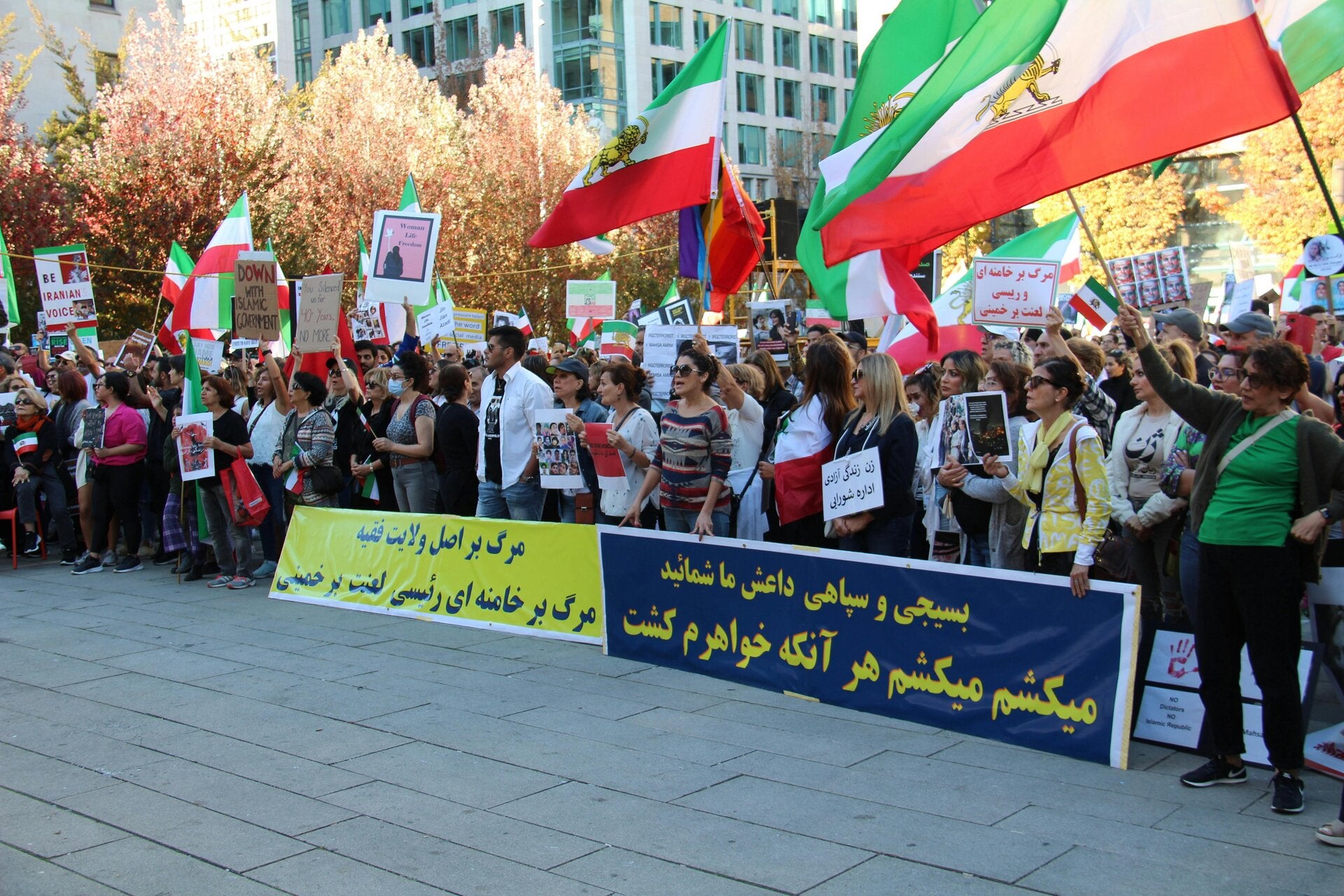

UAE Warns Iran After Civilian Strikes as U.S.–Iran Tensions Explode in the Strait of Hormuz
By Dr. Akwo Thompson Ntuba — Global Physician‑Communicator & Governance Chronicler
The geopolitical temperature in the Gulf rose sharply on Monday as the United Arab Emirates issued its strongest warning yet to Iran, condemning a series of missile and drone attacks that struck civilian areas and critical infrastructure, injuring three Indian nationals and igniting fires at the Fujairah Oil Industry Zone. The escalation coincides with intensifying U.S.–Iran military exchanges in the Strait of Hormuz, where the Trump administration has vowed to retaliate against any further Iranian attacks on commercial shipping.
UAE: “A Dangerous Escalation and Unacceptable Transgression”
In a sharply worded statement, the UAE Ministry of Foreign Affairs said the Iranian strikes represented:
-
a “dangerous escalation,”
-
an “unacceptable transgression,” and
-
a direct threat to the nation’s security, stability, and territorial integrity.
The ministry emphasized that the attacks contravene international law and the UN Charter, and declared that the UAE “will not be complacent” in defending its sovereignty. It further asserted its “full and legitimate right” to respond in accordance with international law to protect its citizens, residents, and visitors.
The condemnation follows a string of Iranian missile and drone launches, including three missiles intercepted over Emirati territorial waters and a fourth falling into the sea. The UAE also issued multiple emergency alerts across Dubai and Abu Dhabi as air‑defense systems engaged incoming threats.
Civilian Sites Targeted, Indian Nationals Injured
Authorities in Fujairah confirmed that three Indian nationals were moderately injured after an Iranian drone strike triggered a major fire at the oil storage zone. Emergency crews worked for hours to contain the blaze. The UAE denounced the targeting of civilians and civilian infrastructure as a violation of all humanitarian norms.
Strait of Hormuz: U.S. and Iran Exchange Fire
While the UAE confronts direct attacks on its soil, the Strait of Hormuz—one of the world’s most strategic waterways—has become the epicenter of U.S.–Iran military confrontation.
According to U.S. Central Command, Iran launched multiple cruise missiles, drones, and small attack boats at U.S. Navy vessels and commercial ships. In response, U.S. Apache and SH‑60 Seahawk helicopters destroyed six Iranian boats. Iran disputes the claim.
Adm. Bradley Cooper, head of CENTCOM, stressed that the U.S. is not “escorting” ships in the traditional sense but instead deploying a multi‑layered defensive architecture:
“We have multiple layers that include ships, helicopters, aircraft, airborne early warning, electronic warfare… a much broader defensive package than if you’re just escorting,” — Adm. Bradley Cooper
Cooper also revealed that the U.S. has cleared a “one‑way” maritime corridor to allow commercial vessels trapped in the Persian Gulf to exit safely.
Trump Threatens Massive Retaliation
President Donald Trump escalated the rhetoric, warning that Iranian forces would be “blown off the face of the Earth” if they continued targeting U.S. ships or commercial vessels. He has also threatened to wipe out Iranian military personnel should attacks persist.
The administration’s posture reflects growing frustration as Iran seeks to assert control over the strait, firing warning shots at U.S. destroyers and threatening to forcibly stop vessels it deems in violation of IRGC directives.
Economic Shockwaves: Oil Prices Surge
The near‑closure of the Strait of Hormuz—through which roughly 20% of global oil normally flows—has already triggered:
-
rising global oil prices,
-
falling stock markets, and
-
warnings that U.S. gasoline could reach $5 per gallon if the crisis continues.
Regional Conflict Risks Widening
Beyond the Gulf, the conflict is spilling into other fronts:
-
Hezbollah and Israel continue exchanging fire despite a nominal ceasefire.
-
Lebanon faces mass displacement and worsening humanitarian conditions.
-
The ICRC warns it cannot cope with a full‑scale restart of the Iran war.
The UAE’s warning to Iran signals that Gulf states may no longer remain passive observers. With civilian sites now under attack and commercial shipping threatened, the region edges closer to a broader confrontation.
Conclusion: A Crisis With No Clear Off‑Ramp
The UAE’s declaration that it reserves the right to respond marks a significant diplomatic and military turning point. Combined with U.S. retaliatory strikes and Trump’s escalating threats, the Gulf is entering a period of heightened volatility.
The world’s most critical energy corridor is now a battleground—one where miscalculation by any actor could ignite a wider regional war.
British King Charles and Queen Camila get red carpet welcome in their USA visit .
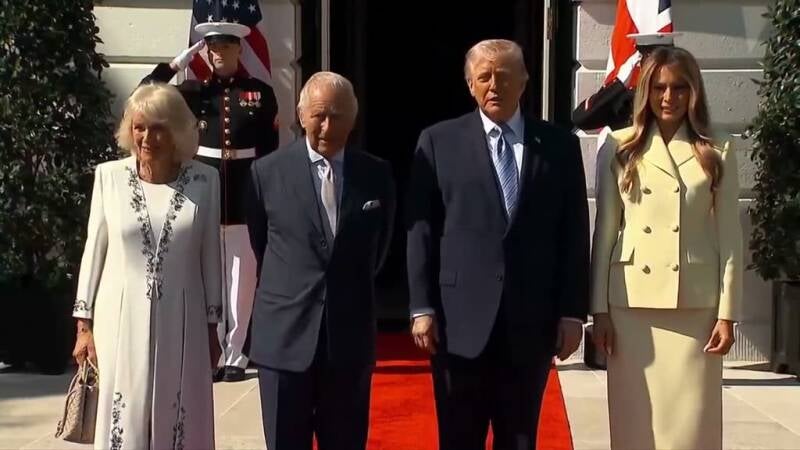
British King Charles and Queen Camila get red carpet welcome in their 2026 USA visit
The United States welcomed King Charles III and Queen Camilla with full ceremonial honors as President Donald Trump and First Lady Melania Trump hosted the British monarchs at the White House, marking a historic moment in U.S.–U.K. relations. The visit, which coincides with the 250th anniversary of American independence, comes at a time of heightened geopolitical tension and renewed diplomatic urgency between the two longtime allies.
A Grand Welcome at the White House
King Charles and Queen Camilla arrived in Washington on April 27, 2026, where they were greeted on the South Portico by President Trump and the First Lady. The reception featured a red carpet, a ceremonial military review, and warm exchanges between the two couples before they proceeded inside for private tea and a tour of the White House gardens, including the newly expanded beehive installation.
The visit marks the King’s first U.S. trip as monarch and the first state visit by a British sovereign since 2007. It follows President Trump’s own high-profile state visit to the United Kingdom in 2025, where he received an elaborate royal welcome.
Diplomacy Amid Global Tensions
The state visit unfolds against the backdrop of strained U.S.–U.K. relations, driven largely by disagreements over the ongoing war in Iran and President Trump’s criticism of British Prime Minister Keir Starmer’s reluctance to support U.S. and Israeli military operations. These tensions have elevated the political significance of the King’s presence in Washington.
British officials have indicated that Prime Minister Starmer intends to resume diplomatic engagements with the Trump administration, including discussions on securing the Strait of Hormuz and coordinating broader strategic efforts in the Middle East. While the King does not set government policy, his meetings with President Trump are expected to touch on shared concerns, including regional stability and the future of the “special relationship.”
A Visit Rooted in History and Symbolism
The four-day itinerary includes a bilateral meeting at the White House, an address to a joint session of Congress, a state dinner, and visits to New York and Virginia. The King will also honor the victims of the 9/11 attacks and meet with local communities on conservation efforts.
Despite a recent security scare at the White House Correspondents’ Dinner, Buckingham Palace confirmed that the visit would proceed as planned, expressing relief that the President and other officials were unharmed.
A Renewed Commitment to the Special Relationship
President Trump has described the visit as a “momentous occasion,” emphasizing his respect for the King and the enduring cultural, economic, and security ties between the two nations. The ceremonial warmth on display underscores both countries’ desire to reaffirm their historic partnership at a time when global challenges demand renewed cooperation.
By Dr. Thompson Akwo Ntuba


HEALTH COMMUNICATION LEADERSHIP INSTITUTE (HCLI)
Build on the skills you’ve been learning through the Health Communication Training Series (HCTS) at our annual in-person event. HCLI is more than just a gathering of professionals in the field. This high-value professional development opportunity gives participants the skills they need to make an impact.
Explore emerging trends in public health and healthcare communication with our hand-picked set of experts and connect with fellow practitioners through interactive skills-building workshops. Plus, get a behind-the-scenes look at real campaigns and hear from leaders across the country.
We're proud to have built a community that allows speakers and attendees to get candid about best practices and lessons learned. Each voice is vital to shaping experience. Meet peers who get it and call on their support as you continue to grow together.Don't miss early bird pricing through April 30!
REGISTER NOW
FEATURED SPEAKERS
Story
JOHN BRYAN SEXTON, PH.D.
Duke University School of Medicine
Dr. Sexton is the Director of the Duke Center for the Advancement of Well-being Science and a Medical Associate Professor in the Department of Psychiatry and Behavioral Sciences. His work is featured in some of our courses, and we're proud to host him in person for the annual McGovern Health Communication Lecture on Day 2 of HCLI.


GRACE FARRIS, MDDell Medical School
Dr. Grace Farris shares her passion for art and medicine through fun, educational cartoons. Her work has been featured in top publications and international exhibits. She’s the author of several books, including Mom Milestones, More Than a Million, and a medical school graphic memoir – See One, Do One, Teach One.
Statement by WHO Director-General on Lebanon

Statement by WHO Director-General on Lebanon
The Israeli Defense Forces have issued an evacuation order for Beirut’s Jnah area, which includes two major referral hospitals; the Rafik Hariri University Hospital and Al Zahraa Hospital. At this time, no alternative medical facilities are available to receive approximately 450 patients from the two hospitals (including 40 patients in the ICU), rendering their evacuation operationally unfeasible. Both facilities are operating at full capacity, including treating the injured from the strikes of 8 April. This zone also encompasses the @mophleb complex, and hosts five shelters accommodating more than 5000 people.
I urge Israel to reverse this order and ensure the protection of all health facilities, health workers, patients and civilians.
Global Peace Message Inspired by H.E. Eminence Excellency Minister Dr. NtubaH.E. Eminence Excellency Minister Dr. Ntuba
Global Peace Message Inspired by H.E. Eminence Excellency Minister Dr. NtubaH.E. Eminence Excellency Minister Dr. Ntuba extends sincere appreciation to Pope Leo for echoing long‑standing messages of peace and reconciliation first shared many years ago with the people of Cameroon, including the Tikar communities of the North West Region.
He emphasizes that true peace begins when communities listen to the cries of their people, protect life, and reject cycles of retaliation that have historically harmed families and villages across the Tikar lands.
Dr. Ntuba calls on all groups—whether political, traditional, or community‑based—to reject violence, manipulation, and actions that endanger civilians. He urges all actors to prioritize the well‑being of the population, uphold human dignity, and allow people to live, work, and move freely without fear.
He further appeals to individuals in positions of influence to refrain from actions that fuel division or prolong suffering. Leadership, he notes, must be rooted in service, compassion, and accountability.
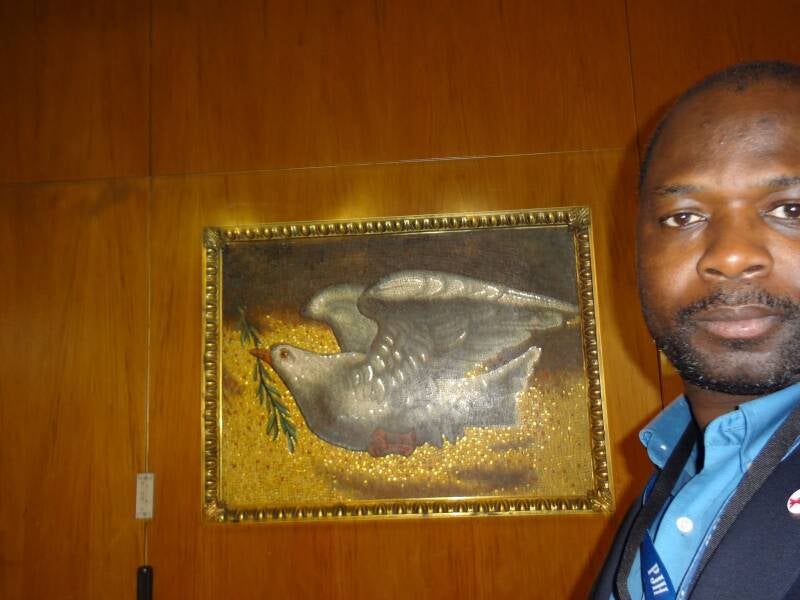
Dr. Ntuba reminds all Cameroonians that the symbol of the dove—released many years ago as a gesture of peace—still carries its message today: peace is possible, reconciliation is achievable, and the future belongs to those who choose dialogue over destruction.
He concludes with a firm call for unity, justice, and an end to all forms of violence, affirming that “enough is enough—let peace prevail for the sake of our people and future generations.”
s.


Pope Francis Begins Four‑Nation African Visit With Historic Stop in Algeria

Pope Leo arrives in Algeria

Pope Leo welcomed with flowers

Pope Leo Speaks

Algerian leaders address participants while Pope listens.
Pope Francis Begins Four‑Nation African Visit With Historic Stop in Algeria
By Dr. Akwo Thompson Ntuba
Pope Francis has begun a four‑country, ten‑day pastoral journey across Africa, starting with Algeria on April 13. His arrival marks a historic moment, as this is the first time a reigning pontiff has visited the country. During his stay, the Pope engaged in apostolic, pastoral, and ecumenical activities, meeting with national authorities as well as leaders from various religious communities, including prominent Islamic scholars.
The Pope’s message in Algeria centered on peace, dialogue, and mutual understanding—principles he has consistently emphasized throughout his papacy. He reiterated that conflict and war cannot be the means through which societies resolve their differences, stressing instead the importance of dialogue as the only sustainable path toward reconciliation.
On April 14, Pope Francis is scheduled to travel to Cameroon, where he will visit Yaoundé in the Francophone region and Bamenda in the Anglophone region. His itinerary mirrors that of previous pontiffs who have visited both parts of the country, acknowledging the cultural and linguistic diversity that defines the nation.
As Cameroon continues to grapple with internal tensions, particularly in the Anglophone regions, the Pope’s message of peace carries significant weight. However, observers note that his call for unity and dialogue may not resonate with separatist groups advocating for the division of Cameroon into two independent nations. Even so, the Vatican has consistently maintained that peace, justice, and reconciliation must be pursued through non‑violent means.
Pope Francis’ African tour comes at a time when the world faces deep fragmentation, and his repeated appeals for peace reflect his broader mission to encourage nations and communities to seek common ground rather than division.
by DR AKWO , THOMPSON NTUBA

Health.

Professional

Business

Mid terms 2026


The Mission of the Roman Catholic Church, Moral Formation, and Engagement in Public Life
By Dr. Ntuba Akwo Thompson
The Mission of the Roman Catholic Church, Moral Formation, and Engagement in Public Life
By Dr. Ntuba Akwo Thompson
The Roman Catholic Church has, for two millennia, articulated a mission that transcends the boundaries of moral instruction alone. While moral teaching is indispensable to Christian life, it is not the foundational purpose of the Church. Rather, the Church’s primary mission is the proclamation of Jesus Christ and the invitation to enter into communion with Him. This theological orientation shapes the Church’s understanding of salvation, human dignity, and its role in society. In contemporary debates, misunderstandings often arise when the Church’s moral voice is interpreted as its central identity, or when its engagement in public affairs is misconstrued as political partisanship. A careful examination of Catholic tradition reveals a more complex and integrated vision.
Theological Foundations: Morality as Fruit, Not Source, of Salvation Christian theology has long distinguished between moral uprightness and salvific faith. The Catholic tradition affirms that moral behavior, while virtuous and socially beneficial, does not in itself constitute the path to salvation. The Church teaches that salvation is rooted in the acceptance of divine grace through Christ, a relationship that transforms the believer from within. Moral conduct flows from this transformation; it is a consequence rather than a cause.
This distinction is essential for understanding the Church’s mission. The Church does not exist primarily to produce ethical citizens, though it certainly contributes to moral formation. Its purpose is to guide humanity toward spiritual truth, sacramental life, and communion with God. Throughout history, individuals of various cultures and religions have demonstrated admirable moral integrity, yet the Church maintains that morality alone does not fulfill the Christian understanding of redemption. This theological stance underscores why the Church’s mission cannot be reduced to ethical instruction.
Historical Role of the Church in Public and Political LifeThe idea that the Church should refrain entirely from political engagement is a modern interpretation that does not align with historical reality. From late antiquity through the medieval and modern eras, the Church has played a significant role in shaping legal systems, social norms, and political institutions. Catholic social teaching, developed over centuries, insists that faith has public implications. Human dignity, justice, solidarity, and the common good are not merely private concerns but societal responsibilities.
The Church’s engagement in public life is grounded in several principles:
Human dignity — Every person possesses inherent worth, which public policies must respect.
The common good — Society must be organized to promote conditions that allow all people to flourish.
Subsidiarity — Decisions should be made at the most local level capable of addressing them.
Solidarity — Communities and nations share responsibility for one another.
These principles require the Church to speak on issues that affect human life and social order. To remain silent on matters of justice, peace, or human rights would be inconsistent with its mission.
Distinguishing Moral Witness from Partisan PoliticsA recurring challenge in contemporary discourse is the conflation of moral teaching with political partisanship. The Church does not endorse political parties or specific geopolitical strategies. Instead, it evaluates public issues through the lens of moral theology. This distinction is crucial: the Church’s authority is moral and spiritual, not partisan or ideological.
When Church leaders address political matters, they do so to illuminate the ethical dimensions of public decisions. This includes topics such as poverty, migration, environmental stewardship, war, and economic inequality. These interventions are not attempts to control political outcomes but efforts to guide consciences and promote justice.
Interpreting Pope Francis in ContextRecent statements by Pope Loe have sometimes been interpreted as discouraging Church involvement in political or foreign policy matters. Such interpretations often arise from selective readings or from misunderstanding his emphasis on avoiding partisan entanglement. Pope Francis has repeatedly affirmed the Church’s responsibility to address social and global issues, even as he warns against reducing the Church to a political actor.
His approach reflects a long-standing Catholic principle: the Church must remain independent of political factions while still offering moral guidance on public matters. This balance is delicate but essential. Misinterpretations of papal remarks can lead to confusion about the Church’s role, suggesting either excessive withdrawal from public life or undue political activism. A careful reading of Catholic teaching shows that neither extreme reflects the Church’s actual mission.
The Church’s Continuing Responsibility in the Modern WorldIn an era marked by political polarization, global conflict, and moral uncertainty, the Church’s voice remains vital. Its mission calls it to evangelize, to teach, and to advocate for justice. Moral formation is part of this mission, but it is not its foundation. Likewise, public engagement is not a departure from the Church’s identity but an expression of its commitment to human dignity and the common good.
The Church’s challenge today is to maintain its prophetic voice without becoming captive to political interests. Its task is to illuminate public life with moral clarity while remaining faithful to its spiritual mission. This requires discernment, courage, and a deep understanding of the theological principles that guide its engagement with the world.
The question that follows is how the Church can continue to articulate this balanced role in societies that increasingly expect religious institutions either to withdraw from public life or to align with partisan agendas.
2026 Statesman Capitol 10K & Health and Fitness Expo Set to Energize Austin
2026 Statesman Capitol 10K & Health and Fitness Expo Set to Energize Austin
By Dr. Thompson Akwo Ntuba, Chief Editor & Medical Correspondent, HealthNDevelopment.com
The 2026 Statesman Capitol 10K weekend is officially underway, with the annual Health and Fitness Expo opening its doors at the Austin Palmer Events Center from Friday, April 10 through Saturday, April 11, 2026. The expo serves as the central hub for pre‑race activities, including race‑packet pickup, wellness education, and community engagement.
As HealthNDevelopment.com’s medical correspondent, I was on-site at the Palmer Center observing the energy, preparation, and health‑focused initiatives that set the tone for one of Austin’s most beloved running events.
Runners Ready for Race Day
Participants streamed into the expo throughout the day—individual runners, families, corporate teams, and charity groups—each with their own motivations and stories. Some are running to challenge personal limits, others to honor loved ones, and many to raise awareness for causes ranging from cancer research to mental health advocacy.
The atmosphere was a blend of excitement and determination, with first‑time runners mingling with seasoned athletes who return year after year.
Scott & White Health System Leads Health Promotion Efforts
Baylor Scott & White Health, a long‑time supporter of community wellness, maintained a strong presence at the expo. Their team provided health screenings, sports‑medicine education, and counseling on injury prevention, hydration, and safe training practices.
Their outreach emphasized the importance of physical activity as a cornerstone of long‑term health—reinforcing the message that events like the Cap10K are not just races, but public‑health opportunities.
Vendors Highlight Fitness, Nutrition, and Recovery
The expo floor featured a wide range of exhibitors offering tools and resources to help participants stay active and healthy. Vendors showcased:
-
Sports‑medicine innovations
-
Recovery technologies such as compression gear and cryotherapy
-
Nutrition and hydration products tailored for endurance athletes
-
Fitness programs and community training groups
-
Local wellness organizations promoting year‑round physical activity
These offerings reflect the growing intersection between sports, preventive medicine, and lifestyle health.
A Community Event With Public‑Health Impact
Beyond the excitement of race day, the Cap10K and its associated expo play a meaningful role in promoting population health. By bringing together healthcare providers, fitness experts, and thousands of motivated participants, the event encourages active living, healthier habits, and community connection.
As Austin continues to grow, events like this remain essential in fostering a culture of wellness and demonstrating how sports can serve as a platform for education, prevention, and collective well‑being.
Yusef D. Jackson Appointed President & CEO of the National Rainbow PUSH Coalition: A New Chapter in a Historic Civil‑Rights Legacy
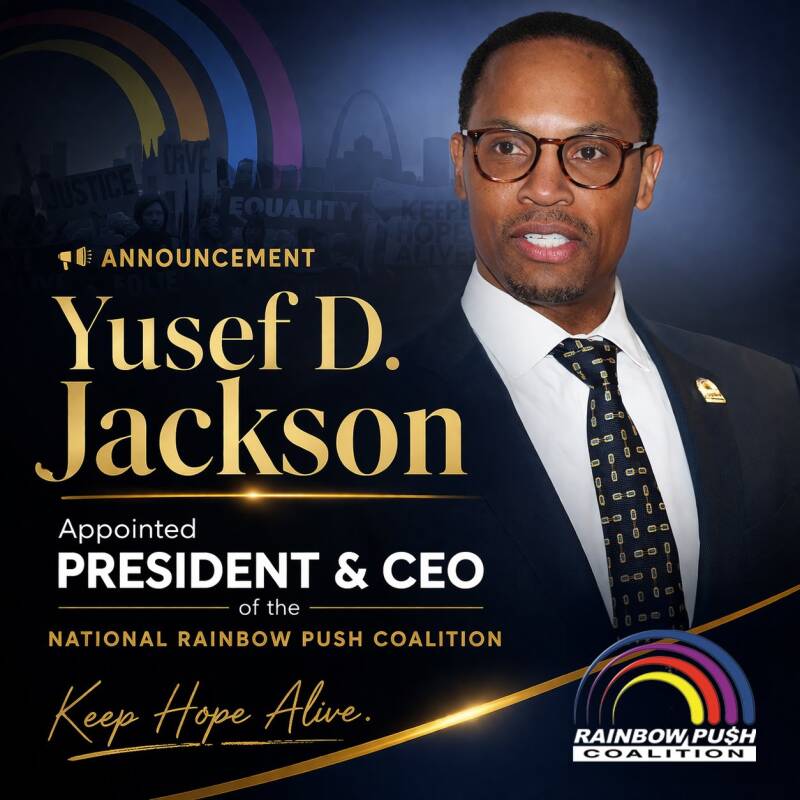
Yusef D. Jackson Appointed President & CEO of the National Rainbow PUSH Coalition: A New Chapter in a Historic Civil‑Rights Legacy
The National Rainbow PUSH Coalition—one of the most enduring civil and human‑rights organizations in the United States—has announced the appointment of Yusef D. Jackson as its new President and Chief Executive Officer. The decision, unanimously approved by the organization’s Boards of Directors, marks a significant leadership transition for the institution founded by the late Rev. Dr. Jesse L. Jackson, Sr., one of the most influential civil‑rights leaders of the 20th and 21st centuries.
For Dr. Akwo Thompson Ntuba—physician, governance communicator, and long‑time chronicler of civil‑rights movements—this moment represents both continuity and renewal. Having reported for years on civil and human‑rights issues, Dr. Ntuba notes that Rainbow PUSH has played a defining role in advocating for marginalized communities, expanding voter participation, and confronting systemic inequities across the United States.
A Legacy of Civil and Human‑Rights Advocacy
Founded by Rev. Dr. Jesse Jackson, Rainbow PUSH emerged from the broader civil‑rights movement that fought to dismantle segregation, expand economic opportunity, and defend the dignity of disenfranchised Americans. Its mission has remained consistent: to protect, gain, and defend the civil and human rights of those excluded from the nation’s promise.
Yusef D. Jackson, in his announcement to supporters, emphasized that this mission is not a relic of the past but an urgent mandate for the present. He noted that the country is experiencing a period of rising racial tension, widening economic inequality, and renewed challenges to long‑established civil‑rights protections.
“These are not times for reflection alone,” he wrote. “This is a time to act.”
A Leadership Transition Rooted in Service
Before his appointment as President and CEO, Yusef Jackson served for two years as Chief Operating Officer, working closely with his father and the organization’s leadership team. His message to supporters reflects both gratitude and resolve:
-
Gratitude for the trust placed in him by the Board
-
Gratitude for the mentorship and example of his father
-
Resolve to strengthen the organization’s base and expand its reach
He stressed that the fight for civil rights has always been inseparable from the fight for economic justice, and that Rainbow PUSH must continue to address both dimensions to build a more equitable society.
Dr. Ntuba’s Perspective: Chronicling a Movement Across Generations
Dr. Akwo Thompson Ntuba has long documented the work of civil‑rights leaders, including Rev. Dr. Jesse Jackson, whose advocacy shaped national conversations on justice, democracy, and human dignity. As a communicator and reporter, Dr. Ntuba has covered:
-
Civil‑rights campaigns
-
Human‑rights conferences
-
Community‑based justice initiatives
-
Leadership transitions within major advocacy organizations
He notes that the appointment of Yusef Jackson represents a generational bridge—linking the historic achievements of the civil‑rights era with the contemporary challenges facing communities today.
For Dr. Ntuba, the work of Rainbow PUSH remains essential in a world where fear, division, and inequality continue to threaten social cohesion. He emphasizes that civil‑rights journalism and communication play a vital role in documenting progress, exposing injustice, and amplifying the voices of those fighting for equity.
A Call to Engagement and Collective Action
In his message, Yusef Jackson urged supporters to remain engaged, emphasizing that Rainbow PUSH cannot fulfill its mission without broad participation. He highlighted the upcoming Annual Convention (June 10–13 in Chicago) as a moment to:
-
Present a renewed vision for the organization
-
Recommit to its founding mission
-
Reflect on America’s 250th anniversary
-
Examine the promises of democracy still unfulfilled
He closed with the organization’s enduring motto: “Keep Hope Alive.”
A New Chapter for a Historic Institution
The appointment of Yusef D. Jackson signals a new era for the National Rainbow PUSH Coalition—one that honors the legacy of Rev. Dr. Jesse Jackson while preparing the organization to confront the challenges of the present moment.
For advocates like Dr. Akwo Thompson Ntuba, this transition is a reminder that civil and human‑rights work is ongoing. It requires leadership, moral courage, and the collective commitment of communities determined to build a more just and inclusive society.
BY DR AKWO , NTUBA THOMPSON
Guyana President Dr. Mohamed Irfaan Ali to Deliver Opening Address at OTC 2026: A Landmark Moment for Global Offshore Energy Dialogue

Guyana President Dr. Mohamed Irfaan Ali to Deliver Opening Address at OTC 2026: A Landmark Moment for Global Offshore Energy Dialogue
BY DR THOMPSON NTUBA AKWO CHIEF EDITOR
The announcement that His Excellency Dr. Mohamed Irfaan Ali, President of the Co‑operative Republic of Guyana, will deliver the Opening Address at the 2026 Offshore Technology Conference (OTC) in Houston marks a defining moment for the global offshore energy community. Scheduled for 4 May 2026 at NRG Park, the address will formally open the world’s largest offshore energy technology gathering—an event that draws tens of thousands of participants from more than 100 countries.
For OTC, the presence of a sitting head of state is both symbolic and strategic. As Dr. Akwo Thompson Ntuba—long‑time credentialed OTC correspondent and Chief Editor of Health & Development—observes, “It is a great honor for the conference when a head of state accepts the invitation to address the meeting, especially during a year marked by volatility in global energy markets.” Dr. Ntuba, who has written extensively on sustainability, climate impacts of fossil fuels, and carbon capture technologies, sees OTC 2026 as a pivotal forum for advancing the energy‑related components of the United Nations Sustainable Development Goals.
Guyana’s Rising Influence in the Global Energy Landscape
Guyana’s emergence as a major offshore producer has reshaped regional and global energy dynamics. Over the past decade, multibillion‑dollar investments have flowed into the country’s offshore fields, accelerating infrastructure development and deepening partnerships with international operators and technology innovators. The participation of President Ali and the Guyanese delegation—including Minister of Natural Resources Vickram Bharrat—signals the country’s growing leadership role in shaping the future of offshore energy.
OTC leaders have emphasized the significance of this moment. Dan McConnell, Chairman of the OTC Board of Directors, noted that President Ali’s acceptance “is a meaningful recognition of the role OTC plays on the world stage.” Executive Director Amanda Rushing added that his presence “underscores the geopolitical significance of offshore energy and the global attention surrounding its continued development.”
A Conference Taking Place Amid Global Energy Disruptions
Observers have pointed out that OTC 2026 arrives during a period of heightened geopolitical tension and energy price instability. Analysts, including Dr. Ntuba, have referenced disruptions linked to conflicts involving major energy‑producing regions and the resulting uncertainty in global supply chains. These pressures have intensified the need for coordinated dialogue among governments, industry leaders, and technology developers—precisely the type of engagement OTC facilitates.
The 2026 conference is expected to place special emphasis on:
-
Energy security and diversification
-
Offshore technology innovation
-
Carbon capture, utilization, and storage (CCUS)
-
Climate‑aligned development strategies
-
Sustainable offshore operations
-
Cross‑regional collaboration among Latin America, the U.S., Europe, Asia, and Africa
Dr. Ntuba highlights that these themes align closely with the UN Sustainable Development Goals, particularly those addressing affordable and clean energy, climate action, and resilient infrastructure.
OTC as a Global Platform for Innovation and Cooperation
Since its founding in 1969, the Offshore Technology Conference has grown into the premier global venue for offshore energy professionals. Its Houston flagship event, along with OTC Brasil and OTC Asia, has welcomed more than 3 million participants. The 2026 edition will continue this legacy by convening engineers, policymakers, researchers, manufacturers, and investors to explore the technologies shaping the next generation of offshore development.
With tens of thousands of attendees expected, OTC 2026 will feature:
-
Technical sessions on cutting‑edge offshore engineering
-
Exhibitions showcasing emerging technologies
-
Panels on sustainability and energy transition
-
Government‑industry dialogues on regulatory and investment frameworks
-
Networking opportunities across continents and sectors
President Ali’s Opening Address is anticipated to set the tone for four days of high‑level discussion, innovation exchange, and strategic collaboration.
A Moment of Opportunity for the Global Energy Community
For stakeholders across Latin America, North America, Europe, Asia, Africa, and beyond, OTC 2026 represents more than a conference—it is a global checkpoint for assessing the trajectory of offshore energy in a rapidly changing world. As Dr. Ntuba emphasizes, the event offers “an opportunity for stakeholders from every continent to advance the promises of the energy components of the United Nations Sustainable Development Goals.”
In a year marked by uncertainty, the presence of a head of state from one of the world’s fastest‑growing offshore producers underscores the urgency and importance of collective action. The conversations that begin in Houston this May may well influence the direction of offshore energy development for years to come.
BY DR THOMPSON NTUBA AKWO CHIEF EDITOR
WHO and France shift One Health vision to action with new high-impact initiatives
07April 2026
NEWS RELEASE
WHO and France shift One Health vision to action with new high-impact initiatives
https://www.who.int/news/item/07-04-2026-who-and-france-shift-one-health-vision-to-action-with-new-high-impact-initiatives
Lyon/Geneva, 7 April 2026 – On World Health Day, global leaders gathered in France for a milestone “One Health Summit”, where the World Health Organization (WHO) and partners announced a new wave of concrete actions to better protect people, animals and the planet from future health crises.
Hosted by France, the Summit marks a major step forward in turning the One Health approach – which recognizes that human health, animal health and the environment are deeply connected – into real-world action. This year’s World Health Day theme, “Together for health. Stand with science,” set the tone for the announcements.
The urgency could not be clearer. Climate change, environmental degradation, unsafe food, water contamination, biodiversity loss and unequal access to health care are among the most pressing challenges facing the world today. About 60% of known infectious diseases in humans originate in animals, and around 75% of emerging infectious diseases are zoonotic. The COVID-19 pandemic alone resulted in an estimated 15 million deaths and caused trillions of dollars in economic losses globally in 2020-2021.
To prevent the next crisis before it starts, WHO and global partners are strengthening the One Health approach – bringing together experts across health, agriculture, environment and science to detect risks earlier and respond faster.
"The health of people, animals and the environment we share are inextricably interwoven, and we cannot protect one without protecting all three," said Dr Tedros Adhanom Ghebreyesus, Director-General of WHO. "The One Health approach brings together expertise to work across silos and sectors to prevent and respond to threats more effectively. WHO thanks France for hosting this Summit, and we remain committed to working with partners and countries to turn commitment into action and accelerate global progress for humans, animals and our planet.”
As host of the One Health Summit, France reaffirmed its leadership and commitment to advancing One Health, championing international cooperation, global scientific partnerships, and catalyzing practical solutions.
“One Health is not just about protecting health, it is about recognizing that we live as one system, where the well-being of humans, animals, and the environment is inseparable,” said Emmanuel Macron, President of the Republic of France. “France is determined to move One Health from ambition to implementation, working with the World Health Organization and our global partners to prevent the next crisis before it begins. Science must guide our action, and cooperation must be our strength.”
Bringing together Heads of State, ministers, experts, and policy-makers, the Summit highlighted how coordinated efforts strengthen international dialogue and mobilize public and private partners for the common goal. The outcomes of the Summit will inform ongoing international discussions – including the G7 – on preparedness and coordinated responses to health threats at the human, animal and ecosystem interface.
WHO announces four major One Health actions
Joining forces with global partners, WHO has outlined the following specific actions:
1. A new global network of institutions on One Health
WHO and One Health Quadripartite partners (the Food and Agriculture Organization, the United Nations Environment Programme and the World Organisation for Animal Health) are planning to launch a new Global Network of One Health Institutions, to deliver the objectives of the One Health Joint Plan of Action.
This new initiative is designed to mobilize multidisciplinary expertise and provide stronger, more coordinated support to countries. It will enhance translation of global guidance into practical tools and on-the-ground support, strengthening training and peer learning through the WHO Academy and other relevant institutions, creating a clearer, country-focused delivery model for One Health implementation.
2. Stronger science to guide global action
WHO and Quadripartite partners announced the extension and expansion of the One Health High-Level Expert Panel (OHHLEP), the world’s leading scientific advisory body on One Health. Its mandate will now run through 2027, with a new phase planned for 2027–2029, reinforcing its role in three priority areas: in shaping the global research agenda, supporting the One Health Joint Plan of Action, and driving high-level advocacy grounded in science and evidence.
3. A new push to eliminate rabies by 2030
WHO, the World Organisation for Animal Health and the Institut Pasteur launched a renewed global initiative to eliminate dog-mediated human rabies deaths by 2030 – a disease that still kills nearly 60 000 people each year, many of them children. Led by endemic countries, the initiative will enhance and strengthen political commitment and community-based surveillance and research, using rabies elimination as a model to strengthen broader One Health surveillance and preparedness systems.
4. A unified strategy to tackle avian influenza threats
WHO and Quadripartite partners presented a new Strategic Framework for Collaboration on avian influenza. The framework strengthens coordination on surveillance, risk assessment, preparedness and response, helping countries shift from fragmented actions to a unified One Health strategy, addressing wider impacts of avian influenza on public health, food security, livelihoods and biodiversity.
WHO to lead global One Health coordination
WHO is also assuming the Chairmanship of the Quadripartite collaboration, taking on an enhanced leadership role for coordinated global action alongside FAO, WOAH and UNEP. Under WHO’s Chairmanship, the Quadripartite partnership will prioritize delivering measurable impact at the country level, streamlining governance, and aligning efforts around a focused set of high-impact priorities, while further strengthening advocacy, norm-setting and evidence generation.
Global Forum of Collaborating Centres opens
Alongside the Summit, WHO is kicking off its first Global Forum of WHO Collaborating Centres (CCs), taking place on 7–9 April. The Forum is convening high-level representatives, including the Minister of Health of France, ministers from Germany, Indonesia and South Africa, and the Vice-Minister of Health of Japan, alongside more than 800 WHO CCs from over 80 countries.
The Global Forum will serve as a forward-looking platform to deepen collaboration among leading academic and research institutions worldwide accelerating scientific innovation, data sharing, coordinated research and capacity‑building.
Both the One Health Summit and the Global Forum of WHO Collaborating Centres send a clear message: tackling today’s complex health challenges demands stronger multilateral cooperation, greater investment in science, and sustained efforts to translate the One Health approach into concrete action at global and local levels.
Media contacts:
In Lyon:
Fallon Bwatu Mbuyi, Communications Officer; Email: bwatuj@who.int
Tunga Namjilsuren, Unit Head: Email: namjilsurent@who.int
Related links:
Monday, 06 April 2026
WHO calls for action: “Together for health. Stand with science.” to mark World Health Day
6 April 2026, Geneva - The World Health Organization (WHO) today calls on people everywhere to renew their commitment to working together and supporting science as the twin engines driving better health, under the World Health Day 2026 theme: “Together for health. Stand with science.” The campaign marks the anniversary of WHO’s founding on 7 April 1948, launching a year-long public health campaign.
Human health has been profoundly transformed over the past century, largely due to scientific progress and international collaboration. The global maternal mortality rate has fallen by more than 40% since 2000, and deaths among children under five have been reduced by over 50%. Advances in technology, scientific knowledge and skills, and collaboration between different disciplines, sectors and countries continue to turn once-life-threatening health challenges – such as elevated blood pressure, cancer diagnoses or HIV infection – into manageable health issues, extending and improving lives worldwide.
Yet, health threats continue to grow, fuelled by climate impacts, environmental degradation, geopolitical tensions and shifting demographics. These challenges include persistent diseases and strained health systems as well as emerging diseases with epidemic or pandemic potential. Across the globe, thousands of scientists – together with organizations such as WHO – are accelerating research and developing policies, tools and innovations needed to protect communities today and safeguard the health of future generations.
“Science is one of humanity’s most powerful tools for protecting and improving health,” said Tedros Adhanom Ghebreyesus, Director-General of the World Health Organization. “People in every country live longer and healthier lives on average today than their ancestors did, thanks to the power of science. Vaccines, penicillin, germ theory, MRI machines and the mapping of the human genome are just some of the achievements that science has delivered that have saved lives and transformed health for billions of people.”
Science behind health progress
Scientific innovations are most powerful when they are widely adopted and used. Every success in improving human health reflects the collective work and collaboration of scientific organizations, policy- makers, heath workers and the public. For example:
- before modern anesthesia, surgery meant unimaginable pain. Today, safer medicines, affordable technologies and trained specialists allow life-saving operations to be performed while patients sleep comfortably. Scientific progress has helped democratize these advances, making safe surgical care accessible across the world, including in many resource-limited communities;
- over the past 50 years, global immunization efforts have saved over 154 million children from infectious diseases. Vaccines have contributed to a 40% reduction in infant mortality, with just one vaccine – the measles vaccine – saving over 90 million children; and
- progress in early screening technologies is transforming health outcomes. From electronic blood pressure monitors to breast cancer screening through mammography, these tools have become life-saving interventions for millions.
WHO, over its 78 years of convening of global scientific organizations, has stood at

WHO Member States agree to extend negotiations on key annex to the Pandemic Agreement
https://www.who.int/news/item/28-03-2026-who-member-states-agree-to-extend-negotiations-on-key-annex-to-the-pandemic-agreement
28 March 2026, Geneva - World Health Organization (WHO) Member States have agreed to extend negotiations on the Pathogen Access and Benefit Sharing (PABS) annex to the WHO Pandemic Agreement, with discussions to resume in late-April ahead of its scheduled consideration by the World Health Assembly (WHA) in May.
The decision to continue negotiations from 27 April–1 May, with informal intersessional discussions taking place in advance, reflects the commitment by WHO Member States to negotiate the PABS annex, a core component of the WHO Pandemic Agreement.
The World Health Assembly adopted the Pandemic Agreement last year to address weaknesses exposed by the COVID-19 pandemic and to strengthen global cooperation and equity in future pandemic prevention, preparedness and response.
“The Pathogen Access and Benefit Sharing system lies at the heart of the WHO Pandemic Agreement and I thank WHO Member States for their commitment to work to bring it to life,” said Dr Tedros Adhanom Ghebreyesus, WHO Director-General. “I urge all delegations to believe in the power of trust – trust in one another, in our institutions, and in our shared ability to transcend differences for the common public good, for solidarity and for equity.”
The PABS annex is intended to ensure, on equal footing, the rapid sharing of pathogens with pandemic potential and the fair and equitable sharing of benefits arising from their use, including vaccines, diagnostics and therapeutics.
“Member State negotiators are working intensively towards having an ambitious and equitable Pathogen Access and Benefits Sharing annex ready for adoption at the World Health Assembly in May,” said IGWG Bureau Co-Chair Ambassador Tovar da Silva Nunes, of Brazil.
During the past week, Member States engaged in intensive negotiations under the Intergovernmental Working Group (IGWG) on the WHO Pandemic Agreement. Discussions covered a range of critical and interlinked issues, including how benefits derived from the sharing of pathogens should be defined and distributed, the nature of contractual arrangements underpinning the PABS system, and governance matters necessary to ensure the system functions effectively, transparently and in the public interest.
“With less than two months until the World Health Assembly in May, I welcome the commitment shown this week by Member States towards finding consensus on outstanding areas in the Pathogen Access and Benefit Sharing system,” said IGWG Bureau Co-Chair Mr Matthew Harpur, of the United Kingdom of Great Britain and Northern Ireland.
Member States acknowledged the constructive engagement to date, while recognizing that additional time is needed to bridge remaining differences to finalize the text and submit the outcome to the World Health Assembly. They also reaffirmed their commitment to solidarity, multilateralism and the shared goal of making the world safer and more equitable in the face of future pandemics.
See also_ https://www.who.int/health-topics/who-pandemic-agreement#tab=tab_1
WHO recommends new diagnostic tools to help end TB

Tuesday, 24 March 2026
NEWS RELEASE
WHO recommends new diagnostic tools to help end TB
On World TB Day, the World Health Organization (WHO) is urging countries to accelerate action to end tuberculosis (TB) and expand access to lifesaving services by using new innovations such as diagnostic tests that can be used near the point-of-care and tongue swabs that can help detect the disease faster, reaching more people.
The new guidelines on tests for TB that can be used near the point-of-care, issued by WHO, mark another step towards faster detection and treatment of one of the world’s deadliest infectious diseases. These portable, simple-to-use tests bring TB diagnosis closer to where people routinely seek care. Available at less than half the cost of many existing molecular diagnostics, they can help countries expand access to testing. The tests can operate on battery power and deliver results in less than one hour, allowing patients to start treatment sooner.
"These new tools could be truly transformative for tuberculosis, by bringing fast, accurate diagnosis closer to people, saving lives, curbing transmission and reducing costs," said Dr Tedros Adhanom Ghebreyesus, WHO Director-General. "WHO calls on all countries to scale up access to these and other tools so every person with TB can be reached and treated promptly."
Beyond TB, these devices have the potential to test for other diseases like HIV, mpox, and HPV, making diagnostics more patient-centered, equitable, and aligned with one-stop-shop style services for emerging and circulating diseases.
New sample collection methods to expand TB testing
The guidelines also recommend easy-to-collect tongue swab samples, as well as a cost-saving sputum pooling strategy to increase testing efficiency for TB and rifampicin-resistant TB. Tongue swabs allow adults and adolescents who cannot produce sputum to receive TB testing for the first time, enabling disease detection among people who are at an increased risk of dying from TB. Sputum pooling, where samples from several individuals are combined and tested together, can significantly reduce commodity costs and machine time, leading to faster results for people and TB programmes – an approach specifically recommended when resources are exceptionally constrained.
Global progress at risk without faster diagnosis
TB remains one of the world’s deadliest infectious killers. Each day, over 3 300 people die from TB, and more than 29 000 people fall ill with this preventable and curable disease. Global efforts to combat TB have saved an estimated 83 million lives since 2000, however, cuts in global health funding are threatening to reverse these gains. Uptake of rapid diagnostic tools has been a challenge in many countries due, in part, to high costs and reliance on sample transport to support testing at centralized laboratories.
Scaling up proven solutions, including point-of-care urine tests for people living with HIV, and near-point-of-care, low- or moderate-complexity tests for people with and without HIV, can collectively be used to close diagnostic gaps across all levels of the health system. Such efforts can help advance toward global targets for universal access to TB and drug resistance testing, reduce delays in treatment initiation and curb transmission.
World TB Day 2026: Countries and communities leading the way
On World TB Day 2026, under the theme “Yes! We can end TB: Led by countries, powered by people”, WHO is calling for urgent action to:
- accelerate the roll out of diagnostic technologies that can be used near the point-of-care and other innovations as part of a comprehensive testing network;
- strengthen people‑centred TB care with meaningful community leadership and continuous engagement;
- build resilient health systems to safeguard health security;
- tackle the social and economic drivers of TB through multisectoral action;
- protect essential TB services amid global crises and funding constraints.
“Investing in TB is a strategic political and economic choice, generating up to US$ 43 in health and economic returns for every dollar spent”, said Dr Tereza Kasaeva, Director of WHO’s Department for HIV, Tuberculosis, Hepatitis and Sexually Transmitted Infections. “What is required now is decisive leadership, strategic investment and rapid implementation of WHO recommendations and innovations to save lives and protect communities.”
Further innovation and research
While new diagnostic tools represent a critical step forward, ending TB will require sustained investment in research and innovation. Global funding for TB research remains far below the estimated annual need of around US$ 5 billion, leaving major gaps in the development of new diagnostics, medicines and vaccines needed to end the epidemic.
WHO is working with partners to accelerate progress through initiatives such as the TB Vaccine Accelerator Council, launched to fast-track the development and equitable access to new TB vaccines by aligning governments, researchers, funders and industry around shared priorities and coordinated investment.
As countries mark World TB Day 2026, WHO urges governments and partners to prioritize TB as a central pillar of health security and universal health coverage.
WHO Director-General's opening remarks at the media briefing – 18 March 2026


WHO Director-General's opening remarks at the media briefing – 18 March 2026
Good morning, good afternoon and good evening.
The improvement in child survival over the past two decades is one of the great success stories of global health.
In 2000, more than 10 million children died before their fifth birthday.
Today, that number has been cut by more than half to 4.9 million deaths in 2024, according to new estimates published today by WHO, UNICEF and other partners.
Millions of children are alive today because countries and partners invested in proven solutions: vaccines, skilled care at birth, treatment for severe acute malnutrition, and stronger primary health care.
These gains show what is possible when the world commits to protecting the health of its youngest and most vulnerable.
Of course, 4.9 million child deaths is still 4.9 million too many.
And since 2015, the pace of decline in child mortality has dropped sharply.
Sub-Saharan Africa remains the region with the highest under-five mortality in the world, losing around 2.8 million young children in 2024.
Every day, about 6300 newborns die.
The most common causes are complications of prematurity, labour and delivery.
If children survive the first month, malaria, pneumonia and diarrhoea continue to claim many young lives.
It’s to be expected that the pace of decline we saw between 2000 and 2015 could not be maintained.
Conflict, humanitarian crises and funding pressures are putting essential services at risk in many countries.
But we know what works – there are solutions.
By strengthening primary health care, expanding immunization, improving maternal and newborn care, and ensuring every child has access to nutrition and lifesaving treatment, we can accelerate progress again.
Many countries are showing what’s possible.
For example, in 2022 Sierra Leone declared child mortality a national emergency.
Since then, almost 1 million children have been screened for malnutrition, and the number of children who have not received any vaccines has been reduced from 15 000 in 2024 to 9000 last year.
Likewise, North Macedonia has achieved one of the fastest recent declines globally, cutting neonatal mortality by 87 per cent since 2015 through improvements in emergency obstetric and newborn care.
WHO calls on governments, donors and partners to make child survival a political and financial priority;
To focus on those at highest risk;
To strengthen accountability for commitments;
And to invest in primary health care, so that every child has the chance not just to survive, but to thrive.
===
One of the main reasons for the decline in child mortality is immunization.
In 1974, only 5% of the world’s children were vaccinated against killer diseases including measles.
Today, that number stands at 85%.
A large part of that success was due to the establishment more than 50 years ago of the Expanded Programme on Immunization, or EPI.
Since 1974, EPI has helped to save more than 150 million lives, from diseases like measles, tetanus, diphtheria and pneumonia.
Many countries rely on advice from WHO about which vaccines to include in their routine immunization schedules, who should be vaccinated at what age, with how many doses, and so on.
That advice is shaped by the Strategic Advisory Group of Experts on Immunization, or SAGE, a group of independent experts who meet twice a year to review the latest evidence and advise WHO.
SAGE concluded its first meeting for the year last week. This time, it issued recommendations on vaccines for COVID-19, typhoid and polio.
The biggest change was for typhoid. SAGE has updated its 2018 recommendation to say that countries with a high burden of typhoid disease should consider a booster at around five years of age to maintain protection.
On COVID-19, SAGE reviewed more than five years of evidence on the safety and performance of COVID-19 vaccines and concluded they have a very good safety profile.
SAGE continues to recommend that countries should consider routine vaccination against COVID-19 for groups at the highest-risk of severe disease, including older people, people in care homes and those who are moderately or severely immunocompromised.
SAGE also provided updated recommendations for other risk groups that countries may consider, including pregnant women and children.
On polio, SAGE recommended that countries that are using three doses of inactivated vaccine may reduce the use of oral polio vaccine from three doses to two.
These recommendations are important for improving the safety and impact of vaccines on the path to polio eradication.
I thank SAGE for its recommendations, which I have accepted.
===
Next Tuesday, the 24th of March, marks World TB Day.
Tuberculosis, or TB, is another example of a major global health challenge against which the world has made great progress.
Since 2000, efforts to fight TB have saved an estimated 83 million lives.
But cuts in global health funding and increasing drug resistance are threatening to reverse these gains.
Each day, over 3300 people die from TB and more than 29 000 people fall ill with this preventable and curable disease.
Millions more are not diagnosed or treated.
New diagnostic tests are helping to close this gap, but their uptake has been slow in many countries due, in part, to high costs and the need to transport samples to laboratories.
Last week, WHO published new guidelines on TB diagnosis to expand access and reduce costs.
WHO has now expanded our recommendations to support the use of new tests that can be used near the point-of-care, opening up even more options for countries to decentralize services and expand access.
For the first time, WHO is also issuing recommendations on the use of tongue swabs for TB testing, and a new sample ‘pooling’ strategy to diagnose people more quickly using fewer tests.
These new tools could be truly transformative for TB. Both the new tests and the new ‘pooling’ strategy can cut the cost of testing by 50% or more – all while providing faster results.
By bringing fast, accurate diagnosis closer to people, along with access to better treatments and – we hope – a new TB vaccine, these innovations can save lives, reduce transmission and change the future of TB.
WHO calls on all countries to scale up access to rapid tests and other tools so every person with TB can be reached and treated promptly.
===
Finally, the conflict in the Middle East continues to impact the health of people across the region.
In the Islamic Republic of Iran, more than 1400 civilian deaths have been reported, almost 900 in Lebanon and 20 in Israel.
Thousands of people have also been injured in all three countries.
Up to 3.2 million people have been displaced in Iran, and over 1 million in Lebanon.
Many are living in overcrowded shelters, which have the potential to rapidly increase health risks.
Meanwhile, in Iraq, health services are facing increasing pressure, particularly hospitals located near areas affected by conflict and violent demonstrations.
And in Syria, more than 100 000 people have recently arrived from Lebanon.
Access to health care is becoming more difficult. Some health facilities have closed, and movement restrictions are delaying ambulances, patient referrals, and the delivery of medicines.
Injured people, displaced families, patients with chronic diseases, pregnant women and older people must be able to reach life-saving health services.
Most concerningly, attacks on health care continue to be reported.
In Lebanon, WHO has verified 28 attacks, with 30 deaths and 25 injuries.
In Iran, WHO has verified 20 attacks, with nine deaths.
And in Israel, WHO has verified two attacks on health care.
Attacks on health care are a violation of international law.
Air space closures and shipping line congestion have decreased the volume of supplies reaching WHO’s supplies hub in Dubai.
We have activated our contingency plans and are identifying alternative ports of entry to replenish the hub.
We are also working with the UAE and partners to consolidate priority cargo movements and explore the possibility of charter flights to deliver supplies to critical emergencies.
We expect operations to continue, although there may be more lengthy delivery times.
WHO has also released US$ 2 million from the Contingency Fund for Emergencies to support the response in Lebanon, Iraq and Syria.
WHO is doing whatever we can to save lives and prevent suffering.
But as always, the best medicine is peace.
Israel’s Solo Strike, Washington’s Divide, and the Growing Crisis Over Trump’s Iran War Request


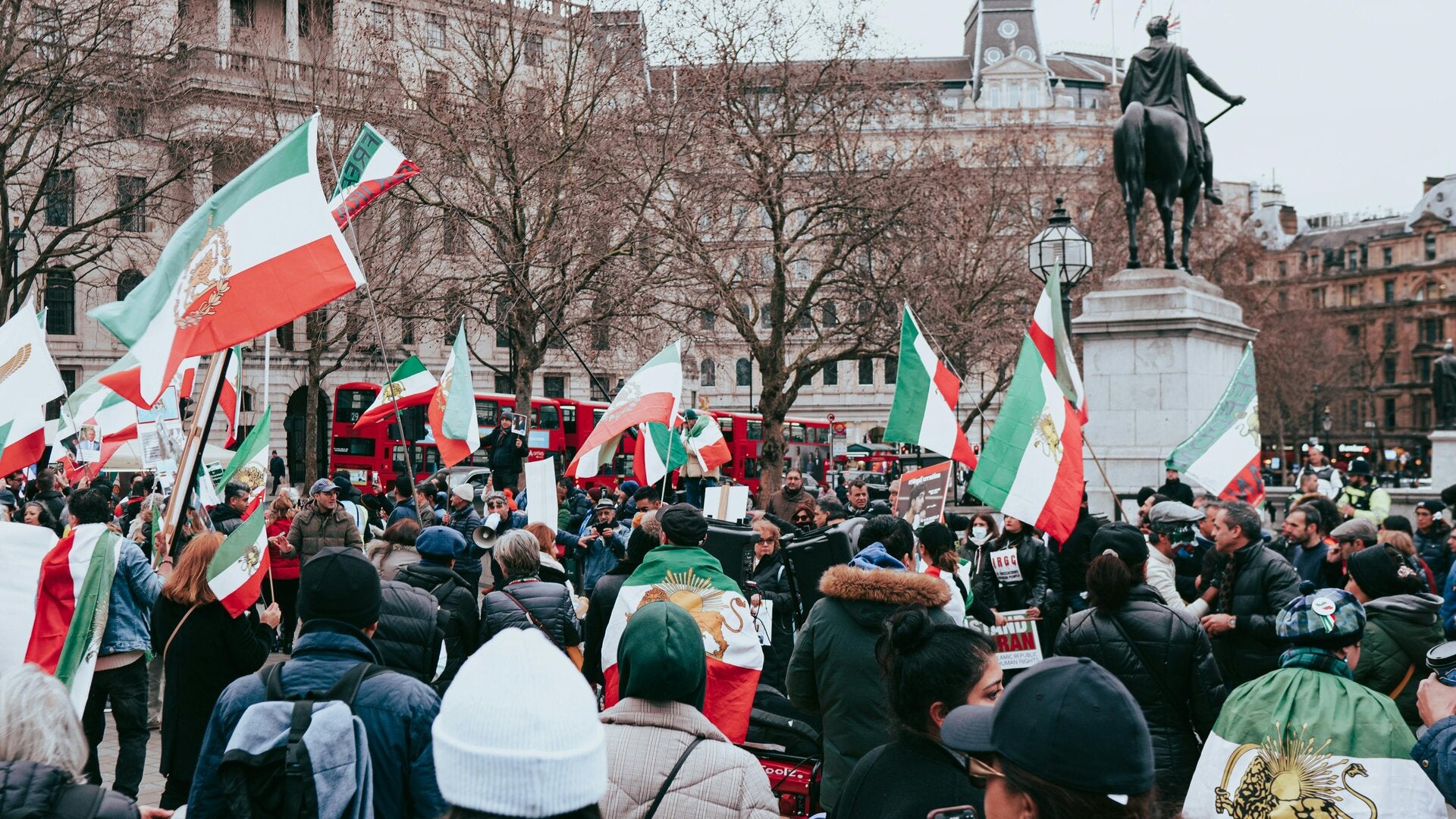
Israel’s Solo Strike, Washington’s Divide, and the Growing Crisis Over Trump’s Iran War Request
By Dr. Akwo Thompson Ntuba
The political landscape in Washington has shifted sharply following the announcement by Israel’s Prime Minister, Benjamin Netanyahu, that Israel acted alone in bombing oil and gas facilities inside Iran. While he affirmed that Israel would comply with future requests from President Donald Trump to halt similar unilateral actions, the admission has intensified debate in the United States about the direction, legality, and cost of the escalating conflict.
A Republican Party Split Over War Funding
The Trump administration’s request for $200 million to support the ongoing military operations has exposed deep fractures within the Republican Party. Many Republican congressional leaders initially believed the confrontation with Iran would be brief and contained. Instead, the conflict has widened, raising questions about strategy, duration, and national interest.
Some members of the president’s own party are now demanding clarity from the White House. They want the administration to present a coherent strategic plan, including:
-
The specific goals of the military campaign
-
The intended end‑state
-
The legal justification for initiating hostilities without congressional authorization
Their concerns reflect a broader unease about entering a prolonged conflict without transparency or constitutional grounding.
Democrats Reject Funding for What They Call an “Illegal War”
Democrats, who hold the majority in Congress, have taken an even firmer stance. They continue to condemn President Trump’s actions as unauthorized and therefore illegal, emphasizing that the Constitution grants Congress—not the executive—the power to declare war.
Democratic leaders have stated that they will not commit taxpayer funds to a military operation launched without congressional approval. Their position reflects both legal concerns and the growing public opposition to another Middle Eastern conflict.
A Moment of Strategic Uncertainty
The situation has created a rare moment in U.S. politics: bipartisan skepticism toward a sitting president’s war powers. Israel’s admission that it acted independently has further complicated the narrative, raising questions about coordination, intelligence sharing, and the broader implications for regional stability.
As the conflict evolves, the United States faces a critical decision point. The debate unfolding in Congress will determine not only the future of the Iran confrontation but also the balance of power between the executive and legislative branches in matters of war.
A Call for Responsible Leadership
From my vantage point as a physician, publisher, and international political observer, I see a moment that demands restraint, clarity, and respect for constitutional processes. The stakes are high—not only for the United States and Iran but for global stability, energy markets, and diplomatic relations across the Middle East.
The coming weeks will reveal whether Washington chooses escalation or accountability, unilateral action or constitutional order. What remains clear is that the American people, and the world, are watching closely.

Escalation Without Strategy: How the Iran Conflict Is Unraveling for President Trump
An analytical essay based on insights from Dr. Akwo Thompson Ntuba
🌍 1. A Crisis Deepens: Headlines That Signal a Turning Point
Recent developments in the Iran conflict have produced a cascade of destabilizing headlines:
-
Ali Larijani’s statements signaling Iran’s hardened posture
-
The resignation of a Trump‑appointed intelligence official amid internal disagreements
-
Tensions in the Strait of Hormuz, a global chokepoint for oil
-
European allies refusing to join a U.S.-led war effort
-
Israel announcing continued strikes on Iran’s new supreme leader
-
Nearly 13 U.S. service members killed, intensifying domestic pressure
Taken together, these events reveal a conflict spiraling beyond the control of those who initiated it. They also expose the strategic miscalculations that have left the United States increasingly isolated.
⚠️ 2. Misjudging Iran: A Strategic Error With Global Consequences
According to Dr. Akwo Thompson Ntuba, the core of the crisis lies in a fundamental misreading of Iran’s likely response to the assassination of its supreme leader. The Trump administration appeared to assume:
-
Iran would be deterred
-
Retaliation would be symbolic
-
Regional actors would fall in line
-
Allies would support escalation
Instead, Iran responded with direct, lethal strikes on U.S. positions abroad, demonstrating both capability and resolve. The killing of nearly 13 American service members has transformed the conflict from a distant geopolitical gamble into a domestic political liability.
This is the moment when a military action becomes a political crisis.
🇪🇺 3. Europe Refuses to March Into War
A defining feature of this moment is the unified refusal of European allies to join the United States in a war with Iran. Their position reflects:
-
Deep skepticism about the legality of the strike
-
Fear of regional destabilization
-
Commitment to diplomacy over escalation
-
Recognition that the Iran nuclear deal had been working
Their refusal has left the U.S. unusually isolated, weakening the administration’s diplomatic leverage and fueling frustration in Washington.
🇮🇱 4. Israel’s Independent Calculus Complicates U.S. Strategy
While Europe steps back, Israel steps forward, declaring it will continue targeting Iran’s new supreme leader. This creates a dangerous dynamic:
-
Israel’s actions pull the region toward deeper conflict
-
The U.S. is pressured to support an ally’s unilateral decisions
-
Iran views both nations as jointly responsible
-
Escalation becomes harder to control
Dr. Ntuba notes that this divergence—U.S. allies refusing war while Israel accelerates it—creates a strategic contradiction that Washington cannot easily resolve.
🛢️ 5. The Strait of Hormuz: A Global Economic Pressure Point
The Strait of Hormuz, through which a significant portion of the world’s oil flows, has become a flashpoint. Any instability there:
-
Threatens global energy markets
-
Raises oil prices
-
Increases pressure on governments
-
Heightens the risk of miscalculation
For a world already strained by economic uncertainty, this is a dangerous variable.
🇺🇸 6. Domestic Fallout: Trump’s Growing Frustration
Inside the United States, the political consequences are mounting:
-
The death of U.S. service members has shaken public opinion
-
Families of the fallen demand answers
-
Congress questions the legality of the strike
-
A Trump‑appointed intelligence official resigns, signaling internal dissent
-
The President lashes out publicly as allies refuse to join the war
Dr. Ntuba observes that this moment exposes a deeper issue: the administration underestimated both Iran’s capacity and the limits of U.S. unilateralism.
🕊️ 7. A Missed Opportunity: The Iran Deal as a Path Not Taken
Dr. Ntuba’s long-standing advocacy for diplomacy—reflected in his presence at the U.S. Congress holding a placard supporting the Iran deal—underscores a painful truth:
The Iran nuclear agreement had been working.
Its abandonment removed a stabilizing framework and replaced it with uncertainty, escalation, and now open conflict. The current crisis illustrates what happens when diplomacy is discarded for force without a long-term strategy.
🔍 8. Conclusion: A Conflict That Demands Rethinking, Not Escalation
The convergence of military casualties, diplomatic isolation, regional escalation, and internal dissent has created a moment of reckoning for the United States.
Dr. Akwo Thompson Ntuba’s analysis highlights a central lesson:
Wars are easy to start, but their consequences are impossible to control.
The path forward requires:
-
Re-engagement with diplomacy
-
Rebuilding alliances
-
Recognizing regional complexities
-
Prioritizing stability over political theater
The crisis with Iran is not merely a foreign policy challenge—it is a test of strategic wisdom, leadership, and the ability to correct course before the consequences become irreversible.
Escalation Without Strategy: How the Iran Conflict Is Unraveling for President Trump

Escalation Without Strategy: How the Iran Conflict Is Unraveling for President Trump
An analytical essay based on insights from Dr. Akwo Thompson Ntuba
🌍 1. A Crisis Deepens: Headlines That Signal a Turning Point
Recent developments in the Iran conflict have produced a cascade of destabilizing headlines:
-
Ali Larijani’s statements signaling Iran’s hardened posture
-
The resignation of a Trump‑appointed intelligence official amid internal disagreements
-
Tensions in the Strait of Hormuz, a global chokepoint for oil
-
European allies refusing to join a U.S.-led war effort
-
Israel announcing continued strikes on Iran’s new supreme leader
-
Nearly 13 U.S. service members killed, intensifying domestic pressure
Taken together, these events reveal a conflict spiraling beyond the control of those who initiated it. They also expose the strategic miscalculations that have left the United States increasingly isolated.
⚠️ 2. Misjudging Iran: A Strategic Error With Global Consequences
According to Dr. Akwo Thompson Ntuba, the core of the crisis lies in a fundamental misreading of Iran’s likely response to the assassination of its supreme leader. The Trump administration appeared to assume:
-
Iran would be deterred
-
Retaliation would be symbolic
-
Regional actors would fall in line
-
Allies would support escalation
Instead, Iran responded with direct, lethal strikes on U.S. positions abroad, demonstrating both capability and resolve. The killing of nearly 13 American service members has transformed the conflict from a distant geopolitical gamble into a domestic political liability.
This is the moment when a military action becomes a political crisis.
🇪🇺 3. Europe Refuses to March Into War
A defining feature of this moment is the unified refusal of European allies to join the United States in a war with Iran. Their position reflects:
-
Deep skepticism about the legality of the strike
-
Fear of regional destabilization
-
Commitment to diplomacy over escalation
-
Recognition that the Iran nuclear deal had been working
Their refusal has left the U.S. unusually isolated, weakening the administration’s diplomatic leverage and fueling frustration in Washington.
🇮🇱 4. Israel’s Independent Calculus Complicates U.S. Strategy
While Europe steps back, Israel steps forward, declaring it will continue targeting Iran’s new supreme leader. This creates a dangerous dynamic:
-
Israel’s actions pull the region toward deeper conflict
-
The U.S. is pressured to support an ally’s unilateral decisions
-
Iran views both nations as jointly responsible
-
Escalation becomes harder to control
Dr. Ntuba notes that this divergence—U.S. allies refusing war while Israel accelerates it—creates a strategic contradiction that Washington cannot easily resolve.
🛢️ 5. The Strait of Hormuz: A Global Economic Pressure Point
The Strait of Hormuz, through which a significant portion of the world’s oil flows, has become a flashpoint. Any instability there:
-
Threatens global energy markets
-
Raises oil prices
-
Increases pressure on governments
-
Heightens the risk of miscalculation
For a world already strained by economic uncertainty, this is a dangerous variable.
🇺🇸 6. Domestic Fallout: Trump’s Growing Frustration
Inside the United States, the political consequences are mounting:
-
The death of U.S. service members has shaken public opinion
-
Families of the fallen demand answers
-
Congress questions the legality of the strike
-
A Trump‑appointed intelligence official resigns, signaling internal dissent
-
The President lashes out publicly as allies refuse to join the war
Dr. Ntuba observes that this moment exposes a deeper issue: the administration underestimated both Iran’s capacity and the limits of U.S. unilateralism.
🕊️ 7. A Missed Opportunity: The Iran Deal as a Path Not Taken
Dr. Ntuba’s long-standing advocacy for diplomacy—reflected in his presence at the U.S. Congress holding a placard supporting the Iran deal—underscores a painful truth:
The Iran nuclear agreement had been working.
Its abandonment removed a stabilizing framework and replaced it with uncertainty, escalation, and now open conflict. The current crisis illustrates what happens when diplomacy is discarded for force without a long-term strategy.
🔍 8. Conclusion: A Conflict That Demands Rethinking, Not Escalation
The convergence of military casualties, diplomatic isolation, regional escalation, and internal dissent has created a moment of reckoning for the United States.
Dr. Akwo Thompson Ntuba’s analysis highlights a central lesson:
Wars are easy to start, but their consequences are impossible to control.
The path forward requires:
-
Re-engagement with diplomacy
-
Rebuilding alliances
-
Recognizing regional complexities
-
Prioritizing stability over political theater
The crisis with Iran is not merely a foreign policy challenge—it is a test of strategic wisdom, leadership, and the ability to correct course before the consequences become irreversible.
GLOBAL TRIBUTES TO REV. DR. J. C. JACKSON.


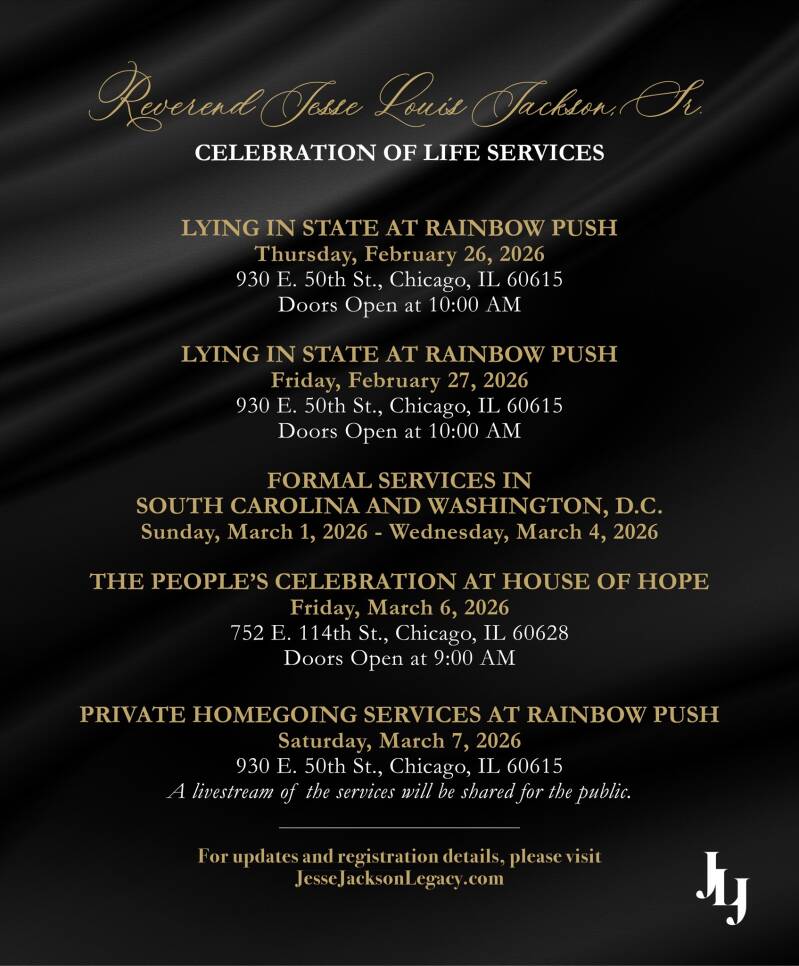


A GLOBAL TRIBUTE TO REV. DR. J. C. JACKSON:
A LIFE THAT UNITED NATIONS, MOVEMENTS, AND GENERATIONS**
The funeral ceremonies held in Chicago for Rev. Dr. J. C. Jackson became far more than a local farewell. They evolved into a global moment of reflection—an international acknowledgment of a man whose life’s work crossed borders, political eras, and liberation movements. The presence and messages of presidents, ministers, pastors, and civic leaders from across continents testified to the magnitude of his influence.
From the podiums of South Africa and the Congo to the voices of American clergy and national leaders, the world paused to honor a man who lived at the intersection of faith, justice, and diplomacy.
🇿🇦 **A Salute from South Africa:
Honoring a Brother in the Struggle Against Apartheid**
The President of South Africa addressed the family, friends, and the people of the United States with deep gratitude. His message was clear: Rev. Dr. Jackson was not merely an observer of history—he was a participant, an ally, and a witness to the birth of a new South Africa.
-
He stood against apartheid when it was dangerous to do so.
-
He was present during the release of Nelson Mandela from prison.
-
He attended the inauguration of South Africa’s first democratically elected president.
In the words of South African leadership, Rev. Dr. Jackson was “a friend of our people and a guardian of our hope.” They thanked his family for sharing him with the world and thanked the people of South Africa for embracing him as one of their own.
🇨🇬 **A Message from the President of Congo:
A Diplomat, A Friend, A Bridge to Africa**
The President of Congo spoke with equal admiration, recalling Rev. Dr. Jackson’s contributions during the years when he served as a special envoy to Africa under President Bill Clinton. He highlighted:
-
His diplomatic work during critical moments in Central Africa.
-
His role as a trusted friend to Congolese leadership.
-
His commitment to peace, development, and continental unity.
For Congo, Rev. Dr. Jackson was not just a visitor—he was a partner in their national journey.
🇺🇸 **American Clergy and Leaders:
A Continuum of Praise**
Pastors of the Baptist Convention Incorporated echoed the sentiments of global leaders, placing Rev. Dr. Jackson in the lineage of American faith leaders who shaped civic life. Their tributes aligned with earlier acknowledgments from national figures such as:
-
President Barack Obama
-
President Bill Clinton
-
President Joe Biden
-
Vice President Kamala Harris
Each had previously recognized his contributions to civil rights, political advocacy, and community empowerment.
🌍 A Life Measured by Impact, Not Titles
The many ceremonies, tributes, and international messages form a single, undeniable truth: Rev. Dr. J. C. Jackson lived a life of consequence. His work touched continents. His voice strengthened movements. His presence at historic moments—Mandela’s release, democratic transitions, diplomatic missions—places him among the quiet architects of global justice.
✨ A Call to Continue His Work
Across all speeches, one theme emerged: Rev. Dr. Jackson’s legacy is not a monument—it is a mandate.
Leaders urged the people he inspired to continue:
-
His fight for justice
-
His commitment to unity
-
His belief in the power of faith-driven leadership
-
His dedication to Africa–diaspora cooperation
His footsteps form a path. His life forms a blueprint. His legacy forms a responsibility.
Shield of the Americas Summit Concludes With Far‑Reaching Decisions

Shield of the Americas Summit Concludes With Far‑Reaching Decisions
The 2026 Shield of the Americas gathering in Doral has come to a close, leaving behind a wave of consequential decisions that will shape regional cooperation across the Western Hemisphere for years to come. Delegations from across North, Central, and South America — including the United States — stood together beneath the emblem of the summit, signaling a renewed commitment to collective security, economic coordination, and diplomatic engagement.
The image from the closing ceremony captured the essence of the moment: leaders from multiple nations standing shoulder‑to‑shoulder, framed by the flags of the Americas. The emblem behind them — a shield encasing the map of the hemisphere — symbolized unity, shared responsibility, and the recognition that the challenges facing the region transcend borders.
Among the most notable moments of the summit was President Donald Trump’s public praise of Secretary of State Marco Rubio. In remarks that drew attention across diplomatic circles, President Trump described Rubio as “the most important Secretary of State of the United States.” The statement underscored Rubio’s central role in shaping U.S. engagement throughout the Americas, particularly in matters of regional security, migration, and multilateral cooperation.
Throughout the summit, delegates addressed a wide range of issues:
-
Strengthening hemispheric security frameworks
-
Coordinating responses to transnational crime
-
Expanding economic partnerships
-
Enhancing disaster preparedness
-
Reinforcing democratic institutions
The tone of the discussions reflected a shared understanding that the hemisphere’s stability depends on collaboration rather than isolation. The presence of leaders from diverse political backgrounds — standing together in the summit photograph — illustrated the seriousness with which member states approached the agenda.
The decisions reached at Shield of the Americas are expected to influence policy across the region, from border management to trade facilitation and crisis response. While the full details of the agreements will unfold in the coming months, the summit’s conclusion marked a moment of renewed hemispheric alignment.
As the leaders dispersed, the emblem behind them — SHIELD OF THE AMERICAS, DORAL 2026 — remained a visual reminder of the commitments made and the responsibilities ahead. The summit closed not merely as a diplomatic event, but as a declaration that the nations of the Americas intend to face shared challenges with shared resolve.
WHO Director-General's opening remarks at the media briefing – 5 March 2026
WHO Director-General's opening remarks at the media briefing – 5 March 2026
Good morning, good afternoon and good evening.
And a special welcome to our guests today: His Excellency Minister Nadda, His Excellency Minister Motsoaledi and our Regional Director Dr Balkhy.
You will be hearing from them in a few moments.
Today, WHO is providing an update on three diseases where we are supporting countries to use powerful new tools to prevent disease and save lives: obesity, HIV and cervical cancer.
Yesterday marked World Obesity Day.
Obesity is one of the greatest health challenges of our time – but it is a challenge that we have more and more tools to address, including GLP-1 therapies.
In December last year, WHO issued our first guideline on the use of GLP-1 therapies for treating obesity in adults.
Medication alone will not reverse obesity, but it can help as part of a comprehensive approach that includes healthy diets, regular physical activity and support from health professionals.
The guidelines generated significant global attention and interest from countries who want to integrate GLP-1s into obesity care.
WHO is supporting them to do that. Yesterday, colleagues from WHO published a paper in The Lancet Global Health on our work to prepare health systems in 12 countries to strengthen obesity services, including GLP-1 therapies.
Through the WHO Acceleration Plan to Stop Obesity, we are supporting 34 countries, representing 1.3 billion people, to reduce obesity prevalence across all age groups by 5% by 2030.
Many countries are taking action – from taxing sugary drinks to integrating obesity care into primary health care systems.
WHO calls on countries to scale up the use of all tools to prevent and treat obesity at all ages.
===
One of the other defining public health challenges of the past 50 years is HIV.
But it’s also one of the defining public health successes.
Once a death sentence, HIV can now be controlled with safe and effective medication.
As a result, the number of annual AIDS-related deaths has dropped by 70% in the past 20 years.
In recent years, the same medicines that are used to treat HIV infection have also been used to prevent it in people at risk.
Last year, a new medicine was approved for the prevention of HIV – lenacapavir – that is the most important development in addressing HIV since the first antiretrovirals were approved almost 40 years ago
Lenacapavir is not a vaccine, but it’s the next best thing: a long-acting antiretroviral, taken once every six months by people who are HIV-negative but at risk of infection.
In trials, it has been shown to prevent almost all cases of HIV in those at risk.
In July last year, WHO published guidelines on the use of lenacapavir, and in October we prequalified it – the WHO stamp of approval that gives the green light to the Global Fund to buy the medicine and begin shipping it to countries.
It’s the first time WHO has developed prequalification and guidelines in parallel, not in sequence, to speed up equitable access to innovative new tools.
In the past eight months, WHO has supported nine countries to roll out lenacapavir to people at risk of HIV: Eswatini, Kenya, Lesotho, Mozambique, Nigeria, South Africa, Uganda, Zambia and Zimbabwe.
In October last year, South Africa’s national regulator became the first in Africa to approve lenacapavir, and only the third globally.
In his State of the Nation address last month, President Cyril Ramaphosa said that South Africa is planning a massive rollout of lenacapavir.
And just today, South Africa announced that it plans to manufacture lenacapavir locally.
One of the challenges we face is that demand is outstripping what countries have ordered from donors, who buy lenacapavir from manufacturers.
WHO is working with countries, donors and manufacturers to meet this demand.
===
Another powerful tool that is changing the face of public health is the HPV vaccine, which together with screening and treatment, is giving the world hope of eliminating cervical cancer.
Yesterday was HPV Awareness Day, drawing attention to a family of viruses that are responsible for several cancers, including cervical cancer.
In 2018, I issued a global call for action to eliminate cervical cancer, which was followed in 2020 by a Global Strategy with the 90-70-90 targets:
90% of girls vaccinated;
70% of women screened;
And 90% of women with cervical cancer or pre-cancerous lesions treated, all by 2030.
Since then, nearly 60 countries have introduced HPV vaccination, and 162 countries now include the vaccine as part of their national immunization schedules.
Today we are proud to celebrate two countries that are making major progress towards cervical cancer elimination: India and South Africa.
Last week, India announced the largest free HPV vaccination campaign in history, targeting almost 12 million girls aged 14 every year.
More than 127 000 women in India are diagnosed with cervical cancer annually, and about 80 000 women die from the disease.
I commend Prime Minister Modi and the Government of India for their leadership on this critical issue.
To say more, I’m delighted to welcome India’s Union Minister of Health and Family Welfare, Minister J.P. Nadda.
Minister, congratulations and thank you for making the time to join us today. You have the floor. Namaste.
[MINISTER NADDA ADDRESSED THE MEDIA]
Thank you Minister once again for your time and leadership. WHO looks forward to supporting you on this journey.
Now to South Africa.
I referred earlier to President Ramaphosa’s State of the Nation address last month in which he announced plans for a massive rollout of lenacapavir.
In the same speech, he also committed to ensuring every girl between 9 and 14 receives an HPV vaccine.
WHO is supporting South Africa to develop a comprehensive national strategy for cervical cancer elimination.
To say more, I’m delighted to welcome South Africa’s Minister of Health, Minister Aaron Motsoaledi.
Dr Motsoaledi, thank you for making time to join us today. You have the floor.
[MINISTER MOTSOALEDI ADDRESSED THE MEDIA]
Thank you Minister, for your time and leadership. WHO is committed to supporting you on this journey and to realizing your vision for the elimination of cervical cancer.
===
Finally, WHO is deeply concerned about the conflict in the Islamic Republic of Iran and the Middle East, with 16 countries affected.
So far, almost 1000 deaths have been reported in Iran, 50 in Lebanon, 13 in Israel and 11 in other gulf countries.
In addition, WHO has verified 13 attacks on health care in Iran, and one in Lebanon.
Under international humanitarian law, health care must be protected and not attacked.
The conflict is also causing significant displacement. So far, an estimated 100 000 people have left Tehran, and in Lebanon, more than 60 000 people have been displaced, and at least 1 million people may be on the move following evacuation orders in the south.
The threat of nuclear facilities being impacted is also concerning: any compromise to nuclear safety could have serious public health consequences.
WHO is working closely with our offices in the affected countries to monitor the impact on the delivery of health services, and provide support when needed and requested.
But the impact goes beyond the immediately affected countries.
Operations at WHO’s Logistics Hub for Global Health Emergencies in Dubai are currently on hold due to insecurity.
To say more, I’m pleased to welcome WHO’s Regional Director for the Eastern Mediterranean, Dr Hanan Balkhy.
Dr Balkhy, thank you for joining us at this difficult time for the region. You have the floor.
Thank you, Dr Balkhy, and all our colleagues in the region, for your leadership at this time.
As always, the best medicine is peace.
Christian, back to you.
His Eminence Excellency Minister Dr. Ntuba at the West 6th Street Memorial


His Eminence Excellency Minister Dr. Ntuba at the West 6th Street Memorial
In the quiet glow of string lights along West 6th Street in Austin, His Eminence Excellency Minister Dr. Ntuba walked slowly toward the memorial erected for the victims of the recent tragedy. The night air carried a solemn stillness, broken only by the soft flicker of candles and the murmured prayers of those gathered. White crosses, blue heart plaques, flowers, rosaries, and handwritten messages formed a sacred space of remembrance — a community’s attempt to honor lives taken too soon.
Dr. Ntuba paused before each cross, reading the names, touching the ribbons, and acknowledging the grief etched into every object. The memorial was not just a display; it was a cry for justice, a testament to the pain that violence leaves behind, and a reminder of the responsibility borne by leaders, institutions, and society.
Nearby, residents and visitors stood on the open premises, some in tears, others in quiet reflection. Dr. Ntuba spoke with them gently, listening to their fears, their anger, and their hopes. Many expressed frustration — not only at the violence itself, but at the slow, uncertain response from authorities. Their voices echoed a familiar national concern: that tragedies involving marginalized communities too often go unanswered or are influenced by unseen pressures.
From this place of mourning, Dr. Ntuba issued a clear and unwavering call: the United States government must conduct a full, independent investigation into the killings at Buford Bar, free from influence, interference, or political shielding. He emphasized that justice cannot be selective, and that every life lost deserves truth, accountability, and transparency.
As a long-standing advocate against gun violence, Dr. Ntuba reminded those present that America’s crisis is not only about weapons, but about deeper institutional fractures — racism, inequity, underfunded social systems, and a culture that too often normalizes harm in the name of power. He warned that when these forces combine, they create environments where tragedies become predictable rather than shocking.
Standing before the illuminated memorial, he reaffirmed his commitment to speak out, to challenge complacency, and to push for reforms that protect all Americans, regardless of race, class, or background. The candles at the site symbolized both grief and resolve — a reminder that remembrance must lead to action.
In his closing words to the community, Dr. Ntuba urged unity, vigilance, and courage. “Let no one silence your pain,” he said. “Let no institution bury the truth. And let us work together so that no family must stand at a memorial like this again.”
Austin’s Sixth Street Mass Shooting Leaves Four Dead, Dozens Injured as Investigators Search for Answers

Austin’s Sixth Street Mass Shooting Leaves Four Dead, Dozens Injured as Investigators Search for Answers
Austin, Texas — What began as a typical Saturday night along West Sixth Street, one of Austin’s busiest nightlife corridors, turned into a scene of chaos and tragedy when a gunman opened fire shortly before 2 a.m. on March 1. The attack left four people dead and more than a dozen injured, shaking a city known for its vibrant downtown culture and raising urgent questions about public safety.
Police identified the shooter as 53‑year‑old Ndiaga Diagne, who was killed during a confrontation with responding officers. Authorities say Diagne first fired from his vehicle into a crowd outside Buford’s Backyard Beer Garden, then drove a short distance before stepping out with an AR‑15‑style rifle and continuing to shoot.
A Rapid Police Response
According to Austin police, officers arrived within 57 seconds of the first 911 call. Body‑camera and surveillance footage released by the department shows officers moving toward the sound of gunfire while simultaneously rendering aid to victims lying on the street. Bystanders pointed officers toward the shooter’s location, where Diagne was ultimately shot and killed.
Police Chief Lisa Davis praised the swift response, saying the actions of officers “prevented further loss of life” during an attack that unfolded in seconds.
Victims Identified
The shooting claimed the lives of four people:
-
Ryder Harrington, 19
-
Savitha Shan, 21, a University of Texas student
-
Jorge Pederson, 30, who died after being removed from life support
-
A fourth victim whose name has not yet been publicly released
Between 13 and 18 others were wounded, depending on updated counts from hospitals and police. Several remain hospitalized.
A growing memorial of flowers, candles, and handwritten notes now lines the sidewalk outside Buford’s, where friends, family members, and strangers have gathered to grieve.
Investigators Examine Motive
The motive behind the attack remains unclear. The FBI is assisting Austin police and is evaluating the case as a potential act of terrorism, though officials emphasize that no conclusions have been reached.
Investigators have searched Diagne’s Del Valle apartment and are reviewing digital evidence, witness statements, and ballistics. Public records show that Diagne was a former Tesla employee and had been involved in a workplace assault allegation and a contentious divorce in recent years, though authorities have not linked these events to the shooting.
A City in Mourning
Austin residents have responded with a mix of grief, anger, and resolve. Local leaders, including the mayor and University of Texas officials, have issued statements expressing condolences and calling for community support for the victims’ families.
Business owners in the West Sixth Street district say the shooting has reignited concerns about safety in the area, which draws thousands of visitors each weekend. City officials have indicated that discussions about security measures and nightlife management will intensify in the coming weeks.
Looking Ahead
As Austin mourns the victims and honors the bravery of first responders, investigators continue working to understand what led to one of the deadliest mass shootings in the city’s recent history. For now, the community is left to grapple with the shock of a night that began like any other and ended in tragedy.
Shifting Currents: An Analysis of the 2026 Texas Primary Outcomes Through Field Reporting by Dr. Akwo Thompson Ntuba


Shifting Currents: An Analysis of the 2026 Texas Primary Outcomes Through Field Reporting by Dr. Akwo Thompson Ntuba
The 2026 Texas primaries delivered results that surprised political analysts, campaign strategists, and even long‑serving incumbents. Across both major parties, voters demonstrated a willingness to challenge established political figures and elevate new voices. As His Eminence Excellency Minister Dr. Akwo Thompson Ntuba observed during his extensive field reporting across Texas, the electorate appeared motivated by a combination of generational change, policy dissatisfaction, and a desire for renewed leadership.
The outcomes across the state—spanning U.S. Senate, congressional districts, gubernatorial primaries, and county leadership—collectively point to a political environment in transition.
A Senate Race Upended: Paxton Forces a Runoff Against Senator Cornyn
One of the most striking results emerged in the Republican primary for the U.S. Senate. Incumbent Senator John Cornyn, long considered a dominant figure in Texas politics, was forced into a runoff by Ken Paxton, the sitting Attorney General. This development signaled that a significant portion of Republican voters were willing to challenge established leadership and support a candidate who positioned himself as a more combative, outsider‑aligned figure.
Dr. Ntuba’s interviews with Republican voters revealed recurring themes:
-
frustration with long‑serving incumbents,
-
desire for stronger ideological alignment,
-
and a belief that new leadership might better represent current conservative priorities.
These sentiments contributed to Paxton’s strong showing and Cornyn’s unexpected vulnerability.
Democratic Momentum: Taritico Wins Outright
In contrast, the Democratic primary produced a decisive outcome. Taritico, a younger candidate with a message centered on generational change and economic fairness, secured an outright victory without a runoff. Many Democratic voters told Dr. Ntuba that they were looking for:
-
fresh leadership,
-
candidates who speak to younger and more diverse constituencies,
-
and a break from traditional political structures.
Taritico’s win reflects a broader trend within the party toward elevating new voices and expanding its appeal to emerging demographic groups.
Houston’s Political Landscape: Runoffs Signal Voter Restlessness
Houston, one of the most politically dynamic regions in Texas, also experienced dramatic shifts. In Texas Congressional District 18, incumbent Congressman Al Green, a long‑serving and influential figure, was forced into a runoff by Manefee, the current district attorney. This outcome underscored a growing appetite for change even in historically stable districts.
Similarly, former Houston Mayor Annise Parker—a nationally recognized political figure—was pushed into a runoff by former city councilwoman and dentist Letitia Plummer. Voters interviewed by Dr. Ntuba frequently cited:
-
the need for new perspectives,
-
concerns about local governance,
-
and a desire for leaders who reflect the evolving demographics of Houston.
These runoffs illustrate a broader pattern: incumbency no longer guarantees security in urban Texas politics.
Statewide Continuity: Governor Abbott Secures a Fourth Republican Nomination
While many races signaled change, the Republican gubernatorial primary delivered continuity. Governor Greg Abbott won his party’s nomination for a fourth term. Voters who supported him emphasized:
-
stability,
-
experience,
-
and alignment with their policy priorities.
Abbott’s victory demonstrates that while some areas of Texas politics are shifting, others remain anchored in long‑standing political loyalties.
San Antonio’s Earthquake: Ron Nirenberg’s Landslide Victory
Perhaps the most dramatic local result came from Bexar County, where former San Antonio Mayor Ron Nirenberg defeated the sitting county judge by a commanding 64%, a margin of 24 points. This landslide reflected strong support for Nirenberg’s leadership style, his record on city governance, and his appeal to voters seeking pragmatic, community‑focused leadership.
Dr. Ntuba’s conversations with San Antonio voters revealed motivations such as:
-
desire for administrative competence,
-
frustration with county‑level leadership,
-
and appreciation for Nirenberg’s visibility and responsiveness during his mayoral tenure.
This race exemplifies how local leadership reputations can significantly influence county‑level outcomes.
A Broader Pattern: Voters Signaling a Preference for a New Guard
Across the state, the 2026 primaries revealed a consistent theme: voters are increasingly willing to challenge established political figures and elevate new leaders. Whether in statewide contests, congressional districts, or county races, the electorate demonstrated a readiness to reconsider long‑standing political alignments.
Dr. Ntuba’s field interviews captured several recurring motivations:
-
desire for generational change,
-
concerns about economic pressures,
-
frustration with political stagnation,
-
and a belief that new leadership may better address contemporary challenges.
These sentiments cut across party lines and geographic regions, suggesting a broader shift in Texas political culture.
Conclusion: A State in Transition
The 2026 Texas primaries showcased a dynamic political environment marked by both continuity and disruption. While some incumbents retained their positions, many others faced unexpected challenges or were forced into runoffs. The results reflect a complex electorate—one that is increasingly diverse, increasingly assertive, and increasingly willing to demand accountability and renewal.
Through his on‑the‑ground reporting, Dr. Akwo Thompson Ntuba captured the voices and motivations of voters across the state. Their perspectives illuminate a Texas that is evolving, questioning, and redefining its political future.
A Call for Restraint, Diplomacy, and Respect for International Norms: A Statement from Dr. Akwo Thompson Ntuba


A Call for Restraint, Diplomacy, and Respect for International Norms: A Statement from Dr. Akwo Thompson Ntuba
A Moment of Global Tension
Dr. Akwo Thompson Ntuba, who has engaged for many years with U.S. military communities through the Association of the United States Army (AUSA) in Washington, D.C. and other regions, expresses deep concern about the rising instability in the Middle East and its implications for global security, international cooperation, and the safety of service members.
Recent targeted killings of senior Iranian officials have intensified regional tensions and raised questions among global observers about the long‑term consequences of such actions. Dr. Ntuba emphasizes that eliminating leaders of a nation during periods of diplomatic engagement undermines trust, weakens international goodwill, and complicates efforts toward peaceful resolution.
Appeal to European Partners and NATO Leadership
Dr. Ntuba urges European and NATO partners to carefully evaluate the broader implications of Middle Eastern policy decisions. He stresses that alliances are strongest when they are guided by independent judgment, respect for international law, and a commitment to multilateral dialogue.
He notes that many global actors believe that unilateral military actions—especially those taken without broad international consensus—risk deepening divisions and eroding the credibility of institutions designed to promote global stability.
Concern for U.S. Service Members and Their Families
Dr. Ntuba expresses sorrow over the loss of American service members in retaliatory attacks. He emphasizes that every life lost represents a profound national tragedy and that decisions leading to military escalation must be weighed with the utmost seriousness.
He highlights that a significant portion of the American public has voiced opposition to expanded conflict with Iran, particularly actions taken without congressional authorization. In a democratic society, public sentiment and constitutional processes remain essential safeguards.
The Importance of Multilateralism
Dr. Ntuba warns that dismissing the role of the United Nations and other multilateral institutions weakens global cooperation at a time when trust is already fragile. He argues that international agreements—such as the Iran nuclear deal and the Paris climate accord—were designed to reduce tensions and promote long‑term stability.
He questions why, instead of strengthening these agreements, some leaders chose to withdraw from them, thereby reducing opportunities for constructive engagement.
Rejecting Threats and Escalation
Dr. Ntuba also cautions against issuing threats or calls for violence against any political leader, including the President of the United States. He notes that such actions are unlawful and undermine the principles of civil discourse and democratic accountability.
A Call for Restraint and Responsible Leadership
Dr. Ntuba encourages leaders within AUSA and across the U.S. military community to continue advocating for restraint, strategic clarity, and respect for constitutional processes. He believes that wisdom, not impulsiveness, must guide decisions that affect global peace and the lives of service members.
He concludes that the world is best served when nations choose dialogue over escalation, cooperation over division, and diplomacy over force.


Escalation Through Joint U.S.–Israeli Strikes


Escalation Through Joint U.S.–Israeli Strikes
According to multiple sources, the United States and Israel launched a coordinated military operation on February 28, 2026, striking Iranian government and military sites. President Trump announced that the U.S. had begun “major combat operations” aimed at eliminating what he described as imminent threats from Iran’s leadership.
Several reports state that the strikes targeted the offices and security compounds associated with Iran’s Supreme Leader, Ayatollah Ali Khamenei. Some outlets report that Khamenei was killed in the attack, marking a dramatic escalation with profound implications for Iran’s political future.
The strikes were described as large‑scale, daytime operations involving missiles and drones, with explosions reported in Tehran and other major cities.
Iran’s Retaliation Across the Region
Iran responded within hours, launching missiles and drones toward Israel and U.S. military installations in the Middle East. Retaliatory strikes were reported near U.S. bases in the region, including those in Bahrain and other strategic locations.
Smoke and explosions were observed across Tehran as Iranian forces attempted to counter the initial wave of attacks. Analysts note that Iran views these strikes as existential threats to the regime and is likely to respond with greater intensity than in previous confrontations.
Trump’s Call for Regime Change
President Trump’s public statements went beyond military justification. He urged the Iranian people to “seize control of your destiny” and rise up against the Islamic Republic, explicitly calling for regime change.
He also encouraged members of Iran’s military to lay down their arms and join efforts to topple the government. This marks a significant shift from previous U.S. policy, which often avoided openly endorsing regime change even during periods of heightened tension.
Global Reactions: Praise, Condemnation, and Alarm
The international response has been sharply divided:
Praise
-
Some governments and political groups that oppose Iran’s leadership welcomed the strikes, viewing them as a necessary step to curb Iran’s regional influence and military capabilities.
-
Supporters of the operation argue that the death of Khamenei—if confirmed—could open the door to political transformation in Iran.
Condemnation
-
Critics, including former U.S. officials, warn that the strikes represent a dangerous escalation that risks a wider regional war. Former Vice President Kamala Harris called the operation “a dangerous and unnecessary gamble” that jeopardizes global stability.
-
Several international organizations expressed concern about civilian casualties, regional destabilization, and the legality of preemptive strikes.
Neutral or Cautious Responses
-
Some nations urged restraint and called for immediate diplomatic engagement to prevent further escalation.
-
Analysts note that the death of a sitting supreme leader could trigger internal instability within Iran, complicating global diplomatic efforts.
Strategic and Geopolitical Implications
The events represent one of the most consequential Middle Eastern escalations in decades. Key implications include:
-
Potential power vacuum in Iran if Khamenei’s death is confirmed, raising questions about succession and internal cohesion.
-
Heightened risk of regional war, as Iran’s retaliatory capacity remains significant.
-
Strain on global energy markets, given Iran’s central role in regional oil flows.
-
Increased polarization between nations aligned with U.S.–Israeli security interests and those sympathetic to Iran.
-
Long‑term uncertainty about whether regime change is achievable through military pressure alone.
Conclusion
The joint U.S.–Israeli strikes and Iran’s retaliatory attacks have pushed the region into a volatile and unpredictable phase. With reports of the Iranian Supreme Leader’s death and open calls for regime change from the U.S. president, the geopolitical landscape of the Middle East may be entering a historic turning point. Whether this leads to transformation, prolonged conflict, or broader instability remains uncertain, but global reactions already reveal deep divisions over the legitimacy and consequences of the strikes.
Cameroonians’ Outcry Over the Catholic Church’s Engagement With Paul Biya
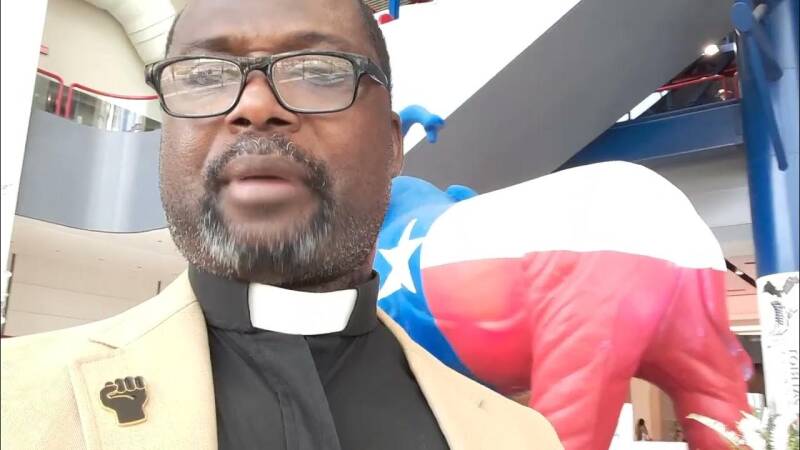

Cameroonians’ Outcry Over the Catholic Church’s Engagement With Paul Biya
For many Cameroonians, the political and social climate of their country has become a source of deep pain, frustration, and moral outrage. President Paul Biya—now in his nineties and in power for more than four decades—remains one of the world’s longest‑serving leaders. Critics inside and outside the country have long accused his government of authoritarian practices, including suppression of dissent, electoral manipulation, and the imprisonment of opposition figures. Against this backdrop, the involvement of high‑ranking Roman Catholic officials with the Cameroonian presidency has become a flashpoint for public anger.
The Perception of Church Endorsement
The Roman Catholic Church holds enormous influence in Cameroon, both spiritually and socially. When senior clergy, including the Apostolic Nuncio or prominent archbishops, appear to support or legitimize the current political leadership, many citizens interpret this as a form of endorsement. Statements such as the recent remark by a major archbishop suggesting “another seven years” for President Biya have intensified public frustration. To many Cameroonians, such comments feel disconnected from the lived reality of a population facing political repression, economic hardship, and a lack of democratic renewal.
This sense of betrayal is especially strong among Catholics who believe that the Church should stand with the oppressed, not with those accused of perpetuating suffering. The Church’s global history—where it has at times been criticized for aligning with authoritarian regimes—adds to the perception that similar patterns may be repeating in Cameroon.
The Political Use of Religious Legitimacy
Critics argue that the Biya government strategically uses religious ceremonies, papal invitations, and the presence of Vatican representatives to project an image of moral legitimacy. Carefully crafted speeches and public appearances often portray the government as stable, peaceful, and open to dialogue—even when opposition leaders remain imprisoned or silenced. For many Cameroonians, this creates a painful contradiction: the image presented to the world does not match the realities they experience daily.
The concern is not merely symbolic. When a religious institution with global influence appears to validate a political leader, it can weaken international pressure for reform and undermine the voices of those calling for democratic change. Many citizens fear that such religious diplomacy unintentionally strengthens authoritarian structures.
Moral and Spiritual Disillusionment
Among some Cameroonians, the frustration has taken on a spiritual dimension. They question how a Church that preaches justice, compassion, and truth can appear to stand beside a leader accused of corruption, human rights abuses, and electoral manipulation. This has led some to describe the Church’s actions as morally compromised or even spiritually harmful. While these views are deeply emotional and symbolic, they reflect a genuine crisis of trust.
For believers who once saw the Church as a refuge from political oppression, this perceived alignment with state power feels like a profound betrayal. It raises difficult questions about the role of religious institutions in societies where political power is concentrated and dissent is dangerous.
A Call for Accountability and Solidarity
Despite the anger, many Cameroonians are not rejecting their faith. Instead, they are calling for the Church—both locally and in Rome—to act with greater moral clarity. They want religious leaders to stand with the people, to speak truth to power, and to refuse participation in political theater that masks suffering. They want the Vatican to understand the gravity of the situation and to avoid actions that could be interpreted as support for authoritarian rule.
For these citizens, the issue is not simply about one visit or one statement. It is about the broader struggle for dignity, justice, and democratic freedom in Cameroon. Their message is clear: religious authority should never be used to legitimize oppression.
Joint statement by the UNFPA Executive Director, UNICEF Executive Director, UN High Commissioner for Human Rights, UN Women Executive Director, WHO Director-General, and UNESCO Director-General on the International Day of Zero Tolerance for Female Genital Mutilation

JOINT STATEMENT
Joint statement by the UNFPA Executive Director, UNICEF Executive Director, UN High Commissioner for Human Rights, UN Women Executive Director, WHO Director-General, and UNESCO Director-General on the International Day of Zero Tolerance for Female Genital Mutilation
5 February 2026 | In 2026 alone, an estimated 4.5 million girls – many under the age of five – are at risk of undergoing female genital mutilation (FGM). Currently, more than 230 million girls and women are living with its lifelong consequences.
Today, on the International Day of Zero Tolerance for Female Genital Mutilation, we reaffirm our commitment to end female genital mutilation for every girl and every woman at risk, and to continue working to ensure those subjected to this harmful practice have access to quality and appropriate services.
Female genital mutilation is a violation of human rights and cannot be justified on any grounds. It compromises girls’ and women’s physical and mental health and can lead to serious, lifelong complications, with treatment costs estimated at about US$ 1.4 billion every year.
Interventions aimed at ending female genital mutilation over the last three decades are having an impact, with nearly two-thirds of the population in countries where it is prevalent expressing support for its elimination. After decades of slow change, progress against female genital mutilation is accelerating: half of all gains since 1990 were achieved in the past decade reducing the number of girls subjected to FGM from one in two to one in three. We need to build on this momentum and speed up progress to meet the Sustainable Development Goal target of ending female genital mutilation by 2030.
We know what works. Health education, engaging religious and community leaders, parents and health workers and the use of traditional and social media are effective strategies to end the practice. We must invest in community-led movements – including grassroots and youth networks – and strengthen education through both formal and community-based approaches. We need to amplify prevention messages by involving trusted opinion leaders, including health workers. And we must support survivors by ensuring they have access to comprehensive, context-tailored health care, psychosocial support, and legal assistance.
Every dollar invested in ending female genital mutilation yields a tenfold return. An investment of US$ 2.8 billion can prevent 20 million cases and generate US$ 28 billion in investment returns.
As we approach 2030, gains achieved over decades are at risk as global investment and support wane. Funding cuts and declining international investment in health, education, and child protection programmes are already constraining efforts to prevent female genital mutilation and support survivors. Further, the growing systematic pushback on efforts to end female genital mutilation, compounded by dangerous arguments that it is acceptable when carried out by doctors or health workers, adds more hurdles to elimination efforts. Without adequate and predictable financing, community outreach programmes risk being scaled back, frontline services weakened, and progress reversed – placing millions more girls at risk at a critical moment in the push to meet the 2030 target.
Today we reaffirm our commitment and efforts with local and global public and private partners, including survivors, to end female genital mutilation once and for all.
./.
- Over four million girls still at risk of female genital mutilation: UN leaders call for sustained commitment and investment to end FGM
- Factsheet: Female genital mutilation
- Female genital mutilation
./.
AUSTIN MARATHON THANKS DR. NTUBA AKWO THOMPSON FOR HIS WEEK‑LONG PARTNERSHIP AND CONTRIBUTIONS TO A SUCCESSFUL 2026 EVENT


AUSTIN MARATHON THANKS DR. NTUBA AKWO THOMPSON FOR HIS WEEK‑LONG PARTNERSHIP AND CONTRIBUTIONS TO A SUCCESSFUL 2026 EVENT
Austin, Texas — The organizers of the Austin Marathon have formally expressed their appreciation to His Eminence Excellency Minister Rev. Dr. Ntuba Akwo Thompson, recognizing his outstanding partnership, leadership presence, and full‑week participation that contributed to the success of the 2026 Austin Marathon, Half Marathon, and 5K.
In an official message of gratitude, the Austin Marathon leadership commended Dr. Ntuba for his consistent engagement throughout marathon week — from the Palmer Events Center activities to the community health interactions, expo participation, and his visible support along the race route near the Texas State Capitol.
The marathon organizers highlighted that Dr. Ntuba’s presence strengthened the event’s community‑health mission, especially through his collaboration with medical teams, wellness partners, and public‑health advocates. His engagement aligned with the marathon’s long‑standing partnership with Ascension Seton and its commitment to promoting preventive health, safety, and community wellness.
Dr. Ntuba’s participation included:
-
Attending marathon‑week events at the Palmer Events Center
-
Engaging with medical and wellness teams supporting runners
-
Representing global public‑health leadership during the marathon’s community outreach
-
Supporting runners and volunteers along the iconic Congress Avenue route
-
Highlighting Austin’s health, fitness, and community‑building culture through his media and public‑engagement platforms
The Austin Marathon organizers noted that his involvement exemplified the spirit of partnership that strengthens the event each year. They emphasized that leaders like Dr. Ntuba help elevate the marathon beyond a sporting event — transforming it into a platform for health education, civic pride, and community unity.
In their letter, the organizers wrote that they “deeply appreciate Dr. Ntuba Akwo Thompson’s commitment, presence, and partnership,” acknowledging that his contributions helped make the 2026 marathon “a memorable and successful celebration for the entire Austin community.”
Dr. Ntuba, a global physician, public‑health communicator, and community leader, expressed gratitude for the recognition and reaffirmed his commitment to supporting Austin’s health and wellness initiatives. He noted that the marathon reflects the city’s values of resilience, unity, and community strength.
The Austin Marathon, now in its 35th anniversary year, continues to be one of the city’s most celebrated events — drawing thousands of runners, volunteers, medical teams, and community partners. This year’s success, organizers say, was strengthened by leaders like Dr. Ntuba whose engagement extended far beyond race day.
SWELA DIASPORA HONORS THE LEGACY OF REV. DR. J. C. JACKSON AND HIS CONTRIBUTIONS TO CAMEROON AND THE AFRICAN DIASPORA


SWELA DIASPORA HONORS THE LEGACY OF REV. DR. J. C. JACKSON AND HIS CONTRIBUTIONS TO CAMEROON AND THE AFRICAN DIASPORA
A Tribute Story
The South West Elites Association (SWELA) Diaspora joins the global community in honoring the extraordinary life and legacy of Rev. Dr. J. C. Jackson, a visionary leader whose influence touched Cameroon, the African continent, and the worldwide diaspora. His journey was one of courage, conviction, and unwavering dedication to justice for Black and minority communities across the globe.
Rev. Dr. Jackson’s leadership began long before he became a global figure. As the first son of South West Cameroon to serve as President of the National Union of Cameroonian Students at the University of Ilorin, he broke barriers and set a new standard for Cameroonian student leadership abroad. His early rise foreshadowed a lifetime of service marked by boldness, intellect, and a deep commitment to the advancement of his people.
SWELA Diaspora recognizes Rev. Dr. Jackson not only as a national figure but as a continental voice. His work in the United States placed him at the center of major political and civic movements. Alongside His Eminence Excellency Minister Rev. Dr. Ntuba Akwo Thompson—founder and president of SWELA USA—Rev. Dr. Jackson engaged in high‑level political advocacy at the National Democratic Conventions, the Congressional Black Caucus Annual Legislative Conference, and historic events surrounding the presidency of Barack Obama.
Their partnership represented a powerful bridge between African leadership and the diaspora. Together, they worked with influential American leaders, including Houston Mayor Sylvester Turner and Congresswoman Sheila Jackson Lee, strengthening ties between African communities and U.S. political institutions.
One of the most symbolic moments in their shared journey was their meeting with Nigerian statesman Governor Godswill Akpabio. That encounter reflected the unity of African governance and diaspora political engagement—a unity that SWELA Diaspora continues to champion today.
Rev. Dr. Jackson’s contributions extended beyond politics. He was a minister of the Gospel, a mentor to young leaders, and a steadfast advocate for justice. His voice echoed the unfinished work of Rev. Dr. Martin Luther King Jr. and President Nelson Mandela. His mission was global, and his impact remains immeasurable.
SWELA Diaspora honors him not only for what he achieved, but for what he inspired. His life reminds us that leadership is not confined by geography; it is defined by purpose, courage, and service.
As Rev. Dr. Ntuba Akwo Thompson reflects:
“Rev. Dr. Jackson, we shook the bridge—and we will continue the work until the mission is complete.”
Today, SWELA Diaspora stands committed to carrying forward the legacy of Rev. Dr. J. C. Jackson. His vision for justice, unity, and global Black empowerment lives on in the work of those he mentored, the communities he uplifted, and the movements he helped shape.
His journey continues through us.
SUDAN: Famine threshold for acute malnutrition surpassed in two more North Darfur localities, crisis worsening in Greater Kordofan
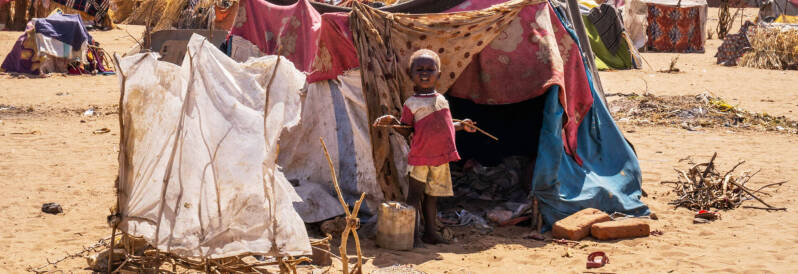

Following the mass displacement of people from El Fasher town in late October 2025 and ongoing hostilities, levels of acute malnutrition have surpassed famine thresholds in two areas of North Darfur—Um Baru and Kernoi. Recent assessments conducted in December 2025 in Um Baru and Kernoi localities found acute malnutrition levels exceeding the 30 percent weight-for-height (WHZ) Famine threshold—global acute malnutrition (GAM) in Um Baru was estimated at 52.9 percent among children aged 6-59 months, with 18.1 percent suffering severe acute malnutrition (SAM). In Kernoi, the situation is also extremely concerning, with a GAM prevalence of 34 percent, and 7.8 percent SAM for the same population group.
Many other conflict-affected or inaccessible areas may also be facing similarly catastrophic conditions; however, the full extent remains unknown due to limited access and uncertainty over how rapidly conditions are deteriorating—especially in locations not covered by assessments or monitoring systems, and among displaced populations.
In Greater Kordofan, the intensifying conflict is driving a rapid deterioration in food security, with more people likely to face extreme hunger, acute malnutrition, and rising hunger‑related deaths. Famine was already confirmed in the town of Kadugli in the September 2025 analysis, and very severe conditions were projected in Dilling and the Western Nuba Mountains.
Immediate action is urgently needed to end hostilities and open safe corridors for people fleeing conflict. Only by supporting mutual aid, strengthening communities’ coping capacities, and ensuring unimpeded, large‑scale humanitarian response can we prevent further loss of life and halt the spread of famine and human suffering.
This IPC Alert does not classify areas or provide population estimates and does not constitute a Famine classification. This alert for Sudan is based on the latest evidence available up to 29 January, with the exception of situational developments in Greater Kordofan, which are reflected up to 4 February, and highlights the worsening humanitarian situation, following the IPC analysis published on 3 November 2025 when Famine (IPC Phase 5) was classified in El Fasher and Kadugli towns, and 20 areas across Greater Darfur and Greater Kordofan were at risk of Famine.


Six years after COVID-19’s global alarm: Is the world better prepared for the next pandemic?
GENEVA, 2 February 2026 — Six years ago, the Director-General of the World Health Organization sounded the highest global alarm available under international law at the time, declaring the outbreak of a new coronavirus disease (later known as COVID-19) a Public Health Emergency of International Concern (PHEIC). While the PHEIC was declared over in May 2023, the impact of COVID-19 remains etched in our collective memory – and continues to be felt worldwide.
As we cross this six-year mark, WHO asks countries and partners, just as we ask ourselves: Is the world better prepared for the next pandemic?
The answer is yes and no.
Yes, in many ways, the world is better prepared because meaningful, concrete steps have been taken to strengthen preparedness.
However, at the same time, no, because the progress made is fragile and uneven, and more still needs to be done to keep humanity safe.
Progress since COVID-19
“The pandemic taught all of us many lessons – especially that global threats demand a global response,” WHO Director-General Dr Tedros Adhanom Ghebreyesus told today’s opening of the 158th session of the Executive Board. “Solidarity is the best immunity.”
Applying lessons learned from COVID-19, WHO, Member States, and partners have delivered significant advances in pandemic preparedness, prevention and response, including:
- the historic WHO Pandemic Agreement was adopted in May 2025, setting out a truly comprehensive approach to pandemic prevention, preparedness and response that improves both global health security and global health equity. Its conclusion demonstrated the strength of multilateralism. Members States are now negotiating the Pathogen Access and Benefits Sharing (PABS) system annex to the WHO Pandemic Agreement ahead of this year’s World Health Assembly. Its adoption would open the Pandemic Agreement for signature, and entry into force as international law;
- amendments to the International Health Regulations (IHR) to strengthen national capacities entered into force in September 2025;
- the Pandemic Fund, cofounded and implemented by WHO and the World Bank, has provided grant funding totalling over US$ 1.2 billion in its first three rounds, which has helped catalyse an additional US$ 11 billion that has so far supported 67 projects in 98 countries across 6 regions, to expand surveillance, lab networks, workforce training and multisectoral coordination;
- WHO’s Hub for Pandemic and Epidemic Intelligence launched a major update of the Epidemic Intelligence from Open Sources (EIOS) system, leveraging AI to support more than 110 countries in identifying and reacting to new threats faster;
- genomic sequencing capacities globally have surged in recent years and through the International Pathogen Surveillance Network, more than 110 countries have strengthened genomic surveillance to track pathogens with epidemic and pandemic potential and accelerate preparedness and response actions;
- the WHO BioHub expanded as a trusted global mechanism, supported by 30 countries and territories, coordinating 25 sample shipments to 13 laboratories. Since launching in late 2020, the BioHub has acquired 34 variants of the following viruses: SARS-CoV-2; mpox clades Ia, Ib, IIb; the Oropouche virus; and MERS-CoV. Close to 80 laboratories from 30 countries across all WHO regions have engaged in the system by sharing and requesting biological materials;
- global efforts to expand local, equitable development and production of vaccines, diagnostics and treatments have accelerated through initiatives including the mRNA technology transfer hub in Cape Town, its training centre in Seoul, and the Interim Medical Countermeasures Network;
- the WHO Academy in France will help strengthen capacities in countries for pandemic preparedness, including through simulation trainings;
- the Global Training Hub for Biomanufacturing, established by the Republic of Korea and WHO, is boosting workforce capacities in manufacturing high-quality vaccines and biologics. By providing training in this critical field, the aim is to increase equitable access to such products globally through expanded manufacturing capacity in low- and middle-income countries;
- the Global Health Emergency Corps was set up by WHO in 2023 in response to the gaps and challenges identified during the COVID-19 response. The Corps supports countries experiencing public health emergencies by assessing emergency workforce capacities, rapidly deploying surge support, and creating a network of emergency leaders from multiple countries to share best practices and coordinate responses; and
- the Universal Health and Preparedness Review (UHPR) continues to help countries identify gaps and strengthen accountability.
Other work, which predated the pandemic, continues to strengthen pandemic preparedness, prevention and response:
- a hundred and twenty-one countries now have national public health agencies responsible for their health emergency prevention, preparedness, response and resilience efforts;
- twenty countries completed Joint External Evaluations; 195 States Parties filed annual IHR reports; 22 countries finalized National Action Plans for Health Security;
- the Global Influenza Surveillance and Response System (GISRS) processes over 12 million samples worldwide annually for influenza characterization and to update seasonal influenza vaccines and recommend avian influenza viruses for inter-pandemic production; and
- under the Pandemic Influenza Preparedness Framework (PIP), WHO signed eight new agreements in 2025, bringing the total to 19 contracts with pandemic products manufacturers. These agreements have secured access to antivirals, diagnostics, syringes and 900+ million vaccine doses for future influenza pandemics.
These are remarkable achievements, reflecting a shared global commitment to work together across national borders, across sectors to never again face a pandemic unprepared and leave anyone behind.
WHO Member States have taken decisions that have strengthened the world’s ability not only to respond more rapidly and to mitigate the impact of future pandemics but also to prevent them in the first place.
Recent Ebola and Marburg outbreak responses show this progress clearly at national levels with support from WHO. Ebola, a disease that once had no vaccines, no rapid diagnostics, and limited treatment options – leading to catastrophic loss of life in West Africa 10 years ago – has since been transformed. The most recent outbreaks of Ebola in the Democratic Republic of the Congo and Marburg, in Rwanda, Tanzania and Ethiopia, were contained in a fraction of the time, with limited spread and lower case fatality rates. The responses to these outbreaks were led by national institutions, supported by WHO.
But these gains are fragile
The past years have brought profound turbulence to global health. Funding continues to shift away from health toward defence and national security – placing at risk the very systems that were strengthened during COVID-19 to protect countries from future pandemics.
This is shortsighted. Pandemics are national security threats.
Investing in preparedness is an investment in:
- lives saved
- economies protected
- societies stabilized.
A call to action
WHO urges all governments, partners and stakeholders: do not drop the ball on pandemic preparedness and prevention.
This week’s WHO Executive Board meeting will be a pivotal moment in this journey, as governments set the course for designing the future of collaboration, accountability and efficiency in who does what in global health.
Pathogens don’t respect borders. No country can prevent or manage a pandemic alone.
Global health security requires collaboration across sectors, across governments, and across regions.
WHO remains committed to working with all countries to strengthen preparedness, accelerate innovation and uphold solidarity. We will continue supporting Member States as they finalize their historic effort to forge a global compact for a world that is safer from pandemics.
Preparedness requires continuous vigilance. The time to prepare is now – before the next pandemic strikes.
Epstein‑related emails reignite scrutiny, political tension, and public outrage: A Political and Moral Firestorm


A wave of reputational crisis is sweeping across some of the most recognizable figures in American public life as newly released Epstein‑related emails reignite scrutiny, political tension, and public outrage. The release—described by many survivors as incomplete due to extensive redactions—has placed global elites, former presidents, philanthropists, and business leaders under renewed pressure to explain past associations and decisions.
A Political and Moral Firestorm
The release of the documents has placed Bill Gates, Bill Clinton, and other prominent Americans back into the center of a controversy that has lingered for years. Survivors and advocates argue that the Justice Department under previous administrations, including the Trump administration, redacted large portions of the material—shielding individuals whose names or actions may have been relevant to the investigation.
Some survivors have suggested that the redactions may have protected individuals across political lines, including possible references to Donald Trump, who has also faced public questions about his past interactions with Epstein.
The political implications are immediate. With the 2026 midterm elections underway, both parties are navigating the fallout carefully. Democrats have been slow to defend the Clintons, while Republicans—who once subpoenaed the Clintons and threatened contempt charges—have shifted tone as the hearings approach.
Melinda French Gates’ Public Position
Melinda French Gates’ earlier statement that “all those responsible and involved should answer for their involvement” has resurfaced, interpreted by some observers as a distancing from her ex‑husband Bill Gates. Her comments have added to the perception that accountability must be universal, regardless of wealth, philanthropy, or political influence.
Trump’s Push for Full Release
President Donald Trump, who has himself been accused in the past of having ties to Epstein, reportedly supported the full release of the emails. According to political analysts, Trump’s stance reflects a desire to avoid being singled out or “going down alone,” as some critics have phrased it. His position has intensified the pressure on federal agencies to justify past redactions and on Congress to pursue further inquiry.
A Moment of National Embarrassment
For many Americans, the scandal represents a deeper moral crisis. The idea that individuals who have held the nation’s highest offices—or who have shaped global philanthropy and policy—could be entangled in such a shameful network has fueled anger, disappointment, and a sense of institutional betrayal.
Public commentators note that the United States, which often positions itself as a global advocate for human rights and moral leadership, now faces a reputational wound. The involvement—direct or indirect—of high‑profile leaders in a scandal tied to exploitation and abuse has raised difficult questions about accountability, privilege, and the standards expected of those who seek public trust.
Dr. Ntuba Akwo’s Perspective as a Communicator and Advocate
Dr. Ntuba Thompson Akwo, founder, publisher, and editor of Health & Development Magazine and Media, and a communicator with professional experience in New York, has joined colleagues in expressing concern about the broader implications of the scandal.
From his vantage point in global health communication and public ethics, Dr. Akwo emphasizes that the crisis is not only political but moral:
“When leaders entrusted with public confidence become entangled in schemes that harm the vulnerable, the entire nation suffers reputational damage. Accountability must be consistent and transparent, regardless of status or political affiliation.”
His comments reflect a growing sentiment among communicators, advocates, and civil society leaders who argue that the United States must confront the scandal openly to restore public trust.
A Nation Watching Closely
As hearings approach and political pressure intensifies, the country is bracing for further revelations. Whether the full truth will emerge—and whether accountability will be evenly applied—remains uncertain.
What is clear is that the scandal has become a defining test of transparency, justice, and moral leadership in modern American public life.
DR NTUBA AKWO FOUNDER, PUBLISHER AND EDITOR OF HEALTH & DEVELOPMENT MAGAZINE AND MEDIA JOINS COLLEAGUES IN CALL FOR THE SAFE RETURN OF THEIR COLLEAGUE’S MOTHER



DR NTUBA AKWO FOUNDER, PUBLISHER AND EDITOR OF HEALTH & DEVELOPMENT MAGAZINE AND MEDIA JOINS COLLEAGUES IN CALL FOR THE SAFE RETURN OF THEIR COLLEAGUE’S MOTHER
The global communication and media community was shaken this week as news spread that the mother of a respected colleague, NBC journalist Savannah Guthrie, has gone missing—prompting an outpouring of solidarity from communicators, journalists, and public‑interest media leaders across the United States.
Among the voices calling for her safe return is Dr. Ntuba Thompson Akwo, founder, publisher, and editor of Health & Development Magazine and Media, whose professional work includes years of communication and public‑interest reporting in New York, USA. Known for his leadership in global health communication and his advocacy for families and vulnerable communities, Dr. Akwo joined colleagues nationwide in expressing concern and urging collective support.
A Community of Communicators Standing Together
The situation gained national attention after NBC anchor Craig Melvin withdrew from his scheduled assignment covering the Winter Olympics in Italy so he could remain in the United States during the search for Guthrie’s mother. His decision underscored the seriousness of the moment and the deep sense of family that exists within the journalism profession.
For Dr. Akwo, the news resonated deeply. His decades of work in media, public health communication, and community advocacy have consistently emphasized the importance of human dignity, family unity, and collective responsibility. As a communicator who has worked alongside colleagues in New York and across the country, he described the moment as “a call for compassion, vigilance, and solidarity.”
Dr. Akwo’s Statement
Dr. Akwo joined fellow communicators in urging the public to remain alert and supportive:
“When one member of our communication family is in distress, we all feel it. We stand with Savannah Guthrie, Craig Melvin, and their families during this difficult time. We pray and advocate for the safe return of her mother and encourage communities to support the search efforts with empathy and responsibility.”
His message reflects the values that have shaped his career: community protection, responsible communication, and the belief that media professionals have a duty not only to inform but also to uplift and safeguard the public.
A Moment That Unites the Profession
The search for Guthrie’s mother has brought together journalists, public health communicators, broadcasters, and media leaders across the nation. For Dr. Akwo, whose work spans global health, development communication, and humanitarian advocacy, the moment highlights the shared humanity behind the headlines.
As the search continues, he and his colleagues remain united in hope, prayer, and public support—demonstrating once again that the communication profession is, at its core, a community built on connection, compassion, and collective strength.
Crisis and Community Response: A Report on Recent Immigration Enforcement
Crisis and Community Response: A Report on Recent Immigration Enforcement
By Dr. Ntuba Akwo Thompson Chief Editor, HealthnDevelopment Magazine
The current administration's immigration policies and operations continue to catalyze deep divisions within American communities. As U.S. Immigration and Customs Enforcement (ICE) ramps up enforcement actions, particularly through the recent "Operation Metro Surge" in Minnesota, the human and public health costs are becoming increasingly stark. Families are being separated from loved ones, and reports of deportations occurring without full due process have sparked widespread legal and social unrest.
Tensions and Clashes in the North
In Minnesota, tensions reached a breaking point following the killing of Renee Nicole Good, an American citizen, by an ICE agent in Minneapolis on January 7, 2026. This incident has galvanized a massive movement, leading to a statewide general strike and business shutdowns. Advocates argue that the militarized nature of these raids—involving thousands of armed, masked agents—has created a climate of terror that transcends immigration status, affecting schools, local businesses, and the general sense of public safety.
The Vigil at the Texas State Capitol
Recently, immigrant rights advocates and community members gathered in front of the Texas State Capitol in Austin for a memorial vigil. The event was held to honor the lives of those who have died in ICE custody—a number that reached a twenty-year high of 31 deaths in 2025, with four additional deaths recorded in the first ten days of 2026 alone.
During the vigil, participants expressed a profound sense of empowerment. Despite the grief, the atmosphere was one of collective resistance. Attendees voiced a commitment to protecting their neighbors and friends from what they describe as an inherently violent agency. One speaker noted that these operations do not just target "bad elements," as the administration claims, but often sweep up long-time community members who are integral to the social fabric.
The Administration's Stance
The Trump administration maintains that its operations are focused on public safety and the removal of criminal elements. Officials argue that these measures are necessary to uphold the rule of law and protect the country’s borders. Vice President JD Vance recently visited Minneapolis to defend the operations, claiming that the tension is fueled by "irresponsible rhetoric" from local leaders and that the agency is focused on arresting dangerous offenders.
Global and Public Health Consequences
The public health implications of this enforcement surge are dire. Dr. Ntuba Akwo Thompson reports that a "chilling effect" has permeated the community:
-
Avoidance of Care: Many undocumented individuals—and even legal residents—now fear visiting hospitals and clinics, worried that seeking medical care will lead to capture by ICE.
-
Mental Health Impact: Roughly one-third of immigrants report negative health repercussions, including severe anxiety and depression, due to constant worries about their or their family's status.
-
Infrastructure Strain: New restrictions on public benefits (the "public charge" rule) are discouraging families from accessing nutrition and health programs, which experts warn will lead to worse long-term health outcomes for millions of U.S.-citizen children.
"When a community is too afraid to seek healthcare or send their children to school, the entire public health infrastructure is compromised. This is no longer just an immigration issue; it is a crisis of human rights and community well-being." — Dr. Ntuba Akwo Thompson
Keeping the Dream Alive: Dr. Thompson Ntuba Akwo at the 2026 Austin MLK Day March


Keeping the Dream Alive: Dr. Thompson Ntuba Akwo at the 2026 Austin MLK Day March
On Monday, January 19th, 2026, the grounds of the Texas State Capitol in Austin pulsed with the energy of remembrance, resistance, and renewed commitment. Predominantly Black communities, joined by Latino, Asian, African immigrant, and other minority groups, gathered shoulder‑to‑shoulder to honor the Dream Holiday of Rev. Dr. Martin Luther King Jr. Among them stood Dr. Thompson Ntuba Akwo—global health communicator, justice advocate, and long‑time defender of marginalized communities in the United States.
The morning air carried the sound of drums, chants, and the unmistakable rhythm of a people determined not to let history fade into ceremony. This was not just a celebration; it was a call to action.
A Rally Rooted in Urgency
Before the march toward Huston‑Tillotson University began, speakers took the stage at the Capitol steps. Their voices rose with conviction, reminding the crowd that Dr. King’s dream was not a relic of the past but a living mandate that required vigilance, courage, and collective responsibility.
One speaker declared that “the dream must not die—not in our schools, not in our streets, not in our communities.” The crowd responded with applause that echoed across the Capitol lawn.
A representative from the University of Texas at Austin brought a sobering message. She spoke candidly about the challenges Black students and other minority students were facing—challenges intensified by political attacks on universities and funding cuts that threatened academic programs, diversity initiatives, and student support systems. Her words resonated deeply with Dr. Akwo, whose own advocacy has long centered on equity, access, and the protection of vulnerable populations.
Leadership, Legacy, and Transition
Among the speakers was the Austin City Councilwoman representing East Austin, a historically Black and culturally rich district. She addressed the crowd with a mixture of pride and reflection, acknowledging that this would be her final MLK Day march as a councilwoman due to term limits. Yet she spoke with gratitude, noting that her years at City Hall were shaped and inspired by the very spirit of the march—community, justice, and the unshakeable belief that progress is possible when people stand together.
Her message underscored a truth that Dr. Akwo has witnessed across cities and nations: leadership is not defined by titles but by service, sacrifice, and the courage to speak for those whose voices are often ignored.
A March of Purpose
As the rally concluded, the crowd began its traditional march toward Huston‑Tillotson University, a historically Black institution that has long served as a beacon of education and empowerment. Dr. Akwo walked alongside elders, students, activists, families, and children—each step a reminder that the struggle for justice is both generational and ongoing.
The festival that awaited at the university grounds was filled with music, food, cultural performances, and community organizations offering resources. But beneath the celebration was a shared understanding: the dream survives only when people choose to carry it forward.
A Witness and a Participant
For Dr. Thompson Ntuba Akwo, the day was more than an event. It was a reaffirmation of his lifelong mission—standing with the marginalized, amplifying the unheard, and ensuring that justice remains a living, breathing pursuit. His presence at the Austin Capitol was part of a broader legacy of advocacy that spans continents, yet remains deeply rooted in the everyday struggles of ordinary people.
On this January day in 2026, the dream lived on—not as nostalgia, but as a call to action. And Dr. Akwo, alongside the communities he has long championed, marched forward with purpose, conviction, and hope.

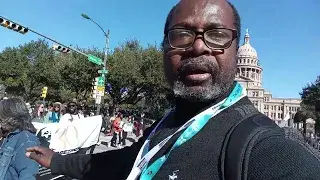
Trump Addresses World Economic Forum, Touches on Greenland, Europe, Immigration, and U.S. Economic Policy

Trump Addresses World Economic Forum, Touches on Greenland, Europe, Immigration, and U.S. Economic Policy
At the World Economic Forum in Davos, Switzerland, U.S. President Donald Trump delivered a wide‑ranging speech that drew close attention from representatives of America’s Western European allies. His remarks spanned geopolitics, immigration, economic policy, and transatlantic relations, while a separate meeting with NATO leadership added further diplomatic context to the visit.
🌍 Greenland, the Arctic, and Strategic Competition
President Trump reiterated his long‑standing view that Greenland is geographically part of North America and emphasized its strategic importance. He argued that the Arctic region—where both Russia and China have increased activity—requires strong U.S. engagement to ensure stability and security.
While past comments about purchasing Greenland sparked controversy, Trump struck a more measured tone in Davos, stating that the United States “will not use force” to acquire the island and that any discussions regarding Greenland remain “ongoing” through diplomatic channels.
🇪🇺 Tensions With Europe Over Defense and Immigration
The president also delivered pointed criticism of European allies. He argued that without U.S. support during the 20th century, “many would be speaking German—and a little bit of Russian,” a remark that drew mixed reactions from European delegates.
Historians often note that France, now a close U.S. ally, played a decisive role in America’s own independence from Britain. Trump’s comments nonetheless underscored his recurring theme that Europe relies heavily on U.S. military and strategic power.
He also criticized European governments for what he described as excessive illegal immigration, claiming it has altered national cultures and traditions. According to Trump, it was Europe’s own cultural foundations that helped shape both Western civilization and the United States after the continent emerged from the Middle Ages.
🇺🇸 Domestic Politics: Ilhan Omar, Jerome Powell, and Minnesota
Turning to U.S. domestic issues, Trump referenced Congresswoman Ilhan Omar, originally from Somalia, criticizing conditions in her country of birth while questioning her approach to U.S. governance.
He also mentioned Federal Reserve Chair Jerome Powell, suggesting that the Fed’s policies had contributed to recent economic challenges. In addition, he alluded to concerns about corruption in the state of Minnesota, though he did not provide specific details.
🤝 Meeting With NATO Leadership
During his visit, Trump met with the NATO Secretary General. Despite the president’s public remarks about Greenland, NATO’s executive leadership clarified afterward that the topic was not discussed during their meeting. The alliance instead focused on broader security cooperation and ongoing defense commitments.
by DR NTUBA THOMPSON AKWO CHIEF EDITOR
EDITORIAL .
🕊️ Immunity and Sovereignty: A Global Reckoning

EDITORIAL .
🕊️ Immunity and Sovereignty: A Global Reckoning
In a world increasingly shaped by geopolitical tensions and shifting alliances, the voice of reason often emerges from unexpected quarters. One such voice—firm, principled, and unwavering—belongs to His Eminence, Excellency Minister Dr. Ntuba Akwo Thompson.
Dr. Ntuba Akwo has delivered a powerful address that challenged the prevailing narratives surrounding the legitimacy of world leaders and the sanctity of sovereign governance.
“For justice to be done,” he says , “the process must be just and right.”
His words echo through media outlets , a reminder that justice is not merely about outcomes, but about the integrity of the path taken to reach them. He has turned his attention to the case of President Nicolás Maduro of Venezuela and his wife, who had recently come under scrutiny from foreign powers.
“The charges against President Maduro and his wife,” Dr. Ntuba declares, “are not the immediate issue. What must be addressed first is the principle of presidential immunity granted to all UN-recognized heads of sovereign states.”
He emphasizes that the United States, while a powerful nation, does not hold the authority to determine who is or isn’t a legitimate leader of another country. Sovereignty, he argues, is not a privilege granted by one nation to another—it is a birthright of every independent state.
“The same way the United States urges other nations to refrain from meddling in its internal affairs,” he continues, “is the same expectation sovereign nations have of the United States. Respect must be mutual.”
Dr. Ntuba draws a striking parallel to the situation within the United States itself. Despite numerous allegations and controversies surrounding President Donald Trump during his tenure, no legal body had detained him. Why? Because the U.S. Supreme Court upheld his presidential immunity—a legal shield that protects sitting presidents from prosecution while in office.
“If the United States defends its own president with immunity,” Dr. Ntuba ask, “why should it deny that same protection to another UN-recognized head of state?”
My message is clear: international law must be applied consistently, without bias or political convenience. Human rights, , belong to all people and must be respected globally—not selectively.
I Dr. Ntuba is not merely defending a man—I am defending a principle. The principle that justice, sovereignty, and human dignity are not negotiable. They are universal.
And with that, I say :
“The Maduro case stops with his presidential immunity. Period.”
World health organization work in the year 2025

World health organization work in the year 2025
Looking back on 2025, the year has been marked by immense achievements and profound challenges for global health. In the face of major funding cuts and increasing threats to science and solidarity, WHO continued to lead and champion global efforts to confront the biggest health challenges of our time.
From governments adopting the world’s first Pandemic Agreement and expanding access to life-saving medicines, to tackling climate-related health risks, WHO reaffirmed both the central role of evidence in health and our enduring relevance to the health of all people, everywhere.
Victories for disease control
Amidst many challenges, 2025 delivered significant victories for disease control and elimination.
Elimination of mother-to-child disease transmission
Maldives became the first country to achieve “triple elimination” of mother-to-child transmission of HIV, syphilis and hepatitis B. Brazil was also recognized for eliminating mother-to-child transmission of HIV, making it the most populous country in the Americas to achieve this historic milestone.
Elimination of trachoma, sleeping sickness and river blindness
Burundi, Egypt and Fiji eliminated trachoma, while Guinea and Kenya eliminated sleeping sickness. Niger became the first African country to eliminate river blindness. WHO’s Global report on neglected tropical diseases (NTDs) shows 32% fewer people needing treatments against an NTD since 2010, with 867 million people treated in 2023.
Decline in deaths from tuberculosis
Tuberculosis (TB) deaths declined significantly, with the WHO African and European regions achieving 46% and 49% reductions over the past decade. Yet TB still killed 1.2 million people in 2024, underscoring the need to address risk factors like HIV, diabetes, smoking and undernutrition.
Progress in malaria control
In 2025, Georgia, Suriname and Timor-Leste were certified malaria-free, and 7 additional new countries in Africa introduced malaria vaccines – a key intervention for child survival. This brings the total to 24 countries, reaching more than 10 million children annually. Wider use of new tools against malaria, including dual-ingredient nets and WHO-recommended vaccines, helped to prevent an estimated 170 million cases and 1 million deaths in 2024.
Continued scale-up of vaccination programmes
With support from WHO and partners, countries continue scaling up vaccination programmes to protect against diseases including meningitis, pneumococcal disease, polio, rotavirus and HPV (human papillomavirus – a major cause of cervical cancer). On 17 November, the first World Cervical Cancer Elimination Day, WHO and partners announced 86 million girls vaccinated against HPV. In 2025, countries including Bhutan, Brazil, China, Indonesia, Nigeria, Tajikistan, Pakistan and Rwanda expanded HPV vaccination and screening – bringing the world closer to eliminating cervical cancer.
Global immunization efforts have led to an 88% drop in measles deaths between 2000 and 2024; nearly 59 million lives have been saved by the measles vaccine since 2000. Despite fewer deaths, measles cases are surging worldwide, with an estimated 11 million infections in 2024 – nearly 800 000 more than pre-pandemic levels in 2019. At least 95% coverage with two measles vaccine doses is required to stop transmission and protect communities from outbreaks of this highly contagious virus.
While 89% of infants worldwide received at least one dose against diphtheria, tetanus and polio (DTP), 20 million children missed out on essential vaccines in 2024 due to conflict, supply disruptions, and a rise in vaccine misinformation.
Dr. Thompson Ntuba Akwo Commends 2024 San Antonio Breast Cancer Symposium


Dr. Thompson Ntuba Akwo Commends 2024 San Antonio Breast Cancer Symposium
Dr. Thompson Ntuba Akwo, Editor of HealthnDevelopment Magazine, Certified Global Health Communicator, and World Health Organization–trained educator, is commending the University of Texas at San Antonio and the American Association for Cancer Research (AACR) for hosting the 2024 San Antonio Breast Cancer Symposium.
Dr. Ntuba, who continues to lead media efforts on breast cancer as a chronic disease, emphasizes that prevention through mammography, early screening, and detection remains critical. He highlights that alongside these measures, other health promotion strategies are essential in reducing the burden of breast cancer worldwide.
He notes that AACR, UT Health San Antonio, and their partners—including Novartis—are making significant strides in alleviating suffering. Novartis, in addition to providing symposium materials for attendees, is promoting Kisqali (ribociclib 200 mg tablets) as part of breast cancer management.
Dr. Ntuba Akwo, who writes and reports on cancer as part of global community awareness and education, regards the San Antonio International Symposium as one of the largest and most impactful gatherings dedicated to breast cancer. National partners such as Susan G. Komen are also participating, sharing knowledge, resources, and advancing awareness.
By Dr. Thompson Ntuba Akwo Editor, HealthnDevelopment Magazine
CDC Vaccine Panel Sparks Controversy with Hepatitis B Decision



CDC Vaccine Panel Sparks Controversy with Hepatitis B Decision
Washington, D.C. — December 5, 2025 In a move that has ignited intense debate across the medical and public health communities, vaccine advisers to the U.S. Centers for Disease Control and Prevention (CDC) have voted in favor of a major change to the nation’s childhood immunization schedule. The panel recommended abandoning universal hepatitis B vaccination for newborns in the United States — a policy that has been in place for over three decades.
The decision came during a meeting held today, where the committee also began discussions on broader vaccine schedule revisions and the use of aluminum adjuvants in pediatric vaccines.
A Reshaped Committee
The composition of the advisory panel itself has drawn scrutiny. Earlier this year, U.S. Health and Human Services Secretary Robert F. Kennedy Jr., a longtime critic of vaccine mandates, abruptly dismissed all 17 sitting members of the CDC’s vaccine advisory committee. He then appointed a new slate of members reportedly aligned with his views on vaccine safety and parental choice.
Kennedy’s actions have been described by critics as a politicization of public health policy. Supporters argue the shake-up brings long-overdue transparency and reform to vaccine oversight.
Medical Community Reacts
Public health experts and pediatricians have expressed alarm at the recommendation to end universal hepatitis B vaccination at birth. The vaccine, typically administered within 24 hours of delivery, has been credited with dramatically reducing transmission of the virus, which can lead to chronic liver disease and cancer.
“This is a dangerous reversal of decades of progress,” said Dr. Elena Martinez, a pediatric infectious disease specialist. “Hepatitis B can be transmitted from mother to child during birth, and early vaccination is the most effective way to prevent lifelong infection.”
What’s Next
The CDC is expected to review the panel’s recommendations before making any formal changes to its immunization guidelines. Meanwhile, discussions continue around the safety and necessity of aluminum in vaccines — a topic frequently cited by vaccine skeptics despite extensive research supporting its safety.
As the nation watches closely, the outcome of these deliberations could reshape how childhood vaccines are administered in the U.S., with implications for public trust, disease prevention, and the role of science in policymaking.
ASCENSION SETON MEDICAL CENTER AUSTIN IS UNDERGOING A LAND MARK EXPANSION WITH CONSTRUCTION OF A NEW WOMEN ,S PAVILION


Ascension Seton Medical Center Austin is undergoing a landmark expansion with the construction of a new Women’s Pavilion, a state-of-the-art tower dedicated to advancing women’s health in Central Texas. The project represents one of the largest investments in women’s healthcare in the region, with a vision to transform patient care, education, and community impact.
🌟 The Story of the Expansion
A Bold Vision for Women’s Health
-
In March 2023, Ascension Seton broke ground on a new women’s health tower at its Austin campus.
-
The project is valued at $320 million and is designed to meet the growing demand for comprehensive women’s health services in Central Texas.
-
The facility will be 282,000–337,000 square feet, rising 8 stories, and will include a 1,600-space parking garage to accommodate increased patient and visitor traffic.
What the Pavilion Will Offer
-
Dedicated Emergency Room: Specialized for obstetric and gynecologic emergencies, staffed by OB-GYN specialists.
-
Advanced Clinical Services: Including urogynecology, gynecologic oncology, breast diagnostics, minimally invasive surgery, and maternal-fetal medicine.
-
Expanded Maternity Care: Capacity for 7,500 deliveries per year, with neonatal intensive care units (NICU) and C-section suites.
-
Academic Collaboration: Partnership with UT Health Austin and Dell Medical School to train future caregivers and integrate subspecialty expertise.
Human Impact
-
At the groundbreaking, Morgan Moorhead, a mother whose twins were cared for in Ascension Seton’s NICU, spoke about how the new pavilion will help “even more women, even more families that maybe wouldn’t have access”.
-
The design incorporates patient feedback, ensuring that the hospital reflects the needs and experiences of women across diverse backgrounds.
Timeline & Future
-
The Women’s Pavilion is expected to be completed by spring 2025, marking a new era for women’s healthcare in Austin.
-
Beyond clinical care, the expansion will serve as a hub for innovation, education, and community engagement, reinforcing Ascension Seton’s role as a leader in health equity and excellence.
✨ Why It Matters
This expansion is more than bricks and mortar—it’s about reshaping the future of women’s health in Texas. By combining cutting-edge medical services with compassionate care and academic partnerships, Ascension Seton is positioning Austin as a national model for women-centered healthcare.
Would you like me to craft this into a feature-style article (like for a magazine) or a press release-style story that emphasizes the institutional voice and milestones?
Statement to Coach Marc Brys from His Eminence Dr. Ntuba Akwo Thompson

Statement to Coach Marc Brys from His Eminence Dr. Ntuba Akwo Thompson
Coach Marc Brys,
Before external voices—especially those with controversial reputations—attempt to intervene in Cameroon’s internal affairs, I urge you to consider the following points with care and reflection:
-
Cameroon’s National Football Team is a sovereign entity. It does not belong to FIFA or any external organization. Its identity is rooted in the people and government of Cameroon.
-
FECAFOOT is a registered non-profit within Cameroon. It operates under Cameroonian law and can be dissolved by the government if deemed necessary. The national teams will continue to exist regardless of FECAFOOT’s status.
-
Contracts are binding but conditional. If your agreement included qualifying Cameroon for the 2026 World Cup and that goal was not met, the contract may be subject to review.
-
Cameroon reserves the right to pursue arbitration or legal action. This includes engaging FIFA or international courts to resolve disputes fairly and transparently.
-
Players are the heart of the team. While coaches are vital, Cameroon can participate in tournaments without one if necessary. The talent and spirit of our athletes remain paramount.
-
As a Cameroonian political leader based in the West, I advocate for fairness. You should not be mistreated due to internal politics or personal rivalries. Figures like Eto’o and others have built their careers abroad, and their influence should not cloud justice.
-
Your appointment came from the Minister of Sports. That authority is legitimate and recognized. FECAFOOT does not override the government’s mandate.
-
We call on the Cameroonian government to clarify the situation. The Minister of Sports must address the confusion and ensure transparency, just as we demand in our democratic processes.
-
FIFA’s actions may be influenced by misinformation. It’s possible that private communications led to your removal from their records. This does not necessarily reflect FIFA’s stance toward you.
-
Youth criticism should not discourage you. Many young Cameroonians lack full context. Avoid engaging in public disputes, especially with figures like Eto’o, whose regional and political ties complicate matters.
David Pagou’s presence in the team may be used to justify continuity without formal reappointment. You are facing a system shaped by both Cameroonian traditions and Western influences.
Stand firm on your contract. Seek the best international legal counsel to ensure justice and set a precedent for future governance in Cameroonian sports.
Respectfully, His Eminence, Excellency Minister Dr. Ntuba Akwo Thompson
Dr. Thompson Akwo Ntuba sends message of courage to Cameroonians, pledges diaspora support for governance reform

Dr. Thompson Akwo Ntuba sends message of courage to Cameroonians, pledges diaspora support for governance reform
In the wake of the tragic killing of opposition leader Anicet Ekane from Littoral Cameroon, Dr. Thompson Akwo Ntuba, a distinguished international political figure and medical doctor based in the United States, has issued a heartfelt message of courage and solidarity to Cameroonians. He reaffirmed his commitment—alongside other diaspora leaders—to modernize governance in Cameroon by working with all “good living forces” for national renewal.
🕊️ A Voice of Courage from the Diaspora
Dr. Ntuba’s message comes at a time of political tension and grief. His call for unity and reform resonates deeply with Cameroonians mourning the loss of Anicet Ekane, a prominent opposition figure. Speaking from his base in Texas, Dr. Ntuba emphasized that the diaspora has a vital role to play in shaping a more inclusive and transparent political future for Cameroon.
“We will do all in our powers to modernize governance in Cameroon,” he declared, “working with all good living forces to ensure justice, peace, and development.”
🗳️ Political Leadership Rooted in Cameroon
Dr. Ntuba’s political journey began in Cameroon, where he was elected president of the Meme I YCPDM section. His leadership was marked by a commitment to dialogue and reform within the ruling Cameroon People's Democratic Movement (CPDM). In a widely circulated newspaper interview, he acknowledged the need to embrace modernist proposals within the party, stating:
“The modernists’ proposals should not be rejected entirely,” reflecting his openness to progressive ideas and intra-party collaboration.
His election was contested by rival Algo Mukete, but Dr. Ntuba maintained his position, advocating for unity and intellectual exchange as directed by the party chairman. His stance earned him recognition as a reform-minded leader willing to challenge orthodoxy while respecting party structures.
🌍 Global Influence and Youth Empowerment
Beyond politics, Dr. Ntuba has built a reputation as a global health consultant, preacher, and youth mentor. His work through Health Consulting International and Bethel Foundation Association spans Cameroon, Nigeria, France, and the USA. He has spoken at universities and seminaries, encouraging young Africans to lead with integrity and visionhealthconsultingint.wixsite.com.
His leadership philosophy—rooted in “Dominion principles”—emphasizes transformation through communication, education, and health development. These values continue to inform his political advocacy, especially in moments of national crisis.
✊ A Call to Action
Dr. Ntuba’s message following Anicet Ekane’s death is not just a tribute—it’s a rallying cry. He urges Cameroonians at home and abroad to unite in pursuit of democratic renewal. His promise to work with “all good living forces” signals a broad coalition of reformers, civil society actors, and diaspora leaders committed to change.
As Cameroon navigates its political future, voices like Dr. Ntuba’s offer hope, resilience, and a roadmap for inclusive governance.
Sources: Health Consulting International – Leadership Profile Health Consulting International – Biography Youth & Education Initiatives
Celebrating Community and Compassion: The Turkey Trot with Dr. Ntuba Akwo Thompson

The Turkey Trot is more than just a festive run—it’s a vibrant celebration of community, philanthropy, and shared purpose. Held annually in Austin, Texas, this event brings together thousands of participants to support local causes while enjoying the spirit of Thanksgiving. In 2025, the Turkey Trot took on special significance as it marked the 50th anniversary of ThunderCloud Subs, a beloved local sandwich shop and the event’s founding sponsor. Among the distinguished attendees was Dr. Ntuba Akwo Thompson, whose presence underscored the event’s commitment to social impact and civic engagement.
Honoring 50 Years of ThunderCloud Subs
At the heart of the Turkey Trot stood a towering sponsor banner, proudly displaying the ThunderCloud Subs logo alongside the phrase “50 Years.” This milestone celebrated half a century of culinary service and community involvement. ThunderCloud Subs has long been a champion of local initiatives, and its continued support of the Turkey Trot exemplifies its dedication to giving back. The event served as a living tribute to the company’s legacy, blending fitness, fun, and fundraising in a way that resonated with Austinites of all ages.
Supporting Caritas of Austin: Ending Homelessness Together
One of the most impactful aspects of the Turkey Trot is its partnership with Caritas of Austin, a nonprofit organization devoted to ending homelessness. The banner prominently featured Caritas’ logo and its powerful tagline, “Ending Homelessness Together,” reminding participants of the deeper purpose behind the festivities. Proceeds from the event directly benefit Caritas’ programs, helping individuals and families find stability, housing, and hope. This collaboration transforms the Turkey Trot from a mere race into a movement for change.
A Network of Sponsors and Community Leaders
The event’s success was made possible by a diverse array of sponsors, each contributing to the cause and the celebration. Logos from First Texas Honda, Uber Eats, Chevron, Long Center, Austin Telco Federal Credit Union, Community Impact Newspaper, Keurig Dr Pepper, and IronBridge Private Wealth adorned the banner, showcasing a united front of corporate and civic support. Their involvement highlighted the power of collective action in addressing social challenges and fostering community well-being.
Dr. Ntuba Akwo Thompson: A Voice for Equity and Engagement
Among the attendees, Dr. Ntuba Akwo Thompson stood out as a symbol of leadership and advocacy. Known for his work in public health, diplomacy, and humanitarian service, Dr. Thompson’s presence at the Turkey Trot reflected his ongoing commitment to community empowerment. His engagement with events like this reinforces the importance of visibility, representation, and collaboration in tackling issues such as homelessness and health equity. By participating in the Turkey Trot, Dr. Thompson not only celebrated the spirit of Thanksgiving but also amplified the message of unity and compassion.
Conclusion
The 2025 Turkey Trot was a powerful convergence of celebration and service. With ThunderCloud Subs commemorating 50 years, Caritas of Austin driving meaningful change, and leaders like Dr. Ntuba Akwo Thompson lending their voice, the event embodied the best of Austin’s community spirit. It reminded all who attended that when people come together—with purpose and heart—they can make a lasting difference.
Memorial Service Honors Former Vice President Dick Cheney at Washington National Cathedral
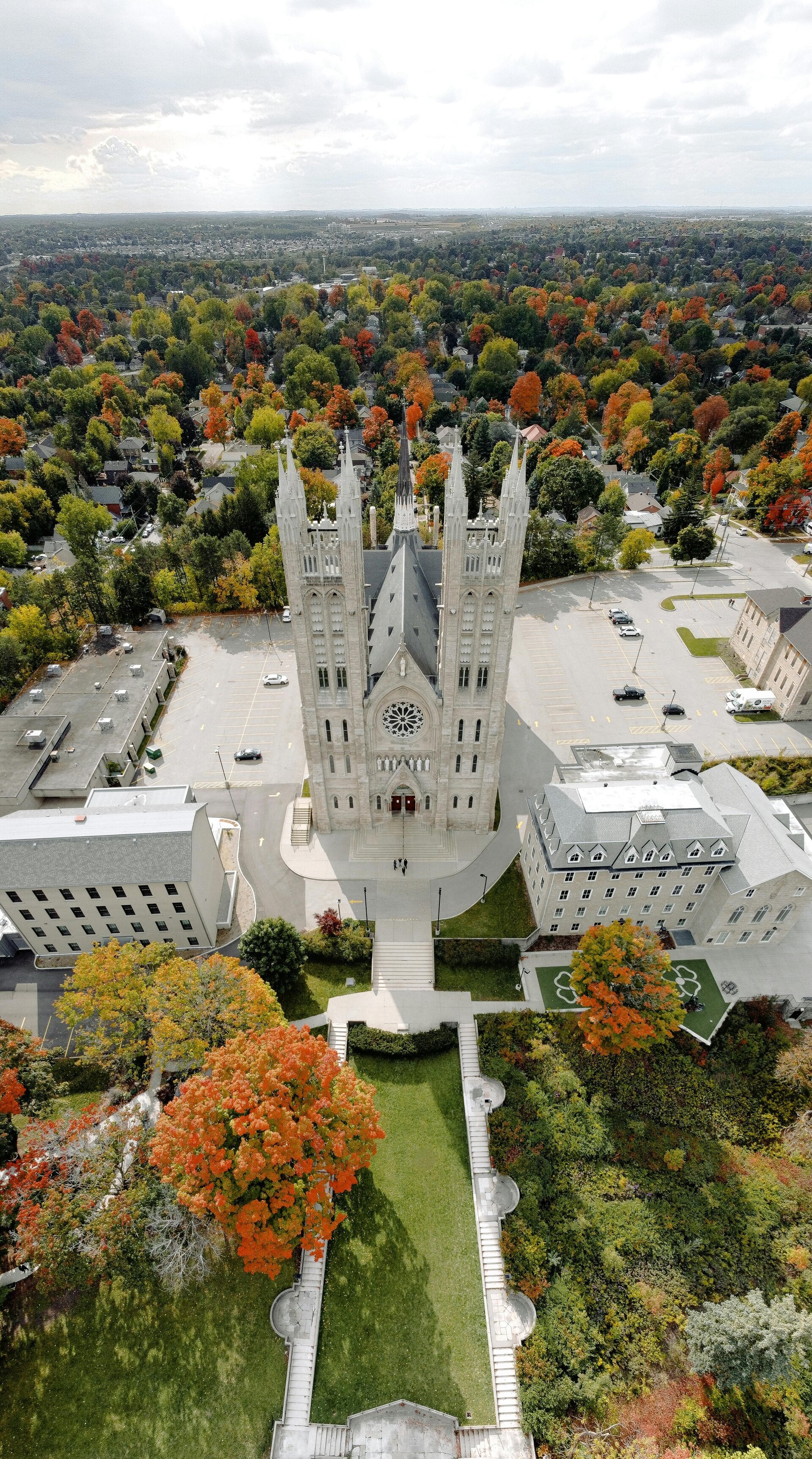
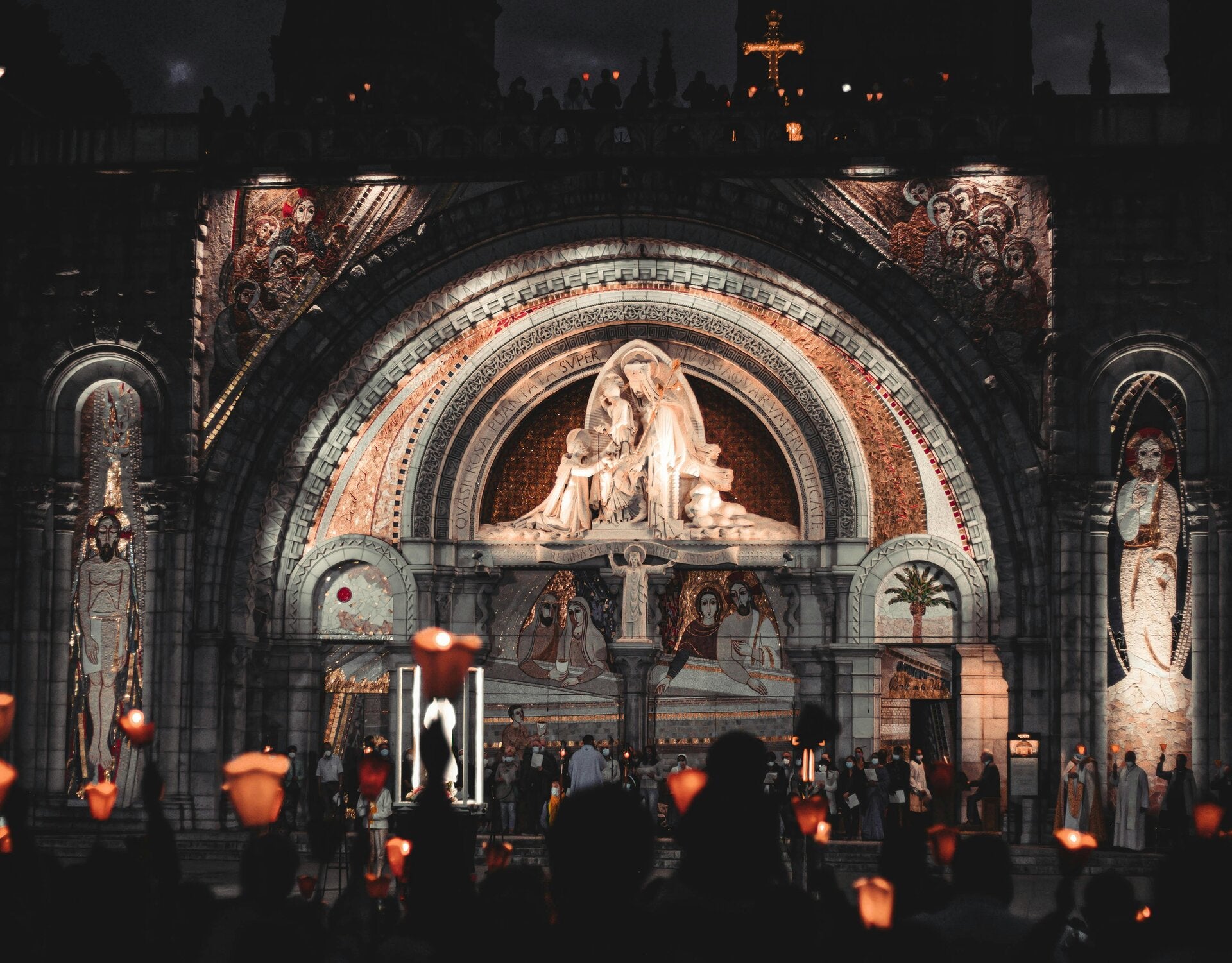

Washington, D.C. — A solemn memorial service was held at the Washington National Cathedral to honor the life and legacy of former Vice President Dick Cheney. The invitation-only ceremony drew a distinguished gathering of national leaders, family members, and former colleagues who came together to pay tribute to Cheney’s decades of public service.
Among those in attendance were former President George W. Bush and First Lady Laura Bush, President Joe Biden and First Lady Jill Biden, as well as Vice President Kamala Harris and all living former vice presidents. Former Vice President Mike Pence, who served under President Donald Trump, was also present.
President Bush delivered a heartfelt eulogy, praising Cheney’s unwavering dedication to the nation. He emphasized Cheney’s reputation for selfless service, noting that he never sought personal glory but instead devoted himself to the responsibilities of leadership and the defense of American values.
Cheney’s daughter, former Congresswoman Liz Cheney, also spoke, offering a deeply personal reflection on her father’s life and his commitment to family and country. Her remarks underscored the profound impact Cheney had not only on American politics but also on those closest to him.
Notably absent from the service were President Donald Trump and Vice President Vance, who were not invited. The event remained focused on Cheney’s legacy and the leaders who worked alongside him.
The service was attended by numerous former members of Congress and administrative staff from the Bush administration, including Senate Minority Leader Mitch McConnell. Their presence highlighted Cheney’s enduring influence across multiple generations of political leadership.
The ceremony at the National Cathedral served as both a farewell and a celebration of a man remembered for his steadfastness, conviction, and commitment to the nation he served.
Tragedy at the Bus Stop: Austin Homeless Man Fatally Shot in Early Morning Confrontation.


Tragedy at the Bus Stop: Austin Homeless Man Fatally Shot in Early Morning Confrontation in Austin, TX — November 12, 2025.
In the early hours of Tuesday morning, a fatal shooting claimed the life of a homeless man known in the local community as "Pork Chop." The incident occurred near the bus stop adjacent to the Hilton Hotel and the site of the now-demolished Austin Convention Center.
According to eyewitnesses, a woman exited a vehicle and confronted the man before shooting him twice in the torso at close range. Emergency medical services arrived swiftly and attempted resuscitation, but their efforts were unsuccessful. Witnesses believe the man may have died before EMS arrived or succumbed to his injuries during the attempt to revive him.
Dr. Ntuba Thompson Akwo, an International Physician, Global health expert, Communicator and community advocate, was present at the scene and documented the unfolding events. He observed the victim lying motionless on the concrete as EMS personnel worked urgently. Police officers quickly cordoned off the area, establishing a perimeter to preserve the crime scene.
A nearby bystander, waiting for his car to be released from a nearby lot, remarked that this was not the first death he had witnessed in that location—though the previous incident had not involved gunfire.
Members of the local unhoused community identified the victim as "Pork Chop," a man known for his volatile behavior. Some expressed that his confrontational nature may have contributed to the tragic outcome, though others were quick to emphasize that no one deserves to die in such a violent manner.
Dr. Akwo Ntuba captured photos and videos of the scene, which he says help contextualize the tragedy. He also spoke with a distraught woman who had witnessed the shooting and was visibly shaken. "Be thankful to God that you were not hit by stray bullets," he told her. "Pray for the soul of the deceased."
This incident is a stark reminder of the dangers faced by Austin’s unhoused population, who are often exposed to violence, mental health crises, and inadequate access to support services. Advocates like Dr. Ntuba Akwo stress the urgent need for expanded mental health resources, housing initiatives, and community-based interventions to address the root causes of such tragedies.
As the investigation continues, the community mourns yet another life lost on the streets—and calls grow louder for systemic change.
Veterans Day 2025: A Nation Honors Its Heroes

Austin, TX — November 11, 2025 Across the United States, Americans gathered to honor the service and sacrifice of veterans on Veterans Day. From parades to solemn ceremonies, the day was marked by gratitude, remembrance, and unity.
🎖️ Celebrations in Austin
In Austin, thousands lined Congress Avenue and the Capitol grounds to watch the annual Veterans Day parade. Marching bands, military units, and community organizations joined together in a vibrant display of patriotism. Governor Greg Abbott hosted invited guests at the Governor’s Mansion, where he praised veterans for their courage and commitment to freedom. The atmosphere was festive yet reverent, as families waved flags and applauded those who served.
🌹 A Solemn Ceremony in Washington, D.C.
Meanwhile, in Washington, D.C., President Donald Trump participated in a solemn tradition at Arlington National Cemetery. He was seen laying a wreath at the Tomb of the Unknown Soldier, honoring the countless men and women who gave their lives in defense of the nation. The ceremony, attended by military leaders and veterans’ families, underscored the enduring respect for America’s fallen heroes.
🕊️ A Day of Reflection and Unity
Veterans Day 2025 was not only a celebration of freedom but also a reminder of the ongoing responsibility to support those who served. Communities across the country held events ranging from parades to prayer services, highlighting both the joy of freedom and the cost at which it was won.
As Dr. Ntuba Thompson Akwo and other advocates have often emphasized, honoring veterans must go beyond ceremonies—it requires investment in healthcare, housing, and holistic support for those who return home carrying the burdens of war.
✨ This story ties together the festive celebrations in Austin with the solemn national ceremony in Washington, showing how Veterans Day bridges joy and remembrance.
Trump-Xi Trade Truce: Tariff Cuts and Fentanyl Crackdown Spark Mixed Reactions in Washington

Trump-Xi Trade Truce: Tariff Cuts and Fentanyl Crackdown Spark Mixed Reactions in Washington
In a high-stakes meeting held in Busan, South Korea, President Donald Trump and Chinese President Xi Jinping have reached a sweeping macroeconomic agreement aimed at easing trade tensions and tackling the fentanyl crisis. The deal includes a reduction in U.S. tariffs on Chinese imports, particularly those linked to fentanyl production, in exchange for China’s commitment to tighten controls on precursor chemicals used in the deadly drug’s manufacture.
Trump hailed the meeting as “amazing,” announcing that fentanyl-related tariffs would be cut from 20% to 10%, and that China would delay its planned export restrictions on rare earth minerals for one year. The agreement also includes a resumption of Chinese purchases of American soybeans and a pause on new restrictions affecting magnets and rare earthsYahoo+1.
While the White House framed the deal as a win for both sides, critics argue that China emerged stronger, especially given the optics of the summit and the concessions made by the U.S. “This deal gives China breathing room on rare earths and positions Xi as a global statesman,” said one analyst. “Meanwhile, Trump is giving up leverage on tariffs without securing long-term guarantees.”
Adding to the controversy, four Republican senators have publicly opposed the tariff reductions, arguing that they undermine U.S. manufacturing and reward China’s strategic maneuvering. Though their names have not been officially released, sources close to Capitol Hill suggest that the dissenting senators represent states with strong industrial bases and have long been skeptical of Trump’s trade diplomacy.
The fentanyl crisis remains a central concern. With synthetic opioids responsible for tens of thousands of deaths annually in the U.S., China’s pledge to regulate chemical exports is seen as a critical step. However, enforcement remains uncertain. “We’ve heard promises before,” said a senior DEA official. “What matters is whether China follows through.”
As Trump prepares for a follow-up visit to China in April, and Xi plans a reciprocal trip to the U.S., the world watches closely. The deal may have bought time, but it has not resolved the deeper tensions between the two superpowers.
Sources: Yahoo News – Trump-Xi agreement details NBC News – Trump lowers fentanyl tariffs ABC News – Trump cuts fentanyl tariffs CNBC – Rare earths and fentanyl deal Straits Times – Trade truce overview
Prince Andrew stripped of royal titles amid renewed scrutiny over Epstein ties and Virginia Giuffre’s memoir




Prince Andrew stripped of royal titles amid renewed scrutiny over Epstein ties and Virginia Giuffre’s memoir
In a dramatic turn of events that reverberates through the corridors of Buckingham Palace and beyond, King Charles III has formally stripped Prince Andrew of all royal titles, styles, and honours, following mounting public pressure and the release of a memoir by Virginia Giuffre, the woman who has long accused Andrew of sexual assault during her time as a victim of Jeffrey Epstein’s trafficking network.
The memoir, Nobody’s Girl, penned by Giuffre before her death, reignites scrutiny over Andrew’s alleged involvement with Epstein and Ghislaine Maxwell. Its publication has galvanized calls for accountability, not just for Andrew, but for the monarchy itself. In response, Buckingham Palace issued a stark statement: “His Majesty has today initiated a formal process to remove the Style, Titles and Honours of Prince Andrew.”
From this day forward, the man once known as the Duke of York will be referred to as Andrew Mountbatten Windsor. His long-held lease on Royal Lodge, which had previously shielded him from legal eviction, has been revoked. “Formal notice has now been served to surrender the lease and he will move to alternative private accommodation,” the palace confirmed.
This move marks a decisive shift in the monarchy’s posture toward scandal and accountability. While Andrew continues to deny all allegations, the symbolic stripping of his titles is seen by many—including Giuffre’s family—as a form of vindication. “This decisive action is a powerful step forward in our fight to bring Epstein’s network to justice,” her family said in a public statement.
Yet, questions linger. What did Andrew know? What role did royal privilege play in shielding him from consequences for so long? And how will this affect the monarchy’s image in an era demanding transparency?
As Dr. Ntuba Thompson Akwo reflects in this editorial analysis, “The monarchy stands at a crossroads. The removal of titles is not merely ceremonial—it is a reckoning. But reckoning without truth is hollow. The unanswered questions that haunt Andrew now haunt the institution itself.”
In the wake of Nobody’s Girl, the Royal Family must confront not just the legacy of one man’s alleged actions, but the broader implications of silence, complicity, and the cost of preserving image over justice.
Sources: People – King Charles strips Prince Andrew of all titles Today – Prince Andrew removed from Royal Lodge People – Virginia Giuffre’s family reacts
BREAKING: The European Union has condemned post-election violence in Cameroon, calling for accountability, justice, and dialogue following the disputed October 2025 presidential results.


BREAKING: The European Union has condemned post-election violence in Cameroon, calling for accountability, justice, and dialogue following the disputed October 2025 presidential results.
Here’s a detailed summary of the situation and the EU’s response:
🇨🇲 Post-Election Crisis in Cameroon
-
On October 27, 2025, Cameroon’s Constitutional Council proclaimed President Paul Biya the winner of the October 12 presidential election, securing 53.66% of the vote.
-
His main challenger, Issa Tchiroma Bakary, had earlier declared victory and accused the government of widespread electoral fraud.
-
The announcement triggered massive protests across cities like Douala, Garoua, and Yaoundé, with demonstrators alleging a stolen victory.
🔥 Violence and Repression
-
At least six civilians were killed, reportedly by security forces, during protests on October 26 and 27.
-
Hundreds have been arrested, with reports of excessive force and human rights violations.
🇪🇺 EU’s Strong Statement
-
In a statement from Brussels, the European Union condemned the violent repression of peaceful demonstrations and deplored the deaths by firearm.
-
The EU urged Cameroon to:
-
Ensure accountability, transparency, and justice.
-
Release all arbitrarily detained individuals.
-
Uphold commitments under the Samoa Agreement, which emphasizes democracy, human rights, and good governance.
-
-
The EU called on all political and social actors to engage in constructive dialogue to preserve national cohesion and democratic values.
🌍 Broader International Reaction
-
The African Union and other global development partners have echoed concerns, emphasizing the need for peaceful resolution and respect for democratic processes.
-
The United Nations Secretary-General also expressed deep concern over the violence and called for restraint and inclusive dialogue.
⚠️ Current Situation
-
Tensions remain high nationwide, with fears of prolonged unrest.
-
The opposition continues to reject the results, and international observers are closely monitoring developments.
Cameroon erupts in nationwide protests following disputed presidential election, as citizens decry alleged vote rigging and demand change.

Cameroon erupts in nationwide protests following disputed presidential election, as citizens decry alleged vote rigging and demand change.
🇨🇲 Cameroon’s political crisis deepens as President Paul Biya, now 92, secures an eighth term in office amid widespread allegations of electoral fraud. The October 12, 2025 election has ignited massive protests across all ten regions, with opposition supporters and civil society groups claiming the vote was stolen through manipulation by the electoral commission (ELECAM), the Constitutional Council, and the ruling CPDM party.
🔥 A Nation in Turmoil
-
Violent clashes have erupted in major cities like Douala, Yaoundé, and Garoua, where security forces reportedly used live ammunition and tear gas to disperse demonstrators.
-
At least four protesters have been killed, and dozens more injured or detained, including prominent opposition figures.
-
The Constitutional Council dismissed ten petitions challenging the election results, citing lack of evidence, despite claims of ballot-stuffing and voter intimidation.
🗳️ The Contested Victory
President Biya was declared the winner with 53.66% of the vote, narrowly defeating opposition candidate Issa Tchiroma Bakary, who claims he actually won with 54.8% based on his campaign’s internal tallies. Bakary’s supporters have taken to the streets, demanding transparency and international intervention.
🌍 Global Echoes and Local Voices
Dr. Ntuba Akwo, a Cameroonian physician, preacher, and international political figure with ties to England, France, Germany, and Italy, has condemned the election as a “democratic disaster.” He warns that Cameroon may not recover from the damage inflicted by what he calls “a regime of looters and killers,” drawing parallels to election protests in the U.S. and Europe.
Akwo’s statement reflects growing concern among diaspora communities and international observers, who fear that Biya’s continued rule—stretching over 43 years as president and more than 65 years in government—is plunging Cameroon into irreversible decline.
🧭 What Lies Ahead?
With Biya’s term potentially extending until 2032, critics argue that Cameroon faces a crisis of legitimacy and governance. The country remains divided by language, plagued by separatist movements, and burdened by economic stagnation. The protests signal a tipping point, as citizens demand accountability and democratic renewal.
🕊️ “The Best Medicine Is Peace”: WHO Chief Urges Humanitarian Access to Gaza Amid Global Health Briefing
🕊️ “The Best Medicine Is Peace”: WHO Chief Urges Humanitarian Access to Gaza Amid Global Health Briefing
Geneva, Switzerland — October 23, 2025 In a powerful and emotionally charged press conference held at the World Health Organization headquarters in Geneva, WHO Director-General Dr. Tedros Adhanom Ghebreyesus called for urgent humanitarian access to Gaza, emphasizing that “the best medicine is peace” in times of conflict.
Speaking alongside global health experts, Dr. Tedros addressed the escalating humanitarian crisis in Gaza, where medical supply chains have been severely disrupted due to ongoing hostilities. “We urge Israel to open humanitarian corridors to allow the flow of medical and health commodities into Gaza,” he stated. “Lives depend on it. Health systems cannot function without access, and civilians must be protected.”
The WHO panel highlighted the compounded risks of disease outbreaks in conflict zones, noting the recent detection of poliovirus in Gaza and the challenges of maintaining routine immunization amid violence. A two-round emergency polio vaccination campaign was launched earlier this year, reaching over half a million children.
Dr. Tedros also praised the resilience of health workers and the support of international partners, singling out Rotary International for its decades-long commitment to polio eradication. “Rotary’s leadership and grassroots mobilization have brought us to the brink of ending polio globally,” he said, referencing the organization's recent funding for outbreak response in Gaza.
🌍 Global Health Wins: Ebola and Polio Progress
The briefing also celebrated major milestones in global health. WHO officials reported significant progress in the fight against Ebola, citing successful containment efforts in recent outbreaks across Africa. “Rapid response, community engagement, and vaccine deployment have transformed our ability to manage Ebola,” said one panelist.
On polio, the Global Polio Eradication Initiative (GPEI) launched a new Global Action Plan to overcome funding shortfalls and geopolitical challenges. The strategy aims to fully implement the 2022–2029 roadmap for eradication, with Rotary International continuing to play a pivotal role.
🔍 A Call for Global Solidarity
Dr. Tedros closed the conference with a heartfelt appeal: “Whether it’s Gaza, Guinea, or Geneva, health is a human right. Peace is not just the absence of war—it is the foundation of health. Let us act with urgency, compassion, and unity.”
🗳️ Austin Voters Weigh Proposition Q Amid Early Voting Surge and Statewide Amendments

🗳️ Austin Voters Weigh Proposition Q Amid Early Voting Surge and Statewide Amendments
By HealthNDevelopment Media | November 2025 | Austin, Texas
As early voting kicked off across Texas this November, Dr. Ntuba Thompson Akwo—international physician, publisher, and civic documentarian—hit the streets of Austin to capture the pulse of voters navigating a crowded ballot. With 17 proposed amendments to the Texas Constitution and a local measure known as Proposition Q, the stakes felt high for many Austinites.
🎥 Voices from the Field: Proposition Q Sparks Debate
In interviews conducted by Dr. Akwo, a University of Texas at Austin professor expressed skepticism about Proposition Q, which proposes a new funding mechanism for city infrastructure. “This has nothing to do with the current government shutdown,” the professor said, referring to federal budget tensions. “It’s driven by people who have a history of raising taxes and misusing funds—prioritizing billion-dollar projects like the convention center over basic needs like parks.”
Others voiced strong support for the measure, arguing that Proposition Q offers a lifeline for Austin amid federal financial shortfalls. “Trump’s budget cuts have hit our city hard,” said one voter. “Prop Q helps us fill the gap and keep services running. It’s about resilience.”
The flyer distributed by University Democrats, titled Pro-Student Voter Guide, endorsed a “FOR” vote on Proposition Q, aligning with student concerns about equity, affordability, and civic investment.
📜 Statewide Amendments: A Wave of Opposition
The same flyer revealed a sweeping stance against nearly all of the 17 proposed constitutional amendments. University Democrats opposed Propositions 2 through 17, citing concerns about fiscal responsibility, equity, and transparency. Only Propositions 1 and 7 received “No endorsement,” signaling neutrality or ambiguity.
Among the contested measures:
-
Proposition 4: A tax-related amendment that critics say disproportionately benefits wealthy landowners.
-
Proposition 5: A higher education funding proposal that some argue lacks accountability.
-
Proposition 14: A land acquisition measure that opponents fear could sideline community input.
🧭 Civic Engagement in Action
Dr. Akwo’s documentation reflects a city grappling with complex choices—balancing local needs, state reforms, and national political dynamics. His interviews and video footage offer a snapshot of democratic engagement in real time, amplifying voices often left out of policy debates.
“This is legacy work,” Dr. Akwo said. “We’re not just voting—we’re shaping the future of health, equity, and justice in our communities.”
As Election Day approaches, Austin’s voters continue to weigh the promises and pitfalls of each proposition, with grassroots leaders like Dr. Akwo ensuring that every perspective is heard, archived, and remembered.
“From Script to Healing: Dr. Ntuba Akwo Documents Health Narratives at Austin Film Festival 2025”


🎬 “From Script to Healing: Dr. Ntuba Akwo Documents Health Narratives at Austin Film Festival 2025”
Austin, Texas — As the city buzzes with cinematic energy during the Austin Film Festival (AFF), one figure moves with quiet purpose through the crowds, cameras, and conversations. Dr. Ntuba Akwo Thompson, founder and editor of HealthNDevelopment Magazine and Media, is on the ground—documenting, interviewing, and amplifying the voices behind the screen.
From October 25 to November 1, AFF transforms Austin’s theaters—including the Galaxy Theatres and Austin Film Festival Theater—into hubs of creativity and dialogue. Filmmakers, screenwriters, and storytellers from across the country and around the world gather to showcase new and independent films, participate in Q&A panels, and compete in one of the industry’s most respected screenwriting competitions.
But for Dr. Akwo, this isn’t just a celebration of cinema—it’s a strategic moment for health communication.
“Films are powerful vessels,” he explains between interviews with out-of-town participants. “They carry emotion, culture, and truth. For health communicators, they’re not just entertainment—they’re tools for healing, education, and advocacy.”
Dr. Akwo’s presence at AFF echoes the spirit of the World Health Organization’s Health for All Film Festival, which uses cinematic storytelling to promote global health messages—from mental health and maternal care to pandemic resilience and trauma recovery. Through HealthNDevelopment Magazine and Media, he’s building a similar archive—one that documents how screenwriters and filmmakers embed health themes into their work, consciously or unconsciously.
Among the participants he’s interviewed are:
-
A screenwriter from New York whose short film explores grief and addiction
-
A director from Mexico City whose documentary tackles rural health disparities
-
A student filmmaker from UT Austin whose script centers on immigrant mental health
These stories, Dr. Akwo says, will be featured in upcoming editions of HealthNDevelopment, alongside reflections on how festivals like AFF can serve as civic classrooms—spaces where art meets advocacy.
“Whether it’s a fictional drama or a raw documentary,” he adds, “every frame has the potential to shift hearts and policies. That’s why we’re here—to capture that impact.”
As AFF continues its weeklong celebration, Dr. Akwo’s lens remains focused—not just on the films, but on the filmmakers, the messages, and the moments that make cinema a force for global health.
📰 UT Austin Students Protest Trump-Era Higher Education Compact During Presidential Investiture
📰 UT Austin Students Protest Trump-Era Higher Education Compact During Presidential Investiture
Amid the ceremonial investiture of University of Texas at Austin’s 31st president, James E. Davis, hundreds of students staged a powerful protest against a proposed federal compact from the Trump administration that they say threatens academic freedom, diversity, and the integrity of campus life.
The compact—offered to nine flagship universities across the country—promises preferential federal funding in exchange for sweeping policy changes. These include limiting international student enrollment, enforcing ideological neutrality, and defunding ethnic, gender, and diversity studies programs.
🎓 Black Students Coalition Leads the Charge
At the heart of the protest was the Black Students Coalition, which issued a bold declaration: “We Demand.” Their demands, emblazoned across protest signs and banners, called for:
-
Leadership that reflects the full diversity of the student body
-
Student voices in all policy decisions
-
Protection of ethnic and identity studies programs from consolidation
-
Defense of academic freedom
-
Transparency and direct communication regarding the compact
-
Reintroduction and defense of Diversity, Equity, and Inclusion (DEI) programs
-
Regular meetings with key stakeholders
-
Representation on the Core Curriculum Task Force
-
Reinstatement of Cultural Diversity and Global Cultures flags in the curriculum
📉 Concerns Over Black Student Representation
Protesters also lamented the declining percentage of Black students at UT Austin, citing systemic barriers and policy shifts that have marginalized their presence and contributions. “This compact furthers the erasure of our communities,” one student leader declared. “We are not just statistics—we are scholars, leaders, and changemakers.”
📣 “Fight the Agenda” Echoes Across Campus
The demonstration, organized by student groups including Students for a Democratic Society and Not Our Texas, coincided with President Davis’s public remarks. Chants of “Do not sign!” and “Our campus, not Trump’s!” echoed across the UT Tower lawn as students demanded institutional autonomy and a rejection of federal overreach.
📍 A Crossroads for UT Leadership
While UT System Board of Regents Chair Kevin Eltife acknowledged the university’s inclusion in the compact offer, UT Austin has yet to publicly declare its stance. Students are urging President Davis and university leadership to reject the compact and affirm their commitment to inclusive education.
🕊️ Legacy, Justice, and the Future
The protest was more than a moment—it was a movement. Students framed their resistance as a defense of legacy, justice, and the future of higher education. As one organizer put it: “We’re not just fighting for UT. We’re fighting for every student whose voice has been silenced, every curriculum erased, and every community pushed to the margins.”



State of the University Address
Remarks as prepared:
Longhorns have gathered here for 142 years. We come together to celebrate sacred moments of our shared history, and today is one of those moments. On the face of it, we are here to install a new president, and I am deeply honored. Thank you, Chairman Eltife and members of the Board of Regents — thank you for your trust in me and your deep support of this university.
In a larger sense, today is for all of us. It is a moment to reflect on what it means for each of us to be part of the flagship university for the state of Texas. And it is a moment to recommit to our enduring mission. That mission, from the beginning, has been to build an institution that is truly exceptional: “a university of the first class.”
For all of us who are part of this university, it is our solemn duty to the people of Texas to deliver on our mission. And as your 31st President, I give you my promise to do everything in my power to fulfill that duty.
Like many of you, this University shaped me. My father was a UT professor, and my mother was a librarian who later became a Methodist minister. So in many ways, I was raised in the shadow of the Tower. My very first memories are of this campus. But my path to UT as a student was not a straight line.
You would think, with my background, I would be college-ready when I graduated from Austin High. I certainly came to campus enough, but it was to hang out on the Drag or at the Union pool hall, and maybe even a few late nights at my brother’s fraternity house. I was college-ready in the fun ways, but not so much in the academic ways. So, in a singular moment of good sense, I enlisted in the United States Navy instead of applying to college. Back then the ads for the Navy said, “It’s not just a job, it’s an adventure.” At 18, that’s what I wanted.
To be honest, I did not pay full attention to many things in high school, but I did get to know two of my greatest intellectual influences: Ralph Waldo Emerson and Henry David Thoreau.
Emerson taught me to trust myself, to be self-reliant, and to have the courage to choose the path that is right over the path that may be expected, and then choose the next right path after that. Thoreau taught me to live deliberately, to advance confidently in the direction of my aspirations; he also taught me that, just as there is a time to go out on an adventure, there is also a time to come back home. And here I am.
What did get my attention in high school was a girl named Teresa Quinn. I can still remember the moment 39 years ago when I saw her on the second floor of Austin High — and I remember how she gave me the cold shoulder. Teresa was a good student, near the top of her class, and totally college-ready. She is also a good judge of character, and she knew that at that age I was a bit of trouble. But she took a chance on me. Somehow I convinced her it was a good idea to get married when we were just teenagers — 19 and 18 — and that changed my life. Whatever good quality or success or accomplishment you think I have, know that it was first shaped by Teresa Davis. As for my many flaws . . . she’s still working on me.
Thanks to Teresa, she and I returned to UT for college after my time in the Navy. Also thanks to her, we have two wonderful kids, one who is an accountant working on the UT Austin staff, and another who graduates from UT in May. I am grateful that my entire family is here today to be part of this moment.
As much as Teresa shaped my character, UT shaped my mind. I studied history with a broad mix of literature, classics, arts, and humanities. I look back at that time as formative to so much of what matters to me now. My time as a UT student taught me how to seek the truth. How to understand complexity and uncertainty, commitment and change, tradition and progress.
I thought about going on to become a history professor, but I went to Harvard Law School, and there I had another great experience of honing an academic mind to address real-life problems and real-life opportunities. I also thought about being a law professor, but instead started a career as a lawyer in Austin. Then, after a stop at the Texas Attorney General’s office, I made my way back to UT Austin in 2018 to be a senior leader. Once again, I came back home.
That brings us to today, where I am honored to serve as the 31st president of the University of Texas at Austin. There are many people here who have helped me along the way, and I thank you all. I am incredibly grateful for the opportunity to serve our university that we all cherish so much.
So then, what is ahead for this University? I am here to tell you: Our greatest days are ahead of us. This university is strong and ready to thrive like never before. It is ready because of the strong foundation we start from, the tremendous support of our Regents, our state leadership, our alums, our faculty and our staff, and the finest students anywhere in the world. We are ready.
What does our future hold? Here is our charge, in five parts.
1. We will be a model of public trust in higher education.
In 1933, UT President Harry Benedict gave an address at the opening event of this very building. It is worth noting that, besides me, Benedict was the only other full time UT President who also earned his undergraduate degree from UT Austin. Benedict stood right here in Hogg Auditorium — 50 years after the university opened and 92 years ago. In that address, he delivered an idea that would become his most famous quote: Public confidence is the only real endowment of a state university.
Today we are confronted with a general loss of public trust in higher education. Some wonder if we have lost our way in how we teach. They question whether the modern academic has forgotten the duty to steward curiosity, or to invite students to see broad and varied perspectives. Has inquiry become indoctrination? Has science surrendered to subjectivity? Have we given in to a culture of asserting my truth, with an intolerance for any other?
That is not the Texas way.
Our faculty have come together to reaffirm academic integrity at the University of Texas. We recognize that as a public university we hold a position of public trust. We recommit to our long-held and enduring values that we teach with intellectual honesty. We honor the traditions of both academic freedom and academic responsibility. And we hold ourselves accountable to these standards.
At the same time, we also know that a university is a place of ideas, and that different perspectives are welcome. We expect that sometimes those ideas will be in conflict, just as they should be. Think about this — Janis Joplin and Farrah Fawcett were students at UT Austin around the same time. You take my point: A great university is many things at the same time. By embracing the fullness of ideas, we necessarily embrace contradiction. In the immortal words of Walt Whitman:
Do I contradict myself?
Very well then I contradict myself,
(I am large, I contain multitudes.)
We are multitudes.
2. We will prepare the next generation to thrive in a complex future.
To be fair, it is far more than just complex. Our students are entering a critical and divisive world. We must prepare them to have wisdom. We must prepare them to understand truth, beauty, and goodness — foundational principles that are the promise of the arts and humanities. In a world of growing artificial intelligence, there has never been a more important time to develop human intelligence.
We will do that in three ways: value, balance, and completeness. Let me explain.
Value. We will build a core curriculum of the highest value. We should have a focused, common learning experience shared across all majors. I am talking about important foundational classes taught by our very best professors who are the highest examples of excellence and academic integrity. This is our opportunity to send out 10,000 Longhorns a year who are ready to lead, ready to be great citizens, and ready to be positive contributors to our society. This is what it means when we say: “What starts here changes the world.”
Balance. We will expand our curriculum to create balance. Some say we have splintered and specialized so much that our undergraduates miss the big picture. And we don’t want degree programs that are so narrow they develop only one perspective. Instead, we must provide a balanced education — a full education — for every degree program. As we do this, we need to be honest with ourselves and, when necessary, expand the scope of learning to ensure balance.
Completeness. We will add curriculum to build completeness. We need to identify where we are missing important elements. We need to identify what we ought to be teaching but don’t yet, then fix it. One current example is the launch of the School of Civic Leadership, which creates new options for our students to have more choices. Coming soon will be the new Center for Texas History, a program designed to make the fullness of Texas History available to our students and our state.
In all of these efforts, value, balance, and completeness will be our guiding principles for preparing our students well.
3. We will invest in research and teaching at the frontiers of science.
Our researchers, faculty, and students are already at the cutting edge of science. We are world leaders in areas of critical importance, such as energy, semiconductors, life science, computer science, and artificial intelligence, among many others. We will invest and grow to push the boundaries of knowledge and applied solutions to the world’s greatest challenges. We will also combine our strengths across multiple fields to expand the limits of what we can accomplish.
For example, we will create a new shared focus on materials science. Materials science is the ancient art of using all the known elements to create materials new to nature that improve our lives. Combine the right ingredients, and you make steel. Work with the right materials in the right lab, and you create fiber-optic cable. Test enough of the right elements, and you discover the lithium-ion battery.
Materials science is a foundational field of discovery. It harnesses and advances our existing strengths in engineering, computation, chemistry, physics, medicine, and other disciplines. We will create a center of gravity to recruit world-class talent around this cutting-edge field. And by combining our talents, we will accelerate our success.
4. We will build the UT Medical Center and expand our reach in academic medicine.
In just 10 years, Dell Medical School has pioneered new models of education, trained hundreds of physicians who remain in Texas, and delivered millions of hours of care. As we chart the course for this university’s next chapter, we are building on the remarkable progress of Dell Med with one of our boldest steps: the launch of the UT Medical Center.
The University of Texas has spent years leading the way in research and discovery. Now we are building an academic medical center to apply this work directly to people’s health. This integrated academic health system will be a center of care, discovery, and education. The medical center will unite Dell Med and the world-class cancer care of MD Anderson, along with UT’s top-ranked strengths in engineering, nursing, pharmacy, social work, business, and all the sciences.
From artificial intelligence, to robotics, to immersive learning environments, we are designing the hospital of the future. This is not just a place for treatment. It is a living laboratory where every patient interaction drives discovery and where every breakthrough transforms medical practice. With the UT Medical Center we are changing medicine, changing lives, and changing the world.
5. We will restore the Tower.
Walk outside, and anywhere you look around campus, you will see something being built or improved. Along with the new flowers, you probably also saw the scaffolding around the Tower. The Tower is the iconic symbol of the University of Texas at Austin. It is a beacon to all Longhorns. It draws us in at the beginning of our time as students. It calls us back as alumni. It is the ultimate statement of our university’s excellence. And yet the Tower has been tarnished by time.
Going back 90 years, the decision to build the Tower in the first place was audacious. In the 1930s, there were only a few thousand students on campus, and the only other tall building in town was the State Capitol. The idea of building a 300-foot tower at that time was a bold statement. Those leaders knew this university was exceptional. They knew what it meant to be a flagship. No wonder: Those leaders were Longhorns.
Well, Longhorns, it is our turn now. As much as the Tower has done for us over the ages, now it is our time to take care of it. Just as we restore public trust, revitalize our academic commitment, and reimagine our missions in research and medicine, we are doing the same for that great symbol of our university. We will restore, revitalize, and reimagine the Tower. We will return it to its original glory and prepare it to be the everlasting beacon for Longhorns of the future.
And when we come together to celebrate great moments of our shared history, the Tower will be there. And when those moments come — at commencement, at Gone to Texas, at the next national championship — we will light the Tower. We will strike up the band. We will raise our horns. And we will remember that we are part of the greatest university in the world.
Hook ’em, Horns!
NEWS
Cameroon’s 2025 Election Crisis: Allegations, Uprising, and a Nation on Edge


Cameroon’s 2025 Election Crisis: Allegations, Uprising, and a Nation on Edge
Yaoundé, Cameroon — As the dust settles from Cameroon’s October 12, 2025 presidential election, a storm of controversy has erupted, threatening to fracture the nation’s fragile unity. Allegations of electoral fraud, political manipulation, and authoritarian overreach have drawn sharp condemnation from domestic leaders and international observers alike.
Among the most vocal critics is His Eminence Excellency Minister Dr. Akwo Ntuba, an international politician, physician, preacher, and publisher of Health & Development Magazine. Dr. Ntuba has publicly declared that President Paul Biya, now 92 years old and in power since 1982, is “mentally and physically incapacitated” and unfit to lead. He accuses Biya’s inner circle—including his wife, her relative Ngoh Ngoh, and controversial figure Atanga Nji—of orchestrating a campaign of bribery and intimidation to falsify election results and declare Biya the winner.
🗳️ A Disputed Victory
The election has been marred by widespread unrest. Opposition candidate Issa Tchiroma Bakary has claimed victory, while Biya’s ruling party insists the incumbent remains in power. In Garoua and other cities, citizens have taken to the streets, some even forming protective watch groups around opposition leaders to prevent politically motivated arrestsAfricanews | MSN.
Reports of arson attacks on ruling party offices and whistleblower revelations about a coordinated fraud network led by former UN General Assembly President Philemon Yang have further fueled public outrage.
💣 Echoes of Libya?
Dr. Ntuba warns that the situation could spiral into a civil war, drawing parallels to Libya’s collapse under Muammar Gaddafi’s failed life presidency. “Cameroon risks being divided into fragmented states,” he said, “if this rigging continues unchecked.”
He also alleges that taxpayer money is being misused to fund bribes and arm state forces, echoing past constitutional changes that removed term limits and entrenched Biya’s rule.
🌍 A Call to the World
In a passionate appeal, Dr. Ntuba urges the United Nations, G7, and European Union to intervene and halt what he describes as a descent into “occultic governance” backed by foreign allies in France and the United States. He applauds the resilience of Cameroonians, many of whom are fleeing the country in record numbers due to corruption, violence, and economic despair.
🔥 What Comes Next?
With tensions rising and legitimacy in question, Cameroon stands at a crossroads. Will international pressure and domestic resistance force a democratic reckoning? Or will entrenched power structures prevail, deepening the crisis?
The world watches, and Cameroonians wait—for justice, for peace, and for a future free from fear.
“No Kings” Protests Sweep the Nation: Millions Rally Against Trump’s Policies



🇺🇸 “No Kings” Protests Sweep the Nation: Millions Rally Against Trump’s Policies
Washington, D.C. — October 18, 2025 In a historic display of civic unrest, nearly 7 million Americans flooded the streets of over 2,700 cities and towns across the United States on Saturday, participating in the massive “No Kings” protests aimed squarely at President Donald Trump’s immigration policies, use of federal force, and perceived authoritarianism.
From New York’s Times Square to Grant Park in Chicago, demonstrators of all ages and backgrounds marched under banners reading “America Has No Kings,” “Resist Fascism,” and “Nothing Is More Patriotic Than Protesting”. The protests were largely peaceful, often resembling street festivals with music, inflatable costumes, and interactive art installationsPOLITICO.
🔥 What Sparked the Uprising?
The protests were triggered by a series of controversial moves by President Trump during his second term, including:
-
Deployment of National Guard units to predominantly Democratic-run cities under the guise of immigration enforcement and protest control
-
Mass deportation campaigns, with masked federal agents conducting raids in urban centers
-
Crackdowns on liberal and left-wing organizations, raising alarm among civil rights groups
Organizers say the protests were not just about policy—they were about defending democratic norms. “There is nothing more American than saying, ‘We don’t have kings,’” said one protester in Washington.
🗣️ Trump Responds
President Trump responded with characteristic bluntness, stating, “I’m not a king. I work my ass off for America.” He dismissed the protests as “theatrics” and accused organizers of undermining national unity.
Republican leaders echoed his sentiment, labeling the demonstrations “anti-American” and warning that they could prolong the ongoing government shutdown, which has already entered its third week.
🌍 Global Ripples
Solidarity rallies were held in more than a dozen countries, including Canada, Germany, and South Korea. In China, state media used the protests to highlight what they called “chaos in Western democracy”.
📊 Largest Protest in U.S. History?
Experts believe the “No Kings” mobilization may be the largest single-day protest in American history, surpassing even the Women’s March of 2017. The scale and coordination of the event—spanning all 50 states—reflect growing public anxiety over the direction of Trump’s presidency.
As the dust settles, one thing is clear: millions of Americans are demanding a government that listens, not commands. Whether these protests will shift policy or political momentum remains to be seen—but the message has been sent, loud and clear.
“Kumba Heeds the Call: Dr. Ntuba’s Prophetic Warning Echoes in Cameroon’s Election Shift”

📰 “Kumba Heeds the Call: Dr. Ntuba’s Prophetic Warning Echoes in Cameroon’s Election Shift”
Kumba, Cameroon — October 2025
Twenty-one years ago, before departing for the United States, His Eminence Excellency Minister Dr. Ntuba Thompson Akwo stood before the people of Kumba with a solemn warning: “Do not rig elections. Do not curse our ancestral lands.” That message, delivered with conviction and spiritual authority, has now become a rallying cry for a new generation of Cameroonians demanding integrity, justice, and change.
This week, as exit polls and grassroots reports signal a dramatic shift in Cameroon’s political landscape, the people of Kumba are celebrating—not just a vote, but a vindication. “We remembered what Dr. Ntuba told us,” said one local elder. “And this time, we chose truth.”
Dr. Ntuba, now a globally recognized physician, minister, and media consultant, responded with gratitude and resolve. “Kumba, thank you for voting for change,” he declared in a public message. “You have honored your ancestors. You have broken the cycle.”
His words reverberated across social media, where thousands of followers—including Adepa Charlotte, Mea Aurélie, Harriet Harriet, and others—shared the message with pride. With over 5,000 friends and a growing archive of healing testimonies, crusade footage, and civic engagement campaigns, Dr. Ntuba’s influence continues to shape hearts and policies across continents.
As Cameroon enters a new chapter, the legacy of prophetic leadership and moral clarity stands tall. And in Kumba, the people know: they listened, they acted, and they changed history.
🌍 A New Dawn in Cameroon: Issa Tchiroma Declares Victory Amid Global Applause

🌍 A New Dawn in Cameroon: Issa Tchiroma Declares Victory Amid Global Applause
Garoua, Cameroon — October 14, 2025
In a dramatic turn of events, Issa Tchiroma Bakary, the longtime political figure and former government spokesperson, has declared victory in Cameroon’s October 12 presidential election, sending ripples across the nation and drawing international attention2.
Tchiroma’s announcement, made via a video message from his hometown of Garoua, was met with jubilant celebrations across several regions. Massive crowds that had rallied behind his campaign—marked by promises of reform, transparency, and generational change—are now claiming vindication. “Our victory is clear. It must be respected,” Tchiroma stated, urging incumbent President Paul Biya to concede gracefully3.
🎉 Global Recognition and Local Euphoria
World leaders have reportedly begun extending congratulations to Tchiroma, recognizing what many see as a historic shift in Cameroon’s political landscape. His campaign, backed by a coalition of opposition parties and civic groups, resonated with a population weary of the status quo.
Cameroonians, especially the youth and diaspora communities, have expressed relief and optimism. Many view Tchiroma as a stabilizing figure who can usher in a new era while ensuring the dignity and care of outgoing President Paul Biya, now 92, who has led the country for over four decades.
⚠️ Tensions and Pushback
Despite the celebratory mood, the Cameroon People’s Democratic Movement (CPDM) has rejected Tchiroma’s claim, calling it premature and “grotesque”. The official results have yet to be released by Elections Cameroon and the Constitutional Council, with a deadline set for October 261.
Reports of threats and intimidation from entrenched political actors have surfaced, raising concerns about post-election stability. However, Tchiroma’s supporters remain defiant, insisting that the will of the people must prevail.
🕊️ Looking Ahead
As Cameroon stands at a crossroads, the international community watches closely. Whether Tchiroma’s declaration will be ratified officially remains to be seen, but the momentum behind his movement suggests that change—long sought and fiercely contested—may finally be within reach.
🕊️ Historic Ceasefire Sparks Hope for Lasting Peace in Middle East
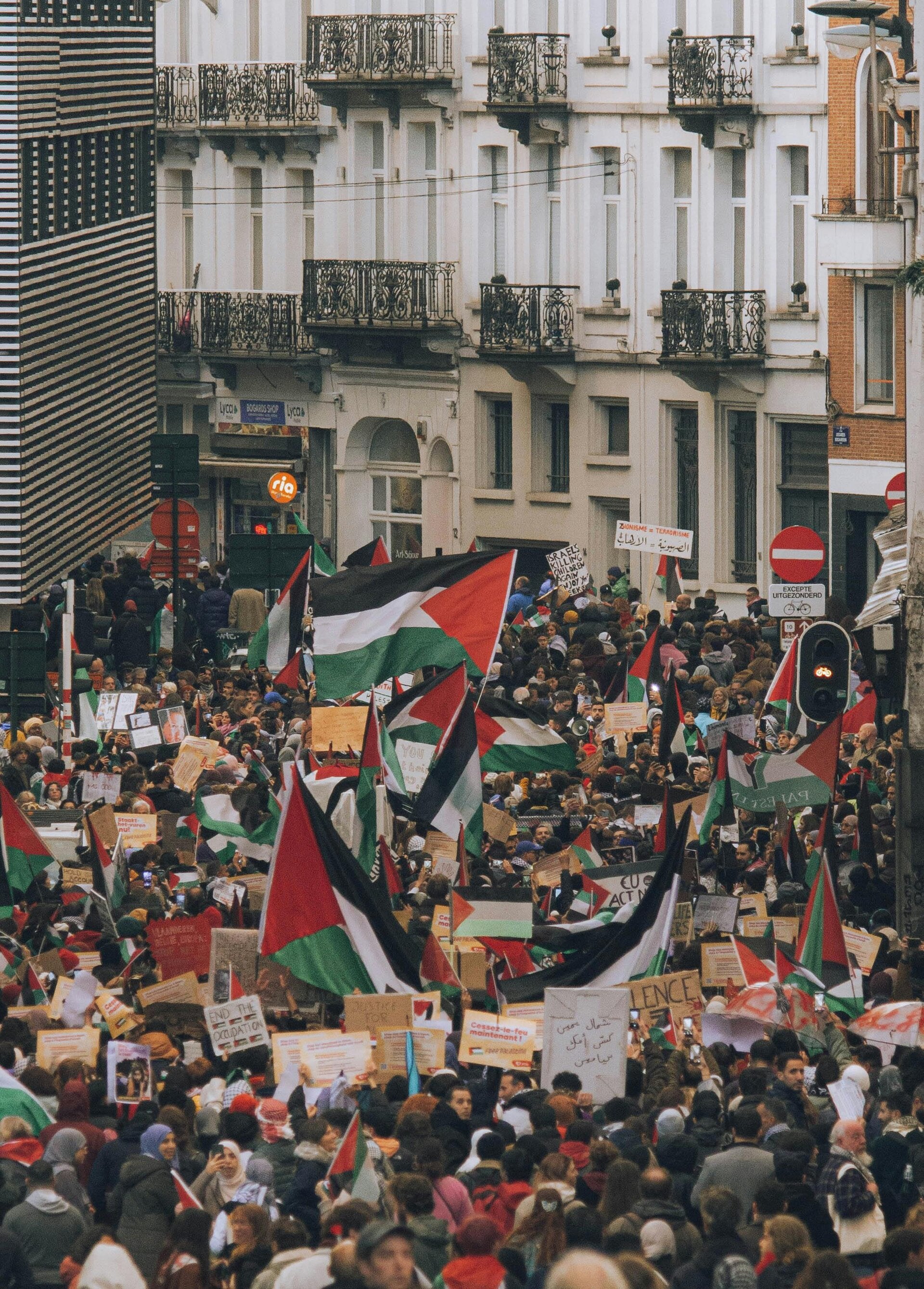
🕊️ Historic Ceasefire Sparks Hope for Lasting Peace in Middle East
In a moment hailed as a turning point in the long-standing Israel-Palestine conflict, His Eminence Excellency Minister Dr. Akwo Thompson Ntuba—renowned international physician, politician, preacher, and publisher-editor of Health & Development Magazine—has publicly lauded the release of all living Israeli hostages held by Hamas for the past two years. The humanitarian breakthrough came as part of a U.S.-brokered ceasefire agreement that has captured global attention.
🇮🇱 Hostage Release and Prisoner Exchange
The release of the 20 surviving hostages marked a deeply emotional moment for families across Israel, who had waited in anguish since the October 2023 abductions. In a reciprocal gesture, Israel began releasing the first batch of Palestinian prisoners—part of a larger group of approximately 2,000 slated for freedom. Many of these individuals have now reunited with their families, sparking scenes of jubilation across the West Bank and Gaza2.
🇺🇸 Trump’s Visit and Bold Declarations
President Donald Trump arrived in Israel during the unfolding events, addressing the Israeli Knesset and urging both sides to embrace peace. In a striking moment, he called on the Israeli president to grant a pardon to Prime Minister Benjamin Netanyahu, a move that stirred both support and controversy. Despite skepticism from some quarters about the durability of the ceasefire, Trump declared to journalists, “The war is over,” expressing confidence in the agreement’s longevity2.
🌍 Global Diplomacy and Future Talks
Following his address, Trump embarked on a diplomatic tour to meet with world leaders, aiming to chart a path forward for Gaza and the Palestinian people. Discussions reportedly centered on reconstruction, governance, and long-term peace strategies. Meanwhile, the international community, led by the United Nations, reaffirmed its recognition of Palestine as an independent state. In a symbolic gesture, Britain reopened the Palestinian embassy in London, signaling renewed diplomatic engagement.
🎨 Activism and Cultural Resistance
Back in the United States, pro-Gaza and Palestinian freedom activists have organized a series of events, blending art, protest, and political discourse. These gatherings have called for an end to land appropriation and greater autonomy for Palestinians, amplifying voices that have long been marginalized.
🌟 A New Chapter?
While the road ahead remains uncertain, the recent developments have ignited cautious optimism. As Minister Dr. Akwo Thompson Ntuba emphasized, the release of hostages and prisoners is not just a political milestone—it is a humanitarian triumph that could pave the way for reconciliation and healing.
The world now watches with bated breath to see whether this fragile peace can blossom into lasting stability.
Cameroon 2025: A Nation on the Brink of Political Transformation


Cameroon 2025: A Nation on the Brink of Political Transformation
YAOUNDE — In a stunning turn of events, the 2025 Cameroonian presidential election has delivered seismic tremors across the political landscape. With polling stations closed and preliminary results posted, opposition candidate Issa Tchiroma Bakary appears to be surging ahead of incumbent President Paul Biya, whose 43-year rule now hangs in the balance2.
📉 A Crumbling Stronghold
The heartland of Biya’s support—the Bulu-Beti-Ewondo tribal belt in Yaoundé and the Centre Region—is reportedly gripped by panic. Once considered an unshakable fortress of loyalty, the region is now witnessing murmurs of dissent and disbelief. International observers stationed across the country have confirmed the transparency of the vote tabulation process, lending credibility to the unfolding drama.
🗣️ Smear Tactics and Desperation
As the opposition gains ground, Biya’s loyalists have resorted to incendiary rhetoric. In a bid to discredit Tchiroma, some supporters have attempted to link him to Anglophone separatist leaders in the diaspora—an accusation widely dismissed as baseless and inflammatory. The move has sparked outrage among civil society groups and further polarized an already tense electorate.
🔥 Tchiroma Responds to Threats
Issa Tchiroma, once a government insider and now the face of change, has not remained silent. In a fiery address from his hometown of Garoua, he condemned threats allegedly issued by Interior Minister Paul Atanga Nji, a controversial figure with a criminal past. Tchiroma called on Cameroonians to remain vigilant and peaceful, urging the Constitutional Council to honor the will of the people2.
🕊️ A Nation at a Crossroads
The stakes could not be higher. For decades, Cameroonians have endured economic stagnation, political repression, and regional unrest. The 2025 election has become more than a contest of ballots—it is a referendum on the future of the nation. With diaspora votes showing strong support for Tchiroma and domestic tallies echoing the same, the possibility of a historic power shift looms large.
As the country awaits official confirmation of results, one thing is clear: Cameroon is no longer the same. The winds of change are blowing, and they are fierce.
Would you like a follow-up piece on how the diaspora is influencing this election or a profile on Issa Tchiroma’s political journey?
Headline: “We Won”: Texas Halts Execution of Robert Roberson Amid Faith-Led Advocacy and Scientific Reckoning


Headline: “We Won”: Texas Halts Execution of Robert Roberson Amid Faith-Led Advocacy and Scientific Reckoning
In a dramatic turn of events, the Texas Court of Criminal Appeals has halted the execution of death row inmate Robert Roberson, granting a long-sought review of his 2003 conviction. The decision marks a pivotal victory for justice advocates, scientists, and faith leaders—including His Eminence Excellency Minister Dr. Ntuba Thompson Akwo—whose spiritual and strategic intervention helped shift the tide.
Roberson, convicted for the death of his two-year-old daughter Nikki under the now-discredited theory of shaken baby syndrome, was scheduled to be executed on October 16. But the court’s ruling, citing Texas’ 2013 “junk science” law, sends the case back to trial court for reexamination2. The law allows for retrials when convictions are based on outdated or debunked forensic methods.
Dr. Ntuba, a global health strategist and spiritual leader, shared that his involvement was divinely inspired:
“The Lord said, ‘Thompson, get involved, because he didn’t do the crime. I want you to call your prayer partners for him.’”
He did just that—mobilizing a coalition of intercessors, legal advocates, and media partners to amplify Roberson’s case. The campaign, rooted in both faith and evidence, demanded a retrial and challenged the flawed science that led to Roberson’s conviction.
Roberson’s defense team presented new medical findings showing Nikki suffered from chronic pneumonia, adverse drug reactions, and sepsis—conditions that were misinterpreted as signs of abuse3. Even the detective who originally investigated the case has since renounced the prosecution, stating he believes Roberson is innocent.
“This is a triumph,” said Gretchen Sween, Roberson’s attorney. “We’ve won a battle, but not yet the war.”
Dr. Ntuba echoed that sentiment, declaring:
“Yes, we got the review and retrial demanded—and we will continue to fight for Robert to be set free completely.”
The ruling not only spares Roberson from imminent execution but also opens the door for what could be a landmark exoneration. If successful, it would be the first time Texas grants a new trial under the junk science law for a death row inmate.
As the retrial process begins, Dr. Ntuba’s coalition remains steadfast. Their message is clear: justice must be rooted in truth, and mercy must be guided by faith.
For updates and documentation of the advocacy journey, visit HealthNDevelopment Magazine’s campaign page.

Headline: Nobel Peace Prize 2025 Sparks Global Debate as Venezuelan Opposition Leader Triumphs Over Trump’s Bid
In a decision that reverberated across diplomatic circles and political camps, the Norwegian Nobel Committee awarded the 2025 Nobel Peace Prize to Venezuelan opposition leader María Corina Machado, bypassing U.S. President Donald Trump despite his highly publicized campaign for the honor.
Machado was recognized “for her tireless work promoting democratic rights for the people of Venezuela and for her struggle to achieve a just and peaceful transition from dictatorship to democracy”. Her selection was hailed by international human rights advocates as a bold affirmation of grassroots resistance against authoritarianism.
Meanwhile, Trump’s camp reacted with visible frustration. White House Communications Director Steven Cheung issued a statement accusing the Nobel Committee of “placing politics over peace,” arguing that Trump’s diplomatic efforts—including ceasefire negotiations in Gaza and claims of resolving eight global conflicts—deserved recognition3.
Trump, who has long expressed resentment over former President Barack Obama’s 2009 Nobel win, reportedly viewed the prize as a symbolic validation of his foreign policy legacy. His speeches at the United Nations and lobbying efforts—including outreach to Norwegian officials—underscored his desire for the accolade6.
Critics, however, point to Trump’s controversial alliances and military actions. His unwavering support for Israeli Prime Minister Benjamin Netanyahu during escalations in the Middle East, as well as recent unprovoked strikes in Iran, have drawn condemnation from international observers who argue that such actions undermine the principles of peace and diplomacy3.
Despite the tension, Machado extended an olive branch, dedicating her award not only to the suffering people of Venezuela but also to President Trump for his “decisive support” of her cause8. Her gesture, while surprising to some, reflects the complex web of global alliances and the nuanced nature of peace advocacy.
As the dust settles, the Nobel Committee stands firm in its decision. Chairman Jørgen Watne Fridnes emphasized that the selection was made “in a room filled with both courage and integrity,” dismissing claims of political bias.
The 2025 Nobel Peace Prize has become more than an award—it’s a mirror reflecting the global struggle between populist power and principled resistance. And in this moment, the spotlight shines on Venezuela’s fight for democracy, even as the echoes of ambition and disappointment ripple from Washington to Oslo.
Dr. Ntuba Akwo Condemns Prolonged U.S. Government Shutdown: A Crisis of Conscience and Equity
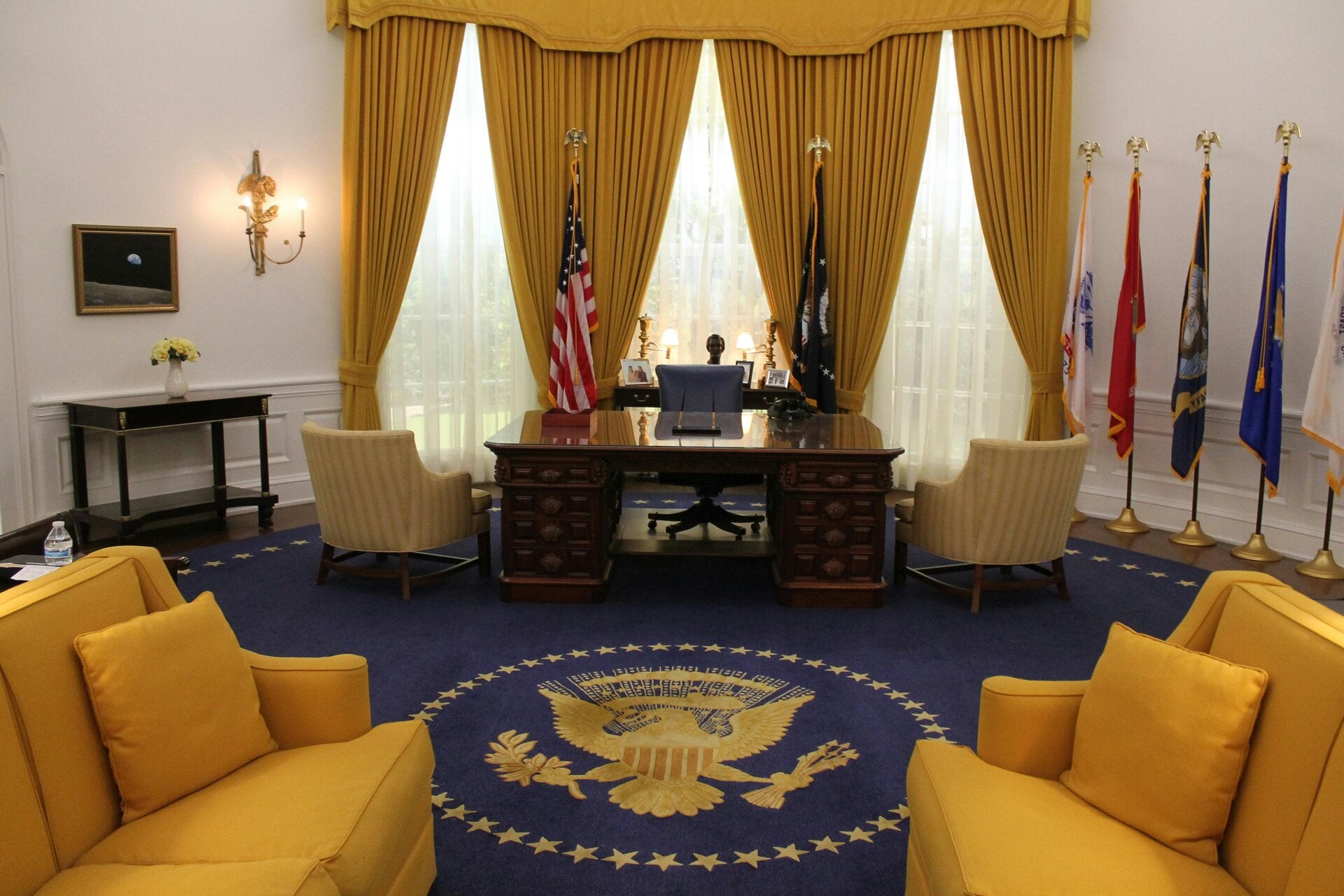

Dr. Ntuba Akwo Condemns Prolonged U.S. Government Shutdown: A Crisis of Conscience and Equity
Washington, D.C. — October 8, 2025
As the U.S. government shutdown enters its second week, international physician and global development communicator Dr. Ntuba Thompson Akwo has issued a strong statement condemning the political gridlock that continues to harm millions of Americans—especially the vulnerable, the working class, and federal employees caught in the crossfire.
The shutdown, triggered by a failure to pass funding legislation before the October 1 deadline, has left critical services stalled and thousands of workers furloughed or working without pay. According to recent polling by CNN, a majority of Americans blame Republican lawmakers for the impasse, echoing sentiments from previous shutdowns under President Donald Trump’s leadership.
💸 Subsidies Under Siege
At the heart of the standoff is a contentious debate over federal subsidies—particularly those supporting healthcare, food assistance, and housing programs. Some Republican leaders have argued that these subsidies could be misused to support undocumented immigrants, a claim Dr. Akwo calls “morally bankrupt and historically dishonest.”
“America is a nation of immigrants,” Dr. Akwo stated. “To weaponize subsidies against the very communities that built this country—including African Americans whose ancestry predates the founding of the republic—is a betrayal of truth and justice.”
He emphasized that the DNA of the nation is woven from migrant and immigrant stories, and that denying aid based on xenophobic fears undermines the values enshrined in the Constitution and the global commitments of the United States.
✈️ Federal Workers in Crisis
The shutdown has hit federal aviation workers particularly hard, with reports of operational strain and delayed paychecks. The IRS has announced furloughs for nearly half its staff, and confusion continues to mount across agencies. President Trump has suggested that not all furloughed workers will receive back pay—despite legal guarantees under the Government Employee Fair Treatment Act.
Dr. Akwo condemned these threats, calling them “a cruel and calculated attempt to punish public servants for political gain.”
🏛️ Calls for Congressional Action
Representative Marjorie Taylor Greene and other lawmakers have urged Speaker Mike Johnson to reconvene Congress and resolve the crisis. Meanwhile, President Trump has signaled a possible shift in his stance, though critics remain skeptical of his intentions.
Dr. Akwo called on all branches of government to act swiftly and restore funding, warning that continued delay will deepen economic hardship and erode public trust.
“This is not just a budget issue—it is a moral reckoning,” he said. “Let Congress return. Let truth prevail. And let the suffering of everyday Americans be met with compassion, not contempt.”
🌍 Dr. Ntuba Akwo Urges UN to Speak Truth to Power on Second Anniversary of Israel-Palestine Crisis
New York, NY — October 8, 2025
As the world marks two years since the October 7, 2023 hostage crisis and the escalation of violence between Israel and Hamas, global development communicator and international physician Dr. Ntuba Thompson Akwo has issued a solemn call to the United Nations system: to stand firm, speak truth to power, and reject all forms of exploitation and violence committed in the name of God.
Dr. Akwo, who has served within the UN framework in New York and across global development platforms, condemned the continued suffering of innocent civilians—both Israeli and Palestinian—as a moral failure of leadership and a betrayal of the principles enshrined in the UN Charter.
“The blood, sweat, and deaths of innocents have been weaponized to advance agendas that defy the conscience of nations who fear God,” Dr. Akwo stated. “There is no justification—religious, political, or strategic—for the evil unfolding in the Middle East.”
🕊️ A Call for Moral Clarity and Accountability
Dr. Akwo urged the UN to maintain its prophetic voice in the face of geopolitical pressure, calling on Secretary-General António Guterres and humanitarian leaders to continue advocating for the unconditional release of hostages, the protection of civilians, and the restoration of dignity to displaced populations.
He emphasized that both sides of the conflict must be held accountable for actions that violate international law and human rights. “Truth must be spoken to all forms of evil,” he said. “Not selectively, not diplomatically—but courageously and consistently.”
📢 Speaking for the Voiceless
Referencing recent UN statements that describe Gaza as a “graveyard for children” and highlight the “indescribable pain” endured by families, Dr. Akwo called for a renewed commitment to justice, reconciliation, and peace rooted in human dignity—not military might.
“The instruments of the devil—bombs, blockades, and propaganda—must never define the future of this region,” he declared. “Let the committee of nations rise in unity, not in silence.”
🌐 A Global Responsibility
Dr. Akwo’s message resonates with faith leaders, civil society advocates, and humanitarian workers who continue to demand a ceasefire, unrestricted aid access, and a pathway toward a just and lasting peace. He called on global leadership to reject apathy and complicity, and to invest in solutions that honor the lives lost—not exploit them.
“The world must not look away,” he said. “We must build a future where truth is louder than terror, and where peace is not postponed by politics.”
⚖️ Calls for Justice: Press Conference at Texas Capitol Sparks Debate Over Robert Roberson Case

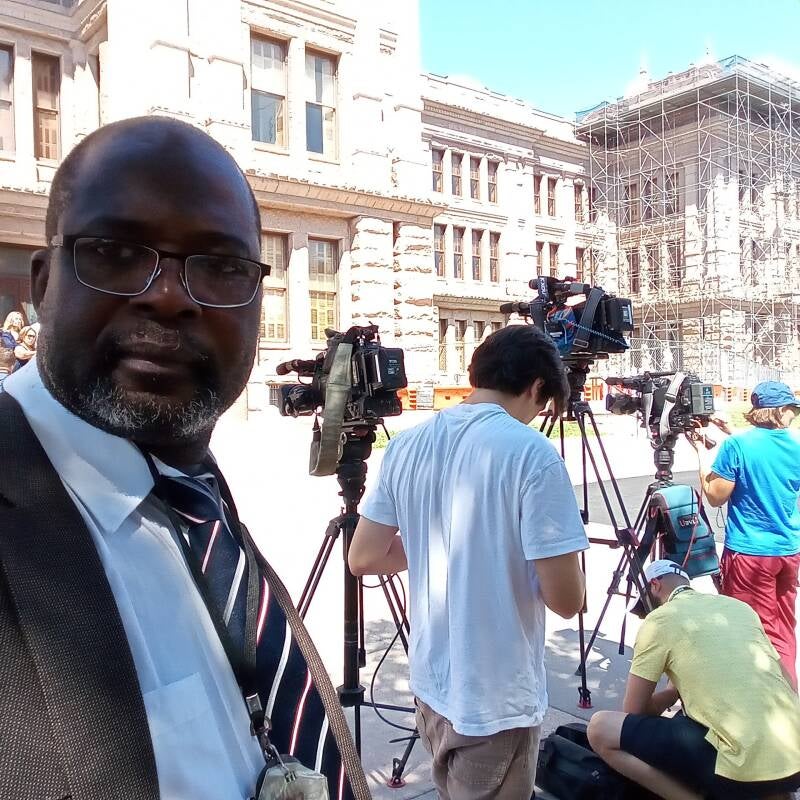


⚖️ Calls for Justice: Press Conference at Texas Capitol Sparks Debate Over Robert Roberson Case
Austin, TX — October 1, 2025
In a powerful and emotionally charged press conference held today at the Texas State Capitol, renewed calls for justice echoed through the halls as legal experts, legislators, and representatives from Crime Stoppers of Houston gathered to advocate for a retrial in the controversial case of Robert Roberson, a Texas man convicted of killing his two-year-old daughter, allegedly by shaking her—a diagnosis commonly referred to as Shaken Baby Syndrome (SBS).
Among the voices demanding clarity and fairness was Dr. Akwo Thompson Ntuba, Chief Editor of HealthNDevelopment Magazine, who posed pointed and medically informed questions to the defense team and attending officials. Dr. Ntuba reminded the panel that SBS can occur without visible external injuries, a fact often misunderstood in both legal and public discourse.
“Shaking a child to death does not always produce overt traumatic injury features on the body,” Dr. Ntuba emphasized, challenging the assumption that lack of physical signs equates to innocence or guilt.
🧠 Expert Testimony and Legal Preparedness
Dr. Ntuba pressed the defense team on whether they had enlisted top-tier medical experts to support their position should a retrial be granted. The response, captured in recorded video footage, suggested that the defense had indeed considered expert testimony as a cornerstone of their strategy.
🔍 The Question of Motive
In a follow-up inquiry, Dr. Ntuba asked whether prosecutors had ever presented a clear motive for Roberson allegedly shaking his daughter to death. The answer was unequivocal: no motive had been established. This absence of motive, coupled with the medical ambiguity surrounding SBS, has fueled growing concern over the integrity of the original conviction.
⏳ A Race Against Time
With Roberson’s execution reportedly scheduled for October 16, the urgency of the situation was palpable. Dr. Ntuba concluded his remarks with a sobering reflection:
“It is better to acquit a suspect than let an innocent man be executed. Let justice take its course, and if Robertson needs a stay of execution for a retrial, then so be it.”
🗣️ A Case That Demands Scrutiny
The Robert Roberson case continues to stir debate across legal, medical, and ethical lines. As advocates push for a retrial, today’s press conference served as a reminder that justice must be rooted not only in law, but in truth, science, and compassion.
Reclaiming Cameroon’s Future: Dr. Ntuba Thompson Akwo’s Response to Paul Biya’s 2025 Manifesto

🕊️ Reclaiming Cameroon’s Future: Dr. Ntuba Thompson Akwo’s Response to Paul Biya’s 2025 Manifesto
Introduction: A Nation at a Crossroads
Cameroon stands at a pivotal moment in its history. With President Paul Biya seeking yet another seven-year term—after nearly 50 years in power—many Cameroonians are questioning whether their country still operates under a democratic constitution or a de facto monarchy. Dr. Ntuba Thompson Akwo, an international physician, educator, and global health consultant, sees this moment not as a time for despair, but as a clarion call for civic awakening, leadership renewal, and legacy activation.
At age 56, Dr. Ntuba believes he is not only old enough to speak truth to power, but also wise enough to bequeath a new vision for Cameroon—one rooted in dignity, justice, and participatory governance.
📜 Responding to Biya’s Manifesto: A Legacy of Accountability
Paul Biya’s 2025 campaign promises—ranging from cybercrime legislation to price regulation and peace restoration—are, in Dr. Ntuba’s view, stale and insulting. These are not visionary goals for a leader of nearly half a century; they are basic governance tasks that should have been completed decades ago.
Dr. Ntuba’s response will be threefold:
1. Public Education Campaigns
-
Host town halls, webinars, and media broadcasts to dissect each manifesto promise.
-
Use storytelling and civic education to show how these promises have been recycled for decades.
-
Mobilize youth and diaspora communities to demand transparency and measurable outcomes.
2. Policy Counter-Proposals
-
Publish alternative policy briefs that offer real solutions to cybercrime, inflation, and regional insecurity.
-
Collaborate with economists, legal scholars, and civil society to draft people-centered legislation.
-
Promote participatory budgeting and community-led development models.
3. Legacy Documentation and Advocacy
-
Use platforms like HealthNDevelopment Magazine to archive the failures of Biya’s regime and highlight grassroots resilience.
-
Document cases like the tragic murder of journalist Martinez Zogo to expose the culture of impunity.
-
Build coalitions with international human rights organizations to amplify Cameroonian voices.
🧭 Vision for Cameroon: From Survival to Sovereignty
Dr. Ntuba’s leadership philosophy is not about replacing one strongman with another—it’s about activating a culture of shared responsibility. His vision includes:
-
Empowering citizens to become stewards of their own communities through education, entrepreneurship, and civic engagement.
-
Building infrastructure for legacy activation, including museums, fellowships, and archives that honor Cameroon’s unsung heroes.
-
Institutionalizing complexity-informed governance, where health, development, and justice are addressed holistically.
✊ A Call to Conscience
Dr. Ntuba’s campaign is not just political—it is moral. It is a call to every Cameroonian to reject the normalization of looting, killing, and deception. It is a demand for leadership that works, not one that hides behind slogans and shadows.
As he often says, “Leadership is not longevity—it is legacy. And legacy is not what you keep, but what you leave behind.”
The Twilight of a Presidency: Dr. Ntuba Thompson Akwo’s Rebuke of Paul Biya A Legacy of Longevity or Stagnation?


The Twilight of a Presidency: Dr. Ntuba Thompson Akwo’s Rebuke of Paul Biya A Legacy of Longevity or Stagnation?
Dr. Ntuba Thompson Akwo, an international political leader based in the United States, has voiced strong disappointment over the continued presidency of Paul Biya, who has held power in Cameroon for over four decades. With a political career spanning nearly 65 years, Biya’s prolonged tenure has sparked widespread debate about leadership accountability, generational renewal, and democratic stagnation.
At the age of 93, Biya’s recent campaign posters for the 2025 presidential election—featuring promises to combat cybercrime, protect journalists, and support rural development—have been met with skepticism. Dr. Akwo argues that these are rudimentary pledges that should have been fulfilled decades ago, not recycled as fresh commitments.
Silence at the UNGA: A Symbol of Disconnect
Dr. Akwo highlights Biya’s conspicuous absence from recent United Nations General Assembly (UNGA) sessions, interpreting it as a sign of disengagement from global diplomacy. While other leaders address pressing international issues, Biya’s silence has raised concerns about Cameroon’s visibility and credibility on the world stage.
In contrast, former President Donald Trump’s UNGA remarks reportedly referenced African leadership challenges, indirectly alluding to figures like Biya. Dr. Akwo sees this as a wake-up call for Cameroonians to demand more from their leadership.
Concerns Over Mental Fitness and Public Engagement
Biya’s last trip to the United States, marked by what Dr. Akwo describes as “apparent confusion and mental instability,” has further fueled doubts about his capacity to govern. The lack of direct engagement with citizens and international bodies has created an aura of mystery around the presidency, leaving many Cameroonians feeling disconnected and disillusioned.
The Exodus: Cameroonians Fleeing Their Homeland
Dr. Akwo draws attention to the growing number of Cameroonians seeking refuge in Europe and America, attributing this migration to poor governance, economic hardship, and political repression. He warns that the country risks becoming a source of instability if leadership continues to fail its people.
A Call to Action: Reclaiming the PresidencyIn a passionate appeal, Dr. Akwo urges Cameroonians to rise and reclaim their democracy. He calls for citizens to demand transparency, accountability, and a functioning presidency that reflects the will of the people—not one that serves as a life-extension mechanism for aging elites.
He emphasizes that the presidency is funded by taxpayers and should serve the public interest, not personal survival. “Cameroonians must stand up,” he declares, “and fight for their right to be governed by leaders who work, not those who hide behind slogans and shadows.”
Rally Against HUD Cuts Draws Powerful Voices to Senator Cornyn’s Office in Austin

✊ Rally Against HUD Cuts Draws Powerful Voices to Senator Cornyn’s Office in Austin
Austin, TX — On a spirited day of civic action, dozens of advocates, community members, and solidarity groups gathered outside the office of Senator John Cornyn at the corner of 6th Street and Lavaca in downtown Austin. The rally, organized by VOCAL Texas, aimed to protest proposed cuts to the U.S. Department of Housing and Urban Development (HUD), which many fear would devastate vulnerable populations across the state.
🚍 Solidarity on Wheels Supporters from San Antonio arrived by bus to join the demonstration, amplifying the voices of those who have long struggled with housing insecurity. Many attendees shared deeply personal stories with local media outlets, recounting years spent unhoused—some for as long as seven years—before finally receiving public housing. Far from feeling shame, they stood proudly, emphasizing that public housing had restored dignity and stability to their lives.
🩺 Housing as Health Dr. Ntuba Thompson Akwo, who attended on behalf of his health-focused organizations, highlighted the critical link between housing and health outcomes. “Housing is a social determinant of health,” he stated, “and cutting HUD funding will only worsen the conditions of those already battling chronic illnesses, disabilities, and mental health challenges.” Dr. Akwo spoke with event leaders and praised their tireless work advocating for the marginalized, noting that the rally was not just political—it was humanitarian.
♿ Voices from the Frontlines Among the speakers were individuals in wheelchairs, whose presence underscored the intersection of disability rights and housing justice. Their testimonies were both moving and urgent, calling on Senator Cornyn and fellow lawmakers to reject partisan efforts to slash HUD funding. Their message was clear: housing is not a luxury—it’s a lifeline.
📢 A Call to Action Participants urged elected officials to recognize the real-world consequences of budget decisions. They called on Senator Cornyn to stand with his constituents rather than party lines, emphasizing that HUD cuts would disproportionately harm those already facing systemic barriers.
Dr. Akwo concluded the day by commending the rally’s organizers and attendees: “This was a powerful demonstration of solidarity and resilience. The leadership shown here today is exactly what our communities need.”
Austin Brass Band Ignites Republic Park with Music and Purpose at MAAD Festival
Austin Brass Band Ignites Republic Park with Music and Purpose at MAAD Festival
🎺 Austin, TX – September 23, 2025 — Republic Park pulsed with energy and rhythm today as the Austin Brass Band delivered a stirring performance during the MAAD Festival, a vibrant celebration aimed at raising awareness and resources for the health and well-being of musicians in the Austin community.
The event, held under clear autumn skies, drew a lively crowd of music lovers, health advocates, and community leaders. The Austin Brass Band’s performance was a highlight of the day, captivating attendees with their signature blend of bold brass harmonies and infectious enthusiasm. Their set not only entertained but also underscored the festival’s mission: supporting institutions that address the unique health challenges faced by musicians.
🎶 The MAAD Festival—short for Musician’s Awareness and Advocacy Day—brought together a diverse lineup of musical acts and organizations, each contributing to the cause through performance, education, and outreach. From jazz ensembles to street bands, the park was alive with sound and solidarity.
Among the notable attendees was Dr. Ntuba Akwo, a respected health advocate and media contributor, who praised the initiative. “This program is a powerful step forward for the health of musicians,” Dr. Akwo remarked. “It’s encouraging to see the community come together like this, and I hope more artists and institutions will participate in future events.”
📹 The spirit of the day was captured in a dynamic video montage available on YouTube, showcasing the performances, crowd reactions, and behind-the-scenes moments that made the festival unforgettable.
While the MAAD Festival was the centerpiece, other cultural events across the region also celebrated music and community. For example, Cypress Woods 2024 “The Cat’s Meow” (🎥: @FloMarching ... offers a glimpse into the vibrant brass scene in Texas high schools, highlighting the deep roots and future promise of brass music in the state. Meanwhile, This is the LARGEST food festival in New Jersey, and maybe ... reminds us how music and food festivals nationwide are creating spaces for joy, connection, and cultural exchange.
As the sun set over Republic Park, the echoes of brass and applause lingered—a testament to the power of music not just to entertain, but to heal and unite. The MAAD Festival proved that when artists and advocates join forces, the results are nothing short of inspiring.
by Dr, Ntuba Akwo Thompson
The United Nations General Assembly: A Diminished Platform in a Fractured World By Dr. Rev. Ntuba Thompson Akwo


📰 The United Nations General Assembly: A Diminished Platform in a Fractured World By Dr. Rev. Ntuba Thompson Akwo
As the United Nations marks over 80 years of existence, I reflect with both reverence and sorrow on what this institution once symbolized—and what it has now become. The General Assembly, once a beacon of multilateralism and moral authority, has lost its central purpose. Today, it serves more as a stage for geopolitical posturing than a forum for peace, security, human rights, and global development.
🌍 From Peace to Power Plays
The UN General Assembly (UNGA) was founded on the principles of dialogue, cooperation, and collective responsibility. But in recent years, it has devolved into a theater where nations—represented not by statesmen but by surrogates—position themselves for self-interest and control. The noble goals of peace and human dignity are drowned out by the noise of strategic maneuvering and veiled threats.
I watch with sadness as powerful nations flaunt the decisions of the General Assembly, the Security Council, and the Human Rights Council. They do as they please, ignoring resolutions and undermining the very institutions they helped create. The UNGA has become a place where some leaders use their platforms to insult others who dare to stand up to their bullying and hegemonic ambitions.
💣 Wars That Shame the Global Conscience
From the blood-soaked streets of Gaza to the devastated cities of Ukraine, the world is witnessing intractable conflicts that the UN seems powerless to resolve. These wars are not just failures of diplomacy—they are indictments of a system that has lost its teeth. The UNGA, once a guardian of peace, now watches helplessly as violence escalates and human suffering multiplies.
🌐 The G7 and the Hijacking of Global Governance
The G7 nations have emerged as dominant players, often making decisions behind closed doors and attempting to impose them on the rest of the world. Their diatribes, delivered at the UNGA, are not calls for unity but declarations of control. This imbalance undermines the spirit of equal representation and shared responsibility that the UN was meant to uphold.
🏥 Agencies of Hope Amidst Dysfunction
Despite these failures, I still see hope in the UN’s specialized agencies—particularly the World Health Organization (WHO). For many member states, especially those grappling with climate change, debt relief, and health crises, these agencies remain lifelines. Their work is vital, and their survival depends on the integrity of the broader UN system.
⚖️ The International Court of Justice: A Missed Opportunity
I lament the resistance of certain nations to the International Court of Justice (ICJ) in The Hague. Had they cooperated, we might have seen more accountability and fewer atrocities. The ICJ represents a path toward justice that too many refuse to walk.
🕊️ A Call to Conscience
The UN has produced results over its eight decades, and its legacy is not without triumphs. But today, we must confront the truth: the General Assembly is faltering. If the UN is to reclaim its relevance, member states must recommit to its founding principles—not just in words, but in action.
Let the UNGA be a place of healing, not hostility. Let it be a platform for justice, not judgment. And let it once again become the voice of the people—not the echo of the powerful.
Signed, Dr. Rev. Ntuba Thompson Akwo International Political Leader, Physician, Publisher-Editor President, SWELA USA | CEO, Health Consulting International


Dr. Ntuba Thompson Akwo’s Defiant Voice in Cameroon’s Political Crossroads


📰 Dr. Ntuba Thompson Akwo’s Defiant Voice in Cameroon’s Political Crossroads
At a critical juncture in Cameroon’s political evolution, Dr. Rev. Ntuba Thompson Akwo, a Cameroonian-born international political leader, physician, preacher, and publisher-editor, has once again stepped forward to confront the entrenched injustices plaguing his homeland. With unwavering conviction, Dr. Akwo denounces the overcentralization of power, the life presidency project of Paul Biya, and the systemic violence and tribal favoritism that continue to destabilize Cameroon.
🇨🇲 A Nation in Crisis
Cameroon’s 2025 presidential elections loom under a cloud of skepticism and fear. President Paul Biya, now 92, has declared his intention to run for an eighth term2—a move that many, including Dr. Akwo, view as a continuation of authoritarian rule and a mockery of democratic principles. The electoral institutions, including Elections Cameroon and the Constitutional Council, remain stacked with Biya loyalists, raising serious doubts about the fairness and transparency of the upcoming vote.
Dr. Akwo calls the elections a “charade” and a “waste of taxpayers’ money,” citing the lack of credible opposition and the manipulation of electoral processes. His critique echoes broader concerns from civil society and international observers who warn of electoral autocracy, voter suppression, and ethnic favoritism2.
🕊️ To the Fallen in the Cause of Justice
In a deeply emotional tribute, Dr. Akwo honors those who lost their lives during the October 1st, 2017 protests, when thousands of Anglophone Cameroonians defied government orders to assert their right to self-determination. His words—“though fallen in the cause, your blood sacrifice will never go unremembered”—resonate as a solemn reminder of the price paid for justice and dignity.
He recalls the historical significance of October 1st, once a day of unity between English and French Cameroon, now marred by bloodshed and betrayal. Dr. Akwo mourns the fallen, commends their courage, and pledges that their sacrifice will not be used to “glorify the devil,” but to reclaim the sacred lands of promise and glory.
🔥 A Call for Accountability
Dr. Akwo directly challenges President Biya’s recent statements, which condemn violence but fall short of acknowledging the regime’s role in perpetuating it. He urges Biya to “do more,” insisting that platitudes on social media are insufficient in the face of state-sponsored repression, tribalism, and military brutality.
From the Anglophone crisis in the Southwest and Northwest, to the jihadist violence in the Far North, Dr. Akwo sees a common thread: a regime that prioritizes power over people, and loyalty over justice2. He warns that without meaningful reform, more Cameroonians will die—just like those who fell in the struggle for democracy and good governance.
✊ A Legacy of Resistance
As founder and president of SWELA USA, Dr. Akwo continues to amplify the voices of the marginalized, both within Cameroon and across the diaspora. His legacy is one of unrelenting advocacy, spiritual leadership, and global engagement—a beacon for those who believe that Cameroon can rise from the ashes of tyranny.
In his words, “Cameroon will never remain the same because of you all.” And with leaders like Dr. Ntuba Thompson Akwo, the fight for justice, democracy, and dignity presses on.
Let me know if you'd like this adapted into a speech, press release, or social media campaign.

Dr. Ntuba Thompson Akwo Joins Rally Against HUD Budget Cuts at Senator Cornyn’s Office


Dr. Ntuba Thompson Akwo Joins Rally Against HUD Budget Cuts at Senator Cornyn’s Office
In a powerful show of solidarity, Dr. Ntuba Thompson Akwo—international political leader, preacher, physician, and publisher-editor—will stand shoulder to shoulder with housing advocates and community voices at a pivotal rally outside Senator John Cornyn’s office in Austin, Texas. The event, scheduled for September 23rd at 3:45 PM, is a direct response to the Trump Administration’s proposed $33.6 billion cut to the Department of Housing and Urban Development (HUD)—a move that threatens to destabilize housing security for millions across the United States.
🏛️ A Crisis in the Making
HUD’s rental assistance programs, including Public Housing and Section 8 vouchers, serve over 9 million Americans. In Texas alone, nearly 600,000 residents rely on these lifelines, with 22,500 in Travis County. The proposed 44% budget slash would not only gut these programs but also push countless families into homelessness and further strain already underfunded public housing systems.
📣 Voices Rising in Austin
The rally, organized by VOCAL-TX and other advocacy groups, calls on Senator Cornyn to reject the budget proposal and instead champion expanded housing resources that match the scale of the crisis. Attendees are urged to bring signs and noise makers to amplify their message: “Show up. Speak out. Fight back!”
Dr. Akwo’s presence underscores the global significance of housing justice and the interconnectedness of local and international advocacy. Known for his work across major U.S. cities and states, Dr. Akwo has long been a vocal force for equity, dignity, and human rights. His participation adds weight to the rally’s demands and signals a broader coalition of leaders uniting against policies that endanger vulnerable communities.
⚔️ Political Undercurrents
The rally also unfolds amid rising political tensions. Senator Cornyn faces mounting opposition from Texas Attorney General Ken Paxton, who is reportedly eyeing Cornyn’s Senate seat. This backdrop adds urgency to the rally, as constituents demand accountability and bold leadership in the face of sweeping federal proposals.
📍 Event Details
-
Date & Time: September 23rd at 3:45 PM
-
Location: Senator Cornyn’s Office, 221 W. Sixth St, Austin, TX (Lavaca and Sixth St)
-
RSVP: v-tx.org/923
As the nation grapples with a housing crisis of historic proportions, the rally at Senator Cornyn’s office is more than a protest—it’s a call to conscience. And with leaders like Dr. Ntuba Thompson Akwo lending their voice, the message is clear: housing is a human right, and silence is not an option.
WHITE HOUSE UNDER PRESIDENT TRUMP, SAYS ACETAMINOPHANE OR TYLENOL CAUSES AUTISM .
Dr Akwo Thompson Ntuba who has been involved in Global health Autism prevention and awareness work , including care campaigns says "the Global health and medical community should not be alarmed by the President Donald Trump white house proclamation that Acetaminophane or Tylenol has a causal relationship with Autism" . Dr Ntuba Akwo who is a certified professional and expert in Global health in the USA with many years of campaigns and awareness work on autism as shown in the multiple you tube videos above believes that the Trump administration under HSS head Kennedy , showed be allowed to do more research on the causal relationship . The are many scientists like Professor Peter Hotez who Dr Ntuba has a knowledge of ,through his work in the Health System of Harris county Texas may have a slightly different position on causality especially as he believes that the are close to 100 genes associated with Autism and one drug cannot just affect all of them . Many in the biomedical scientific communities have mixed outcomes in the researches they have carried on the causality issues . Dr Ntuba Akwo believes that the information from the White house should encourage people to learn more and be aware of autism . They have also encouraged a new FDA Vitamin related drug to cure Autism . Many believe that women need pain and fever relieve during pregnancy especially because both the Fetus and or pregnant Woman may be affected by high fever .
A Daughter’s Defiance: The Fall of a Dynasty in Cameroon


A Daughter’s Defiance: The Fall of a Dynasty in Cameroon
In a moment that stunned the nation and echoed across the globe, Brenda Biya, daughter of Cameroon’s long-serving president Paul Biya, broke ranks with her family and launched a public campaign urging Cameroonians not to vote for her father in the upcoming 2025 presidential election2.
For over 65 years, Paul Biya has been a fixture in Cameroonian politics—nearly 45 of those as president, making him one of the longest-ruling leaders in the world. His grip on power has been sustained through constitutional revisions, allegations of electoral manipulation, and a centralized control of state institutions4.
But now, the challenge comes not from opposition parties or foreign critics—it comes from within his own bloodline.
🎙️ A TikTok Rebellion
In a fiery video posted from Switzerland, Brenda Biya—known online as “King Nasty”—denounced her father’s rule, citing decades of poverty, unemployment, and stagnation. She accused her family of mistreatment and declared she would sever ties with her parents. “I sincerely hope there will be another president,” she said, calling on Cameroonians to vote for change2.
Her message was unprecedented in African politics: the child of a sitting president publicly campaigning against their own parent. It sent shockwaves through Cameroonian society, where political dissent is often met with silence or suppression.
🏛️ The Weight of History
Paul Biya’s tenure has been marked by authoritarianism, corruption, and a deepening divide between Cameroon’s French- and English-speaking regions. His government has faced criticism at the United Nations for human rights violations and constitutional manipulation. Despite his age—92 years old—Biya is seeking yet another seven-year term, defying calls for democratic transition4.
The country’s youth, many of whom have never known another leader, are increasingly disillusioned. With over 60% of the population under 25, the call for change is growing louder.
🌍 A Nation at a Crossroads
Brenda Biya’s defiance is more than a personal rebellion—it’s a symbol of a nation grappling with its future. Her voice joins a chorus of Cameroonians demanding accountability, transparency, and leadership that reflects the aspirations of a new generation.
As the October election approaches, the world watches. Will Cameroon choose continuity or change? Will the daughter’s plea mark the beginning of a new chapter—or the final act of a long-standing regime? BY DR NTUBA THOMPSON AKWO INTERNATIONAL POLITICIAN , PREACHER , PHYSICAN AND PUBLISHER EDITOR


Community Power and Political Truths: VOCAL-TX Hosts Groundbreaking Advocacy Event in Austin
🗓️ Austin, TX — September 10, 2025 In a powerful gathering at the Trinity Center in Austin, VOCAL-TX held a community-driven event that brought together activists, political leaders, and residents to address pressing issues of racial justice, harm reduction, and grassroots advocacy. The event was marked by passionate speeches, strategic planning, and a renewed commitment to organizing for equity across Texas.
Among the keynote speakers was Dr. Ntuba Akwo Thompson, an international political leader and publisher-editor, whose remarks electrified the room. Dr. Thompson spoke candidly about the racial and political motivations behind the Trump administration’s deployment of National Guard troops to predominantly Black-led cities. His analysis drew attention to the intersection of race, power, and federal overreach, sparking deep reflection among attendees.
🎤 “This isn’t just about policy—it’s about who holds power and how that power is used against communities of color,” Dr. Thompson stated, urging attendees to remain vigilant and politically engaged.
Other speakers emphasized the critical role of harm reduction programs, highlighting their success in supporting marginalized populations affected by homelessness, substance use, and incarceration. Advocates pointed to recent wins in the state budget, attributing funding allocations to persistent grassroots pressure and community organizing.
In a moment of levity and defiance, organizers called out a local billionaire-backed organization—widely viewed as antagonistic to VOCAL-TX’s mission—for undermining their advocacy efforts. The crowd responded with laughter and applause, reinforcing the solidarity and resilience of Austin’s activist community.
📸 The event, captured in vivid images, showcased a dynamic mix of presentations, audience engagement, and strategic planning. Slides projected during the meeting outlined campaign goals such as increasing visibility on the streets, engaging neighborhoods, and confronting the housing crisis head-on.
VOCAL-TX continues to build momentum, with plans to expand its outreach and deepen its organizing efforts. As one slide boldly declared: “BUILD SUPPORT TODAY!”—a rallying cry that resonated throughout the gymnasium.
For more on VOCAL-TX’s mission and upcoming actions, visit their official website.
📰 Editorial: Safeguarding Institutional Integrity in a Politicized Era
In a time when democratic institutions are increasingly tested by political pressures, Dr. Ntuba Akwo Thompson, Chief Editor of Health and Development Magazine, offers a timely and sobering reflection on the role of the Federal Reserve and the broader implications of unchecked executive influence.
🇺🇸 The Federal Reserve: Independence Under Siege
Dr. Ntuba Akwo reminds us that the Federal Reserve was designed to be an independent body—shielded from the political whims of presidents and public officials. Its mandate is to steward the economy with impartiality, not to bend to partisan agendas. The recent calls for the resignation of Chairman Jerome Powell, allegedly for resisting pressure to lower interest rates to suit political interests, raise troubling questions. Is Powell being targeted not for failure, but for his refusal to play politics?
If the Fed becomes a tool of political convenience, its credibility and effectiveness will erode. Dr. Ntuba Akwo warns that such manipulation undermines the very foundation of economic governance and threatens the pursuit of a “more perfect union.”
⚖️ Due Process and the Presumption of Innocence
The editorial also touches on the case of the first Black woman cook facing mortgage-related accusations. Dr. Ntuba Akwo urges caution, emphasizing that accusations alone do not equate to guilt. In a nation built on the principle that individuals are innocent until proven guilty, rushing to judgment without judicial process is not only unjust—it’s un-American.
He draws a pointed comparison to Texas Attorney General Ken Paxton, whose own legal troubles have sparked controversy. If Cook is to be dismissed based on allegations, then consistency demands similar scrutiny of Paxton. Selective accountability erodes public trust and reinforces perceptions of bias.
🔍 Checks, Balances, and Restraint
Dr. Ntuba Akwo’s broader concern is the creeping expansion of presidential authority. When presidents are allowed to wield power without restraint, democratic institutions falter. Oversight must be robust, impartial, and consistent—regardless of political affiliation or public stature.
His call for restraint is not a plea for inaction, but for fairness. The United States cannot afford to sacrifice its principles at the altar of expediency. Justice must be blind, and institutions must remain above the fray.
📣 Conclusion: A Call to Conscience
This editorial is a clarion call to preserve the integrity of America’s institutions. Whether it’s the Federal Reserve, the judiciary, or the executive branch, the health of the republic depends on our collective commitment to fairness, independence, and the rule of law.
Dr. Ntuba Akwo’s insights challenge us to think critically, act justly, and resist the temptation to politicize what must remain impartial. In doing so, we honor the ideals that continue to shape the American experiment.
General Assembly Elects Annalena Baerbock of Germany President of Eightieth Session, Selects Main Committee Bureaus

Assembly Vice-President Also Elected
Pledging to serve the international community as “an honest broker and unifier”, Annalena Baerbock of Germany was elected as President of the upcoming session of the United Nations General Assembly — the fifth woman to serve in that post in 80 years.
Ms. Baerbock was put forward as a candidate by the Western European and Other States Group, whose turn it was to nominate a president, according to procedures to ensure equitable geographical representation. She was elected after she obtained a simple majority of 167 votes in a secret-ballot election. The Assembly also elected today its Vice-Presidents for the eightieth session, as well as the Bureaus of its Main Committees.
Incoming President Highlights Vision of ‘Better Together’Addressing the Assembly after she was elected, Ms. Baerbock highlighted the theme of her presidency — “Better together” — emphasizing inclusivity, transparency and trust-based dialogue. She promised an open-door policy and affirmed her commitment to upholding the UN Charter as the “irrevocable foundation of our work”.
Quoting former Secretary-General Dag Hammarskjöld — “The UN was not created to take mankind to heaven, but to save humanity from hell” — she reminded Member States that the Organization was forged out of the devastation of war to build a hopeful, cooperative world order based on peace, human rights and respect for international law. Despite the pressures currently facing the UN — political and financial — she insisted that “nothing would be better without the United Nations”, and that now, more than ever, countries must work better together.
Three Strategic PrioritiesHer presidency will focus on three strategic priorities. The first is to support Member States in modernizing the Organization to be “fit for purpose” in the twenty-first century. The Secretary-General’s UN80 Initiative must not become “a mere cost-cutting exercise”, but a process grounded in bold and inclusive decision-making, she said, as she called for reliable financing and greater system-wide efficiency.
Secondly, it is essential to advance the Pact for the Future and the 2030 Agenda for Sustainable Development. With fewer than one in five Sustainable Development Goal targets on track, she urged “bold, ambitious, accelerated, just and transformative action”. Sustainable development, she emphasized, is inseparable from peace and security. The Assembly — the most representative and main deliberative and policy-making body of the United Nations — in collaboration with the Economic and Social Council and other UN bodies, must lead this charge.
Third is inclusive multilateralism. She underlined the need for gender equality: “Peace and development can only be sustained when half of the world’s population — women — have an equal seat at the table.” She also called for meaningful engagement with youth, civil society and all regional groups, highlighting the power of diversity and multilingualism to strengthen legitimacy and outcomes. She also highlighted the selection of the next Secretary-General during her presidency.
She concluded with resolve: “This is the task of our time: To make the United Nations fit for purpose. To uphold the Charter. To deliver tangible results for everyone. I am honoured to work with all of you in this challenging endeavour. Better together.”
Career Defined by ‘Unwavering Commitment to Multilateralism’Congratulating the President-elect, Assembly President Philémon Yang (Cameroon) said “it is fitting that, in this milestone eightieth year of the General Assembly, leadership should fall to someone whose career has been defined by an unwavering commitment to multilateralism”. Noting that Ms. Baerbock served as the Federal Minister for Foreign Affairs of Germany during one of the most turbulent periods in recent memory, he said: “Her experience at the helm of diplomacy amidst global uncertainty will serve this Assembly well.” He welcomed her pledge “to serve as an honest broker — to listen, to build trust and to foster dialogue across divides”. That is precisely what this Assembly and the international community need, he observed.
António Guterres, United Nations Secretary-General, also noted that Ms. Baerbock is assuming the presidency at a difficult and uncertain moment for the multilateral system. “Mistrust and divisions are rife,” while the Sustainable Development Goals are alarmingly off-track, he said, also noting global challenges ranging from poverty to climate change. “And our institutions and structures still reflect the world of yesterday, not a vision of tomorrow,” he added.
President-elect Baerbock’s vision — “Better together” — is an inspiring rallying cry for this moment, he underscored. Noting that her priority issues range from peace and development to the Organization’s reform and transparency, he said this agenda will be well-served by her wealth of government and diplomatic experience. “And let us not forget the historic significance of her being only the fifth woman to be elected President of the General Assembly,” he pointed out.
He also congratulated outgoing President Yang for taking on critical global issues, preparing for numerous milestone events in this anniversary year and serving as a powerful advocate for Africa.
Woman President ‘Finally and Successfully’ Nominated by Western European and Other StatesThe representative of Liechtenstein, speaking on behalf of the Western European and Other States, noted with pleasure that “our region has finally and successfully nominated a woman” for the Assembly President. “We look forward to working together with other regional groups to improve the regretful track record of only five female Presidents so far in the history of this Assembly,” he pledged. He also encouraged the President-elect to work in close cooperation with the President of the Security Council to help enable a transparent process for the selection of the next Secretary-General and continue to encourage the nomination of women candidates.
Also congratulating the President-elect were the representatives of Gabon on behalf of the African States, Iran on behalf of the Asia-Pacific States and the United States as the host country.
Niger Chosen to Occupy First Seat in Assembly HallIn accordance with tradition, the Secretary-General drew lots to determine which delegation would occupy the first seat in the Assembly Hall during the eightieth session, with all other countries following in English alphabetical order. Niger was picked for the first seat, and this seating order will be observed in the Main Committees.
Assembly Vice-Presidents ElectedThe Assembly then elected the following Vice-Presidents of its plenary: Andorra, Argentina, Bangladesh, Cabo Verde, Democratic Republic of the Congo, Kenya, Lebanon, Lesotho, Maldives, Montenegro, Saint Kitts and Nevis, Saudi Arabia, Timor-Leste, Tunisia and Venezuela. They will join the five permanent members of the Security Council — China, France, Russian Federation, United Kingdom and the United States — which serve annually as Assembly Vice-Presidents.
The representative of the United States dissociated from the re-election of Venezuela as Vice-President.
Six Main Committees Elect Respective Bureaus by AcclamationFollowing the meeting, consecutive meetings of the Assembly’s six Main Committees were held to elect their respective Bureaus by acclamation.
The First Committee (Disarmament and International Security) elected Maurizio Massari (Italy) as Chair; Amr Essameldin Sadek Ahmed (Egypt), Jakub Jaros (Poland) and Pawinrat Mahaguna (Thailand) as Vice-Chairs; and Ana Maricela Ávila Becerril (Costa Rica) as Rapporteur.
The Fourth Committee (Special Political and Decolonization) elected José Alberto Bríz Gutiérrez (Guatemala) as Chair; Josélyne Kwishaka (Burundi), Noel Novicio (Philippines) and Raphael Ruppacher (Austria) as Vice-Chairs; and Dávid Sz. Nagy (Hungary) as Rapporteur.
The Second Committee (Economic and Financial) elected Lamin B. Dibba (Gambia) as Chair; Weronika Garbacz (Poland), Andrés Napuri Pita (Peru) and Jenni Mikkola (Finland) as Vice-Chairs; and Javad Momeni (Iran) as Rapporteur.
The Third Committee (Social, Humanitarian and Cultural) elected Cherdchai Chaivaivid (Thailand) as Chair; Glentis Thomas (Antigua and Barbuda), Katarina Andric (Croatia) and Ginevra Oliva (Italy) as Vice-Chairs; and Edna Stephanie Williams (Ghana) as Rapporteur.
The Fifth Committee (Administrative and Budgetary) elected Zsuzsanna Horváth (Hungary) as Chair; Mohammad Taghi Amrollahi (Iran) and Erik Björk (Sweden) as Vice-Chairs; and Vadim Belloni (Chile) as Rapporteur.
The Sixth Committee (Legal) elected Leila Castillon Lora-Santos (Philippines) as Chair; Estela Mercedes Nze Mansogo (Equatorial Guinea), Marek Zukal (Czech Republic) and Lucia Teresa Solano Ramirez (Colombia) as Vice-Chairs; and Wieteke Theeuwen (Netherlands)as Rapporteur.
Ghana Mourns: A Nation United in Grief After Tragic Helicopter Crash
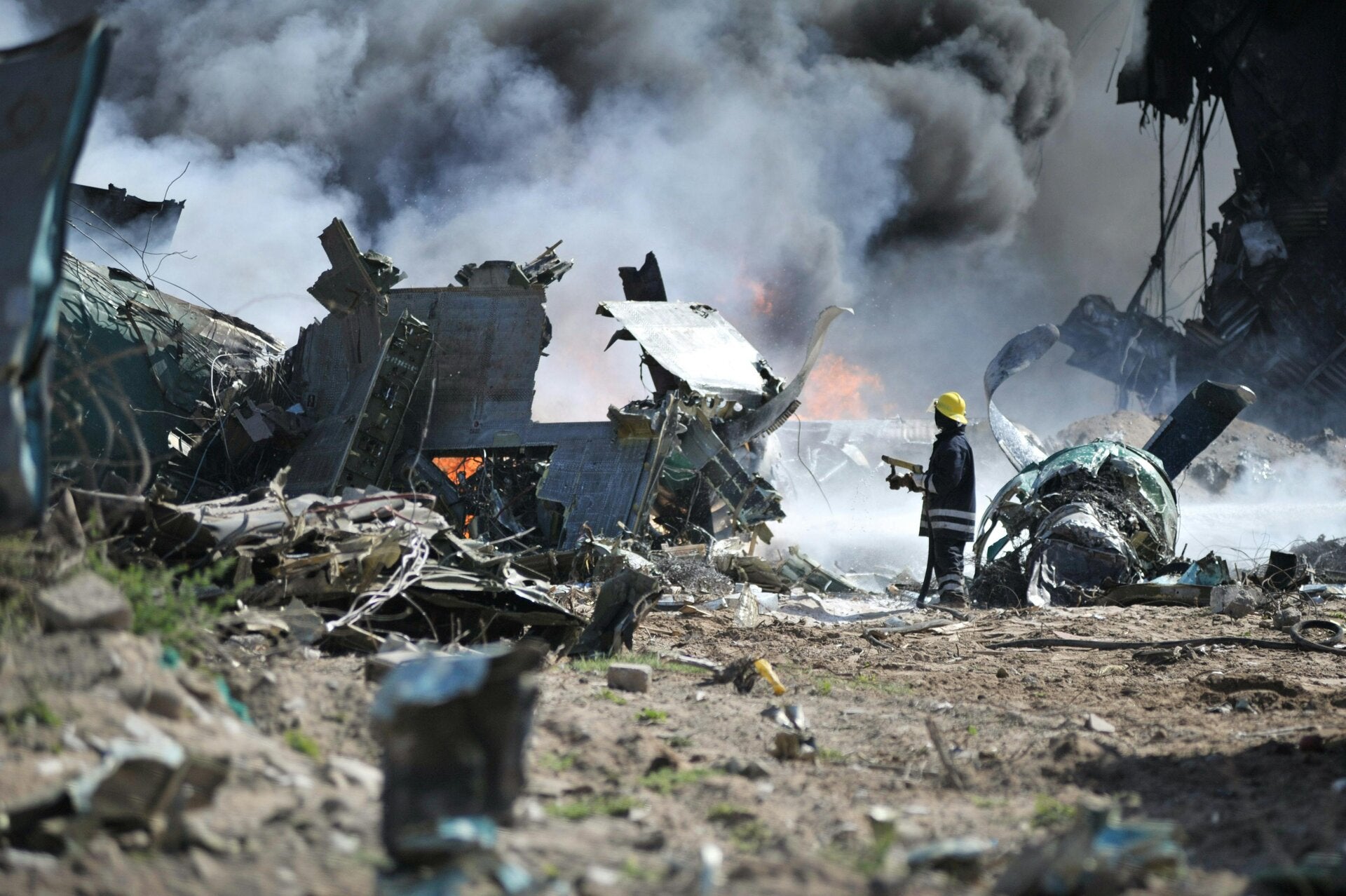
Accra, Ghana — August 7, 2025
Ghana is in mourning following one of the most devastating air tragedies in its recent history. A military helicopter en route to Obuasi for an anti-illegal mining mission crashed in the forested Adansi area of the Ashanti region, killing all eight passengers on board. Among the deceased were two of the nation’s most respected cabinet members: Defense Minister Dr. Edward Omane Boamah and Environment, Science and Technology Minister Dr. Ibrahim Murtala Muhammed2.
The crash, which occurred on August 6, has been described by the Ghanaian government as a “national tragedy.” The aircraft—a Z-9 military helicopter—lost contact shortly after departing Accra, prompting a swift search and rescue operation. The wreckage was later discovered engulfed in flames, surrounded by stunned onlookers and emergency responders.
🕯️ Lives Lost, Legacies Remembered
In addition to the two ministers, the victims included:
-
Dr. Samuel Sarpong, Vice Chairman of the ruling National Democratic Congress (NDC)
-
Alhaji Muniru Mohammed, Acting Deputy National Security Coordinator
-
Samuel Aboagye, former parliamentary candidate
-
Squadron Leader Peter Bafemi Anala, Flying Officer Twum Ampadu, and Sergeant Ernest Addo Mensah, all Ghana Air Force personnel4
These individuals were en route to launch the Responsible Cooperative Mining and Skills Development Programme (rCOMSDEP), a national initiative aimed at curbing illegal mining and promoting sustainable development.
🌍 A Global Outpouring of Condolences
Condolences have poured in from around the world. WTO Director-General Ngozi Okonjo-Iweala expressed her sorrow, calling the loss “devastating” and extending heartfelt sympathy to President John Dramani Mahama and the people of Ghana. Ghana Premier League clubs, civil society organizations, and international partners have joined in mourning, recognizing the fallen as heroes of public service4.
🇬🇭 National Mourning and Presidential Response
President Mahama, visibly shaken, declared three days of national mourning, ordering flags to be flown at half-mast across the country. He delegated Vice President Kwesi Amissah-Arthur to accompany the remains of the fallen officials, a gesture symbolizing the nation’s collective grief and reverence.
💬 Voices of Grief and Tribute
Minister of Communications Samuel Nartey George shared a deeply personal tribute to Dr. Boamah, describing him as a mentor, brother, and guiding light. “You were not just a colleague—you were the elder brother I didn’t have,” he wrote in a moving social media post.
🌱 A Call to Unity and Reflection
As Ghana mourns, the tragedy has sparked reflection on the fragility of life and the weight of public service. The fallen leaders were not only policymakers—they were visionaries committed to justice, environmental stewardship, and national security.
Their legacy now rests in the hands of a grieving but resilient nation, determined to honor their memory through continued service, unity, and reform.
Turmoil in Washington: Trump Fires Labor Statistics Chief Amid Controversy
8/1/2025
In a move that has sparked widespread debate, former President Donald Trump dismissed the Director of the Bureau of Labor Statistics following the release of disappointing job numbers—reportedly around 73,000. Trump accused the official of manipulating employment data for political gain, though no credible evidence has emerged to support these claims.
📉 Job Numbers and Political Fallout
The job report, which fell far short of expectations, has intensified scrutiny of Trump’s economic policies. Critics argue that the administration’s aggressive tariff strategies—particularly the trade wars with China and other nations—have contributed to economic instability and job losses across key sectors. While many Americans express concern over rising costs and shrinking opportunities, Trump’s core Republican base continues to back his decisions, often citing loyalty and party unity.
🔥 Protests and Public Dissent
Nationwide protests have erupted in response to Trump’s policies, with demonstrators voicing frustration over economic inequality, labor conditions, and what they perceive as authoritarian tactics. The firing of the labor statistics director has only added fuel to the fire, raising questions about transparency and accountability in government.
🧭 Looking Ahead
As the political landscape remains deeply polarized, analysts warn that undermining independent institutions like the Bureau of Labor Statistics could have long-term consequences for public trust and economic policy. With protests growing and economic indicators flashing warning signs, the nation finds itself at a crossroads—caught between partisan loyalty and the pursuit of truth. by Dr Ntuba Akwo Thompson
Muhammadu Buhari: A Legacy of Discipline, Leadership, and Service


Nigeria and the world bid farewell to one of Africa’s most enduring statesmen, Muhammadu Buhari, who passed away in the United Kingdom on July 13, 2025, following a prolonged illness. He was 82.
Born in Daura, Katsina State, Buhari first rose to prominence as a military officer, eventually becoming Nigeria’s Head of State from 1983 to 1985, following a coup that ousted the civilian government of President Shehu Shagari. During his military rule, he was seconded by General Tunde Idiagbon, a fellow disciplinarian from Ilorin, and together they launched the War Against Indiscipline, a campaign aimed at restoring order, accountability, and moral rectitude in public life.
After decades in public service and several attempts at the presidency, Buhari made history in 2015 when he became the first opposition candidate to defeat an incumbent president in Nigeria’s democratic era. He was re-elected in 2019, serving two full terms until 2023. His civilian presidency was marked by a strong anti-corruption drive, infrastructural development, and efforts to stabilize Nigeria’s economy and security landscape.
🕯️ Tributes from Around the Globe
Following the announcement of his death, global leaders expressed their condolences, recognizing Buhari’s contributions to Nigeria and the African continent. Indian Prime Minister Narendra Modi (possibly referenced as "Morandi Mordi") described Buhari as a man of “wisdom, warmth, and unwavering commitment to India–Nigeria friendship”. African heads of state, including those from South Africa, Tanzania, Sierra Leone, and Ethiopia, hailed Buhari as a Pan-Africanist, a champion of regional integration, and a symbol of integrity and discipline3.
President Bola Ahmed Tinubu, Buhari’s successor, declared a seven-day national mourning period, with flags flown at half-mast across Nigeria.
🏡 Final Journey to Daura
In accordance with Islamic rites, Buhari was buried in his hometown of Daura, Katsina State, on July 15, 20256. The ceremony was attended by dignitaries, family members, and citizens from across the country. A military parade and 21-gun salute honored his service as both a military and civilian leader.
Buhari’s legacy remains complex yet impactful. To many, he was a symbol of moral rigor and national discipline. To others, his tenure reflected the challenges of governing a diverse and dynamic nation. Yet, few dispute his unwavering commitment to Nigeria’s unity and sovereignty.
As Nigeria reflects on his life and leadership, Muhammadu Buhari will be remembered as a man who came, saw, and served—with conviction, restraint, and a deep belief in the promise of his country.
BY DR NTUBA , THOMPSON AKWO
Bridging Wellness, Culture, and Global Dialogue: HealthNDevelopment Magazine at the Essence 2025 Festival



The Essence Festival of Culture 2025 in New Orleans was more than a gathering—it was a cultural reckoning, a healing sanctuary, and a global platform for advocacy. As Editor-in-Chief of HealthNDevelopment Magazine, I was honored to be part of this vibrant mosaic, participating in transformative sessions, capturing untold stories, and engaging with voices often underrepresented in global health media.
Our presence at the festival aligned with our magazine's core mission: to amplify health equity, celebrate cultural resilience, and bridge the local with the global. From plenaries on Black maternal health to intimate interviews with grassroots organizers, each moment was a revelation of the deep interconnections between identity, public health, and cultural agency.
We engaged deeply with African American women—the heartbeat of the festival and longtime stewards of wellness movements. These interactions underscored the power of culturally grounded advocacy. Through audio-visual interviews, editorial briefs, and upcoming digital features, we are curating media resources for global consumption that not only inform but inspire a reimagining of health justice.
Essence 2025 was not merely an event to attend; it was a space to witness the harmonies of healing, joy, and power. As the festival pulsed with music, faith, and purpose, HealthNDevelopment Magazine stood firmly at the intersection of culture and communication—translating the soul of the event into a global language of equity.
By Dr. Ntuba Akwo, Editor-in-Chief

A Deluge of Grief: The Central Texas Flooding Tragedy and the Questions It Raises
The devastating flash floods that swept through Central Texas over the Fourth of July weekend have left a trail of destruction, heartbreak, and urgent questions. With at least 95 confirmed deaths, including 27 children and counselors from Camp Mystic, and dozens still missing, this disaster has become one of the deadliest flooding events in U.S. history since 1925. As the Guadalupe River surged over 26 feet in less than an hour, entire communities were caught off guard, prompting scrutiny over preparedness, communication, and leadership.
The Human Toll and the Unfolding Tragedy
The epicenter of the disaster was Kerr County, where the majority of fatalities occurred. The floodwaters struck in the early hours of July 4, catching many residents and campers asleep. Camp Mystic, a beloved Christian summer camp, was particularly hard hit, with heartbreaking stories emerging of children swept away in the darkness3. Emergency responders have rescued over 850 people, but the search for the missing continues.
Why Was There No Evacuation?
One of the most pressing questions is why no evacuation orders were issued despite forecasts of heavy rain. Local officials, including Kerr County Judge Rob Kelly, have defended their response, claiming the magnitude of the flood was unforeseen and that radar did not predict such a catastrophic event5. However, critics argue that the region’s history of flash flooding—often referred to as “Flash Flood Alley”—should have prompted more proactive measures.
Senator Ted Cruz voiced this concern, stating, “Something went wrong there. We’ve got to fix that and have a better system of warning to get kids out of harm’s way”. He emphasized the need for improved early warning systems and acknowledged that, in hindsight, evacuations should have been ordered for vulnerable areas like summer camps and RV parks7.
Calls for Unity Amid Political Tensions
As the death toll rose, political leaders urged against politicizing the tragedy. Cruz cautioned against “partisan games,” while also calling for accountability and systemic improvements. Other officials echoed the sentiment, emphasizing that the focus should remain on rescue and recovery rather than blame.
Governor Abbott’s Response and Federal Support
Texas Governor Greg Abbott has been at the forefront of the state’s emergency response. He declared a state of disaster, deployed over 1,500 personnel, and coordinated with federal agencies to support search and rescue operations. Abbott described the scene at Camp Mystic as “horrendously ravaged” and vowed that operations would continue “24/7” until every missing person is found2.
🇺🇸 President Trump’s Emergency Declaration and Visit
President Donald Trump approved a major disaster declaration for Kerr County, unlocking federal aid for affected communities11. He praised the efforts of first responders and announced plans to visit the region on Friday, stating, “God bless all of the people that have gone through so much, and God bless the state of Texas”. While some questioned his past remarks about phasing out FEMA, Trump deferred the topic, saying, “FEMA is something we can talk about later”4.
Looking Ahead: Lessons and Accountability
This tragedy has exposed critical gaps in emergency preparedness and communication. As the state mourns, there is a growing consensus that early warning systems, evacuation protocols, and infrastructure resilience must be re-evaluated. The loss of life—especially among children—demands not only compassion but also action.
In the words of one survivor, “We had no idea it would be this bad. We just want answers—and change.”

US Americans Celebrate the Fourth of July at Home and Abroad 🎆
Every year on the Fourth of July, Americans around the world come together to honor the birth of their nation with pride, patriotism, and plenty of fireworks. Whether in bustling cities, small hometowns, or far-flung corners of the globe, the spirit of Independence Day is alive and well.
✨ Celebrations at Home
In the United States, the Fourth of July is a cornerstone of summer. From sea to shining sea, Americans celebrate with:
-
Fireworks Displays: Spectacular shows light up skies in cities like New York, Washington D.C., and Los Angeles.
-
Parades: Marching bands, floats, and veterans often fill the streets, waving flags and spreading cheer.
-
Barbecues and Picnics: Families and friends gather for grilled favorites, chilled drinks, and classic desserts like apple pie.
-
Historical Reenactments: In places like Philadelphia and Boston, actors bring the Revolution to life with colonial costumes and readings of the Declaration of Independence.
🌍 Celebrations Abroad
Americans living or traveling overseas don’t let distance dull their patriotic spark. U.S. embassies and expatriate communities frequently host events such as:
-
Formal Receptions: U.S. diplomats invite local officials and American citizens to join in raising a toast to freedom.
-
Community Barbecues: In cities from Tokyo to Berlin, American expats recreate homegrown traditions with friends and fellow citizens.
-
Sports and Concerts: Events often include baseball games, live music, and fireworks for a familiar taste of home.
🗽 More Than Just a Party
For many, the Fourth of July isn’t just about celebration—it's a moment of reflection. It’s a time to appreciate the values of freedom, independence, and unity that sparked the nation’s founding. Whether standing on American soil or a different continent, citizens and friends of the U.S. honor the enduring legacy of July 4, 1776.
No matter where they are, Americans carry a little bit of home with them every Independence Day—wrapped in red, white, and blue.
Powerful Partnerships Take Center Stage at Essence Festival 2025 Opening Press Conference
📍 New Orleans, LA – July 3, 2025
The vibrant halls of the Ernest N. Morial Convention Center echoed with anticipation this morning as the 2025 Essence Festival of Culture officially kicked off with an opening press conference that highlighted decades of empowerment, legacy, and meaningful partnerships.
Mayor LaToya Cantrell took the podium to welcome attendees to New Orleans, celebrating the city’s long-standing bond with the Essence Festival. “This festival is more than just a celebration—it’s a movement. A celebration of Black womanhood, creativity, and power,” she declared. “New Orleans is proud to once again host this transformative event.”
Leaders from Essence Magazine reflected on the publication’s journey and its mission to amplify the voices, dreams, and experiences of Black women across generations. They emphasized how the festival has evolved into a multi-day platform for advocacy, wellness, music, business, and community building.
A representative from Coca-Cola, one of the festival’s enduring partners, underscored the strength of their collaboration with Essence. “Coca-Cola has stood alongside Essence for decades because we believe in the same vision—uplifting communities and celebrating culture,” they shared. “This year’s festival is a testament to what we can achieve when we stand together.”
Voices from the Crowd
Attendees at the press conference shared their excitement and personal connections to the festival:
-
“This is my fifth Essence Fest, and every year it feels like coming home,” said Tasha Williams, a teacher from Atlanta. “It’s more than music—it’s healing, it’s sisterhood, it’s power.”
-
“I brought my daughter for the first time this year,” shared Monique Ellis from Houston. “I want her to see what it looks like when Black women lead, create, and thrive.”
-
Darryl Greene, a small business owner from Chicago, added: “The energy here is unmatched. The panels, the networking, the love—it’s all here. Essence is where we recharge.”
With an exciting lineup of performances, panels, and resource-rich activations on the horizon, festival organizers and attendees alike are looking forward to what promises to be an unforgettable weekend.
✨ Essence Festival 2025 continues through the weekend, offering spaces for reflection, celebration, and unity—reminding everyone that when Black women thrive, communities rise.

Trump Concludes 2025 NATO Summit Amid Controversy Over Iran Strikes and Defense Spending
President Donald Trump, representing the United States at the 2025 NATO Summit in The Hague, Netherlands, concluded a high-stakes gathering marked by bold declarations, military controversy, and shifting alliances. The summit, attended by leaders of all 32 NATO member states, focused on four major issues: a proposed increase in defense spending, the U.S. bombing of Iranian nuclear facilities, the ongoing war in Ukraine, and the fragile ceasefire between Israel and Iran.
One of the most consequential outcomes was the agreement—championed by Trump—for NATO members to commit 5% of their GDP to defense spending, a dramatic increase from the previous 2% benchmark. While some nations, like Spain, negotiated exemptions, most leaders reluctantly aligned with the U.S. position, wary of jeopardizing their standing in the alliance.
The summit took place just days after the Trump administration launched airstrikes on what it claimed were Iranian nuclear enrichment sites. Trump declared the operation a “total obliteration,” citing reports from Israeli intelligence and a letter allegedly from Iran’s foreign minister acknowledging the destruction of key infrastructure. However, media outlets such as CNN and The New York Times questioned the effectiveness of the strikes, citing early intelligence that suggested the damage may have been overstated. Trump lashed out at the press during a NATO press conference, accusing them of “undermining American strength.”
In a moment that drew both laughter and raised eyebrows, NATO Secretary General Mark Rutte referred to Trump as “daddy” during a discussion about the U.S. role in brokering the Israel-Iran ceasefire. Trump had likened the two nations to “kids in a schoolyard,” prompting Rutte to quip, “Then daddy has to sometimes use strong language”. The comment sparked a flurry of media coverage and social media reactions, with Trump later embracing the nickname as a sign of respect.
Despite the ceasefire, tensions remain high. Iranian retaliation included missile strikes on a U.S. base in Qatar, though no casualties were reported. Meanwhile, Israeli airstrikes continued sporadically, raising doubts about the durability of the truce.
Back in Washington, Democratic lawmakers led by Rep. Alexandria Ocasio-Cortez began drafting articles of impeachment, accusing Trump of violating the War Powers Act by launching military strikes without congressional approval. The move has reignited debates over executive authority in foreign policy and could set the stage for a constitutional showdown.
Turkish President Recep Tayyip Erdoğan and other leaders expressed unease with Trump’s unilateral actions but ultimately chose to remain aligned with NATO’s consensus, prioritizing alliance unity over dissent.
As the world watches the fallout from the summit, Trump’s aggressive posture has reshaped NATO’s agenda and reignited global debates over diplomacy, deterrence, and democratic accountability.


Trump Frustrated Over Iran-Israel Escalation Despite Brokered Ceasefire
By Dr. Ntuba Akwo Thompson
Former U.S. President Donald Trump has expressed frustration following renewed hostilities between Iran and Israel, despite his claim to have brokered a ceasefire intended to de-escalate tensions between the two regional adversaries. The renewed conflict follows Trump’s order for targeted American strikes on Iranian nuclear-related sites—strikes he described as preventative and strategic.
Israeli forces reportedly launched a large-scale bombing campaign inside Iran shortly afterward, dropping heavy payloads in response to a missile launch that was intercepted before reaching its target. Trump, however, believes that the Iranian launch may have been accidental or miscalculated and did not justify Israel's overwhelming response. He has publicly stated that Iran and Israel have “been fighting for too long” and “don’t know what the [expletive] they are doing,” reflecting his exasperation with the lack of restraint from both sides.
While critical of Iran’s actions, Trump has made clear that he does not support regime change in Tehran. He argues that ousting the current leadership could lead to chaos and further regional destabilization—especially at a time when many Iranians, across political divides, appear to have unified in defense of what they view as their sovereign right to a peaceful civilian nuclear program.
Domestically, Trump’s decision to authorize strikes has drawn sharp criticism. A recent poll shows that nearly 56% of Americans oppose the attacks on Iran, expressing concern over unnecessary military entanglement and the risk of igniting a broader conflict. In a heated response, Democratic House Minority Leader Hakeem Jeffries questioned Trump's judgment, paraphrasing his own blunt rhetoric by asking, “What the f*** is Trump doing?”
In Israel, public sentiment is more divided. Some see the campaign as a strategic success, weakening Iran’s military infrastructure and creating momentum to resolve the ongoing conflict in Gaza. There is a growing chorus urging the Israeli government to capitalize on perceived gains by agreeing to a ceasefire, securing the release of hostages, and transitioning toward regional stabilization.
Observers note that Iran’s reported acceptance of a new ceasefire may have been influenced by the surprise U.S. strikes. Whether this signals a lasting shift or a temporary pause remains uncertain.
Israel Signals Near Completion of Military Campaign in Iran
Tel Aviv, Israel — Israel's military campaign in Iran may be approaching its final phase, with top officials expressing confidence that key objectives will soon be achieved. The development raises hopes for a potential ceasefire after more than ten days of intensifying hostilities between the two regional powers.
An Israeli official, speaking to CNN on condition of anonymity, revealed that the intelligence-guided strikes are nearing completion. “The bank of targets we have been pursuing is close to being exhausted,” the official noted, adding that Israel believes it can achieve its final military goals in the coming days.
Prime Minister Benjamin Netanyahu echoed this sentiment during public remarks on Sunday, stating that Israel is “very, very close to completing” its objectives. He emphasized that while Israel remains determined in its campaign, the nation has no desire to be drawn into a prolonged conflict. “We do not wish to be dragged into a war of attrition with Iran,” Netanyahu asserted.
The recent surge in violence began after U.S. strikes on Iranian nuclear sites triggered a cascade of retaliatory actions across the region. Iran responded with attacks on American bases in Qatar and Iraq, while Israel struck strategic targets in and around Tehran, including infrastructure tied to Iran’s nuclear program.
International observers are watching closely for signs that the violence may ebb. A ceasefire, if secured in the coming days, could prevent further civilian casualties and allow diplomatic efforts to resume amid escalating tensions.

Suspension of International flights to Tel Aviv and other Middle Eastern destinations is rooted in a complex web of geopolitical, economic, and security dynamics.
1. Geopolitical Factors Behind the Suspension
Air France’s decision follows a sharp escalation in regional tensions after:
-
U.S. airstrikes on Iranian nuclear facilities, which prompted Iran to launch retaliatory missile attacks targeting U.S. bases in Qatar and Iraq.
-
The ongoing conflict between Israel and Iran, which has led to missile exchanges and heightened military activity across the region.
-
Qatar’s temporary suspension of air traffic and missile interceptions near Al Udeid Air Base, which raised concerns about the safety of overflown airspace.
These developments have made the airspace over parts of the Middle East—including Israel, Iran, Iraq, and Syria—volatile and unpredictable, prompting airlines to reroute or cancel flights to avoid potential threats3.
2. Economic Implications of Flight Suspensions
The ripple effects of suspended flights are significant:
-
Direct financial losses for airlines due to canceled routes, rerouting, and increased fuel consumption. For example, rerouted flights over safer corridors like Egypt or the Caspian Sea can add hours and thousands of dollars in fuel and crew costs4.
-
Passenger compensation and logistics: Airlines must offer refunds or rebookings, and in some cases, cover accommodation and meals for stranded travelers.
-
Supply chain disruptions: Suspended cargo flights can delay shipments, affecting industries reliant on just-in-time logistics.
-
Tourism and local economies: Destinations like Tel Aviv, Dubai, and Riyadh may see a drop in tourism revenue, hotel bookings, and business travel.
Globally, flight disruptions in 2022 alone were estimated to cost $67.5 billion and generated 9 million tons of CO₂ emissions.
3. How Other Airlines Have Reacted
Air France is not alone in its caution:
-
British Airways canceled and rerouted flights to Dubai, Doha, and Bahrain, citing operational and airspace constraints.
-
Singapore Airlines suspended flights to Dubai and warned of further disruptions depending on how the situation evolves.
-
United and American Airlines preemptively suspended flights to Qatar and Dubai, respectively.
-
Middle Eastern carriers like Emirates, Etihad, and Qatar Airways have also adjusted routes or temporarily halted services to high-risk areas.
These actions reflect a broader industry trend: airlines are prioritizing safety over schedule reliability, especially in regions where missile activity or military operations pose a credible threat to civilian aviation.

Doha, Qatar — June 23, 2025 — In a significant escalation of regional tensions, Iran’s Islamic Revolutionary Guard Corps (IRGC) has confirmed the launch of a “powerful” missile attack targeting the U.S.-operated Al Udeid Air Base in Qatar. The operation, which also included missile launches toward U.S. military installations in Iraq, comes in apparent retaliation for recent U.S. airstrikes on Iranian nuclear facilities.
According to two U.S. defense officials, American forces had been anticipating potential retaliatory action following the strikes over the weekend. In preparation, the U.S. military had repositioned some aircraft from Al Udeid Air Base, which serves as a critical hub for U.S. operations in the Middle East.
Qatar’s Ministry of Defense reported that its air defense systems successfully intercepted the incoming missiles, preventing casualties and damage. “We confirm that the attempted attack on Al Udeid Air Base was thwarted by our defense systems. No deaths or injuries have been reported,” a spokesperson stated.
The Qatari government has condemned the attack as a violation of its sovereignty and international law, affirming its right to respond proportionately. The situation remains fluid, with both U.S. and Qatari officials closely monitoring developments.

France Condemns Israeli Strike on Iranian Prison Housing French Nationals
BY DR NTUBA AKWO THOMPSON
Paris, France — France has strongly condemned an Israeli airstrike targeting Tehran’s Evin Prison, expressing grave concern over the safety of two French nationals detained there since 2022.
In a statement posted Monday on X, French Foreign Minister Jean-Noël Barrot denounced the attack as “inacceptable,” highlighting the danger posed to Cecile Kohler and Jacques Paris, whom he described as "hostages for the past three years.”
“The strike aimed at Evin Prison in Tehran put in danger two of our nationals,” Barrot wrote. “It’s inacceptable.”
Kohler, a 40-year-old French teacher, and her partner Jacques Paris were arrested in May 2022 while vacationing in Iran. Iranian authorities accused the pair of espionage, a charge France has rejected as baseless. Later that year, Iranian state television aired footage of a forced confession in which Kohler claimed to be an agent of the French intelligence service DGES.
Human rights advocates, including Amnesty International, have decried the confessions as coerced and demanded the immediate release of the couple. The international community has repeatedly criticized Iran for detaining foreign nationals under dubious charges and using them as bargaining tools in geopolitical disputes.
Minister Barrot has called for urgent consular access to the detainees and demanded up-to-date information regarding their condition following the prison strike.
Israel has not yet publicly commented on the implications of its strike on Evin Prison, which is notorious for holding political prisoners and critics of the Iranian regime. The incident comes amid escalating regional tensions, with both Iran and Israel exchanging a series of retaliatory attacks in recent weeks.
As the international spotlight turns toward the humanitarian consequences of military action, France continues to press for accountability and the protection of its citizens detained abroad.
Crossing Disciplines, Saving Lives: A Global Call from Dublin on Tobacco Control


As policymakers, health advocates, and civil society leaders gather in Dublin for the World Conference on Tobacco Control 2025, a powerful message resonates from the halls of collaboration: the fight against tobacco is not solely a public health endeavor—it is a global mandate that demands intersectional strategy and cooperative resolve.
Formerly known as the World Conference on Tobacco or Health (WCTOH), this year's convening—organized by the International Union Against Tuberculosis and Lung Disease (The Union) and supported by Bloomberg Philanthropies—signals a paradigm shift. With its new name comes an expanded vision: one that centers tobacco control as a multisectoral imperative embedded in every facet of sustainable development.
The Complex Terrain of Tobacco Epidemics
Tobacco use remains one of the most preventable causes of death worldwide. Yet, addressing its reach involves far more than health warnings or bans on advertising. The conference highlights how tobacco control intersects deeply with taxation policy, legal enforcement, agricultural practice, environmental sustainability, gender disparities, and broader social inequities.
For instance, tobacco farming perpetuates environmental degradation and child labor, particularly in low-income regions. In parallel, weak taxation systems and legal loopholes in many countries allow tobacco industries to flourish unchecked, targeting vulnerable populations and widening health disparities across gender and income lines.
Why a Holistic Response Matters
The World Conference on Tobacco Control 2025 calls on nations to adopt holistic approaches—ones that unite ministries of finance, agriculture, education, and environment alongside health officials. From shaping smoke-free cities to crafting gender-responsive cessation programs, progress depends on collective will and interlocking strategies.
Notably, the conference fosters south-south dialogue, amplifies the voices of marginalized communities, and empowers the next generation of tobacco control leaders. It is a gathering where evidence meets ethics, where lived experience meets legislation, and where global solidarity transcends borders.
A Call to Action
"Join us in this call to action at the World Conference on Tobacco Control 2025!" is more than a slogan—it’s a moral summons. It invites each nation, organization, and individual to reflect not only on what is at stake but on what is possible when we unite for health justice.
From Dublin to Dakar, from ministries to marketplaces, the message is clear: tobacco control is not just about saving lives—it's about reshaping systems. The time to act is now.

The UN’s Call for De-escalation in the Iran-Israel Conflict
The ongoing conflict between Iran and Israel has escalated to a critical point, prompting United Nations Secretary-General António Guterres to issue a strong warning against further military interventions. His statement underscores the potential consequences of international involvement, particularly as reports suggest that U.S. President Donald Trump is considering military action against Iranian nuclear facilities.
The UN’s Position on Military Intervention
Guterres’ appeal for restraint reflects the UN’s broader commitment to global peace and stability. He emphasized that additional military interventions could have far-reaching consequences, not only for the nations directly involved but for the entire Middle East and international security. The UN has historically advocated for diplomatic solutions in conflicts, urging member states to prioritize negotiations over military action.
The U.S. Consideration of Military Action
Reports indicate that President Trump is weighing the possibility of striking Iranian nuclear sites, a move that could significantly alter the geopolitical landscape. His statement, “I may do it, I may not do it,” reflects the uncertainty surrounding U.S. involvement2. The potential for military action raises concerns about escalating tensions and the broader implications for regional stability.
Global Implications of Further Escalation
If the conflict continues to intensify, it could lead to economic disruptions, humanitarian crises, and increased instability across the Middle East. The involvement of additional international actors could further complicate diplomatic efforts and heighten the risk of prolonged warfare. The UN’s call for restraint serves as a reminder of the importance of diplomatic engagement in resolving conflicts.
Conclusion
The Iran-Israel conflict remains a pressing issue with global ramifications. The UN’s warning highlights the need for cautious decision-making and diplomatic solutions to prevent further escalation. As world leaders navigate this crisis, the emphasis should remain on dialogue, negotiation, and peaceful resolution to safeguard international security.
Would you like me to expand on any specific aspects of this discussion?
Healing, Visibility, and Justice: Reflections from the 2025 New Orleans LGBTQ+ Community Events

Healing, Visibility, and Justice: Reflections from the 2025 New Orleans LGBTQ+ Community Events
In June 2025, New Orleans pulsed with color, courage, and community as it hosted a vibrant series of LGBTQ+ Pride events. Among the many voices and leaders present was Dr. Ntuba Akwo, a global health communicator and faith-based advocate, who joined the celebrations not only to stand in solidarity but to amplify the urgent message of health equity and human dignity.
From the lively Pride Parade winding through the French Quarter to the soulful rhythms of the Black Queer Community Fest at Armstrong Park, the weekend was a tapestry of joy and resistance. Dr. Akwo’s presence was especially felt at the Community Festival, where he engaged with health partners like Gilead Sciences, VIIV Healthcare, and St. Thomas Community Health Center. These organizations offered free HIV testing, PrEP education, and wellness resources—underscoring the critical intersection of public health and LGBTQ+ advocacy.
Gilead and VIIV, both leaders in HIV prevention and treatment, hosted interactive booths that emphasized culturally competent care and the importance of community-led solutions. St. Thomas Community Health, a trusted local provider, offered screenings and counseling, reinforcing their commitment to accessible, affirming healthcare for all.
But the weekend wasn’t just about health—it was also about global justice. A powerful film screening series spotlighted the struggles of the Palestinian people, drawing connections between queer liberation and broader human rights movements. These screenings, held in collaboration with local activists and international solidarity groups, reminded attendees that Pride is not only a celebration—it’s a platform for truth-telling and transformation.
The impact of Dr NTUBA ,s participation remains vivid in the memories of those he connected with. His conversations with youth leaders, health workers, and fellow advocates helped bridge faith, health, and justice in a way that few others could. His presence was a testament to the belief that healing—whether from stigma, illness, or injustice—requires both compassion and courage.
As the rainbow flags were folded and the music faded, what lingered was a renewed commitment to inclusion, health equity, and global solidarity. And in that spirit, Dr. Akwo’s voice continues to echo: calling communities to rise, to heal, and to hope.
78TH WORLD HEALTH ASSEMBLY , BEGINS.
5/19/2025


Reflections on the 78th World Health Assembly: Challenges, Successes, and the Path Forward
Introduction
The 78th World Health Assembly (WHA) convened global health leaders to discuss pressing issues affecting public health worldwide. Led elected president , the assembly will focus on protection, promotion, and prevention—three pillars guiding global health efforts. We explore the challenges and successes highlighted during the assembly, including disease elimination, organizational restructuring, the proposed Pandemic Accord, and financial sustainability for the 2026-2027 biennium.
Protection, Promotion, and Prevention: A Global Health Framework
The WHO’s approach to protection, promotion, and prevention has shaped global health policies over the years. Protection involves safeguarding populations from health threats, including pandemics and environmental hazards. Promotion emphasizes strengthening healthcare systems and ensuring equitable access to medical services. Prevention focuses on proactive measures such as vaccinations, health education, and disease surveillance. The past assemblies reaffirmed the importance of these principles in addressing emerging health challenges.
Success in Disease Elimination
One of the assembly’s notable achievements was the recognition of countries that have successfully eliminated certain diseases. Egypt, for instance, received certification for eliminating malaria, marking a significant milestone in global health. Other nations, including Botswana, were acknowledged for their efforts in eliminating mother-to-child transmission of HIV. These successes underscore the effectiveness of sustained public health interventions and international collaboration.
Restructuring WHO’s Management Team
A key discussion point was the reduction of the management team at WHO headquarters. This restructuring aims to enhance efficiency and streamline decision-making processes. While some view this as a necessary step to optimize resources, concerns remain about potential gaps in leadership and operational effectiveness. The assembly is to debate strategies to ensure that WHO maintains its ability to respond swiftly to global health crises despite a leaner management structure.
The Pandemic Accord: A Historic Agreement
One of the most anticipated decisions at the assembly was the Pandemic Accord, a global treaty designed to improve pandemic preparedness and response. The accord seeks to prevent the fragmented responses witnessed during the COVID-19 pandemic by fostering international cooperation and resource-sharing. If adopted, it would be only the second legally binding global health treaty under WHO’s framework, following the Framework Convention on Tobacco Control. The final vote on the agreement is expected soon, marking a pivotal moment in global health governance.
Financial Shortfalls and Sustainability
The assembly also is called to address the financial shortfall affecting WHO’s operations. With the United States’ intended withdrawal from WHO, funding uncertainties have intensified. To bridge the gap, member states are considering a 20% increase in mandatory contributions. Sustainable financing remains a critical issue, as WHO seeks to maintain its ability to support health initiatives worldwide. Discussions also are to explore alternative funding mechanisms, including partnerships with private entities and philanthropic organizations.
Conclusion
The 78th World Health Assembly underscores the complexities of global health governance. While significant progress has been made in disease elimination and pandemic preparedness, challenges such as financial sustainability and organizational restructuring remain. The assembly’s deliberations will shape the future of international health policies, reinforcing the commitment to protection, promotion, and prevention. As nations work together to build a healthier world, the decisions made at WHA78 will have lasting implications for global health security.
by DR NTUBA, THOMPSON AKWO


The Impact of HealthNDevelopment Magazine & Media Over Two Decades
For nearly 20 years, HealthNDevelopment Magazine & Media has been a vital force in the world of information, communication, and education. Based in San Antonio, Texas, this media outlet has consistently provided insightful content across a diverse range of topics, including news, opinions, sports, faith, politics, and women's issues.
A Commitment to Information and Education
At its core, HealthNDevelopment Magazine & Media has been dedicated to educating and informing its audience. Through its publications, the magazine has tackled pressing health concerns, development initiatives, and social issues, ensuring that readers stay well-informed about matters that impact their daily lives. By bridging the gap between expert knowledge and public understanding, the magazine has played a crucial role in fostering awareness and engagement.
Communication and Media Influence
Over the years, the magazine has evolved into a multifaceted media outlet, utilizing various platforms to reach a broader audience. Whether through print publications, digital content, or social media, HealthNDevelopment has remained committed to delivering accurate and timely information. Its ability to adapt to changing media landscapes has allowed it to maintain relevance and credibility in an era dominated by fast-paced news cycles.
Coverage of Diverse Topics
One of the magazine's defining features is its wide-ranging coverage. From political discourse to faith-based discussions, from sports analysis to women's empowerment, HealthNDevelopment has ensured that its content reflects the diverse interests and concerns of its readership. This inclusivity has helped the magazine build a loyal audience that values its balanced and insightful reporting.
The Power of Visual Storytelling
In addition to written content, HealthNDevelopment Magazine & Media has embraced visual storytelling to enhance its impact. Through pictures, infographics, and multimedia presentations, the magazine has made complex topics more accessible and engaging. This approach has strengthened its ability to educate, inform, and inspire its audience.
Conclusion
For close to two decades, HealthNDevelopment Magazine & Media has been a pillar of information, communication, and education. Its dedication to news, opinions, sports, faith, politics, and women's issues has solidified its reputation as a trusted media outlet. As it continues to evolve, its commitment to informing and empowering its audience remains unwavering, ensuring that it remains a valuable resource for years to come.
American makes History as first Pope from the USA .
Pope Leo XIV, born Robert Francis Prevost, made history on May 8, 2025, by becoming the first American-born pope2. His election marked a significant moment for the Catholic Church, as he stepped into the role of the 267th pontiff, succeeding Pope Francis.
Born in Chicago, Illinois, in 1955, Leo XIV had a distinguished career within the Church before his election. He was a member of the Augustinian order, making him the first Augustinian pope. His background includes extensive missionary work in Peru, leadership within the Vatican’s Dicastery for Bishops, and a reputation for being a centrist on theological and social issues.
Leo XIV’s election was met with great enthusiasm, with over 100,000 people gathering in St. Peter’s Square to witness the historic announcement. His first words as pope, “Peace be with you all,” reflected his commitment to unity and dialogue1. His choice of the name Leo XIV may be a nod to Pope Leo XIII, who was known for his dedication to social justice and fair labor practices.
As the first American pope, Leo XIV’s leadership is expected to bring a fresh perspective to the Vatican. His background in canon law, missionary work, and Church governance positions him as a leader capable of navigating the complexities of modern Catholicism. His papacy will likely focus on continuing the legacy of Pope Francis while addressing contemporary challenges within the Church and the world.
Leo XIV’s election is a momentous occasion, not just for American Catholics but for the global Church. His leadership will shape the future of Catholicism, and his approach to governance and social issues will be closely watched in the coming years.

EUROPEAN UNION THREATENS RETARLIATORY TARRIFS ON AMERICAN GOODS
The escalating trade tensions between the European Union (EU) and President Donald Trump's administration have reached a critical juncture. With the EU threatening retaliation against Trump's tariffs on European goods, the global economic landscape faces significant uncertainty. We explore the implications of these tariffs, the EU's response, and the broader impact on international trade relations.
President Trump's tariff strategy, often described as "America First," aims to bolster domestic manufacturing and reduce reliance on foreign imports. By imposing tariffs on European goods, including steel, aluminum, and potentially automobiles, the administration seeks to address perceived trade imbalances and protect American industries. However, these measures have sparked widespread criticism, with many arguing that they could lead to higher consumer prices, supply chain disruptions, and strained diplomatic relations.
The European Union, a formidable economic bloc, has not taken these actions lightly. European Commission President Ursula von der Leyen has emphasized the EU's readiness to retaliate if necessary, highlighting the bloc's "strong plan" to counteract the tariffs. This plan includes imposing reciprocal tariffs on American goods, targeting sectors such as technology and banking. The EU's approach underscores its commitment to defending its economic interests while advocating for a rules-based international trade system.
The potential consequences of this trade dispute extend beyond the US and EU. As two of the world's largest economies, their actions set a precedent for global trade practices. Prolonged tensions could disrupt international markets, hinder economic growth, and undermine multilateral trade agreements. Moreover, the imposition of tariffs risks fueling inflation and creating bureaucratic hurdles, which could adversely affect businesses and consumers on both sides of the Atlantic.
In conclusion, the ongoing tariff dispute between the EU and President Trump's administration underscores the complexities of modern trade relations. While the US aims to prioritize domestic interests, the EU's response reflects its determination to uphold its economic sovereignty. As the situation unfolds, it is imperative for both parties to seek constructive dialogue and collaborative solutions to mitigate the broader impact on the global economy.

The Impact of Trump's Policies on Healthcare
As the President of the United States, Donald Trump has implemented various policies that have had a significant impact on the healthcare system. From attempts to repeal the Affordable Care Act to the handling of the COVID-19 pandemic, our team delves into the implications of these decisions.

Economic Policies and Their Effects on Development
Trump's economic policies have also played a crucial role in shaping the country's development. Our writers analyze the impact of tax reforms, trade agreements, and economic stimulus packages on the overall growth and prosperity of the nation.

Social and Political Commentary
In addition to policy analysis, our team provides insightful commentary on the social and political dynamics at play
. From immigration reforms to civil rights movements, we offer a comprehensive view of the evolving political landscape.

David Axerod and Karl Rove discuss the Trump administration Policies and Future in Tulane Universiity 2025 New Orleans Book Festival .
by Dr Ntuba Thompson Akwo
The City of New Orleans Book Festival at Tulane University in 2025 hosted a thought-provoking panel featuring David Axelrod and Karl Rove, two prominent political strategists from opposing ends of the spectrum. Their discussion delved into the challenges and controversies surrounding the Trump administration, with a particular focus on tariffs and their economic implications.
Karl Rove, known for his role as a senior advisor during the George W. Bush administration, highlighted the economic burden of tariffs, emphasizing that American buyers would bear part of the cost. This perspective underscored the broader economic consequences of protectionist trade policies, sparking a lively debate among attendees. Axelrod, a key figure in Barack Obama's presidential campaigns, added depth to the conversation by questioning Rove's absence from the Trump administration's cabinet. This moment of levity also served as a subtle critique of the administration's approach to governance.
The audience's reaction was telling. Extensive applause during the panel suggested a shared sentiment that the nation was veering off course. Rove's prediction that Democrats would regain control of the House in 2027 further fueled discussions about the political landscape and the potential for change in the coming years.
This panel not only provided a platform for robust political discourse but also reflected the public's growing concerns about the direction of the country. The exchange between Axelrod and Rove exemplified the importance of dialogue in understanding and addressing the complexities of governance and policy.