

Your guide to global health and wellness
Welcome to the HEALTHNDEVELOPMENT Health page, your essential resource for understanding general health and wellness on a global scale. We bring you the latest news, expert insights, and actionable information to empower you in taking charge of your health journey. Our goal is to inspire our general global readership to take actions to promote their health.

Understanding general health issues worldwide
Our content delves into a wide spectrum of general health issues affecting communities across the globe. From preventative care and disease management to lifestyle choices and public health initiatives, we aim to provide clarity and context. As HEALTHNDEVELOPMENT, we help our general global readership stay informed and proactive, solving the problem of misinformation and enabling them to take actions to promote their health.

Inspiring action for a healthier tomorrow
At HEALTHNDEVELOPMENT, a writing company based in San Antonio, Texas, United States, we believe knowledge is power, especially when it comes to health. Our articles on general health issues and wellness are crafted not just to inform but to inspire our readers to take actions to promote their health, contributing to a healthier world for everyone. This is the main reason someone visits our 'HEALTH' page, and what we hope they'll do after reading it.

Driving health awareness through compelling writing
As HEALTHNDEVELOPMENT, we specialize in creating SEO-friendly content that truly helps our clients and readers succeed. We empower our general global readership by translating complex health topics into accessible, engaging narratives, ensuring they have the tools and understanding to promote their health effectively. Our health writing services genuinely help individuals and communities solve problems by encouraging informed action towards better health and wellness.
One Health Summit
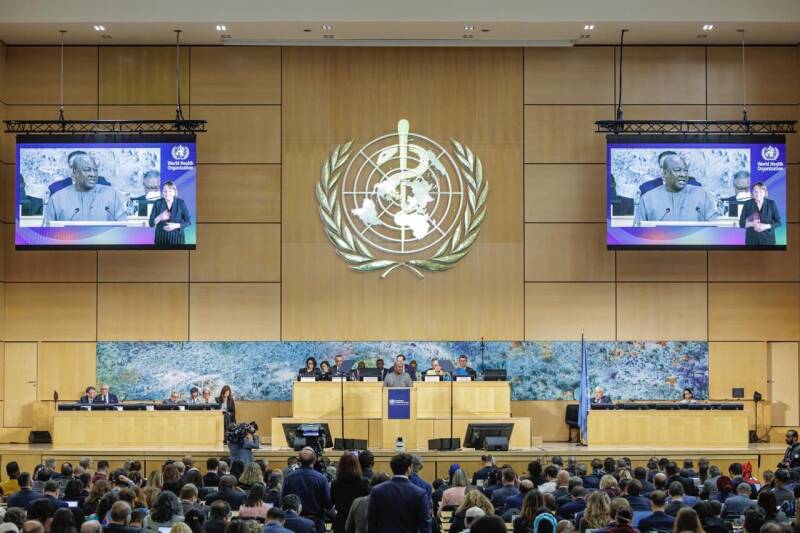
WHO Director-General's opening remarks at the 79th World Health Assembly high-level welcome – 18 May 2026
https://www.who.int/news-room/speeches/item/who-director-general-s-opening-remarks-at-the-79th-world-health-assembly-high-level-welcome---18-may-2026
18 May 2026 - Geneva
Your Excellency John Mahama, President of Ghana,
Your Excellency Elisabeth Baume-Schneider, Federal Councillor of the Swiss Confederation,
President of the 79th World Health Assembly, Dr Victor Atallah Lajam,
UNOG Director-General Tatiana Valovaya,
Excellencies, Honourable Ministers and heads of delegation,
Dear colleagues and friends,
Good morning and welcome.
My thanks to Your Excellency Councillor Baume-Schneider for your warm welcome, and for Switzerland’s continued hospitality in hosting WHO and the World Health Assembly.
My thanks also to Your Excellency President Mahama for honouring us with your presence, and for your inspiring message today.
Thank you for your leadership over the past year, especially in launching the Accra Reset at the Africa Health Sovereignty Summit in August – where I was honoured to join you.
I would also like to thank the President of Syria, the Prime Minister of Barbados and the Secretary-General for their messages today.
This time last week I was in Spain, where we had just completed the successful disembarkation and repatriation of the passengers aboard the MV Hondius.
I thank His Excellency Prime Minister Pedro Sánchez and Minister Mónica García Gómez, who is with us today, for their outstanding leadership and partnership in response to the hantavirus outbreak. Muchas gracias, Minister.
His Excellency Prime Minister Sánchez will join us this afternoon, and I look forward to welcoming him.
And as you know, yesterday I declared a public health emergency of international concern over the Ebola outbreak in the Democratic Republic of the Congo that has already spread to Uganda.
I will say more about both outbreaks – hantavirus and Ebola – in my address to Member States this afternoon, which is the technical report.
They are just the latest crises in our troubled world.
From conflicts to economic crises to climate change and aid cuts, we live in difficult, dangerous and divisive times.
As you all know, WHO has itself been through a difficult period as a result of sudden and steep cuts to our funding.
Many people have questions about the impact of those cuts for the future of WHO. They want to know what’s going on.
Today, I want to address those concerns by telling you what we’ve done, what we’re doing, and what we will do to build a stable and resilient WHO, and secure its future.
In fact, that work did not begin last year. It began nine years ago, when we started the WHO Transformation – the most ambitious reform agenda in the Organization’s history, because we knew such a scenario could happen.
There are dozens of ways in which WHO has transformed, and continues to transform, to meet the changing needs of Member States.
Today I would like to highlight just three, among a long list of changes we’re trying to make:
The changes we made to our core normative and technical functions;
The changes we made to our work in emergencies;
And the changes we made to our financial model.
I will also update you on our restructuring and our work on reform of the global health architecture.
First, our core mandate – science, data, norms and standards. As some say, WHO’s bread and butter.
Prior to 2019, the way WHO developed normative products was fragmented, with limited quality control or overview.
So, for the first time in the Organization’s history, we established a new Science Division – led by the Chief Scientist as a new executive position – to consolidate and strengthen WHO’s normative and technical work.
By the way, this work is going to help the Organization, because we’re saying – and many of you are saying – that WHO should focus on its core mandate, and this is our core mandate.
We have strengthened our evidence generation processes, and aligned prequalification of medical products with the introduction of living guidelines.
For example, in the past, WHO would prequalify medicines and only then develop guidelines on their use.
The process was disjointed and could take years.
Last year, WHO prequalified the groundbreaking drug lenacapavir for HIV prevention, at the same time as we developed the guidelines, in just eight months.
But we also want to make sure that WHO doesn’t just produce technical products that sit on a shelf, but that are put to use.
So, in 2024 we opened the WHO Academy in Lyon, France, which now offers over 400 courses in 23 languages, reaching over 120,000 learners so far.
We’re also leveraging the network of over 800 WHO Collaborating Centres, as the Federal Councillor said earlier;
We established the World Health Data Hub to consolidate our fragmented data and analytics capacities;
We’re investing in a modern data backbone, including an AI-powered single point of discovery for data, statistics and knowledge products.
We continue to modernize interoperability standards, including ICD-11, which is accessed 4 million times daily in 15 languages;
And to support countries to harness the power of digital technologies and artificial intelligence for health, we established a dedicated department at headquarters, with focal points across all six regions.
===
The second major area of change came with the COVID-19 pandemic, which exposed many gaps in global health security, and taught us all many lessons.
Based on the gaps we identified – I will focus on six today – we are changing.
First, we saw that the world needed enhanced capabilities to identify and respond to threats faster.
So with support from Germany, we established the WHO Hub for Pandemic and Epidemic Intelligence in Berlin.
Second, the pandemic exposed deep inequities in access to vaccines, diagnostics and therapeutics.
So we established the Access to COVID-19 Tools Accelerator, including COVAX, followed by the interim Medical Countermeasures Network.
We also set up the mRNA Technology Transfer Hub in Cape Town, South Africa, which is now sharing technology with research centres in 15 countries;
And the WHO Biomanufacturing Workforce Training Initiative in the Republic of Korea, which is supporting countries to build the workforce they need, with the skills they need, for local manufacturing.
Third, to strengthen national capacity, together with the World Bank we established the Pandemic Fund – which has so far disbursed US$1.4 billion in grants to 128 countries.
We also established the Universal Health and Preparedness Review, a peer review mechanism to build national capacity and enhance accountability.
Fourth, to improve coordinated global sharing of pathogen materials we established the WHO BioHub here in Switzerland, again as the Federal Councillor said, which has now shared 165 samples.
Fifth, to enhance emergency workforce capacity, we established the Global Health Emergency Corps, which recently ran its second simulation exercise, involving 600 health emergency experts and 25 partner organizations from 26 countries and territories.
And sixth, we recognized that we needed to reform the governance of global health security, to bring everything together into a cohesive whole.
At this Assembly two years ago, Member States adopted a set of amendments to the International Health Regulations;
And last year, you adopted the WHO Pandemic Agreement, a landmark instrument of international health law.
The final remaining piece of the puzzle is the Pathogen Access and Benefit Sharing system, as was said earlier by previous speakers – the PABS Annex.
Of course, we had all hoped that negotiations would be completed in time for PABS to be adopted at this Assembly.
It hasn’t happened yet, but I am confident it will, and I thank Member States for their commitment to continuing negotiations and seeking consensus – which I have no doubt you will find, and address the last piece of the puzzle.
===
The third major area of transformation – and arguably the most significant – is the historic change we are making to the way WHO is financed.
They say, “The economy, stupid.” In terms of independence and preventing shocks, it’s the financing model, stupid.
When WHO was established in 1948, its only source of funding was from assessed contributions – the membership fees that countries pay.
Voluntary contributions were introduced in the 1950s, but initially represented only about 20% of WHO’s base budget.
By 2017, that proportion had flipped: assessed contributions accounted for only 20% of the base budget, and voluntary contributions accounted for 80%.
What’s more, the majority of voluntary contributions were – and remain – tightly earmarked for specific projects and programmes selected by donors, making WHO vulnerable to shifting donor priorities and geopolitical winds.
We recognized this over-reliance on inflexible, voluntary contributions from a handful of donors as a major risk.
It undermined the organization’s independence, impeded its agility, and exposed it to shocks if a major donor were to withdraw or reduce its funding significantly.
So together with Member States, we designed a set of proposals to broaden our donor base – the revenue source – and make our funding more predictable and sustainable.
Several Member States reduced earmarking and committed to higher levels of flexible and voluntary funding – and we thank those countries for their trust and support.
We also established the WHO Foundation, to tap sources of funding that we had not accessed before.
Most significantly, we proposed a plan to increase assessed contributions from 20 percent of the base budget to 50 percent.
In 2022, here at the World Health Assembly, Member States approved it – a plan to increase assessed contributions to 50 percent of the base budget.
Subsequently, they agreed to achieve that target in five instalments.
The first two have already happened, and the remaining three are due in 2027, 2029 and 2031.
We cannot overstate just how transformational this change has been – and will continue to be – for safeguarding WHO’s institutional independence, and for protecting the Organization against shocks, like the shock that happened last year.
If the first two instalments had not happened, the impact of last year’s funding cut would have been much worse, as you can imagine.
===
Excellencies, honourable ministers, dear colleagues and friends.
These are the three key areas in which WHO has transformed: science, emergencies and finance, among others.
Now I would like to update you briefly on the comprehensive process of prioritization and realignment that we have undergone in the past 16 months.
Although the first two increases in assessed contributions cushioned the impact of the funding cuts we faced, they could not insulate us fully.
In close consultation with Member States, we reduced our Programme Budget and undertook a rigorous analysis of every office and every programme.
Unfortunately, we were left with no choice but to say goodbye to a large number of dedicated, hardworking colleagues – and I would like to place on record my deep gratitude to all of them for their commitment and service.
We have now completed the restructuring process. We have reached a position of stability and are moving forward, with purpose and confidence.
The crisis actually brought clarity, and confirmed that we have been doing the past nine years is the right road to stability.
We project that for the current biennium, 90 percent of the base budget is funded.
However, we recognize that in the current environment, the remaining 10 percent will not be easy to mobilize.
And because the majority of voluntary contributions remain earmarked, we continue to see pockets of poverty in many areas of our work.
That makes it essential that Member States fulfil their commitment to approving the remaining three increases in assessed contributions, and to fully honouring the commitments you made in the Investment Round.
At the same time, the work of reforming WHO to make it leaner and more effective and efficient, focused on its core mandate, will continue.
There is always room for improvement. There are always lessons to learn. There are always things we can do better, should do better, and will do better.
For us, I would like to assure you that change is a constant, and we will continue to change – not for the sake of change, but for the sake of the countries and people we serve.
In some areas, this will require stepping back from work that others are better placed to perform.
Because after all, WHO is only one part of the global health architecture.
Over time, that architecture has become increasingly crowded, complex and fragmented.
It’s time for a renovation, to build a new global health architecture fit for the future.
At this Assembly, Member States will consider a proposal for a Member State-led, WHO-hosted joint process to reform the global health architecture.
Our purpose is not to launch a new initiative, but to bring together the many existing initiatives that have proposed reforms of the global health architecture, in part or in whole.
That is why we have chosen as the theme for this year’s World Health Assembly, “Reshaping global health: a shared responsibility”.
And this is where the leadership of His Excellency President Mahama has been so decisive, in launching the Accra Reset last year.
In the past year, many countries have experienced severe disruptions due to sudden and steep cuts in development assistance.
Those disruptions, and the damage they caused to the health of individuals, families and communities, were regrettable and avoidable.
But they had an unintended benefit: they prompted many leaders to say now is the moment to leave behind the era of donor dependency, and open a new era of health sovereignty.
That is the message of the Accra Reset, and the echoes of Accra are now resounding in Geneva, and around the world.
Thank you, Your Excellency, for your leadership in this. You were very clear in your message today.
Every country should be able to depend on other countries. For friendship. For solidarity. For support when needed.
But no country wants to be dependent. Every country wants equity. Every country wants sovereignty.
It’s a cliché to say we’re at a turning point – a fork in the road. In this case, it’s true.
This is the moment for change. This is the opportunity to take the road that leads to sovereignty; the road that leads to solidarity; the road that leads to equity.
That is the road down which many countries are now walking – and that is the road that WHO is walking with you, every step of the way.
It’s the road that leads to the destination that our founders set 78 years ago: the highest attainable standard of health, not as a luxury for some, but a right for all.
I visited Malaysia yesterday, and I had a meeting with His Excellency the Prime Minister.
One thing I picked up was, “Malaysia boleh boleh.” It means Malaysia can.
All countries can. That’s what President Mahama showed us.
So boleh boleh. It’s possible, we can.
I thank you.
Related links
WHO Director-General's remarks at the Global Health Leaders Awards – 18 May 2026
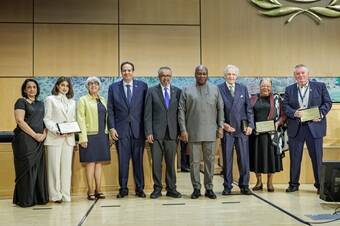
WHO Director-General's remarks at the Global Health Leaders Awards – 18 May 2026
Delivered on behalf of the Director-General by Chef de Cabinet Dr Razia Pendse.
Excellencies, Honourable Ministers, Mr President, dear colleagues and friends,
On behalf of the Director-General, I am honoured to present the Global Health Leaders Awards to four individuals who have made outstanding lifetime contributions to global health.
First, Dr Tore Godal of Norway.
Dr Godal’s contribution to global health is immense.
He was instrumental in establishing numerous global health initiatives, including Gavi, CEPI, the Global Fund, the Every Woman Every Child initiative, the Global Financing Facility, Roll Back Malaria, the Medicines for Malaria Venture and others.
In DG’s own country Ethiopia, he conducted groundbreaking research on leprosy when he was director at the Armaur Hansen Research Institute, which still awards an annual prize in his name to young Ethiopian researchers.
He brought his knowledge and experience to WHO as Director of the Special Programme for Research and Training in Tropical Diseases, or TDR.
In that role, he organized a clinical trial for a drug combination for leprosy that has now become the cornerstone of leprosy elimination efforts.
He also organized a huge clinical trial of insecticide-impregnated mosquito nets, which led to a change in WHO’s strategy that has saved millions of lives.
===
Now it’s my honour to invite Dr Heba El Sewedy of Egypt.
Dr Heba El Sewedy is a visionary leader whose commitment to health, dignity and social justice has transformed the lives of thousands of people, especially the most vulnerable.
From the early days of her humanitarian work, treating the wounded in Tahrir Square, she demonstrated courage, compassion and an unwavering dedication to patient care.
Through her leadership, she has advanced a comprehensive model for burn care that goes beyond treatment to emphasise prevention, rehabilitation and reintegration.
Her work supports survivors not only to recover physically, but to rebuild their lives with dignity, including through access to livelihoods and community inclusion.
Dr El Sewedy’s approach shows that health is not only about saving lives, but about restoring hope and opportunity.
===
Now it’s my honour to invite the third awardee, Dr Michael J. Ryan of Ireland.
Dr Ryan has devoted his career to protecting people in the most difficult and dangerous circumstances, bringing science, leadership and humanity to the frontlines of global health emergencies.
Mike possesses a rare combination of skills and experience from the clinic, the field and the board room.
As the former Executive Director of WHO’s Health Emergencies Programme, he guided the world through some of the most complex crises of our time, including COVID‑19, several Ebola outbreaks, and numerous humanitarian emergencies.
Throughout the pandemic, Mike combined decisive leadership, technical insight and authoritative communication.
He was also instrumental in shaping many of the initiatives that WHO and Member States have put in place in response to COVID-19, including the WHO Pandemic Agreement.
He has been – and continues to be – a powerful advocate for equity, country leadership, and for the dignity of every person affected by crisis.
===
Our last awardee today is Dr Merceline Dhal-Regis of the Bahamas.
Dr Dahl‑Regis is a distinguished public health leader whose lifelong commitment to improving health has transformed lives across the Americas and beyond.
Through her outstanding leadership in disease elimination, she has helped deliver some of the most significant public health achievements of our time.
Her work, grounded in rigorous science and strong community engagement, has advanced equitable access to prevention and care.
Dr Dahl‑Regis played a pivotal role in leading the Americas to become the first region in the world to be declared free of measles and rubella – a landmark achievement that continues to save lives.
She has consistently championed a holistic approach to health and development, recognizing that strong communities are at the heart of sustainable progress.
Her dedication, vision and integrity have inspired generations of public health professionals.
I offer my gratitude and congratulations to all four awardees, and I invite them forward to receive their awards, and address the Health Assembly.


NEWS RELEASE
WHO and France shift One Health vision to action with new high-impact initiatives
https://www.who.int/news/item/07-04-2026-who-and-france-shift-one-health-vision-to-action-with-new-high-impact-initiatives
Lyon/Geneva, 7 April 2026 – On World Health Day, global leaders gathered in France for a milestone “One Health Summit”, where the World Health Organization (WHO) and partners announced a new wave of concrete actions to better protect people, animals and the planet from future health crises.
Hosted by France, the Summit marks a major step forward in turning the One Health approach – which recognizes that human health, animal health and the environment are deeply connected – into real-world action. This year’s World Health Day theme, “Together for health. Stand with science,” set the tone for the announcements.
The urgency could not be clearer. Climate change, environmental degradation, unsafe food, water contamination, biodiversity loss and unequal access to health care are among the most pressing challenges facing the world today. About 60% of known infectious diseases in humans originate in animals, and around 75% of emerging infectious diseases are zoonotic. The COVID-19 pandemic alone resulted in an estimated 15 million deaths and caused trillions of dollars in economic losses globally in 2020-2021.
To prevent the next crisis before it starts, WHO and global partners are strengthening the One Health approach – bringing together experts across health, agriculture, environment and science to detect risks earlier and respond faster.
"The health of people, animals and the environment we share are inextricably interwoven, and we cannot protect one without protecting all three," said Dr Tedros Adhanom Ghebreyesus, Director-General of WHO. "The One Health approach brings together expertise to work across silos and sectors to prevent and respond to threats more effectively. WHO thanks France for hosting this Summit, and we remain committed to working with partners and countries to turn commitment into action and accelerate global progress for humans, animals and our planet.”
As host of the One Health Summit, France reaffirmed its leadership and commitment to advancing One Health, championing international cooperation, global scientific partnerships, and catalyzing practical solutions.
“One Health is not just about protecting health, it is about recognizing that we live as one system, where the well-being of humans, animals, and the environment is inseparable,” said Emmanuel Macron, President of the Republic of France. “France is determined to move One Health from ambition to implementation, working with the World Health Organization and our global partners to prevent the next crisis before it begins. Science must guide our action, and cooperation must be our strength.”
Bringing together Heads of State, ministers, experts, and policy-makers, the Summit highlighted how coordinated efforts strengthen international dialogue and mobilize public and private partners for the common goal. The outcomes of the Summit will inform ongoing international discussions – including the G7 – on preparedness and coordinated responses to health threats at the human, animal and ecosystem interface.
WHO announces four major One Health actions
Joining forces with global partners, WHO has outlined the following specific actions:
1. A new global network of institutions on One Health
WHO and One Health Quadripartite partners (the Food and Agriculture Organization, the United Nations Environment Programme and the World Organisation for Animal Health) are planning to launch a new Global Network of One Health Institutions, to deliver the objectives of the One Health Joint Plan of Action.
This new initiative is designed to mobilize multidisciplinary expertise and provide stronger, more coordinated support to countries. It will enhance translation of global guidance into practical tools and on-the-ground support, strengthening training and peer learning through the WHO Academy and other relevant institutions, creating a clearer, country-focused delivery model for One Health implementation.
2. Stronger science to guide global action
WHO and Quadripartite partners announced the extension and expansion of the One Health High-Level Expert Panel (OHHLEP), the world’s leading scientific advisory body on One Health. Its mandate will now run through 2027, with a new phase planned for 2027–2029, reinforcing its role in three priority areas: in shaping the global research agenda, supporting the One Health Joint Plan of Action, and driving high-level advocacy grounded in science and evidence.
3. A new push to eliminate rabies by 2030
WHO, the World Organisation for Animal Health and the Institut Pasteur launched a renewed global initiative to eliminate dog-mediated human rabies deaths by 2030 – a disease that still kills nearly 60 000 people each year, many of them children. Led by endemic countries, the initiative will enhance and strengthen political commitment and community-based surveillance and research, using rabies elimination as a model to strengthen broader One Health surveillance and preparedness systems.
4. A unified strategy to tackle avian influenza threats
WHO and Quadripartite partners presented a new Strategic Framework for Collaboration on avian influenza. The framework strengthens coordination on surveillance, risk assessment, preparedness and response, helping countries shift from fragmented actions to a unified One Health strategy, addressing wider impacts of avian influenza on public health, food security, livelihoods and biodiversity.
WHO to lead global One Health coordination
WHO is also assuming the Chairmanship of the Quadripartite collaboration, taking on an enhanced leadership role for coordinated global action alongside FAO, WOAH and UNEP. Under WHO’s Chairmanship, the Quadripartite partnership will prioritize delivering measurable impact at the country level, streamlining governance, and aligning efforts around a focused set of high-impact priorities, while further strengthening advocacy, norm-setting and evidence generation.
Global Forum of Collaborating Centres opens
Alongside the Summit, WHO is kicking off its first Global Forum of WHO Collaborating Centres (CCs), taking place on 7–9 April. The Forum is convening high-level representatives, including the Minister of Health of France, ministers from Germany, Indonesia and South Africa, and the Vice-Minister of Health of Japan, alongside more than 800 WHO CCs from over 80 countries.
The Global Forum will serve as a forward-looking platform to deepen collaboration among leading academic and research institutions worldwide accelerating scientific innovation, data sharing, coordinated research and capacity‑building.
Both the One Health Summit and the Global Forum of WHO Collaborating Centres send a clear message: tackling today’s complex health challenges demands stronger multilateral cooperation, greater investment in science, and sustained efforts to translate the One Health approach into concrete action at global and local levels.
Media contacts:
In Lyon:
Fallon Bwatu Mbuyi, Communications Officer; Email: bwatuj@who.int
Tunga Namjilsuren, Unit Head: Email: namjilsurent@who.int
Related links:
One Health Summit, 5-7 April 2026, Lyon, France
5-7 April
One Health Summit
The One Health Summit will take place in Lyon, France, with the High-Level Summit on 7 April, coinciding with World Health Day.
Hosted by the French Government as one of the flagship events of the G7 French Presidency, the Summit will convene Heads of State and government, international organizations, scientists, civil society, youth and local actors to advance global action on One Health.
The Summit will highlight the interdependence of human, animal, plant and ecosystem health, and the need for coordinated, science-based approaches to address shared health threats. It will showcase the Quadripartite partnership between, FAO, UNEP, WHO and WOAH, as well as the role of the WHO Academy and WHO’s work across country, regional and global levels.
With WHO assuming the Chair of the Quadripartite on 8 April 2026, the Summit represents a key moment to translate political commitment into concrete, multisectoral action on prevention, preparedness, antimicrobial resistance, sustainable food systems and environmental health, helping to build more resilient and equitable health systems for humans, animals and the planet.
One Health High-Level Expert Panel (OHHLEP)
Scientific advisory panel to the Quadripartite. The team hosts the OHHLEP Secretariat.
The WHO Quadripartite secretariat for One Health
One Health Summit, Lyon, France, 5-7 April 2026
One Health Summit, Lyon, France, 5-7 April 2026
The One Health Summit will take place in Lyon, France, with the High-Level Summit on 7 April, coinciding with World Health Day.
Hosted by the French Government as one of the flagship events of the G7 French Presidency, the Summit will convene Heads of State and government, international organizations, scientists, civil society, youth and local actors to advance global action on One Health.
The Summit will highlight the interdependence of human, animal, plant and ecosystem health, and the need for coordinated, science-based approaches to address shared health threats. It will showcase the Quadripartite partnership between, FAO, UNEP, WHO and WOAH, as well as the role of the WHO Academy and WHO’s work across country, regional and global levels.
With WHO assuming the Chair of the Quadripartite on 8 April 2026, the Summit represents a key moment to translate political commitment into concrete, multisectoral action on prevention, preparedness, antimicrobial resistance, sustainable food systems and environmental health, helping to build more resilient and equitable health systems for humans, animals and the planet.
Summit's objectives
Foster international and interdisciplinary dialogue about global issues by deploying, for instance, cooperation and research programmes.
- Reshape global institutional frameworks by creating a common "One Health" culture
- Engage all public and private stakeholders to invest in deploying concrete actions
- Develop solutions to strengthen health and surveillance systems in order to prevent health, food, and environmental risks that impact our populations
- Fundamental Principles
- The importance of science, research, and innovation
- The promotion of action-oriented multilateralism and international partnerships
The One Health Summit will focus on the main factors contributing to infectious and non-communicable diseases:
- Zoonotic reservoirs and vectors
- Antimicrobial resistance
- Sustainable food systems
- Exposure to pollutions
WHO Director-General's opening remarks at the media briefing – 18 March 2026
statement by Dr Tedros Adhanom Ghebreyesus, WHO Director-General, on the humanitarian crisis and conflict in Sudan


Saturday, 04 April 2026
Dear members of the media,
Find below a
Saturday, 04 April 2026
Dear members of the media,
Find below a statement by Dr Tedros Adhanom Ghebreyesus, WHO Director-General, on the humanitarian crisis and conflict in Sudan, for immediate use.
Kind regards
WHO Media Team
Statement by WHO Director-General on Sudan conflict and humanitarian crisis
The World Health Organization urges the international community: do not ignore Sudan.
Sudan is confronting one of the gravest humanitarian and public health emergencies in the world today. More than 33.7 million people, over half of the nation’s population, now require urgent, life‑saving assistance.
The ongoing conflict has pushed the health system to the edge of complete collapse. Recent attacks on medical facilities have further deepened this crisis. On March 20, a drone strike on Al-Daein Teaching Hospital in East Darfur killed at least 64 people, among them patients and medical personnel, and left 89 others injured.
Just days later, on April 2, another drone attack struck Al‑Jabalain Hospital in White Nile State, killing 10 medical and administrative staff, including the hospital’s director while performing surgery, and injuring 22 people. On the same day, the Family Hospital in Al-Daein was looted, and patients and health workers assaulted and expelled from the facility leading to its suspension of work. A hospital in the Blue Nile State city of Al-Kurmuk was looted on 25 March, the equipment were destroyed and staff and patients forced from the facility with one worker critically injured.
These incidents are stark reminders of the urgent need for renewed international solidarity and decisive political and humanitarian action. Sudan cannot endure this crisis alone.
Statement on X: x.com/drtedros/status/2040473193631142042?s=48&t=LHKHOfgizngTCdU1t9ivxg
for immediate use.
Kind regards
WHO Media Team
Statement by WHO Director-General on Sudan conflict and humanitarian crisis
The World Health Organization urges the international community: do not ignore Sudan.
Sudan is confronting one of the gravest humanitarian and public health emergencies in the world today. More than 33.7 million people, over half of the nation’s population, now require urgent, life‑saving assistance.
The ongoing conflict has pushed the health system to the edge of complete collapse. Recent attacks on medical facilities have further deepened this crisis. On March 20, a drone strike on Al-Daein Teaching Hospital in East Darfur killed at least 64 people, among them patients and medical personnel, and left 89 others injured.
Just days later, on April 2, another drone attack struck Al‑Jabalain Hospital in White Nile State, killing 10 medical and administrative staff, including the hospital’s director while performing surgery, and injuring 22 people. On the same day, the Family Hospital in Al-Daein was looted, and patients and health workers assaulted and expelled from the facility leading to its suspension of work. A hospital in the Blue Nile State city of Al-Kurmuk was looted on 25 March, the equipment were destroyed and staff and patients forced from the facility with one worker critically injured.
These incidents are stark reminders of the urgent need for renewed international solidarity and decisive political and humanitarian action. Sudan cannot endure this crisis alone.
Statement on X: x.com/drtedros/status/2040473193631142042?s=48&t=LHKHOfgizngTCdU1t9ivxg

WHO Director-General's opening remarks at the media briefing – 18 March 2026
Good morning, good afternoon and good evening.
The improvement in child survival over the past two decades is one of the great success stories of global health.
In 2000, more than 10 million children died before their fifth birthday.
Today, that number has been cut by more than half to 4.9 million deaths in 2024, according to new estimates published today by WHO, UNICEF and other partners.
Millions of children are alive today because countries and partners invested in proven solutions: vaccines, skilled care at birth, treatment for severe acute malnutrition, and stronger primary health care.
These gains show what is possible when the world commits to protecting the health of its youngest and most vulnerable.
Of course, 4.9 million child deaths is still 4.9 million too many.
And since 2015, the pace of decline in child mortality has dropped sharply.
Sub-Saharan Africa remains the region with the highest under-five mortality in the world, losing around 2.8 million young children in 2024.
Every day, about 6300 newborns die.
The most common causes are complications of prematurity, labour and delivery.
If children survive the first month, malaria, pneumonia and diarrhoea continue to claim many young lives.
It’s to be expected that the pace of decline we saw between 2000 and 2015 could not be maintained.
Conflict, humanitarian crises and funding pressures are putting essential services at risk in many countries.
But we know what works – there are solutions.
By strengthening primary health care, expanding immunization, improving maternal and newborn care, and ensuring every child has access to nutrition and lifesaving treatment, we can accelerate progress again.
Many countries are showing what’s possible.
For example, in 2022 Sierra Leone declared child mortality a national emergency.
Since then, almost 1 million children have been screened for malnutrition, and the number of children who have not received any vaccines has been reduced from 15 000 in 2024 to 9000 last year.
Likewise, North Macedonia has achieved one of the fastest recent declines globally, cutting neonatal mortality by 87 per cent since 2015 through improvements in emergency obstetric and newborn care.
WHO calls on governments, donors and partners to make child survival a political and financial priority;
To focus on those at highest risk;
To strengthen accountability for commitments;
And to invest in primary health care, so that every child has the chance not just to survive, but to thrive.
===
One of the main reasons for the decline in child mortality is immunization.
In 1974, only 5% of the world’s children were vaccinated against killer diseases including measles.
Today, that number stands at 85%.
A large part of that success was due to the establishment more than 50 years ago of the Expanded Programme on Immunization, or EPI.
Since 1974, EPI has helped to save more than 150 million lives, from diseases like measles, tetanus, diphtheria and pneumonia.
Many countries rely on advice from WHO about which vaccines to include in their routine immunization schedules, who should be vaccinated at what age, with how many doses, and so on.
That advice is shaped by the Strategic Advisory Group of Experts on Immunization, or SAGE, a group of independent experts who meet twice a year to review the latest evidence and advise WHO.
SAGE concluded its first meeting for the year last week. This time, it issued recommendations on vaccines for COVID-19, typhoid and polio.
The biggest change was for typhoid. SAGE has updated its 2018 recommendation to say that countries with a high burden of typhoid disease should consider a booster at around five years of age to maintain protection.
On COVID-19, SAGE reviewed more than five years of evidence on the safety and performance of COVID-19 vaccines and concluded they have a very good safety profile.
SAGE continues to recommend that countries should consider routine vaccination against COVID-19 for groups at the highest-risk of severe disease, including older people, people in care homes and those who are moderately or severely immunocompromised.
SAGE also provided updated recommendations for other risk groups that countries may consider, including pregnant women and children.
On polio, SAGE recommended that countries that are using three doses of inactivated vaccine may reduce the use of oral polio vaccine from three doses to two.
These recommendations are important for improving the safety and impact of vaccines on the path to polio eradication.
I thank SAGE for its recommendations, which I have accepted.
===
Next Tuesday, the 24th of March, marks World TB Day.
Tuberculosis, or TB, is another example of a major global health challenge against which the world has made great progress.
Since 2000, efforts to fight TB have saved an estimated 83 million lives.
But cuts in global health funding and increasing drug resistance are threatening to reverse these gains.
Each day, over 3300 people die from TB and more than 29 000 people fall ill with this preventable and curable disease.
Millions more are not diagnosed or treated.
New diagnostic tests are helping to close this gap, but their uptake has been slow in many countries due, in part, to high costs and the need to transport samples to laboratories.
Last week, WHO published new guidelines on TB diagnosis to expand access and reduce costs.
WHO has now expanded our recommendations to support the use of new tests that can be used near the point-of-care, opening up even more options for countries to decentralize services and expand access.
For the first time, WHO is also issuing recommendations on the use of tongue swabs for TB testing, and a new sample ‘pooling’ strategy to diagnose people more quickly using fewer tests.
These new tools could be truly transformative for TB. Both the new tests and the new ‘pooling’ strategy can cut the cost of testing by 50% or more – all while providing faster results.
By bringing fast, accurate diagnosis closer to people, along with access to better treatments and – we hope – a new TB vaccine, these innovations can save lives, reduce transmission and change the future of TB.
WHO calls on all countries to scale up access to rapid tests and other tools so every person with TB can be reached and treated promptly.
===
Finally, the conflict in the Middle East continues to impact the health of people across the region.
In the Islamic Republic of Iran, more than 1400 civilian deaths have been reported, almost 900 in Lebanon and 20 in Israel.
Thousands of people have also been injured in all three countries.
Up to 3.2 million people have been displaced in Iran, and over 1 million in Lebanon.
Many are living in overcrowded shelters, which have the potential to rapidly increase health risks.
Meanwhile, in Iraq, health services are facing increasing pressure, particularly hospitals located near areas affected by conflict and violent demonstrations.
And in Syria, more than 100 000 people have recently arrived from Lebanon.
Access to health care is becoming more difficult. Some health facilities have closed, and movement restrictions are delaying ambulances, patient referrals, and the delivery of medicines.
Injured people, displaced families, patients with chronic diseases, pregnant women and older people must be able to reach life-saving health services.
Most concerningly, attacks on health care continue to be reported.
In Lebanon, WHO has verified 28 attacks, with 30 deaths and 25 injuries.
In Iran, WHO has verified 20 attacks, with nine deaths.
And in Israel, WHO has verified two attacks on health care.
Attacks on health care are a violation of international law.
Air space closures and shipping line congestion have decreased the volume of supplies reaching WHO’s supplies hub in Dubai.
We have activated our contingency plans and are identifying alternative ports of entry to replenish the hub.
We are also working with the UAE and partners to consolidate priority cargo movements and explore the possibility of charter flights to deliver supplies to critical emergencies.
We expect operations to continue, although there may be more lengthy delivery times.
WHO has also released US$ 2 million from the Contingency Fund for Emergencies to support the response in Lebanon, Iraq and Syria.
WHO is doing whatever we can to save lives and prevent suffering.
But as always, the best medicine is peace.
Christian, back to you.
How GLP‑1s Are Reshaping Women’s Health — A SXSW 2026 Health Track Highlight


How GLP‑1s Are Reshaping Women’s Health — A SXSW 2026 Health Track Highlight
The SXSW 2026 Health Track continued its tradition of elevating timely, evidence‑based conversations by spotlighting one of the most transformative developments in modern medicine: the rise of GLP‑1 medications and their profound impact on women’s health. As GLP‑1 receptor agonists move from niche diabetes treatments into mainstream discussions on weight management, metabolic health, fertility, and hormonal balance, SXSW provided a critical platform for experts to clarify science, dispel myths, and guide the public toward informed decision‑making.
The session “How GLP‑1s Are Impacting Women’s Health” brought together four influential voices whose work spans clinical medicine, reproductive endocrinology, fitness science, thyroid health, and women’s wellness communication. Their combined expertise created a multidimensional conversation that reflected the complexity of women’s health and the urgency of understanding how GLP‑1s intersect with it.
Clinical Leadership and Women’s Health Advocacy
Dr. Jessica Shepherd, a board‑certified OB/GYN and Chief Medical Officer of Hers, grounded the discussion in clinical realities. As the founder of Modern Meno and author of Generation M, she emphasized that GLP‑1s are not simply weight‑loss tools—they are metabolic regulators with implications for perimenopause, hormonal transitions, and long‑term health outcomes. Her perspective underscored the need for responsible prescribing, patient education, and a holistic understanding of women’s physiology.
Fertility, Reproductive Endocrinology, and Metabolic Health
Dr. Natalie Crawford, a double board‑certified OB/GYN and reproductive endocrinologist, expanded the conversation into fertility and reproductive health. As co‑founder of Fora Fertility and Pinnacle, and author of The Fertility Formula, she highlighted how metabolic dysfunction affects ovulation, egg quality, and reproductive longevity. GLP‑1s, she explained, may offer benefits for women with PCOS, insulin resistance, or weight‑related fertility challenges—but only when used with careful medical oversight. Her insights helped the audience understand the delicate balance between metabolic interventions and reproductive goals.
Movement Science and Sustainable Fitness
Shannon Ritchey, DPT, founder of Evlo Fitness, brought a movement‑science perspective that is often missing from GLP‑1 conversations. She addressed the musculoskeletal implications of rapid weight loss, the importance of preserving lean muscle mass, and the need for strength‑based exercise programs tailored to women using GLP‑1 medications. Her contribution reframed the conversation: medication alone is not a solution—movement, strength, and functional fitness remain essential pillars of long‑term health.
Thyroid Health, Metabolism, and Women’s Wellness
McCall McPherson, PA‑C, founder of Modern Thyroid Clinic and Modern Weight Loss, added a crucial layer by addressing thyroid function, metabolic disorders, and the interplay between GLP‑1s and endocrine health. As a clinician and wellness communicator, she emphasized individualized care, metabolic assessment, and the importance of understanding underlying conditions before initiating GLP‑1 therapy. Her perspective resonated with women navigating complex metabolic and hormonal challenges.
A Broader Health Track Context
This session exemplified what makes the SXSW Health Track so impactful: cross‑disciplinary dialogue, evidence‑based communication, and women‑centered leadership. The conversation around GLP‑1s is often dominated by hype, misinformation, and oversimplification. SXSW 2026 countered that trend by elevating clinicians, scientists, and wellness leaders who approach the topic with nuance, integrity, and a commitment to women’s long‑term health.
For global health leaders like Dr. Akwo Thompson Ntuba, this session reinforced a central truth: women’s health is foundational to community health, and preventive strategies must be communicated clearly, responsibly, and collaboratively. The GLP‑1 conversation is not just about medication—it is about equity, access, education, and the future of women’s health systems.
Why This Session Matters for the SXSW 2026 Legacy
The inclusion of this panel in your SXSW 2026 Legacy Report is essential because it captures:
-
A major shift in metabolic and preventive medicine
-
Women leading the national conversation on health innovation
-
The intersection of clinical care, fitness, endocrinology, and wellness
-
The need for responsible public communication around GLP‑1s
-
SXSW’s role as a global platform for health education
This session reflects the broader mission of the SXSW Health Track: to bring clarity to complex health issues, elevate diverse expert voices, and empower communities with knowledge that shapes healthier futures.

Opening remarks by Dr Maria Van Kerkhove, Director ad interim, Epidemic and Pandemic Management, WHO
Opening remarks by Dr Maria Van Kerkhove, Director ad interim, Epidemic and Pandemic Management, WHO
Good morning and thank you for joining us.
Influenza, or the flu, is an acute respiratory infection caused by influenza viruses that are commonly circulating all around the world.
There are around a billion cases of seasonal influenza annually, including 3–5 million cases of severe illness.
It causes an estimated 290 000 to 650 000 respiratory deaths annually.
Influenza continues to keep us on our toes, not only because of the burden it causes, but because it is constantly changing.
These changes require us to stay vigilant and update vaccines regularly.
For this, we rely on the strong efforts of the WHO Global Influenza Surveillance and Response System or GISRS, which has served the world for nearly 75 years.
GISRS is the global mechanism for surveillance, preparedness and response for seasonal, pandemic and zoonotic influenza.
It provides a platform for monitoring influenza epidemiology and disease and serves as a global alert system for novel influenza viruses and other respiratory pathogens.
It is composed of 165 institutions in 138 countries, areas or territories, and has continued to expand and reinforce its global coverage.
For example, in 2025, the network welcomed five new National Influenza Centres in the African region: in the Democratic Republic of the Congo, Ethiopia, Mauritania, Mozambique and Niger.
This expansion strengthens influenza surveillance capacity across the African continent, improving geographic representation and enhancing the timely detection and sharing of influenza viruses and data.
This network is sharing data and viruses throughout the year from 140-160 countries that allows us to track the circulation and evolution of influenza viruses in real time.
This represents approximately 10-12 million samples collected and tested by GISRS laboratories each year.
Based on the surveillance and lab data collected by GISRS and partners throughout the year, and four days of intense consultation and discussion this week, WHO has today announced updated recommendation for influenza vaccines composition.
We do twice a year to ensure the vaccines for the northern and southern hemispheres are updated to match the circulating viruses.
Today’s announcement include recommendation for the 2026-2027 seasonal influenza season in the northern hemisphere, and also includes a zoonotic influenza report which summarizes the antigenic and genetic characteristics of recent zoonotic influenza viruses and related viruses circulating in animals and recommendations for relevant candidate vaccine viruses (CVV) to strengthen preparedness for future pandemic threats.
Let me begin with the seasonal influenza recommendations.
WHO is recommending the inclusion of ‘subclade K’ (A(H3N2) J.2.4.1) into the next season’s vaccine.
This virus first emerged in July-August 2025 and rapidly spread across the world, contributing to an earlier and more intense influenza season in several countries.
Subclade K quickly became the predominant circulating influenza strain globally and is now included the 2026-2027 northern hemisphere seasonal influenza recommended vaccine composition.
Although influenza B circulation has remained low, we are also recommending an adjustment to the influenza B component of the vaccine, given ongoing changes in the virus.
Turning now to zoonotic influenza, including avian influenza and swine influenza.
Since the last meeting in late September 2025, 25 human infections of zoonotic influenza viruses have been reported to WHO from six countries.
Most of these individuals had direct exposure to infected animals or contaminated environments and no human‑to‑human transmission was reported.
Based on how zoonotic influenza viruses are evolving, WHO is issuing updated recommendations for CVVs, which can be used quickly to develop vaccines if a pandemic threat emerges.
WHO is recommending the development of a new CVV for an avian influenza - A(H9N2) - virus.
The full recommendations are available on WHO’s website, and earlier this morning, we shared the recommendations with global vaccine manufacturers and regulatory agencies in a public information session.
Lastly, I want to express my deep appreciation for GISRS: the National Influenza Centres, the nine WHO Collaborating Centres, Essential Regulatory Laboratories, H5 Reference Laboratories, and many other associated laboratories and institutions that make GISRS a true global system addressing the threat from influenza, and other respiratory viruses.
The efforts and resilience demonstrated by NICs, WHO CCs and ERLs are tremendously important, especially in the evolving complicated landscape in which we work, with the threat of an influenza pandemic real and ever present.
I would also like to thank other institutions, including the World Organization for Animal Health and the Food and Agriculture Organization of the United Nations Network of Expertise on Animal Influenza (or OFFLU) for their continued contributions of information, clinical specimens, viruses and associated data that are important to track and understand the evolution of influenza viruses.
GISRS has become the model of global public health in the complexities of our modern world.
Without the continuous, high‑quality work of this network, influenza vaccine composition recommendations, and the protection they provide, would not be possible.
Thank you.
WHO Director-General's closing remarks at the 158th session of the Executive Board – 6 February 2026


WHO Director-General's closing remarks at the 158th session of the Executive Board – 6 February 2026
Chair, Secretary Blair Comley,
Our vice-chairs, Honourable Ministers, Ambassadors, heads of delegation, members of the Executive Board, dear colleagues and friends,
Chair Comley, thank you for your leadership this week, and for managing such a full agenda ahead of schedule.
Thank you to all Member States for your engagement, which reflects the value you place on WHO and its work.
From NCDs and mental health to TB, rare diseases, neglected tropical diseases, AMR, UHC, polio, emergencies and more, you have highlighted some of the many issues that transcend national borders and that require a coordinated international response.
Thank you also for the attention you have given to governance reform. As I said at the beginning of the week, a more efficient and effective WHO means reform to both the Secretariat and the governance that Member States provide – and thank you again to Secretary Blair.
Thank you for the guidance you have given, the consensus you have forged, and the commitment you have demonstrated to WHO.
Your Secretariat remains fully committed to following your guidance, and supporting all Member States.
Our prioritization and realignment has helped to give us clarity – clarity about where WHO has the greatest comparative advantage and adds the greatest value.
We are now moving forward as a leaner Secretariat, focused on leveraging that comparative advantage and delivering that value, with clarity for our future.
The prioritization and realignment process, as you know, has not been easy. It has affected all of us, and I wish to thank once again the members of staff we could not keep for their dedication and professionalism.
I also thank all staff who are still with us for their continuing commitment.
We remain committed to the principles we applied through the process: fairness, transparency and humanity.
We also thank the Board for the mandate you have given us to move ahead with convening discussions about the global health architecture, or ecosystem.
We look forward to continuing the discussions with Member States and partners about how to ensure that collectively, we avoid overlaps and duplication, and deliver results for the countries and people we serve.
Chair, let me finish with a quote from a famous compatriot of yours, Professor Fred Hollows. I also know him personally – a great Australian.
For those who don’t know, Professor Hollows was an ophthalmologist who did extensive work helping people with trachoma and other eye conditions in indigenous communities in Australia, as well as in Nepal, Eritrea and Viet Nam.
Today, his foundation continues his work in many countries around the world.
Fred said, “We discover our own humanity when we help others.”
That’s why we’re here – to help humanity; to help our sisters and brothers around the world who face threats to their health of all kinds.
That’s the mission to which I and WHO’s staff around the world remain committed: the highest attainable standard of health for all people.
Thank you for your continuing commitment to that mission – a blessed mission – and your trust in WHO, and your confidence. I have seen it during this meeting. Thank you so much for your support.
I wish you a safe journey home.
I thank you.

10 January 2026
Sudan: 1000 days of war deepen the world’s worst health and humanitarian crisis
9 January 2026, Geneva, Cairo, Port Sudan – Today, the conflict in Sudan reaches its 1000th day, with over 20 million people requiring health assistance and 21 million desperately needing food.
Nearly three years of continuous violence, severe access constraints, and reduced funding have turned Sudan into the worst humanitarian crisis globally. An estimated 33.7 million people will need humanitarian aid this year.
The health system has been severely damaged by ongoing fighting, increasingly deadly attacks on health care, mass displacement, lack of essential medical supplies, and shortages of health personnel and funding. Despite sustained efforts by WHO and partners to restore and revive health services across the country, more than one third of health facilities (37%) remain non-functional, depriving millions of people of essential and lifesaving health services.
Since the start of the conflict in April 2023, WHO has verified 201 attacks on health care, resulting in 1858 deaths and 490 injuries. These attacks, which violate international humanitarian law, undermine access to lifesaving care and put health care workers, patients and caregivers at grave risk.
“One thousand days of conflict in Sudan have driven the health system to the brink of collapse. Under the strain of disease, hunger and a lack of access to basic services, people face a devastating situation,” said WHO Representative in Sudan, Dr Shible Sahbani. “WHO is doing what we can, where we can, and we know we are saving lives and rebuilding the health system. Despite the challenges, we are also working on recovery of the health system.”
The level of displacement is unprecedented. An estimated 13.6 million people are currently displaced, making Sudan the largest displacement crisis in the world. Fueled by poor living conditions, overcrowding in displacement sites, disrupted health and water, sanitation and hygiene services, and a breakdown of routine immunization, disease outbreaks are spreading, compounding the crisis. WHO is currently supporting the response to outbreaks of cholera, dengue, malaria, and measles, with cholera being reported from all 18 states, dengue from 14 states, and malaria from 16 states. Access to preventive and curative care, including for the management of chronic conditions and severe malnutrition, remains limited.
WHO works with Sudan’s Federal and State Ministries of Health and partners to improve access to critical health services across Sudan and rehabilitate the health system. Since the start of the conflict in April 2023, WHO has delivered 3378 metric tons of medicines and medical supplies worth about US$ 40 million, including diagnostic supplies, treatments for malnutrition, and diseases such as cholera, malaria, dengue, and emergency surgery, to 48 health partners for lifesaving operations. About 24 million people have received cholera vaccinations, and WHO has supported the country to introduce and scale up malaria vaccines. Additionally, more than 3.3 million people have accessed health care at WHO-supported hospitals, primary health care facilities, and temporary mobile clinics. More than 112 400 children with severe acute malnutrition with medical complications have received treatment at functional stabilization centres, all of which receive lifesaving WHO nutrition supplies. State and National public health laboratories have been equipped and strengthened to confirm disease outbreaks and enable a rapid response.
“As the relentless conflict renders some areas inaccessible, particularly in the Darfur and Kordofan regions, the population’s health needs continue to increase,” Dr Sahbani said. “To meet these mounting needs and prevent the crisis from spiraling out of hand, WHO and humanitarian partners require safe and unimpeded access to all areas of Sudan, and increased financial resources.”
Ultimately, WHO calls parties to the conflict to urgently work towards a ceasefire and peace for the people of Sudan.
./.
WHO EMRO - Sudan: 1000 days of war deepen the world’s worst health and humanitarian crisis