


The Roman Catholic Church Should Refocus on Its Core Mission
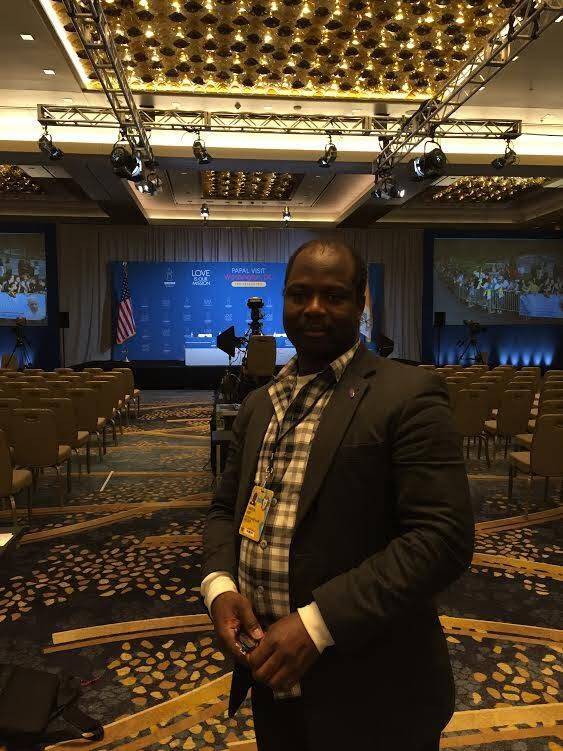
The Roman Catholic Church Should Refocus on Its Core Mission
By Dr. Akwo Thompson Ntuba
Chief Editor, Health and Development Magazine and Media
The Roman Catholic Church is one of the world's oldest and most influential religious institutions, with more than a billion faithful across every continent. Throughout history, it has contributed immensely to education, healthcare, humanitarian work, and the promotion of peace and human dignity. Yet, in today's rapidly changing world, many Catholics and outside observers believe the Church should refocus its priorities.
One area of debate concerns the Holy See's unique status in international diplomacy. The Holy See maintains diplomatic relations with numerous countries and holds observer status at the United Nations. Supporters argue that this enables the Church to advocate for peace, human rights, and humanitarian causes. Critics, however, question whether diplomatic and political activities receive too much attention compared with the Church's spiritual mission.
Many believers would rather see greater emphasis placed on serving the poor, supporting families, expanding education, strengthening healthcare, addressing youth unemployment, and responding to humanitarian crises. These are the issues that affect millions of Catholics every day and are closely aligned with the Church's longstanding teachings on compassion and social justice.
The Church also faces internal challenges that require sustained attention, including rebuilding trust, increasing transparency and accountability, encouraging greater participation by young people, and responding thoughtfully to the needs of modern societies. Addressing these concerns may do more to strengthen the Church than focusing on ceremonial or diplomatic matters.
It is also important to distinguish between the Roman Catholic Church and the Holy See. The Holy See is the central governing authority of the Church and, under international law, possesses legal personality that enables it to maintain diplomatic relations with states. Whether this arrangement continues to serve the Church's mission effectively is a legitimate subject for public discussion and debate.
Ultimately, the measure of any religious institution is not its diplomatic influence but its ability to serve humanity. The Roman Catholic Church has the opportunity to reaffirm its commitment to faith, compassion, justice, and service. By placing people at the center of its mission, it can continue to inspire hope and make a lasting difference in the lives of communities around the world.
Dr. Akwo Thompson Ntuba
Chief Editor
Health and Development Magazine and Media
NAPE and the Global Energy Transition: A Governance, Communication, and Leadership Perspective
NAPE and the Global Energy Transition: A Governance, Communication, and Leadership Perspective
By Dr. Akwo Thompson Ntuba
The NAPE Summit has long been recognized as one of the world’s premier gatherings for energy professionals—a marketplace where exploration prospects, investment capital, and technical expertise converge. But in today’s rapidly evolving landscape, NAPE has become far more than a transactional event. It is now a strategic arena where the future of global energy governance, communication, and transition is actively shaped.
My work as a global physician‑communicator, governance chronicler, and energy‑transition journalist places me at the intersection of health, environment, and development. From this vantage point, NAPE offers a unique lens through which to understand how energy decisions ripple across societies, economies, and public‑health systems.
The images from the summit—crowded registration halls, media zones, women‑in‑energy forums, and industry booths—capture the dynamism of an industry in transformation.
NAPE as a Governance and Policy Hub
Energy is not merely a technical sector; it is a governance arena. Decisions made in Houston, Abuja, London, or Calgary shape national budgets, community livelihoods, environmental outcomes, and geopolitical stability.
At NAPE, these governance dimensions come alive through:
-
Policy discussions on regulation, permitting, and environmental compliance
-
Conversations on methane reduction, carbon capture, and ESG frameworks
-
Cross‑border partnerships that influence global energy diplomacy
-
Corporate governance models that determine how companies adapt to transition pressures
For a governance chronicler, NAPE is a living classroom—where the policies of tomorrow are debated in real time.
Energy‑Transition Journalism in Action
As the world shifts toward cleaner and more diversified energy systems, journalism plays a critical role in translating complexity for the public. NAPE provides the raw material for this work:
-
Emerging technologies showcased on the exhibition floor
-
Investment trends signaling where the transition is accelerating
-
Conversations with engineers, geologists, and executives revealing industry sentiment
-
Women‑in‑energy events highlighting the changing face of leadership
-
Media zones where communicators shape narratives that influence public understanding
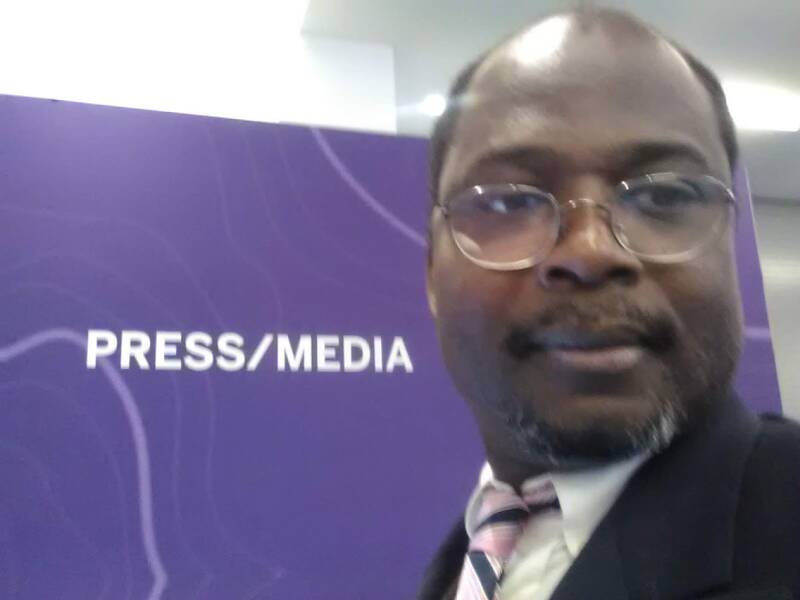
The summit’s PRESS/MEDIA backdrop symbolizes the responsibility of communicators to report accurately, contextualize developments, and connect energy to broader societal issues such as climate resilience, public health, and economic equity.
Women in Energy: Governance Through Inclusion
The Connections & Conversations: Women in Energy forum is one of the most powerful scenes from the summit. It reflects a governance truth: no transition can succeed without inclusive leadership.
Women are increasingly shaping:
-
Corporate governance boards
-
Environmental‑justice frameworks
-
Community‑engagement strategies
-
Innovation in clean‑energy technologies
-
Global climate diplomacy
Their presence at NAPE signals a shift toward a more representative and resilient energy future.
Energy, Environment, and Public Health: A Unified Narrative
My work across Africa, America, Europe, and the Commonwealth has shown that energy decisions directly influence:
-
Air quality and respiratory health
-
Climate‑driven disease patterns
-
Community resilience during disasters
-
Economic stability and migration
-
Water security and agricultural productivity
NAPE’s discussions on carbon management, emissions reduction, and responsible development align with the global movement toward health‑centered climate governance.
Energy transition is not only an environmental imperative—it is a public‑health necessity.
A Marketplace for the Future
The summit’s exhibition booths—featuring major industry publications and companies—demonstrate how NAPE serves as a marketplace of ideas and innovation. It is here that:
-
Traditional oil and gas intersects with renewables
-
Digital technologies reshape exploration and production
-
ESG frameworks redefine investment decisions
-
Global partnerships are forged to support sustainable development
NAPE is where the old energy world and the emerging one negotiate their coexistence.
Conclusion: NAPE as a Bridge Between Sectors and Continents
NAPE is not just an energy summit. It is a governance platform, a communication hub, and a leadership incubator. It connects:
-
The technical with the political
-
The economic with the environmental
-
The local with the global
-
The past with the future
For a global physician‑communicator and energy‑transition journalist, NAPE offers a rare vantage point: a place where the decisions shaping climate, health, and development converge under one roof.
In a world facing climate uncertainty, energy volatility, and governance challenges, NAPE remains a vital bridge—linking industries, nations, and generations in the shared pursuit of a sustainable and equitable energy future.
“Defending Democracy: Dr. Ntuba Akwo Thompson Condemns Biya’s Power Extension”
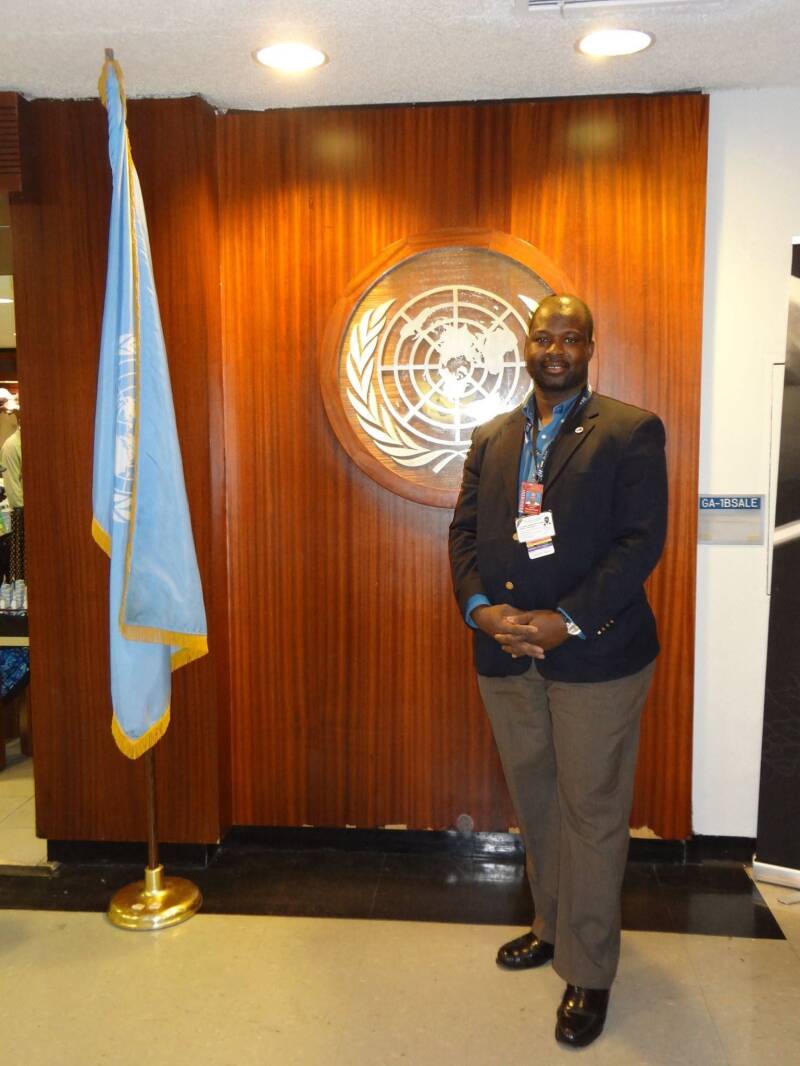
“Defending Democracy: Dr. Ntuba Akwo Thompson Condemns Biya’s Power Extension”
His Eminence, His Excellency Minister Dr. Akwo Thompson Ntuba has long been recognized as one of the notable intellectual voices within Cameroon’s Cameroon People’s Democratic Movement (CPDM). As a former Section President for Youth Affairs, he played a central role in mobilizing political engagement across the South West Region. On multiple occasions, President Paul Biya, the National Chairman of the CPDM, appointed Dr. Ntuba to help coordinate presidential campaigns in his region and department. He worked alongside prominent figures such as the late Victor Mukete, Prof. Ebanja, and Chief D. J. Ngoh, contributing to electoral victories for President Biya in those cycles.
Despite his long-standing service, Dr. Ntuba has increasingly voiced a sense of betrayal—a sentiment rooted in what he describes as the greed, manipulation, and constitutional engineering that removed presidential term limits in Cameroon. From his perspective, this constitutional change entrenched a system that allows President Biya to remain in power indefinitely, potentially until death, undermining democratic renewal and accountability.
A Voice for Reform from Inside the SystemDr. Ntuba is not an outsider to the Cameroonian political establishment. He has been invited to the Presidency of the Republic on several occasions to advise on national issues. He also led delegations of South West CPDM Section Presidents to the Presidency, where they addressed governance challenges and regional concerns.
Over the years, he has issued public statements calling for modernization of governance in Cameroon, emphasizing:
The dangers of over-centralization of power in the hands of a single individual
The rise of tribal patronage networks that distort national unity
The predictable emergence of insecurity and conflict when justice is absent
The need for decentralization, including allowing citizens to elect their own governors rather than having them appointed
These warnings, which he shared long before the current crises escalated, reflect his belief that sustainable peace requires institutional reform, not repression.
Threats, Exile, and Continued AdvocacyDr. Ntuba’s outspoken stance came at a personal cost. According to multiple Cameroonian newspapers, his life was threatened by political rivals—particularly individuals he defeated in internal party elections and civic leadership forums. Facing escalating danger, he was granted political asylum in the United States, recognized as an African political leader targeted for his reformist positions.
In the U.S., Dr. Ntuba has continued to apply his global political leadership experience to governance initiatives at various levels. He remains deeply engaged in advocating for democratic modernization in Cameroon, pushing for reforms such as:
Elected regional governors
Transparent governance structures
Reduced tribalization of state institutions
A peaceful transition of power
A Global Citizen Calling for National RenewalFrom his vantage point abroad, Dr. Ntuba continues to call out what he views as the political stagnation under President Paul Biya. In his public statements, he argues that the President appears increasingly incapacitated, and that Cameroon must move beyond a system dominated by a narrow tribal elite—often described in political commentary as the Bulu–Beti–Ewondo power circle.
His message is consistent:Cameroon must belong to all Cameroonians, not to a single tribe, region, or political dynasty.
Dr. Ntuba positions himself as a global citizen, committed to justice, institutional reform, and the empowerment of ordinary Cameroonians. His advocacy continues to resonate with those who believe that the country’s future depends on genuine decentralization, democratic accountability, and leadership renewal.
The GOP’s Uneasy March Toward 2028
By late 2026, as the midterm elections wrapped up and the country exhaled from another bruising political cycle, Republicans across the nation will quietly turn their eyes toward the next great contest: the 2028 presidential primaries. Traditionally, the party would wait until well into the following year before the jockeying began. But this time is felling different. The anxiety is sharper, the stakes heavier, and the internal fractures more visible than ever.
Many Republicans expect the unofficial campaigning to begin in early 2027, almost immediately after the midterms. But instead of excitement, there is a growing sense of dread. The party has spent years defending the rhetoric coming out of Washington — rhetoric that claimed to protect Republican values and “Make America Great Again,” even though millions of Americans had always believed the country was already great. The contradiction was becoming harder to ignore.
Inside the GOP, a deeper fear simmering: the fear that the toxic tone of the executive branch would spill directly into the 2028 primary battlefield. Potential candidates know they would need to distinguish themselves from Donald Trump without alienating his base. That means walking a political tightrope — one misstep away from being branded disloyal, weak, or “not America First enough.”
At the same time, Republican‑led redistricting battles are unfolding across several states. Critics argued that the new maps were designed to weaken minority voting power and secure additional congressional seats. Whether one agrees with that assessment or not, the perception alone adds to the tension. Every day, more Republicans worry that these strategies, combined with the party’s internal divisions, could backfire in the long run.
As 2027 approaches, the potential 2028 contenders are quietly positioning themselves. They meet with donors, visit early‑primary states, and test messages that hinted at a post‑Trump Republican future. But each time they try to carve out their own identity, they risk contradicting Trump — and that is dangerous territory. A single comment could trigger a public rebuke, a social‑media attack, or a sudden shift in endorsements.
The closer the party moves toward the Iowa caucuses, the more obvious the dilemma becomes. The GOP wants renewal, but it fears rebellion. It wanted fresh leadership, but it fears Trump’s reaction. It wants unity, but it fears the cost of honesty.
And so, as the early months of 2027 arrives, Republicans find themselves in an unprecedented moment: preparing for a presidential primary where every candidate would be forced to answer the same unspoken question — How do you move the party forward when its loudest voice refuses to let it evolve?
The story of the 2028 Republican primaries would not simply be about who ran or who won. It would be about whether the party could redefine itself after years of internal conflict, rhetorical escalation, and strategic contradictions. It would be about whether the GOP could find a path that honors its values without being consumed by its divisions.
And for many Republicans watching from the sidelines, the hope is simple: that 2028 might finally be the year the party reset, rebuilt, and rediscovered what it once stood for.
by Dr Akwo Thompson Ntuba chief editor Healthndevelopment magazine and media


Editorial by Dr. Akwo Thompson Ntuba
The World Needs Serious Leadership — and the United States Must Decide Whether It Truly Wants Peace
Editorial by Dr. Akwo Thompson Ntuba
The World Needs Serious Leadership — and the United States Must Decide Whether It Truly Wants Peace
The question of whether a durable peace agreement with Iran is possible has resurfaced once again. From my perspective, the answer is straightforward: there will be a peace deal with Iran the moment the United States government genuinely wants one. The problem has never been Iran alone. The problem has been the inconsistency, the shifting priorities, and the political gamesmanship that have repeatedly undermined diplomatic progress.
We saw this clearly in the collapse of the nuclear agreement negotiated during President Obama’s administration. That deal, whatever its imperfections, represented a structured path toward de‑escalation. Yet it was abandoned not because it failed, but because political actors preferred confrontation over continuity. When major powers treat diplomacy as disposable, agreements will always break down.
This pattern reflects a deeper crisis in global leadership. Too many actors on the world stage behave as though they are entitled to dictate terms to others — entering lands, seas, and regions far from their own and imposing their will under the banner of “order” or “security.” Such behavior is not leadership; it is domination. And domination has never produced lasting peace.
The world today is marked by confusion, fragmentation, and escalating tensions. These are symptoms of a vacuum — a vacuum of serious, principled, multilateral leadership. Forums like the G20 should be the engines of global cooperation, yet they often fall short, overshadowed by smaller blocs and ad‑hoc alliances that prioritize narrow interests over collective stability.
If the international community is to move forward, we must reject the outdated mindset that some nations are born to rule while others are expected to obey. That worldview belongs to another era, one shaped by empire, conquest, and racial hierarchy. It has no place in a 21st‑century global order.
Religious leaders often speak of peace, justice, and moral responsibility. But without political commitment, such words remain symbolic rather than transformative. Nations need leaders who match moral language with concrete action — leaders who understand that peace is not a slogan but a strategic choice.
This is why I call on the three branches of the United States government to approach Iran with seriousness, clarity, and a commitment to the common good. A renewed agreement must not serve the interests of a few; it must serve the stability of the United Nations community of nations. The world cannot afford another cycle of escalation followed by regret.
A stable Middle East benefits everyone. A predictable global order benefits everyone. And a United States that chooses diplomacy over domination would set an example worthy of its influence.
The world is watching. The world is waiting. And the world needs leadership grounded not in fear or superiority, but in responsibility and vision.
— Dr. Akwo Thompson Ntuba
"The solutions to the problems of Cameroon is with Cameroonians not some Papal Visit "says Rev Dr Ntuba Thompson Akwo
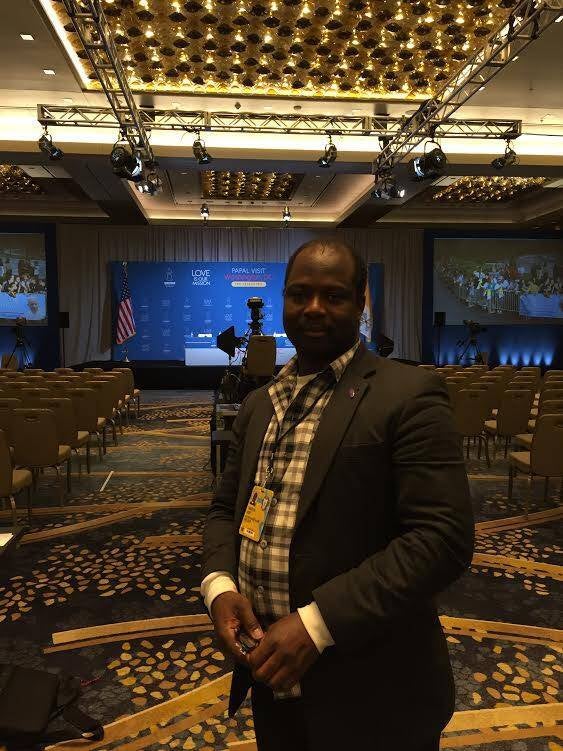
His Eminence Excellency Minister Dr. Akwo Thompson Ntuba FirstHuman progress has never been the product of comfort or convenience. Global goals—whether in peacebuilding, development, or reconciliation—can only be achieved when individuals are willing to lead through sacrifice, altruism, and the harmonious engagement of spirit, soul, and body. It is this tripartite commitment that empowers communities to confront local challenges while contributing meaningfully to the global human family.
Throughout my journey, I have worn many badges—papal diplomatic credentials, United States governmental access passes, and other symbols of responsibility. Yet these were never the honors I sought. What I desired, and continue to desire, is the opportunity to contribute to lasting peace, to help nations confront their internal contradictions, and to guide communities toward moral clarity and reconciliation.
My spiritual formation began early. Though baptized Presbyterian in Nyasoso, my high school years at Sacred Heart College Mankon in Bamenda immersed me deeply in the Roman Catholic tradition. I attended early morning Masses with devotion, drawn by the quiet discipline and spiritual depth of the liturgy. These early influences shaped my understanding of service, sacrifice, and the universal mission of the Church.
Over the years, I have ministered across Cameroon through Protestant churches and extended my ministry globally through engagements in the United States and Europe. My work with cardinals from Rome, interactions with American authorities, and participation in international religious and diplomatic events form part of a broader ministry rooted in obedience to the Lord and the leading of the Holy Spirit. While some observers remain on the margins, questioning my motives or direction, I remain anchored in divine purpose rather than human approval.
My love for Cameroon is deep, but so too is my understanding of its struggles. Our nation’s challenges are not new; they did not begin with recent crises, nor will they be solved by symbolic gestures or high‑profile visits. Cameroonians themselves—through greed, political manipulation, and the pursuit of power at any cost—have sown many of the seeds of today’s instability. From the early political actors such as Foncha, Muna, Endely, and Ahidjo, to the long tenure of President Paul Biya and the entrenched interests of the Bulu‑Beti‑Ewondo elite, patterns of governance rooted in self‑preservation have persisted.
It is not foreign dignitaries, papal visits, or speeches of goodwill that will transform Cameroon. History has shown that even the words of multiple Popes, though noble and well‑intentioned, have not translated into genuine national reconciliation. The problems that existed during previous papal visits remain with us today. Elections continue to be manipulated, constitutional limits are altered for personal gain, and violence is justified under the guise of historical grievances. Innocent children, such as those murdered in Kumba, pay the price for the ambitions of adults seeking land, power, and influence.
The truth is simple: Cameroon’s healing will not come from Rome, Washington, or any external authority. It must come from Cameroonians themselves. We must confront what we do in darkness, acknowledge the greed that drives our divisions, and reject the cycles of deception that have defined our political culture. Until we address the moral decay within our own hearts and institutions, no external figure—no matter how revered—can deliver us.
My mission remains unchanged: to speak truth, to serve with humility, and to encourage my nation and the global community to pursue justice rooted in spiritual integrity. I will continue to follow the leading of the Holy Spirit, trusting that genuine transformation begins not with fanfare, but with the courage to face ourselves.
A Crisis of Credibility: How the Iran–Israel–U.S. Conflict Is Exposing Deep Failures of Leadership
A Crisis of Credibility: How the Iran–Israel–U.S. Conflict Is Exposing Deep Failures of Leadership
By Dr. Akwo Thompson Ntuba
🔥 Introduction: A War Built on Contradictions
The unfolding confrontation involving Iran, Israel, and the United States has become a global spectacle — not because of strategic brilliance, but because of the staggering contradictions, misinformation, and leadership failures emerging from key actors. Iran has openly refuted claims made by President Donald Trump, particularly the assertion that Tehran agreed to halt U.S. military strikes on Iranian oil infrastructure. These denials have intensified scrutiny of Washington’s narrative and raised questions about the credibility of the administration’s statements.
At the same time, many observers around the world view this conflict as a manufactured distraction, a geopolitical smokescreen designed to divert attention from domestic scandals — including the explosive Epstein files, which continue to implicate powerful individuals in the United States.
⚠️ Trump’s Threats and Iran’s Defiance
President Trump publicly threatened that if Iran did not open the Strait of Hormuz, the U.S. would bomb Iranian oil fields and supply routes. Yet Iran did not comply, did not alter its posture, and did not validate Trump’s claims of back-channel communication or concessions.
Instead, Iranian officials have categorically rejected the idea that they negotiated with the U.S. or agreed to any ceasefire conditions. This has left the administration’s narrative exposed, raising concerns about:
-
The accuracy of presidential statements
-
The use of military threats as political theater
-
The widening gap between U.S. claims and verifiable facts
For many global observers, this episode reinforces a pattern: a leadership style reliant on improvisation, exaggeration, and public misinformation.
🌍 Global Reaction: A War Few Believe In
Across Europe, Africa, Asia, and Latin America, analysts and diplomats increasingly describe the conflict as:
-
Unnecessary
-
Strategically incoherent
-
Politically motivated
Many nations see the escalation not as a response to genuine national-security threats, but as a manufactured crisis serving domestic political interests in Washington and Tel Aviv.
The perception that this is a “fake war” — a conflict inflated for political gain — has gained traction as inconsistencies mount and as Iran continues to publicly contradict U.S. claims.
🕳️ The Epstein Files: A Shadow Over U.S. Leadership
A growing number of commentators argue that the timing of the conflict is not accidental. The renewed attention on the Epstein files — which include allegations involving high-profile American figures — has created intense political pressure.
Some believe the war narrative is functioning as:
-
A distraction from ongoing investigations
-
A shield for individuals implicated in crimes against minors
-
A political smokescreen to redirect public outrage
The idea that powerful actors might use foreign conflict to obscure domestic scandals is not new in American history. But the scale and sensitivity of the Epstein revelations have amplified public suspicion.
🇮🇱 Israel’s Role and the Regional Fallout
Israel’s military actions in Iran — and its insistence on continuing targeted strikes — have further complicated the situation. While Israel claims operational independence, its coordination with the U.S. has created a perception of a joint political-military agenda.
The consequences are severe:
-
Rising instability across the Middle East
-
Increased risk to global oil markets
-
Heightened anti-American sentiment
-
Growing skepticism among U.S. allies
Even within the United States, public support for the conflict is collapsing. Many Americans see no clear strategy, no congressional authorization, and no justification for escalating a war that appears avoidable.
🇺🇸 A Crisis of Leadership at Home
The most damaging revelation from this conflict is not military — it is political. The war has exposed:
-
A breakdown in truthful communication
-
A disregard for constitutional processes
-
A willingness to use force without clear objectives
-
A leadership culture shaped by personal interests rather than national interests
For many Americans, the credibility gap has become impossible to ignore.
🧭 Conclusion: A Moment of Reckoning
The Iran–Israel–U.S. conflict is more than a geopolitical confrontation. It is a mirror reflecting the failures of leadership, the dangers of misinformation, and the consequences of political desperation.
As Iran continues to challenge the U.S. narrative, and as global observers question the legitimacy of the conflict, the world is witnessing a profound erosion of trust in American leadership.
This moment demands accountability, transparency, and a return to diplomacy — not more theatrics, not more threats, and not more distractions from the unresolved injustices haunting the nation.
Church Diplomacy and Political Legitimacy in Cameroon: A Critical Analysis Informed by Dr. Akwo Thompson Ntuba

Church Diplomacy and Political Legitimacy in Cameroon: A Critical Analysis Informed by Dr. Akwo Thompson Ntuba
Abstract
This paper examines the controversy surrounding a potential papal visit to Cameroon, focusing on concerns raised by Cameroonian diaspora leaders, including His Eminence Excellency Minister Dr. Akwo Thompson Ntuba. Drawing on his international experience with church leadership and political institutions, the analysis explores the implications of religious diplomacy in contexts of contested political legitimacy.
Introduction
Church–state relations in Africa have long shaped political legitimacy and public morality. In Cameroon, these dynamics have intensified following President Paul Biya’s request for a papal visit. Critics argue that such a visit risks legitimizing a political system widely accused of authoritarianism. Among the most prominent voices in this debate is Dr. Akwo Thompson Ntuba, an international political leader, physician, preacher, and publisher with extensive experience advising global church authorities.
Dr. Ntuba’s Authority and Perspective
Dr. Ntuba’s contributions to global religious diplomacy—including his advisory role during the first papal address to the U.S. Congress—provide him with a unique vantage point. His long-standing engagement with church leaders across continents informs his critique of the Vatican’s potential involvement in Cameroonian political affairs. He argues that the Church must exercise caution to avoid being instrumentalized by political actors seeking international validation.
Political Motives Behind the Papal Invitation
According to Dr. Ntuba and other diaspora leaders, the papal visit was initiated not by local clergy but by President Paul Biya. This distinction is significant. Critics contend that the invitation serves political objectives, including the projection of moral legitimacy and international acceptance at a time when the government faces accusations of electoral manipulation, repression of opposition, and prolonged authoritarian rule.
The bishop of Bamenda’s public celebration of the proposed visit has been criticized as premature and misaligned with the realities of its origin. For many Cameroonians, the Church’s involvement risks reinforcing political narratives that obscure systemic injustices.
Concerns About Church Complicity
The Roman Catholic Church holds substantial influence in Cameroon, making its actions highly consequential. Critics argue that the Church must avoid lending its moral authority to leaders whose governance practices contradict Christian ethical principles. Allegations that some political elites maintain affiliations with secret societies further complicate perceptions of sincerity in their public expressions of faith.
Dr. Ntuba asserts that the Church must not allow itself to be used for purposes that undermine its credibility and the people’s struggle for justice.
Global Implications for the Vatican
Pope Francis already faces criticism in various regions for the Vatican’s diplomatic engagements. A visit to Cameroon under current political conditions could intensify scrutiny of the Church’s global posture. Critics warn that the Pope risks damaging the Church’s moral authority if he is perceived as aligning with a leader whose governance record is widely contested.
Conclusion
The debate over a papal visit to Cameroon highlights the complex interplay between religious diplomacy and political legitimacy. Through the perspective of Dr. Akwo Thompson Ntuba, it becomes evident that many Cameroonians fear the Church may inadvertently reinforce authoritarian structures. Their appeal to the Vatican is rooted in a desire for moral consistency, institutional integrity, and solidarity with the oppressed. As Cameroon confronts ongoing political challenges, the actions of global religious institutions will significantly influence both domestic perceptions and international responses.
Human Rights, Health, and Sovereignty: The Stand of Dr. Ntuba Akwo ThompsonAcross continents and international forums.

Human Rights, Health, and Sovereignty: The Stand of Dr. Ntuba Akwo ThompsonAcross continents and international forums.
Dr. Ntuba Akwo Thompson has built a reputation as a global health leader whose work is grounded in one unshakable belief: human rights are the foundation of strong health systems and healthy nations. In his global goals, global health, and global development initiatives, he consistently argues that populations thrive only when their rights, dignity, and sovereignty are respected.
From UN assemblies to international conferences, Dr. Ntuba has become known for challenging powerful nations—especially those with veto authority at the United Nations—to uphold the rule of law and refrain from interfering in the internal affairs of sovereign states. He warns that when powerful countries attempt to influence or control the political processes of others, the consequences often ripple far beyond politics.
In his recent remarks, Dr. Ntuba pointed to the case involving Venezuelan President Nicolás Maduro and his wife. He expressed concern about what he views as attempts by foreign governments to pursue legal actions against sitting presidents of UN‑recognized sovereign states. According to him, such actions raise questions about consistency, fairness, and respect for international norms.
Dr. Ntuba referenced the posture of the United States government under President Donald Trump, noting that in his view, the administration demonstrated limited engagement with multilateral institutions and international law. He described this as an approach shaped by “might‑is‑right thinking,” which he believes can lead to pressure, intimidation, or political isolation of individuals and nations.
For Dr. Ntuba, the issue is not only political—it is deeply tied to global health. He argues that when human rights are undermined, the health of entire populations suffers. Wars, conflicts, political kidnappings, and the detention of leaders, he says, create instability that disrupts healthcare systems, displaces communities, and exposes millions to preventable suffering.
In this context, Dr. Ntuba raised concerns about the detention of a foreign president in a U.S. facility. He questioned whether such a facility could fully meet the health needs of a head of state and called for international human rights authorities to conduct an independent visit and report on the conditions, treatment, and overall circumstances of the detainee.
His message was clear: health, human rights, and sovereignty are inseparable. When one is violated, the others inevitably weaken.
Through his advocacy, Dr. Ntuba continues to push the global community toward a world where justice is consistent, sovereignty is respected, and the health of all people—regardless of nationality or political status—is protected.
SOUTH AFRICA AND G20 : Statement by Dr. Ntuba Akwo Thompson

Statement by Dr. Ntuba Akwo Thompson
International Political Leader, Physician, Preacher, and Publisher/Editor of HealthnDevelopment Magazine Registered in San Antonio, Texas, USA – with global coverage and reporting
Dr. Ntuba Akwo Thompson calls on the United States government to respect the sovereignty of South Africa and uphold the principles of multilateralism as they relate to South Africa’s rightful membership in the G20.
He emphasizes that governments which attempt to manipulate or control others operate under what the Bible describes as the spirit of witchcraft. South Africa does not require an invitation from any foreign country, including the United States, to attend the convention of an organization of which it is a founding member.
Dr. Ntuba urges nations that are less than 500 years old to learn from global history and from civilizations that have practiced governance and cooperation for thousands of years. To attempt to block South Africa’s participation—especially in defense of those who upheld and benefited from the satanic system of apartheid—is to align with the work of the devil, which has no place in U.S. foreign policy.
He calls on all nations to respect the principles of mutual coexistence and healthy interdependence, warning that failure to do so perpetuates poor governance and contributes to the reality that many of the world’s most indebted nations remain mismanaged.
By Dr. Ntuba Akwo Thompson
🌍 World AIDS Day 2025: Innovate, Empower, and Uphold Human Rights

By Dr. Ntuba Thompson Akwo, USA-Certified Global Health Professional
On this World AIDS Day 2025, I call upon the global community to innovate, empower communities, and confront the human rights abuses that continue to drive the HIV/AIDS pandemic. The fight against HIV/AIDS is not only a medical challenge but also a moral one—demanding justice, equity, and sustainable solutions.
A Journey of Commitment
My work in HIV/AIDS began as a medical student, with my thesis on Knowledge, Attitudes, and Practices (KAP) related to HIV/AIDS among undergraduates at the University of Ilorin. From there, I served as a practitioner in Kumba, Cameroon, conducting outreach programs with partner organizations across communities including Konye, Mbonge, and surrounding villages. I witnessed firsthand the devastating toll of AIDS, even burying patients who succumbed to the disease.
My journey has taken me from symposiums in Toulon, France, where I collaborated with Dr. Anthony Fauci, to engagements across Europe, and to the Commonwealth Magistrates and Judges Queen’s Golden Jubilee Conference in London. More recently, I spent seven months working in New Orleans, continuing my mission to strengthen global health systems and community resilience.
The Call to Global Health Partners
I urge health care partners worldwide to remain steadfast in prevention, promotion, policy, healing, and development innovations. The fight against AIDS requires not only medical interventions but also systemic reforms that ensure sustainability and accountability.
Global funding cuts, if strategically implemented, can reduce waste and streamline the organizational structures of HIV/AIDS programs. Yet funding must never be diverted through corruption or embezzlement—stealing from the poor is stealing from humanity itself.
Rethinking, Rebuilding, Rising
We must embrace strategies rooted in Rethinking, Rebuilding, and Rising—breaking free from what holds us back. Nations must transition from dependency to true partnerships that foster financial sustainability. Community leaders should be mobilized to lead HIV/AIDS communication efforts, ensuring prevention measures resonate at the grassroots level.
Equity in Access to Medicines
I call on international pharmaceutical companies to address patent barriers that prevent low- and middle-income countries from producing affordable generic drugs. Access to life-saving treatment should never be determined by geography or income. Equity in medicine is a cornerstone of global health justice.
A Shared Responsibility
Global health experts engaged in information, communication, and education must scale up the successes we have achieved. The HIV/AIDS pandemic is not over, and complacency is dangerous. Together, through innovation, empowerment, and respect for human rights, we can rise to meet this challenge.
✍️ Closing Thought: The fight against HIV/AIDS is a fight for dignity, justice, and humanity. Let us recommit ourselves to building a world where no one is left behind.
Editorial: “The Spirit of Control Is the Spirit of Witchcraft”—A Nation in Chains

Editorial: “The Spirit of Control Is the Spirit of Witchcraft”—A Nation in Chains
In the wake of Cameroon’s controversial October 2025 presidential election, the country finds itself once again at the crossroads of political turmoil, spiritual decay, and international condemnation. The re-election of 92-year-old President Paul Biya, declared victor with 53.66% of the vote by the Constitutional Council, has sparked widespread protests, violent crackdowns, and a renewed outcry from both domestic voices and global observers.
At the heart of this crisis lies what many, including international political figure and preacher Dr. Ntuba Thompson Akwo, describe as a “spirit of control”—a force so deeply entrenched in Cameroon’s political machinery that it mirrors the biblical definition of witchcraft. As the Bible warns, “rebellion is as the sin of witchcraft, and stubbornness is as iniquity and idolatry” (1 Samuel 15:23). In Cameroon, this rebellion against democratic will is not metaphorical—it is systemic.
The CPDM regime, under Biya’s decades-long rule, has been accused of orchestrating electoral fraud through ELECAM, the national electoral body, and using the military and police as instruments of suppression. The Bulu-Beti-Ewondo tribal elite, often cited as the core of Biya’s power base, are seen by critics as gatekeepers of a political order that thrives on exclusion, manipulation, and fear.
Dr. Akwo Ntuba , a physician and publisher of Health & Development, has labeled the regime’s tactics as “state-sponsored terrorism”, citing the excessive use of force against peaceful demonstrators and the targeted killings of youth who dare to resist. Human Rights Watch and other international watchdogs have corroborated these claims, reporting multiple civilian deaths, mass arrests, and violent dispersals of protests in cities like Douala and Yaoundé.
The spiritual dimension of this crisis cannot be ignored. Dr. Akwo Ntuba argues that Cameroon’s leadership operates under a cloak of darkness, likening their actions to “devil worship” and secret society allegiances in Europe and the U.S. Whether metaphor or reality, the symbolism resonates with a population that feels spiritually and politically oppressed.
The mass exodus of Cameroonians to Europe and the United States is a testament to the despair gripping the nation. So profound is the crisis that President Donald Trump reportedly referenced Cameroon’s plight during his address at the United Nations General Assembly, highlighting the global implications of the country’s descent into authoritarianism and chaos.
Cameroon, once hailed as “Africa in miniature,” is now a cautionary tale of how unchecked power, tribalism, and spiritual decay can corrode the soul of a nation. The path forward, as Dr. Akwo insists, lies not only in political reform but in spiritual awakening—a return to righteousness, justice, and truth.
The world is watching. The people are rising. And the spirit of control must be broken.
Sources: Human Rights Watch – Post-Election Violence in Cameroon ABC News – Protesters Shot in Cameroon Al Jazeera – Biya Declared Winner Amid Protests
The Silence That Failed Us: Dr. Akwo Thompson Ntuba Speaks to Cameroon’s Youth on Paul Biya’s Enduring Presidency

The Silence That Failed Us: Dr. Akwo Thompson Ntuba Speaks to Cameroon’s Youth on Paul Biya’s Enduring Presidency
By Dr. Akwo Thompson Ntuba International Physician, Global Health Consultant, and Civic Archivist
As Cameroon approaches yet another presidential election, the question echoing across campuses, WhatsApp groups, and community halls is painfully simple: How did we get here? How is it possible that Paul Biya—at 92 years old, with nearly 65 years in government and over 43 years as president—is once again on the ballot for another seven-year term2?
To the young adults of Cameroon, I say this not with condemnation, but with clarity: We failed you. And I include myself in that reckoning.
🕰️ A Legacy of Longevity Without Renewal
Paul Biya’s political career began in the 1960s. He became Prime Minister in 1975 and ascended to the presidency in 1982. Since then, he has presided over constitutional amendments that removed term limits, suppressed dissent, and centralized power in ways that have hollowed out democratic institutions3. His rule has been marked by allegations of electoral manipulation, human rights abuses, and economic stagnation.
Yet, despite these realities, Biya has declared his candidacy for the October 2025 election, stating, “The best is still to come”.
🧠 The Failure of Civic Memory and Political Education
Cameroon’s youth are not apathetic—they are under-informed, under-engaged, and often deliberately excluded from political discourse. We failed to teach them the mechanisms of power. We failed to document the betrayals. We failed to build platforms where their voices could shape the future.
We allowed a culture of fear, silence, and survival to replace civic courage. We let the myth of inevitability take root: “Biya will always win.” “Nothing will change.” “It’s not our time.”
But it is your time. And it always was.
🧱 The Architecture of Entrenchment
Biya’s longevity is not just personal—it’s systemic. It is built on:
-
A ruling party (RDPC) that rewards loyalty over vision
-
Electoral bodies that lack independence and transparency
-
A fractured opposition that fails to unite around common goals
-
A population conditioned to expect repression and accept stagnation
Even his own daughter, Brenda Biya, has publicly urged Cameroonians not to vote for him, calling out decades of misrule6. That moment—unprecedented in African politics—should have been a wake-up call.
🧭 What Comes Next: A Call to Youth
This is not just about Paul Biya. It is about the systems that allowed him to remain. It is about the elders who chose comfort over confrontation. It is about the intellectuals who wrote essays but never built movements. It is about the diaspora that watched from afar but did not organize from within.
To Cameroon’s youth, I say:
-
Learn your history—not just the official version, but the lived one
-
Document your truth—through media, art, and civic engagement
-
Build coalitions—not just for protest, but for governance
-
Demand accountability—not just from leaders, but from yourselves
🕊️ Legacy Is Not a Throne—It Is a Torch
I have spent my life documenting civic resilience, health equity, and cultural memory across continents. I have seen what happens when people believe they are powerless. And I have seen what happens when they remember they are not.
Cameroon’s future will not be decided by one man’s age or ambition. It will be decided by whether its youth choose silence or stride.
Let us not fail again.
Editorial: Cameroon at a Crossroads—A Call for Leadership, Modernity, and National Healing

🇨🇲 Editorial: Cameroon at a Crossroads—A Call for Leadership, Modernity, and National Healing
By Dr. Ntuba Akwo Thompson, International Political Leader and Consultant
As a Cameroonian-born international political figure protected in the United States, I write this editorial with a heavy heart and a deep sense of duty. My country of birth, Cameroon, stands at a dangerous crossroads—one shaped by decades of entrenched power, constitutional manipulation, and the erosion of democratic values.
At the center of this crisis is President Paul Biya, who has held power for over 42 years as head of state, and nearly 65 years in government. At 92 years old, Biya is now seeking an eighth presidential term, a move that threatens to cement his status as a life president2. This ambition, supported by a network of loyalists and tribal allies, is not only undemocratic—it is destabilizing.
Cameroon is a nation of over 250 tribes and 10 regions, rich in diversity and potential. Yet, the peddling of influence by Biya’s inner circle across these regions has undermined national unity and progress. While the United Nations does not yet classify Cameroon as a failed state, the signs are troubling: corruption, repression, and subtle forms of political violence have become tools to maintain power2.
As a senior member of the Cameroon People's Democratic Movement (CPDM)—a party that evolved from the Cameroon National Union (CNU) of former President Ahmadou Ahidjo—I am deeply disturbed by the lack of leadership alternance. Ahidjo, who died in exile and was denied repatriation, symbolizes the tragic fate of leaders who fall out of favor with the regime. Today, Biya’s refusal to step aside echoes that same disregard for legacy, patriotism, and national healing.
I fear for the young Cameroonians who may take to the streets in October to challenge this life presidency project. History warns us that state-sponsored violence—often carried out by those who control the nation’s arms and resources—could be unleashed to silence dissent. This is not governance. This is terrorism in disguise.
The Cameroonian constitution, once a beacon of democratic promise, has been repeatedly altered to suit Biya’s ambitions. Presidential term limits were removed, and the Constitutional Council, stacked with loyalists, has become a rubber stamp for authoritarianism. This is a betrayal of the people’s trust and a mockery of the rule of law.
Biya’s recent appearance in the United States revealed a man incapacitated and unfit to lead, even at the local level. His continued grip on power is not a testament to strength—it is a reflection of fear, manipulation, and entitlement. To plunge a nation into bloodshed for the sake of dying in office is not leadership—it is ingratitude.
I call on all Cameroonians—at home and abroad—to remain calm but vigilant. We must reject tribalism, reject violence, and reject the politics of fear. We must demand modernity in governance, transparency in leadership, and a peaceful transition of power.
Cameroon deserves better. It deserves a leader chosen freely by its people, not imposed by force or manipulated law. It deserves a future where youth are empowered, institutions are respected, and unity is more than a slogan.
Let us rise—not in anger, but in resolve. Let us build a Cameroon worthy of its promise.
Editorial: A Call for Unity and Healing in the Wake of Charlie Kirk’s Death
🕊️ Editorial: A Call for Unity and Healing in the Wake of Charlie Kirk’s Death
By Dr. Ntuba Akwo Thompson
The recent assassination of conservative activist Charlie Kirk is a tragedy that transcends political affiliation. It is a sobering reminder of the dangerous path America is treading—a path paved with polarization, intolerance, and escalating political violence.
As an international speaker and consultant in health and development, I have witnessed the consequences of division in nations across the globe. But to see such violence unfold in the United States—a country that proudly bears the word “United” in its name—is deeply troubling.
Charlie Kirk was a controversial figure. He spoke boldly, sometimes divisively, and often provoked strong reactions. Yet, his rhetoric—however polarizing—was not a justification for violence. The bullet that took his life was not just an attack on a man, but an assault on the very principles of free speech and civil discourse that underpin American democracy.
Let us be clear: disagreement is not a crime. Divergence in ideology is not a threat—it is a strength when handled with respect and maturity. Even in the Black community, not all accepted the teachings of Dr. Martin Luther King Jr., yet they were not ostracized or killed for their dissent. This is the essence of a functioning democracy: the ability to coexist with difference.
To kill Charlie Kirk for his views is akin to storming the Capitol, destroying government property, and harming fellow citizens in the name of politics. It is a betrayal of the values that generations of Americans have fought to uphold.
I call on all Americans—left, right, and center—to reflect deeply before taking action. Let us be accommodating of all who live under the same flag. Let us remember that unity is not uniformity, and healing does not come through vengeance.
The rise in politically motivated violence is alarming. Each year, the divisions grow deeper, and the rhetoric more toxic. I place responsibility on all parties who have contributed to this climate of hostility. It is time to tone down the volume and turn up the empathy.
To Charlie Kirk’s wife and children, I send a message of hope and healing. May God watch over you, protect you, and walk with you through your pain. Your loss is not just personal—it is national. And it must serve as a turning point.
Let this moment be a wake-up call. Let it be the beginning of a new chapter—one where Americans learn to tolerate difference without violence, to debate without destruction, and to disagree without dehumanizing.
The United States must reclaim its unity—not just in name, but in spirit.
Would you like this formatted for publication in a newspaper, blog, or public statement? I can tailor it to fit any platform or tone.
🌍 The Global Health Impact of Disasters: Lessons from the September 11 Attacks

🌍 The Global Health Impact of Disasters: Lessons from the September 11 Attacks
🧭 Introduction
Disasters—whether natural or man-made—leave deep scars not only on infrastructure and economies but also on human health. Among the most defining events of the 21st century, the September 11, 2001 attacks on the United States stand out for their profound and lasting health consequences. While the immediate toll was staggering—nearly 3,000 lives lost—the long-term health effects have rippled across communities, borders, and generations. This essay examines the global health impact of disasters through the lens of 9/11, highlighting physical, psychological, environmental, and systemic consequences.
🏥 Immediate and Long-Term Health Effects
🔥 Physical Exposure and Toxicity
The collapse of the Twin Towers released a massive cloud of toxic dust containing asbestos, silica, heavy metals, and combustion by-products. First responders, cleanup crews, and residents of Lower Manhattan were exposed to these hazardous materials for weeks and months. The World Trade Center Health Program identified a range of illnesses linked to this exposure, including:
-
Chronic respiratory diseases (e.g., asthma, bronchitis)
-
Gastroesophageal reflux disease (GERD)
-
Various cancers (e.g., skin, prostate, lung)
-
Sinusitis and other inflammatory conditions
🧠 Mental Health Consequences
The psychological toll of 9/11 was immense. Survivors, responders, and even distant observers experienced elevated rates of:
-
Post-Traumatic Stress Disorder (PTSD)
-
Depression and anxiety
-
Substance abuse
-
Survivor’s guilt and chronic stress
These effects were not confined to New York. The global broadcast of the attacks and their symbolism triggered trauma responses in populations worldwide, especially among those with prior exposure to violence or displacement.
🌐 Global Ripple Effects
✈️ International Health Surveillance
The attacks prompted countries to reassess emergency preparedness and health surveillance systems. Many nations strengthened their disaster response protocols, recognizing the need for rapid medical mobilization and mental health support in crisis situations.
🧳 Displacement and Migration
In the aftermath of 9/11, geopolitical shifts led to military interventions and conflicts that displaced millions. Refugee populations from Afghanistan, Iraq, and other regions faced health challenges including malnutrition, infectious diseases, and limited access to care—further amplifying the global health burden.
🧬 Research and Policy Innovation
The long-term health monitoring of 9/11 survivors led to innovations in epidemiology, toxicology, and mental health care. Programs like the WTC Health Registry became models for tracking health outcomes after mass exposure events.
🏗️ Systemic Lessons and Future Preparedness
Disasters like 9/11 revealed critical gaps in health infrastructure, communication, and coordination. Key lessons include:
-
The importance of integrated emergency response systems
-
The need for mental health services to be part of disaster recovery
-
The value of long-term health monitoring and compensation programs
-
The role of community resilience and public trust in recovery
These insights have influenced global responses to subsequent crises, including pandemics, natural disasters, and terrorist attacks.
🧾 Conclusion
The September 11 attacks were a turning point in global health awareness. They underscored that the impact of disasters extends far beyond the moment of crisis—affecting bodies, minds, and systems for decades. As the world continues to face complex emergencies, the legacy of 9/11 reminds us that health must be at the heart of disaster preparedness and recovery. Only by investing in resilient, inclusive, and responsive health systems can we hope to mitigate the long-term toll of future catastrophes.

📰 Editorial: Safeguarding Institutional Integrity in a Politicized Era
In a time when democratic institutions are increasingly tested by political pressures, Dr. Ntuba Akwo Thompson, Chief Editor of Health and Development Magazine, offers a timely and sobering reflection on the role of the Federal Reserve and the broader implications of unchecked executive influence.
🇺🇸 The Federal Reserve: Independence Under Siege
Dr. Ntuba Akwo reminds us that the Federal Reserve was designed to be an independent body—shielded from the political whims of presidents and public officials. Its mandate is to steward the economy with impartiality, not to bend to partisan agendas. The recent calls for the resignation of Chairman Jerome Powell, allegedly for resisting pressure to lower interest rates to suit political interests, raise troubling questions. Is Powell being targeted not for failure, but for his refusal to play politics?
If the Fed becomes a tool of political convenience, its credibility and effectiveness will erode. Dr. Ntuba Akwo warns that such manipulation undermines the very foundation of economic governance and threatens the pursuit of a “more perfect union.”
⚖️ Due Process and the Presumption of Innocence
The editorial also touches on the case of the first Black woman cook facing mortgage-related accusations. Dr. Ntuba Akwo urges caution, emphasizing that accusations alone do not equate to guilt. In a nation built on the principle that individuals are innocent until proven guilty, rushing to judgment without judicial process is not only unjust—it’s un-American.
He draws a pointed comparison to Texas Attorney General Ken Paxton, whose own legal troubles have sparked controversy. If Cook is to be dismissed based on allegations, then consistency demands similar scrutiny of Paxton. Selective accountability erodes public trust and reinforces perceptions of bias.
🔍 Checks, Balances, and Restraint
Dr. Ntuba Akwo’s broader concern is the creeping expansion of presidential authority. When presidents are allowed to wield power without restraint, democratic institutions falter. Oversight must be robust, impartial, and consistent—regardless of political affiliation or public stature.
His call for restraint is not a plea for inaction, but for fairness. The United States cannot afford to sacrifice its principles at the altar of expediency. Justice must be blind, and institutions must remain above the fray.
📣 Conclusion: A Call to Conscience
This editorial is a clarion call to preserve the integrity of America’s institutions. Whether it’s the Federal Reserve, the judiciary, or the executive branch, the health of the republic depends on our collective commitment to fairness, independence, and the rule of law.
Dr. Ntuba Akwo’s insights challenge us to think critically, act justly, and resist the temptation to politicize what must remain impartial. In doing so, we honor the ideals that continue to shape the American experiment.
🌍 Global Peace Must Begin with Respect for Sovereignty: Dr. Ntuba Akwo Thompson on Ukraine, Russia, and U.S. Diplomacy
In a time of escalating geopolitical tensions and fragile diplomacy, Dr. Ntuba Akwo Thompson—a respected international physician, preacher, politician, and publisher—has voiced strong concerns about the direction of negotiations surrounding the Russia-Ukraine war. His message is clear: any resolution must center the voices and sovereignty of the Ukrainian people.
🕊️ The Call for Inclusive Peace Talks
Dr. Thompson criticizes the notion of bilateral negotiations between former U.S. President Donald Trump and Russian President Vladimir Putin that exclude Ukrainian President Volodymyr Zelensky. He argues that such talks undermine the legitimacy of Ukraine’s leadership and the sacrifices made by its citizens.
“Any compromise that does not originate from Ukraine and the Ukrainian people who have been in war with Russia for many years and lost much human and infrastructure,” he asserts, “is not a true path to peace.”
⚔️ The Danger of Backdoor Deals
Thompson warns that Trump’s willingness to engage in a Russia-U.S. summit could be perceived as capitulating to Putin’s counterattacks—especially if it involves concessions that Trump previously demanded as ultimatums. He emphasizes that Eastern Ukraine, a region already contested and fiercely defended by Ukrainians, cannot be bartered away in diplomatic exchanges that ignore the will of the people.
🛡️ NATO and the Limits of Western Protection
While the United States is a key member of NATO, Dr. Thompson reminds the global community that Ukraine is not part of the alliance. This distinction, he argues, places a greater moral responsibility on world leaders to ensure Ukraine’s sovereignty is respected and not sidelined in pursuit of expedient diplomacy.
🌐 A Plea for Global Solidarity
Dr. Thompson’s message is ultimately one of unity and justice. He calls for global solidarity and respect for sovereign states—regardless of their size or power—as the cornerstone of lasting peace.
“Global peace and solidarity,” he says, “can only be maintained when every nation, big or small, is treated with dignity and allowed to chart its own future.”
PROTESTS RALLY IN HOUSTON TEXAS
The Epstein Files and Political Fallout: Mounting Pressure on Trump and the GOP

As new allegations swirl around the Epstein files and possible ties to former President Donald Trump, political tensions in Washington are reaching a boiling point. Accusations of past involvement—fueled by mounting media speculation and public interest—are beginning to test Republican party unity, while Democrats appear poised to capitalize if substantive evidence emerges.
🚨 Uncomfortable Timing for the GOP
With the Republican Party seeking to present a unified front ahead of the 2025 election cycle, the resurfacing of links between Epstein and prominent political figures could not come at a worse time. Trump’s poll numbers are showing notable declines, and internal party strategists are increasingly concerned about distraction campaigns backfiring.
The Speaker of the House is reportedly taking swift legislative and procedural measures to prevent Democrats from exploiting potential vulnerabilities. These efforts include reviewing ethics committee protocols and tightening language around Congressional investigative powers—moves aimed at minimizing public spectacle and legal exposure.
⚡ Musk Enters the Arena
Adding unexpected momentum to the controversy, Elon Musk has made statements that suggest Trump’s potential involvement in the Epstein narrative—possibly opening a new channel of scrutiny. Though Musk has not released detailed evidence, sources indicate he may be in possession of information that Democratic operatives view as a potential asset.
Whether this "first-class intel" finds its way into official hearings or media campaigns remains to be seen, but one thing is clear: the mere possibility of insider knowledge from high-profile figures like Musk is enough to unsettle party strategists.
🤫 Silence Over Substance
Political analysts say Trump is attempting to avoid public discourse on this topic entirely. With negative polling trends shadowing his current political standing, any association—whether proven or speculative—with Epstein's sordid legacy could further erode confidence among undecided voters and energize opposition platforms.
This environment of whispered accusations and strategic avoidance highlights the high-stakes nature of political survival in the modern age. As investigations unfold and media attention intensifies, the question isn't just whether Trump is implicated—but how both parties handle the pressure cooker of optics, accountability, and electoral consequences.
by DR NTUBA , THOMPSON AKWO
John Bolton’s Reflections on Trump, Iran, and the Shifting Sands of U.S.-Israel Policy
In a striking convergence of long-held convictions and unfolding geopolitical events, former National Security Adviser John Bolton has publicly acknowledged that one of his enduring policy goals—military action against Iran’s nuclear infrastructure—was finally realized under the leadership of a president he no longer supports: Donald J. Trump.
Bolton, a known hawk on Iran and a vocal critic of both the Iranian regime and Trump’s erratic foreign policy style, has nonetheless praised the recent U.S. strikes on Iranian nuclear sites. “I think President Trump made the right decision for America to attack Iran’s nuclear weapons program,” Bolton told CNN, adding, “I thought somebody should do it for a long time, but better late than never”.
This endorsement is particularly notable given Bolton’s broader disapproval of Trump’s leadership and his belief that the former president often acts out of personal ambition rather than strategic clarity. In earlier interviews, Bolton remarked that Trump is “conflicted” over the Israel-Iran conflict because “he’s not the star of the show”. Yet, despite these misgivings, Bolton appears satisfied that Trump—perhaps inadvertently—fulfilled a policy ambition that Bolton had championed for decades.
Bolton has long viewed Iran as a grave threat to both the United States and its allies, particularly Israel. His rhetoric has often framed Iran as a destabilizing force in the Middle East, and he has advocated for regime change in Tehran. In his worldview, Israel’s security is inextricably linked to American interests, and any action that weakens Iran’s nuclear capabilities is a step toward regional and global stability.
In this context, Bolton’s approval of Trump’s decision to strike Iran—even if it meant the U.S. was following Israel’s lead—reveals a pragmatic acceptance of outcomes over authorship. “If Trump or the USA had to follow behind Israel, then it was better than not acting at all,” Bolton seemed to imply through his remarks.
This moment also underscores the complex interplay between ideology, legacy, and leadership. For Bolton, who once called Iran “the central banker of international terrorism,” the recent military action represents a long-awaited reckoning. And for Trump, who has often sought validation through bold, headline-grabbing decisions, the strikes may serve as both a strategic maneuver and a political gambit.
As the dust settles over Tehran and the world watches for Iran’s response, one thing is clear: the lines between political rivalry and policy alignment are not always clean. Sometimes, even adversaries find common ground—especially when the stakes are global and the ambitions are deeply personal.
by DR NTUBA , THOMPSON AKWO

Tobacco control efforts protect 6.1 billion people – WHO’s new report
Dublin/Geneva, 23 June 2025 --
The World Health Organization (WHO) today released its report on the Global Tobacco Epidemic 2025 at the World Conference on Tobacco Control in Dublin, warning that action is needed to maintain and accelerate progress in tobacco control as rising industry interference challenges tobacco policies and control efforts.
The report focuses on the six proven WHO MPOWER tobacco control measures to reduce tobacco use, which claims over 7 million lives a year:
- Monitoring tobacco use and prevention policies;
- Protecting people from tobacco smoke with smoke-free air legislation;
- Offering help to quit tobacco use;
- Warning about the dangers of tobacco with pack labels and mass media;
- Enforcing bans on tobacco advertising, promotion and sponsorship; and
- Raising taxes on tobacco.
Since 2007, 155 countries have implemented at least one of the WHO MPOWER tobacco control measures to reduce tobacco use at best-practice level. Today, over 6.1 billion people, three-quarters of the world’s population, are protected by at least one such policy, compared to just 1 billion in 2007. Four countries have implemented the full MPOWER package: Brazil, Mauritius, the Netherlands (Kingdom of the), and Türkiye. Seven countries are just one measure away from achieving the full implementation of the MPOWER package, signifying the highest level of tobacco control, including Ethiopia, Ireland, Jordan, Mexico, New Zealand, Slovenia and Spain.
However, there are major gaps. Forty countries still have no MPOWER measure at best-practice level and more than 30 countries allow cigarette sales without mandatory health warnings.
“Twenty years since the adoption of the WHO Framework Convention on Tobacco Control, we have many successes to celebrate, but the tobacco industry continues to evolve and so must we,” said Dr Tedros Adhanom Ghebreyesus, WHO Director-General. “By uniting science, policy and political will, we can create a world where tobacco no longer claims lives, damages economies or steals futures. Together, we can end the tobacco epidemic.”
The WHO Global Tobacco Epidemic 2025 report, developed with support from Bloomberg Philanthropies, was launched during the 2025 Bloomberg Philanthropies Awards for Global Tobacco Control. The awards celebrated several governments and nongovernmental organizations (NGOs) making progress to reduce tobacco use.
“Since Bloomberg Philanthropies started supporting global tobacco control efforts in 2007, there has been a sea change in the way countries prevent tobacco use, but there is still a long way to go,” said Michael R. Bloomberg, founder of Bloomberg LP and Bloomberg Philanthropies and WHO Global Ambassador for Noncommunicable Diseases and Injuries. “Bloomberg Philanthropies remains fully committed to WHO’s urgent work – and to saving millions more lives together.”
The WHO Global Tobacco Epidemic 2025 report reveals that the most striking gains have been in graphic health warnings, one of the key measures under the WHO Framework Convention on Tobacco Control (FCTC), that make the harms of tobacco impossible to ignore:
- 110 countries now require them – up from just 9 in 2007 – protecting 62% of the global population; and
- 25 countries have adopted plain packaging.
WHO warns, however, that enforcement is inconsistent, and smokeless tobacco packaging remains poorly regulated. The new report is accompanied by a new data portal that tracks country-by-country progress between 2007–2025.
Despite their effectiveness, 110 countries haven’t run anti-tobacco campaigns since 2022. However, 36% of the global population now lives in countries that have run best-practice campaigns, up from just 19% in 2022. WHO urges countries to invest in message-tested and evaluated campaigns.
Taxes, quit services and advertising bans have been expanding, but many improvements are needed:
- Taxation: 134 countries have failed to make cigarettes less affordable. Since 2022, just 3 have increased taxes to the best-practice level.
- Cessation: Only 33% of people globally have access to cost-covered quit services.
- Advertising bans: Best-practice bans exist in 68 countries, covering over 25% of the global population.
Around 1.3 million people die from second-hand smoke every year. Today, 79 countries have implemented comprehensive smoke-free environments, covering one-third of the world’s population. Since 2022, six additional countries (Cook Islands, Indonesia, Malaysia, Sierra Leone, Slovenia and Uzbekistan) have adopted strong smoke-free laws, despite industry resistance, particularly in hospitality venues.
There has been a growing trend to regulate the use of e-cigarettes or ENDS – Electronic Nicotine Delivery Systems. The number of countries regulating or banning ENDS has grown from 122 in 2022 to 133 in 2024, a clear signal of increased attention to these products. However, over 60 countries still lack any regulations on ENDS.
WHO is calling for urgent action in areas where momentum is lagging. “Governments must act boldly to close remaining gaps, strengthen enforcement, and invest in the proven tools that save lives. WHO calls on all countries to accelerate progress on MPOWER and ensure that no one is left behind in the fight against tobacco,” said Dr Ruediger Krech, Director of Health Promotion.

Solidarity Amid Crisis: Russia’s Support for Iran in the Wake of U.S. Strikes
In a rapidly escalating geopolitical crisis, Russian President Vladimir Putin has taken a decisive stance by hosting Iranian Foreign Minister Abbas Araghchi in Moscow, signaling unwavering solidarity with Iran following U.S. military strikes on Iranian nuclear facilities. This high-level meeting, held at the Kremlin, was more than a diplomatic formality—it was a calculated message to the international community that Russia stands firmly beside its long-time ally.
President Putin condemned the U.S. strikes as an “act of aggression against Iran” that, in his words, “has no grounds and no justification.” His remarks underscore a broader narrative that challenges the legitimacy of unilateral military actions and questions the motivations behind them. Putin further asserted that the United States was provoked by Israel to launch the attack, a claim that adds a layer of complexity to an already volatile regional conflict.
The Russian leader’s emphasis on “long-standing, friendly and reliable relations” with Iran reflects a strategic partnership that has deepened over the past decade. From cooperation in Syria to joint economic and nuclear energy projects, Moscow and Tehran have cultivated a relationship rooted in mutual interests and shared opposition to Western hegemony. Putin’s assurance that Russia is “making efforts to support the Iranian people” is not merely rhetorical—it aligns with Russia’s broader foreign policy of counterbalancing U.S. influence in the Middle East.
This meeting also comes at a time when Iran is reeling from the destruction of key nuclear sites, with the International Atomic Energy Agency reporting significant damage to underground facilities. The strikes have not only heightened tensions between Iran and the United States but have also drawn in regional and global powers, raising fears of a broader conflict.
By hosting Iran’s top diplomat and publicly denouncing the U.S. actions, Putin has positioned Russia as a defender of international law and a counterweight to what it perceives as Western overreach. This move may resonate with other nations wary of unilateral military interventions and could bolster Russia’s standing among non-Western allies.
In conclusion, the Kremlin’s show of solidarity with Iran is more than a diplomatic gesture—it is a strategic maneuver in a high-stakes geopolitical chess game. As the world watches the unfolding crisis, Russia’s alignment with Iran sends a clear message: in the face of perceived aggression, alliances will be reaffirmed, and global power dynamics will continue to shift.
by DR NTUBA , THOMPSON AKWO
6/16/202025
Dr. Ntuba Akwo Urges G7 Nations to Lead Ceasefire Talks Between Iran and Israel
Galgary, Canada — June 16, 2025 — International physician, preacher, and editor-in-chief of Health & Development magazine, Dr. Ntuba Akwo, has issued a passionate call to G7 leaders and international outreach partners attending the G7 Summit in Galgary to mediate a ceasefire between Iran and Israel.
Citing the devastating impact of the conflict on innocent civilians, Dr. Akwo emphasized the urgent need for diplomatic intervention to prevent further loss of life and displacement.
> “World leaders must act boldly and in unity to stop the suffering. Peace is not a political favor—it’s a moral obligation,” Dr. Akwo stated.
As a long-time advocate for global health, peace, and development, Dr. Akwo urged the G7 to collaborate with other international actors and broker negotiations aimed at ending the hostilities.
Media Contact: Health & Development Magazine Email: info@healthndevelopment.org Website: www.healthndevelopment.org
EDITORIAL
DEPENDENCY TO PARTNERSHIP: MANAGING AND LEADING THE CHANGE OF USAID AND PEPFER CUTS IN AFRICA 4/1/2025
BY DR NTUBA AKWO THOMPSON
Dr. Ntunba Thompson Akwo, a distinguished expert in global health and development, has highlighted a critical perspective on the implications of aid cuts under the Donald Trump administration, particularly in programs like USAID and PEPFAR in Africa. While such reductions in funding may initially appear detrimental, Dr. Akwo emphasizes the potential for positive outcomes by fostering a shift from dependency to partnership. This perspective aligns with the broader consensus within the international development community that sustainable foreign aid requires a reimagined donor-recipient relationship.
The traditional model of foreign aid has often been criticized for creating dependency, where recipient nations rely heavily on external funding without building the capacity to sustain their own programs. Dr. Akwo's call for reliance on partnerships rather than dependency underscores the importance of empowering local stakeholders. By encouraging countries to take ownership of their health and development initiatives, aid can transition from being a lifeline to a catalyst for self-sufficiency.
The international development community increasingly recognizes that the lasting impact of health and development programs hinges on the ability and willingness of country stakeholders to plan, manage, and evaluate their own initiatives. This approach not only ensures the sustainability of programs but also fosters a sense of agency and accountability among local actors. For instance, when local governments and organizations are actively involved in decision-making processes, they are more likely to prioritize resources effectively and address the unique needs of their populations.
The Trump administration's aid cuts, while controversial, have inadvertently sparked a necessary conversation about the future of foreign aid. Dr. Akwo's insights suggest that these reductions could serve as an impetus for recipient nations to reevaluate their reliance on external support and invest in building robust systems that can withstand financial fluctuations. This paradigm shift requires a collaborative effort, where donors provide technical assistance, capacity-building support, and knowledge-sharing opportunities to complement financial aid.
In conclusion, Dr. Ntunba Thompson Akwo's perspective sheds light on the potential silver lining of aid cuts: the opportunity to redefine the donor-recipient relationship as one of partnership. By prioritizing sustainability, self-reliance, and local ownership, the international development community can ensure that foreign aid achieves its ultimate goal—empowering nations to thrive independently. This vision not only aligns with the principles of effective development but also paves the way for a more equitable and resilient global health landscape.

Amplifying the Gospel in a Digital Age: Rev. Dr. Ntuba Akwo’s Strategic Use of HealthnDevelopment Media
In the lineage of great evangelists such as Billy Graham and Oral Roberts, Rev. Dr. Ntuba Akwo carries forward a sacred mandate: to not only preach the Gospel but to amplify it through media with global reach and cultural relevance. As the founder and director of HealthnDevelopment Magazine and Media, Dr. Akwo is leveraging modern communication channels to expand the healing message of Christ across borders, disciplines, and demographics.
Graham and Roberts understood early on that revival is not confined to pulpits or sanctuaries. Through their pioneering use of radio, television, and print, they touched millions—bringing salvation, healing, and hope into homes worldwide. Likewise, Dr. Akwo’s HealthnDevelopment platform reflects a 21st-century Pentecostal approach to ministry: fusing public health communication with prophetic witness, and journalism with evangelistic purpose.
The publication serves as both a voice and a vehicle—highlighting spiritual testimonies, sharing transformational health stories, and advocating for transparency and social equity. Whether covering faith-based healing crusades, addiction recovery missions, or public health education initiatives, the content is shaped by a deep conviction that the Gospel must be both proclaimed and practiced.
HealthnDevelopment Media doesn’t merely report on change—it initiates it. By spotlighting local and global partnerships, engaging with civic leaders, and uplifting community voices, it creates a ripple effect that bridges the sacred and the societal.
Just as Oral Roberts said, “God is a good God,” and Billy Graham declared, “Jesus is the answer,” Rev. Dr. Akwo’s ministry declares: Healing is possible, transformation is needed, and the media is a pulpit for both.
Through this vibrant outlet, he continues to inspire, inform, and ignite a generation hungry for truth—not only with words, but with wisdom and compassion that heal.

EDITORIAL
2/13/2025
Trump's Call with Putin and Its Impact on NATO and Ukraine
In a recent phone call with Russian President Vladimir Putin, former U.S. President Donald Trump announced a potential end to the Ukraine war. Trump described the conversation as "highly productive" and stated that they agreed on the need to stop the conflict1. This announcement has sent shockwaves through NATO, prompting an emergency meeting ahead of the NATO security summit.
The United States' Defense Secretary Pete Hegseth further complicated matters by declaring that the U.S. will not be defending Ukraine and NATO. Instead, Hegseth emphasized that the U.S. will focus on securing its own borders2. This stance contradicts the position and demands of Ukraine and Europe, causing panic and confusion among NATO members.
NATO allies have expressed their concerns, insisting that Ukraine and Europe must not be excluded from any peace negotiations. The U.S. administration's shift in policy has raised troubling questions about America's commitment to European security2. European governments are reeling from the news, as they had previously relied on NATO for security guarantees.
The situation has also put Ukrainian President Volodymyr Zelenskyy in a difficult position. Zelenskyy has long demanded full territorial liberation and NATO membership for Ukraine4. However, Trump's recent statements suggest that Ukraine reclaiming all its occupied land is "unrealistic," and NATO membership for Ukraine is unlikely.
In conclusion, Trump's call with Putin and the subsequent statements by the U.S. Defense Secretary have created a significant rift within NATO and raised doubts about the future of Ukraine's security. The coming days will be crucial in determining how NATO and Ukraine navigate this new geopolitical landscape.
BY DR NTUBA AKWO THOMPSON EDITOR HEALTHNDEVELOPMENT MAGAZINE AND MEDIA
Journalistic Bio: Dr. Ntuba Akwo Thompson
Dr. Ntuba Akwo Thompson is a prominent figure in international health and development communication, with extensive experience in press and media work, particularly in the United States. With a career spanning decades, Dr. Thompson has collaborated with city governments, counties, states, and federal entities, providing his expertise in public health and development policies. His exceptional ability to translate complex global health issues into accessible and engaging narratives has made him a sought-after communicator and consultant.
Dr. Thompson's work transcends borders, offering critical analysis and informed opinions on a wide range of global issues. He is known for his ability to navigate the intricate political landscapes and provide leadership in international political discussions. His insights have been instrumental in shaping public discourse on health and development, earning him recognition as an authoritative voice in the field.
In addition to his media and press contributions, Dr. Thompson actively engages with academic and professional communities, sharing his knowledge and fostering collaboration among stakeholders. His dedication to improving global health and development outcomes continues to drive his work, making him a key player in the ongoing efforts to address some of the world's most pressing challenges.
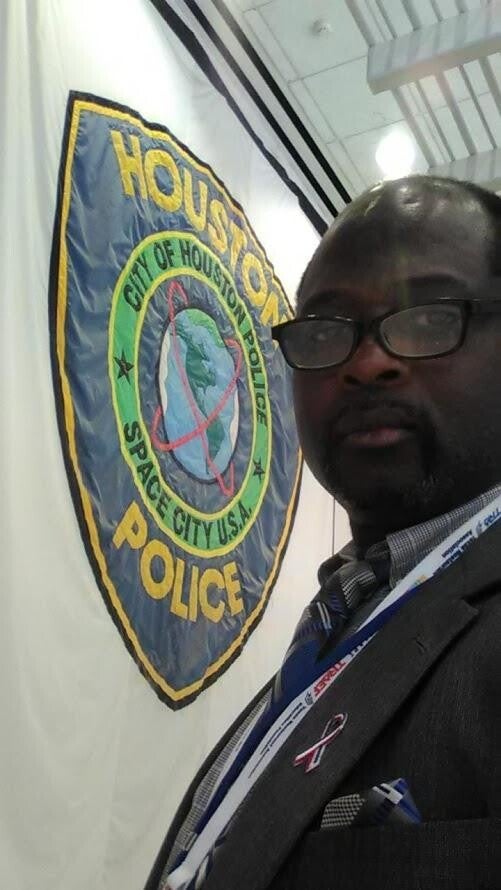
EDITORIAL
WHAT THE MOST LENIENT JUROR IN THE CHAUVIN TRIAL OF "MURDER " OF FLOYD WOULD DO .
Chauvin,s lawyer or defense in the George Floyd murder trial was not as full of nonsense as some call him or accuse him.
Some say he was bad because he took too long to show the context of the happenings and I wonder what they are saying.
The defense built the case for that at least one juror that wants to say look at the whole picture.
Law schools will study and use this case to teach for a very very long time.
I am a presumptive juror and have objectively convicted officer Chauvin for Manslaughter, giving him the benefit of the doubt of not intending to kill, with the defense using training materials to say his actions are Minnesota accepted police procedures.
That makes Minneapolis and Minnesota partly responsible for what happened and should take off those procedures and policies from the books.
Chauvin could have used discretion to change things, especially when he was told by the other officers that Floyd had no pulse.
Chauvin refused to use reasonable discretion to help give him emergency help as he was trained to do.
Why did you only select your training procedures that would lead to death and not the one that will lead to life?
The is no way Officer Chauvin can be cleared of all the responsibilities for Floyd,s death.
The defense kept saying officers make mistakes, as a defense but the mistakes of Floyd must be punished with death ?.
I have placed myself in the shoes of the most objective and lenient juror and have voted to convict Chavin on manslaughter, letting him go away from the murder charges, using the whole case as resources for changes in policing in Minneapolis, Minnesota, and the entire USA.
Juror Ntuba,s Decision is MANSLAUGHTER.
Dr, Ntuba Akwo Thompson
GLOBAL HEALTH COMMODITIES IN GLOBAL HEALTH DIPLOMACY.
GLOBAL HEALTH COMMODITIES IN GLOBAL HEALTH DIPLOMACY.
Global health commodities are traded in the international markets and global health experts, with much insight in the working of international trade and investments in health care commodities, continue to play a vital role in making the world healthier.
Research and development of global health commodities like vaccines and therapeutics require a lot of money which may go into billions of US dollars of investments.
The global health body of the UN [WHO] has invested many billions of dollars in getting covid 19 health commodities to member states though much is still expected as it is said.
The current situation in India that has caused the serum institute of India to fall short of producing the required covid 19 vaccines for export is troubling.
Middle and low-income countries are asking those restrictions on health commodities intellectual property rights be lifted so that covid vaccines can be made on all the continents.
Sinopharm from china and Sputnik from Russia are covid vaccines in circulation in different countries. it must be noted that sovereign states have the right to cater to the medical and health needs of their populations, reasons why certain nations cannot go into Russia and or china and say use Moderna or J and J vaccines,
In global health diplomacy, international trade laws and restrictions may be a problem. Iran blamed the USA during wha73 for trade restrictions imposed on their country through organizations like the world trade organization and the united nations, saying it has led to many of their nationals dead from covid 19.
The world health organization is the main global health diplomacy body and in its,s WHA74, will be addressing some of these issues related to trade in medical and health commodities, asking that covid 19 vaccines technologies be shared freely with member states and restrictions in intellectual property rights over covid 19 vaccines be lifted.
by
Dr. Ntuba Akwo Thompson, international leader, and communicator certified professional and expert in global health USA. Adviser of prime ministers and presidents.
May. 24, 2021
DR NTUBA THOMPSON AKWO, A GLOBAL HEALTH LEADER CALLS ON THE US GOVERNMENT TO EXPAND HEALTH INSURANCE
DR NTUBA THOMPSON AKWO, A GLOBAL HEALTH LEADER CALLS ON THE US GOVERNMENT TO EXPAND HEALTH INSURANCE
Dr. Ntuba Akwo Thompson, a licensed physician and practice of medicine and population health in multiple countries and certified professional and expert in global health [USA] has called on the USA government or President Joe Biden's administration to increase the number of people with health insurance in the nation.
Dr. Ntuba Akwo Thompson has over the years worked in Washington DC USA with the leadership of the congressional black caucus and the congressional Hispanic caucus institute on minority health and disparities issues in all states in the USA.
In the recent 6 states travel of Dr Ntuba Akwo to Colorado, Utah, Nevada, California, Oregon, and Washington state, the problem of lack of insurance by many Americans had told him.
Many in the United States accuse others who advocate for an increase in the numbers of residents with health insurance as promoters of socialized medicine, an accusation based on ignorance. socialized medicine requires the government to take over all aspects of the health care system and run it, a situation that will never happen in the USA.
The covid 19 pandemic has exposed lots of health disparity issues in the USA and we know that a higher percentage of people who died from covid in the USA were minorities including blacks, and Latinos.
The underlying conditions that led or contributed to many deaths among minorities like diabetes could be easily prevented and or managed and controlled if most or all residents in the USA especially in the black and Latino communities had health insurance.
America can provide health insurance to all its residents as a national health policy though the major setback is lack of political will.
Insured populations seek health care more and do better when the is a pandemic because their immune system is not constantly under attack and depressed.
by
Dr Ntuba Akwo Thompson, international leader and communicator, certified professional and expert in global health USA. Adviser of prime ministers and presidents.
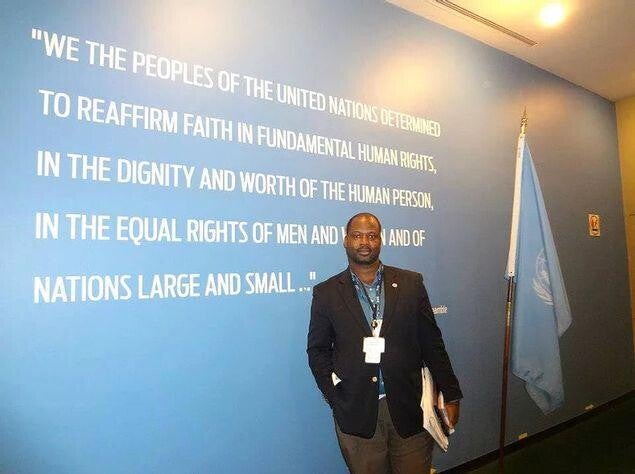
EDITORIAL
ISREALIS-PALISTINIANS RECENT KILLINGS AND CONFLICT IN THE MAKING DURING TRUMP ADMINISTRATION .
Many are watching the rockets fired in Isreal by Islamic Hamas and the Israeli response and wondering if these recent killings from both sides are because of recent provocations and the need for self-defense?.
Dr. Ntuba Akwo Thompson when attending J street conference in Washington DC USA, did all to talk to liberal parliamentarians from Israel, asking them why is it that the is always bloodshed in the middle east around when Netanyahu and the zionists are struggling with winning presidential elections and or having other parties to join them to form coalition governments and they responded to the questions.
Dr, Akwo Thompson Ntuba was told that it was similar to what conservatives do in the USA, they said, people fear those who are called evil people and it pays each side in the conflict to use the fear of the other people groups to win elections.
Netanyahu who Trump supported and who supported Trump over president Biden has struggled lately with winning elections with a majority to allow him to form a government, so he had decided to provoke the Arabs and Muslims especially Iran, knowing what will happen by doing that. Netanyahu has calculated that Hezbollah and or Hamas that has a relationship with Iran will be forced into attacking Israel so that Netanyahu can use disproportionate force in striking the Palestinians with the calculations that the opposition may join to condemn him and he can say to the Israelis that look at those who want Muslims and Palestinians to kill you, these weaklings cannot be your presidential leaders.
Netanyahu was one of the first to congratulate Joe Biden, even before the courts started looking at the Trump petitions calculating that, no matter the outcome, he already had Trump in his corner and so he should be the first to congratulate Biden, if things turn out that Biden is finally declared the winner, he wins both ways.
Before Pope Francis went to Iraq, Biden already did some strikes in Syria against Iran militia in the region, part of the reason why the pope kept asking for peace in the region.
Stop looking at the recent attack as the provocation that led Netanyahu to declare an all-out war.
Netanyahu needed a war at this time and no person else.
The constant attacking of Iranian targets by Netanyahu under Trump had a purpose, which is that of provoking the proxies of Iran to attack Israel so that America will be forced to take sides, and if Biden did not support Israel fully, then conservatives would say look at weak Biden against Israel.
Biden has played into the hands of Netanyahu by taking sides in his statement while his secretary of the state is saying all sides should deescalate.
Both Palestinians and Israelis were made in the image of God, we in America believe.
The United Nations is asking for restraining from all parties including Isreal and they must respect the United Nations that rebirthed that nation in that region.
Hamas you have done what Netanyahu wanted and see how much blood you have brought to your people and destruction to your lands. Netanyahu, you got the war you wanted, you have shed enough blood and republican America and Trump are with you. Hopefully, you can now win the presidential elections and find enough opposition to join you to form a coalition government
.Understand that Zionism is not Christianity.
You all leave American taxpayers out of your wickedness.
BY
Dr, Ntuba Akwo Thompson, international leader, and communicator. certified professional and expert global health and development. Adviser of prime ministers and presidents.

DR NTUBA AKWO GLOBAL HEALTH EXPERT SAYS NATIONS MUST CONSIDER GLOBAL HEALTH AS HUMAN RIGHTS .
DR NTUBA AKWO GLOBAL HEALTH EXPERT SAYS NATIONS MUST CONSIDER GLOBAL HEALTH AS HUMAN RIGHTS .
As international global health experts begin deliberations to make the world healthy, an international multiple nations licensed physician and certified professional and expert global health [usa ] , and international leader and communicator, adviser of prime ministers and presidents, Dr. Ntuba Akwo Thompson has called the 194 members of the united nations, world health organization to consider health as human rights so that universal health care based on primary health care can be made available to all global citizens.
In the united states, health is accessed based on who has health insurance and what type.
When some people decide that even the Obama care that helps poor people in America especially the white poor that make the highest percentage of the poor uninsured is to be taken away by the wicked and selfish, something is wrong with health governance and provision here.
Greatness is not the noise made and foolish pride paraded in the media but for nations to able to take care of their down and out of nations. Lack of addiction and substance abuse health care provision in the USA has millions of AMERICANS homeless most living in bushes and under bridges in their own feces and urine, in unsanitary places.
The question today to nations is " what is your position among the 10 best nations in health care provision and access".
It is time the world health assembly start asking member states the number of the poor and marginalized insured in their countries before they address the assembly because the assembly is for best practices not noise making and foolish pride speak.
In Africa, they steal donor global issues money, stash it in foreign banks in Switzerland, and Europe or USA, calling themselves rich people, yea rich thieves, and demons killing their people, who come talking rubbish at WHA.
Nations like the USA that does not provide universal health care to it citizens, can never be the first 5 in global health care.
Climate change affects the health and life of mostly the poor in nations and the time to talk is over.
it is time to provide another 1 billion people with health care, time to provide to prevent another one billion from emergencies and pandemic and provide health insurance to another billion globally.
Successes of nations are not judged from the abundance of the 1% but the universal health care provision through universal insurance.
by
Dr Akwo Thompson Ntuba , international leader and communicator. certified professional and expert global health and development [USA] . Adviser of prime ministers and presidents.
May. 23, 2021