

Navigating the 2026 midterms
Welcome to HEALTHNDEVELOPMENT's dedicated coverage of the 2026 United States Midterm Elections. This is your essential guide to understanding the pivotal contests shaping our nation, from local races to federal congressional battles. We delve into the critical issues, dynamic campaigns, and emerging candidates, providing insightful analysis to keep you informed. Prepare to explore the heart of American democracy.

Decoding the key issues
The 2026 Midterm Elections will be defined by a complex tapestry of issues impacting communities nationwide. From economic policy and social justice to healthcare and foreign relations, we break down the debates that matter most. Our in-depth coverage helps you understand the platforms and perspectives shaping the national dialogue. Get informed on the core challenges and opportunities facing the United States.

Following the campaigns and candidates
Witness the intensity of the 2026 Midterm campaigns as candidates crisscross the nation, vying for your vote. Our dedicated team tracks the latest campaign developments, profiles the key contenders, and analyzes the strategies that will determine election outcomes. Discover who's running, what they stand for, and how their visions could influence the future of American politics. From grassroots efforts to national debates, we cover it all.

Insights from an international lens
What sets HEALTHNDEVELOPMENT apart? Our analysis of the 2026 Midterms is enriched by extensive international and domestic political experience. Drawing from work across Africa, European countries, and numerous US cities, counties, states, and federal areas, our perspective offers a unique, globally informed view on local and national political dynamics. We aim to empower the global public, including voters, political enthusiasts, and students, to understand the nuances of these critical elections. Our goal is to encourage informed participation: vote on the issues, and consider voting early. Stay informed with HEALTHNDEVELOPMENT, your guide to the 2026 Midterms.
Political Promises, Public Accountability, and the Oklahoma Governorship: Dr. Akwo Thompson Ntuba’s NAPE Documentation and the Lessons for the 2026 Midterms
https://www.youtube.com/watch?v=M2LCeauy6sg
Political Promises, Public Accountability, and the Oklahoma Governorship: Dr. Akwo Thompson Ntuba’s NAPE Documentation and the Lessons for the 2026 Midterms
The relationship between political promises and public performance remains one of the most important measures of democratic leadership. In Oklahoma, the approaching end of Governor Kevin Stitt’s tenure provides an opportunity to examine the difference between ambitious political messaging, promises made before influential audiences, and the public's eventual assessment of governing performance.
Dr. Akwo Thompson Ntuba, a Texas-based international communicator, consultant, and public-policy commentator, brings an interesting perspective to this discussion through his documentation of the National Association of Petroleum Engineers (NAPE) governors' panel in Houston. The video, which captures a public discussion involving governors and energy-sector leadership, offers historical material through which questions about political commitments, executive leadership, economic development, and accountability can be examined.
The central issue raised by this documentation is straightforward: How should citizens evaluate a governor whose public promises and political projections are measured against the realities of his administration?
The NAPE Governors' Panel: When Political Promises Meet Public Expectations
The NAPE governors' panel was an important gathering of political and economic leadership. The 2023 NAPE Summit in Houston featured Oklahoma Governor Kevin Stitt, Wyoming Governor Mark Gordon, and Texas Governor Greg Abbott in discussions about energy markets, investment opportunities, and the future of energy development.
These conversations were significant because governors are not simply political personalities. They are chief executives whose decisions affect employment, state revenues, infrastructure, education, business investment, and the economic prospects of ordinary citizens.
For Dr. Ntuba, documenting such an event provides an opportunity to preserve more than a moment in political history. It creates material that can be revisited as citizens assess what leaders said, what they promised, and what their administrations ultimately delivered.
A governor's appearance before an influential business audience can communicate confidence, ambition, and a vision for economic transformation. However, political communication must eventually be tested against measurable outcomes.
The distinction between announcing an ambitious vision and delivering sustainable results is where public accountability begins.
The Question of Overpromising and Governing Performance
One of the concerns surrounding Governor Stitt's departure from office is whether the scale of his political rhetoric and public commitments has been matched by the outcomes experienced by Oklahoma residents.
The allegation that a political leader has promised more than an administration ultimately delivers should not be treated as an established fact without examining individual commitments. Nevertheless, it is a legitimate question for public debate.
A governor may speak confidently about attracting investment, expanding energy production, creating jobs, improving government efficiency, and strengthening the state's economic position. But citizens eventually want answers to practical questions:
-
Did the promised investments materialize?
-
Were the anticipated employment opportunities created?
-
Did economic growth translate into improved living conditions?
-
Were education, healthcare, infrastructure, and rural communities adequately served?
-
Did the administration's policies produce benefits across the population?
These questions are particularly important in Oklahoma, where energy remains a major component of the state's economic identity.
The 2023 NAPE gathering itself illustrates the importance of the energy industry to regional economic conversations. The Houston Chronicle reported that the conference brought together thousands of oil operators, land professionals, and geologists, while highlighting the governors' discussions about energy policy and government intervention.
Houston Chronicle+1
However, participation in an important energy conference is not itself evidence that every economic promise made by a governor was fulfilled. The proper assessment requires comparing public statements with subsequent economic and social indicators.
Public Approval and the Meaning of a Political Exit
Another important dimension of the discussion is public approval.
As Governor Stitt approaches the end of his constitutionally limited tenure, public opinion provides one way of understanding how voters assess his administration.
A November 2, 2026 report on Oklahoma's political environment cited a Cross Timbers poll placing Stitt's approval at approximately 40%, with disapproval at 55%. These figures offer a snapshot of public sentiment, although polling methodology, sample composition, and the timing of the survey must be considered before drawing broader conclusions.
Nacional E
It is important to distinguish between electoral success, governing authority, and public satisfaction.
A governor can win an election and exercise considerable political influence while still facing dissatisfaction over particular policies or unmet expectations.
Likewise, low approval does not automatically establish that every policy failed. It does, however, raise questions about the relationship between leadership decisions and public confidence.
This is where Dr. Ntuba's NAPE documentation becomes relevant as historical material. The video allows audiences to revisit a public leadership environment and consider the expectations communicated by political executives during their time in office.
Political leadership should ultimately be evaluated not only by the confidence with which promises are announced, but also by the evidence available when those promises are reviewed.
The 2026 Midterms: A Broader Conversation About Political Accountability
The 2026 midterm elections provide a wider national context for examining political accountability.
Oklahoma's gubernatorial transition is particularly relevant because Stitt is term-limited, making the 2026 gubernatorial contest an open-seat election rather than a contest for his own reelection. The Cook Political Report identifies the race as open because of his term limit.
Cook Political Report
The broader civic question extends beyond one governor or one political party.
Across the United States, voters have reason to examine the difference between campaign commitments and governing records. Political communication can create expectations, but democratic accountability requires citizens, journalists, researchers, and independent observers to examine whether those expectations were fulfilled.
This involves looking beyond speeches and conference appearances to examine budgets, employment statistics, public-service delivery, economic development, and the experiences of local communities.
Dr. Ntuba's approach of preserving video documentation offers one possible contribution to this process: historical political communication can become a reference point for later public discussion.
A recorded statement does not independently prove success or failure. Its value lies in allowing citizens to revisit what was publicly communicated and compare those statements with independently documented outcomes.
The Importance of Dr. Ntuba's Documentation
Dr. Akwo Thompson Ntuba's professional profile describes his work in international communication, development, governance, and policy engagement. His stated interests include public accountability, institutional development, and strategic communication.
healthconsultingint.wixsite.com
These areas provide a useful framework for examining the relationship between political leadership and public expectations.
His NAPE video should therefore be understood as a historical record that can contribute to conversations about executive leadership, energy-sector development, and the responsibility of elected officials to explain their decisions.
The significance of such documentation is not limited to Oklahoma. Texas, Wyoming, and other energy-producing states face related questions about economic diversification, energy security, investment, environmental responsibilities, and the distribution of economic benefits.
Governors who speak before industry audiences are communicating with investors and business leaders, but they are also making statements that citizens may revisit when evaluating their administrations.
The public deserves an opportunity to compare those statements with the record.
-
dr akwo thompson ntuba who has worked with governors at nape texas says outgoing governor of oklahoma may have over promised and spoken big much but going out of office with low approval and uses this video of governor panel of nape he docuemted to buttress his stances for midterms 2026 https://www.youtube.com/watch?v=M2LCeauy6sg. write essay
-
Political Promises, Public Accountability, and the Oklahoma Governorship: Dr. Akwo Thompson Ntuba’s NAPE Documentation and the Lessons for the 2026 Midterms
The relationship between political promises and public performance remains one of the most important measures of democratic leadership. In Oklahoma, the approaching end of Governor Kevin Stitt’s tenure provides an opportunity to examine the difference between ambitious political messaging, promises made before influential audiences, and the public's eventual assessment of governing performance.
Dr. Akwo Thompson Ntuba, a Texas-based international communicator, consultant, and public-policy commentator, brings an interesting perspective to this discussion through his documentation of the National Association of Petroleum Engineers (NAPE) governors' panel in Houston. The video, which captures a public discussion involving governors and energy-sector leadership, offers historical material through which questions about political commitments, executive leadership, economic development, and accountability can be examined.
The central issue raised by this documentation is straightforward: How should citizens evaluate a governor whose public promises and political projections are measured against the realities of his administration?
The NAPE Governors' Panel: When Political Promises Meet Public Expectations
The NAPE governors' panel was an important gathering of political and economic leadership. The 2023 NAPE Summit in Houston featured Oklahoma Governor Kevin Stitt, Wyoming Governor Mark Gordon, and Texas Governor Greg Abbott in discussions about energy markets, investment opportunities, and the future of energy development.
These conversations were significant because governors are not simply political personalities. They are chief executives whose decisions affect employment, state revenues, infrastructure, education, business investment, and the economic prospects of ordinary citizens.
For Dr. Ntuba, documenting such an event provides an opportunity to preserve more than a moment in political history. It creates material that can be revisited as citizens assess what leaders said, what they promised, and what their administrations ultimately delivered.
A governor's appearance before an influential business audience can communicate confidence, ambition, and a vision for economic transformation. However, political communication must eventually be tested against measurable outcomes.
The distinction between announcing an ambitious vision and delivering sustainable results is where public accountability begins.
The Question of Overpromising and Governing Performance
One of the concerns surrounding Governor Stitt's departure from office is whether the scale of his political rhetoric and public commitments has been matched by the outcomes experienced by Oklahoma residents.
The allegation that a political leader has promised more than an administration ultimately delivers should not be treated as an established fact without examining individual commitments. Nevertheless, it is a legitimate question for public debate.
A governor may speak confidently about attracting investment, expanding energy production, creating jobs, improving government efficiency, and strengthening the state's economic position. But citizens eventually want answers to practical questions:
-
Did the promised investments materialize?
-
Were the anticipated employment opportunities created?
-
Did economic growth translate into improved living conditions?
-
Were education, healthcare, infrastructure, and rural communities adequately served?
-
Did the administration's policies produce benefits across the population?
These questions are particularly important in Oklahoma, where energy remains a major component of the state's economic identity.
The 2023 NAPE gathering itself illustrates the importance of the energy industry to regional economic conversations. The Houston Chronicle reported that the conference brought together thousands of oil operators, land professionals, and geologists, while highlighting the governors' discussions about energy policy and government intervention.
Houston Chronicle+1However, participation in an important energy conference is not itself evidence that every economic promise made by a governor was fulfilled. The proper assessment requires comparing public statements with subsequent economic and social indicators.
Public Approval and the Meaning of a Political Exit
Another important dimension of the discussion is public approval.
As Governor Stitt approaches the end of his constitutionally limited tenure, public opinion provides one way of understanding how voters assess his administration.
A November 2, 2026 report on Oklahoma's political environment cited a Cross Timbers poll placing Stitt's approval at approximately 40%, with disapproval at 55%. These figures offer a snapshot of public sentiment, although polling methodology, sample composition, and the timing of the survey must be considered before drawing broader conclusions.
Nacional EIt is important to distinguish between electoral success, governing authority, and public satisfaction.
A governor can win an election and exercise considerable political influence while still facing dissatisfaction over particular policies or unmet expectations.
Likewise, low approval does not automatically establish that every policy failed. It does, however, raise questions about the relationship between leadership decisions and public confidence.
This is where Dr. Ntuba's NAPE documentation becomes relevant as historical material. The video allows audiences to revisit a public leadership environment and consider the expectations communicated by political executives during their time in office.
Political leadership should ultimately be evaluated not only by the confidence with which promises are announced, but also by the evidence available when those promises are reviewed.
The 2026 Midterms: A Broader Conversation About Political Accountability
The 2026 midterm elections provide a wider national context for examining political accountability.
Oklahoma's gubernatorial transition is particularly relevant because Stitt is term-limited, making the 2026 gubernatorial contest an open-seat election rather than a contest for his own reelection. The Cook Political Report identifies the race as open because of his term limit.
Cook Political ReportThe broader civic question extends beyond one governor or one political party.
Across the United States, voters have reason to examine the difference between campaign commitments and governing records. Political communication can create expectations, but democratic accountability requires citizens, journalists, researchers, and independent observers to examine whether those expectations were fulfilled.
This involves looking beyond speeches and conference appearances to examine budgets, employment statistics, public-service delivery, economic development, and the experiences of local communities.
Dr. Ntuba's approach of preserving video documentation offers one possible contribution to this process: historical political communication can become a reference point for later public discussion.
A recorded statement does not independently prove success or failure. Its value lies in allowing citizens to revisit what was publicly communicated and compare those statements with independently documented outcomes.
The Importance of Dr. Ntuba's Documentation
Dr. Akwo Thompson Ntuba's professional profile describes his work in international communication, development, governance, and policy engagement. His stated interests include public accountability, institutional development, and strategic communication.
healthconsultingint.wixsite.comThese areas provide a useful framework for examining the relationship between political leadership and public expectations.
His NAPE video should therefore be understood as a historical record that can contribute to conversations about executive leadership, energy-sector development, and the responsibility of elected officials to explain their decisions.
The significance of such documentation is not limited to Oklahoma. Texas, Wyoming, and other energy-producing states face related questions about economic diversification, energy security, investment, environmental responsibilities, and the distribution of economic benefits.
Governors who speak before industry audiences are communicating with investors and business leaders, but they are also making statements that citizens may revisit when evaluating their administrations.
The public deserves an opportunity to compare those statements with the record.
Conclusion: Beyond Political Rhetoric to Measurable Results
The approaching conclusion of Kevin Stitt's governorship presents an important opportunity to examine political promises, public expectations, and the responsibilities of executive leadership.
Dr. Akwo Thompson Ntuba's documentation of the NAPE governors' panel offers a historical starting point for that conversation. It captures a moment when governors engaged with business and energy-sector audiences about the economic future of their states.
The larger question is whether the political ambitions communicated in such settings translated into outcomes that citizens could recognize and measure.
The reported approval figures surrounding Stitt's departure make public confidence another important subject for examination. But a fair assessment must go beyond one poll, one video, or one political interpretation.
As the United States enters another midterm election cycle, the enduring lesson is that political promises deserve scrutiny, public statements deserve documentation, and governing records deserve independent evaluation.
In the final analysis, political leadership is not measured simply by how loudly a governor speaks about the future, but by the transparency of the commitments made, the evidence of progress achieved, and the willingness to answer to the people when expectations and outcomes differ.
-
Letitia Plummer Scores Upset Victory Over Annise Parker in Harris County Democratic Primary
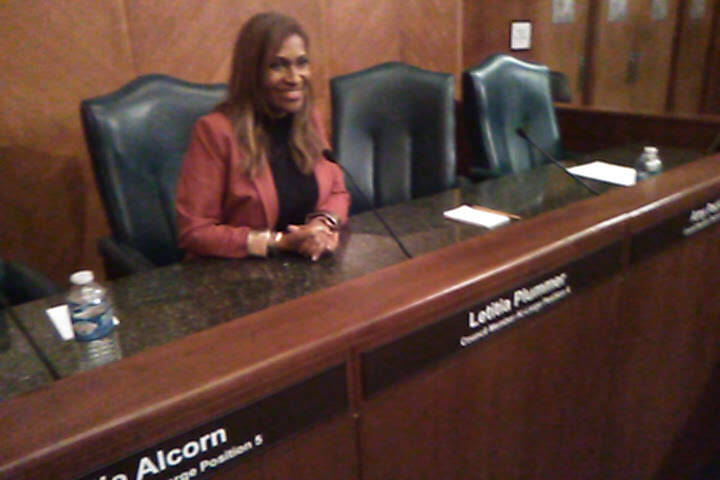
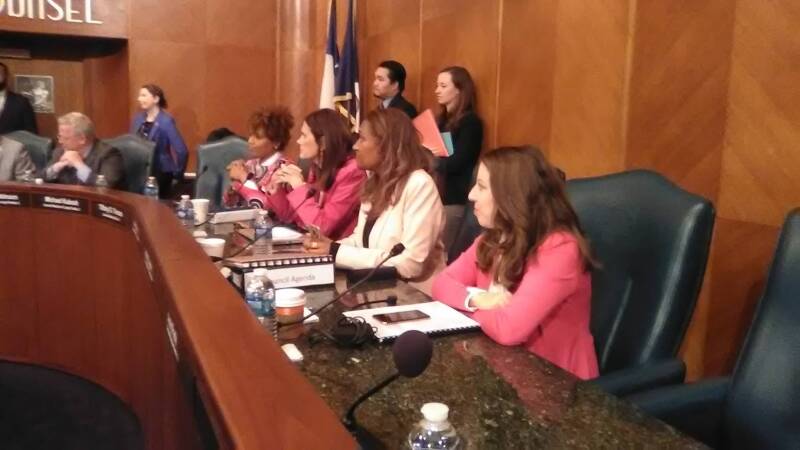
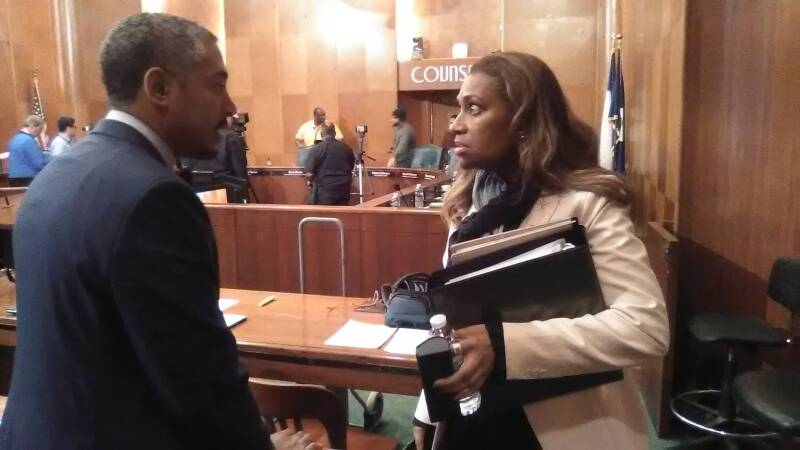
Letitia Plummer Scores Upset Victory Over Annise Parker in Harris County Democratic Primary
By Dr. Akwo Thompson Ntuba
Former Houston City Council member and dentist Letitia Plummer achieved a stunning political upset this week, defeating former Houston Mayor Annise Parker in the Democratic primary to succeed Harris County Judge Lina Hidalgo, who previously announced she would not seek a third term.
Plummer, who entered the race as a relative underdog, steadily built momentum throughout the campaign, ultimately securing a victory that surprised many longtime observers of Harris County politics. Her background as a healthcare professional and her tenure on the Houston City Council helped her position herself as a candidate focused on community needs, public health, and government accessibility.
Parker, a well‑known figure in Texas politics and the first openly LGBTQ+ mayor of a major U.S. city, conceded the race and urged Democrats to unify ahead of the general election. She emphasized that the party must “work together to defeat the bad policies of the Trump regime,” signaling her commitment to supporting the Democratic nominee despite the unexpected outcome.
With the primary now settled, Plummer will face the Republican nominee in the November 2026 general election, a contest expected to draw national attention given Harris County’s size, diversity, and political significance.
If elected, Plummer would bring her experience as a dentist and public servant to one of the most influential local government positions in Texas, overseeing a county of more than 4.7 million residents.
As the campaign moves into its next phase, both parties are preparing for what is likely to be one of the most closely watched county‑level races in the country. Voters will ultimately decide who is best positioned to lead Harris County through the challenges and opportunities ahead.
Voters should confirm all election‑related information with trusted official sources.
Vikki Goodwin Outlines Key Policy Priorities in Interview With Dr. Akwo Ntuba During Early Voting for 2026 Democratic Primary
Field Notes From the 2026 Primary Season: Reporting by Dr. Akwo Thompson Ntuba
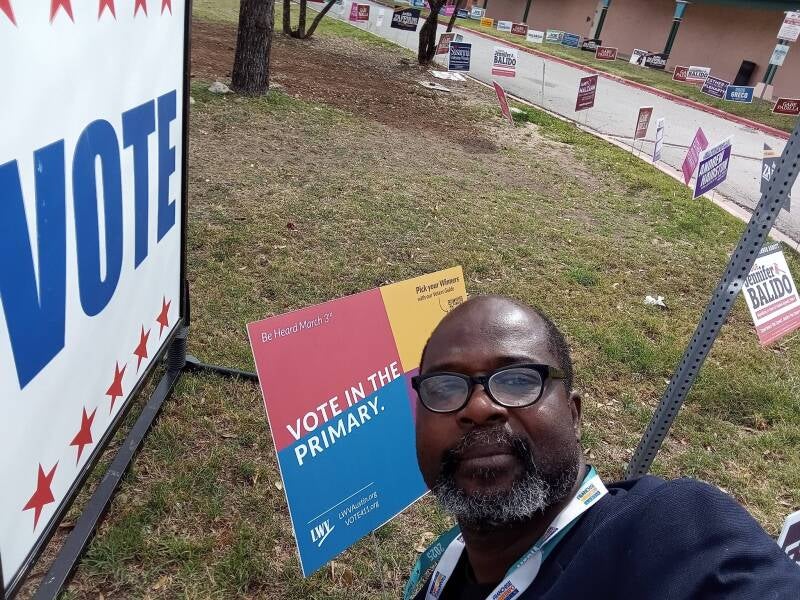


Field Notes From the 2026 Primary Season: Reporting by Dr. Akwo Thompson Ntuba
A Journalist on the Ground
As chief editor of HealthNDevelopment Magazine USA, a San‑Antonio‑registered media organization covering global affairs, governance, and public policy, Dr. Akwo Thompson Ntuba has continued his on‑the‑ground reporting of the 2026 U.S. primary elections. His work has taken him across multiple polling stations in Texas, where early voting has already drawn millions of participants.
This year’s primaries carry heightened national interest, and Dr. Ntuba’s field reporting focuses on voter experiences, polling‑station preparedness, and the broader civic environment shaping the electoral process.
Voter Voices and Motivations
Across the polling locations visited, Dr. Ntuba interviewed voters from different backgrounds, asking what issues guided their choices. Many respondents indicated that their selections aligned with their preferred political party, while others emphasized specific concerns such as:
-
economic stability
-
public safety
-
education
-
judicial accountability
-
healthcare access
These conversations highlight the diversity of motivations that shape voter behavior in a primary season.
Polling‑Station Preparedness
On March 2, 2026, Dr. Ntuba visited additional polling stations to assess readiness for the March 3 primary day. His observations included:
-
orderly lines and efficient check‑in procedures
-
poll workers following established election laws
-
accessible voting machines and clear signage
-
a generally peaceful environment
These findings reflect a system functioning with professionalism and respect for electoral rules.
The Texas Judicial Elections Context
Texas remains one of the states where judicial officers—including members of the Supreme Court for civil matters and the Court of Criminal Appeals for criminal matters—are elected by popular vote. This system continues to generate debate:
-
Some Texans believe elections introduce political ideology into the judiciary.
-
Others argue that because the judiciary is an arm of government, public accountability through elections is appropriate.
Dr. Ntuba’s reporting captures these differing viewpoints without taking a position, allowing readers to understand the complexity of the issue.
Anticipating Runoffs
Based on historical patterns and the competitiveness of several races, Dr. Ntuba notes that some contests may proceed to runoff elections after March 3. This is a normal feature of Texas primaries when no candidate achieves the required threshold for outright victory.
A Peaceful Exercise of Democracy
So far, the 2026 primary season in Texas has unfolded with calm, civic responsibility, and adherence to election laws. Dr. Ntuba’s continued presence at polling stations reflects his commitment to documenting democratic processes with accuracy, neutrality, and respect for the voters who participate in them.

Vikki Goodwin Outlines Key Policy Priorities in Interview With Dr. Akwo Ntuba During Early Voting for 2026 Democratic Primary
During early voting for the 2026 Democratic primary, Texas Lieutenant Governor candidate Vikki Goodwin sat down with Dr. Akwo Ntuba to discuss her platform and the issues she believes are most urgent for Texans. Goodwin, currently serving her fourth term in the Texas Legislature, used the conversation to highlight her legislative experience, community involvement, and policy agenda as she seeks statewide office.
Legislative Experience and Background
Goodwin emphasized that her years in the Texas House have prepared her for the responsibilities of lieutenant governor. A graduate of the University of Texas and the LBJ School of Public Affairs, she also brings experience as a real estate broker and community leader. She noted that her record includes passing meaningful legislation and working collaboratively across communities.
Key Issue Positions
Women’s Health and Reproductive Access
Goodwin was direct in her criticism of the 2025 “Life Protection Act,” arguing that it failed to protect the health and autonomy of pregnant women. She stated that women should be able to make personal, private medical decisions in consultation with their doctors, and that all medical options should remain available when a woman’s health is at risk. Ensuring the best health outcomes, she said, requires trusting women and physicians rather than imposing restrictive state mandates.
Healthcare Access and Prevention
Calling a healthy population “essential,” Goodwin stressed the need for a healthcare system that prevents people from falling through the cracks. She advocated for:
-
Expanded use of mobile health clinics to reach underserved communities
-
Low‑cost diagnostic testing and routine checkups
-
Improved Medicaid records security
-
Reducing reliance on emergency rooms to lower overall healthcare costs
Her focus, she explained, is on prevention, transparency, and equitable access.
Cannabis Regulation
Goodwin supports a regulated, adult‑use cannabis framework similar to alcohol laws. Her position includes:
-
Legal purchase for adults 21 and older
-
Clear labeling of THC content
-
Strict rules preventing marketing to children
-
Updated definitions for qualifying medical conditions such as PTSD
-
Replacing the current, limited TCUP system with a more functional model
She argued that Texans should be able to access cannabis products safely and legally without navigating a “broken” system.
Water Policy and Environmental Stewardship
Water security, Goodwin said, is one of Texas’s most pressing long‑term challenges. She supports the Texas Stewardship Amendment to prevent pollution and ensure responsible management of water resources. Her approach includes:
-
Using the latest science in water planning
-
Prioritizing water reuse and rainwater storage, which she described as more cost‑effective than large reservoirs
-
Cautioning against overreliance on desalination, which she noted is significantly more expensive
Goodwin framed water policy as both an environmental and economic issue that requires forward‑thinking leadership.
A Campaign Focused on Practical Solutions
Throughout the interview, Goodwin presented herself as a pragmatic legislator focused on health, safety, and sustainable growth. Her campaign, she said, is rooted in ensuring Texans have access to the resources and freedoms necessary to thrive.
More information about her platform is available on her campaign website, Goodwin4Texas.com.