

WORLD CUP 2026
Dr. Ntuba Akwo Thompson and Mayor Sylvester Turner’s Efforts to Secure Houston as a FIFA 2026 World Cup Host City
Dr. Ntuba Akwo Thompson, a global health and development expert, played a significant role in Houston’s campaign to become a host city for the FIFA 2026 World Cup. Working alongside the late Mayor Sylvester Turner, Thompson contributed his expertise in community engagement, diplomacy, and international outreach to strengthen Houston’s bid.
Under Mayor Turner’s leadership, Houston positioned itself as a premier destination for the tournament, highlighting its world-class infrastructure, diverse population, and deep-rooted soccer culture. Thompson’s involvement extended beyond advocacy—his work in health and development communication helped emphasize the city’s ability to host large-scale international events while ensuring public health and safety measures were met.
The campaign focused on showcasing Houston’s NRG Stadium, its transportation networks, and its commitment to inclusivity and global sportsmanship. Mayor Turner, a passionate supporter of the bid, worked tirelessly to bring together city officials, business leaders, and sports organizations to present Houston as an ideal host city.
Thompson’s contributions, alongside Turner’s leadership, helped solidify Houston’s standing in the selection process. Their combined efforts reflected a shared vision of economic growth, cultural exchange, and global recognition for the city.
With Houston ultimately securing its place as a FIFA 2026 World Cup host city, their work remains a testament to the power of collaboration, strategic planning, and civic pride in bringing one of the world’s biggest sporting events to Texas.
USA–Belgium: A World Cup Night of Turmoil, Triumph, and Truth
USA–Belgium: A World Cup Night of Turmoil, Triumph, and Truth
By Dr. Akwo Thompson Ntuba
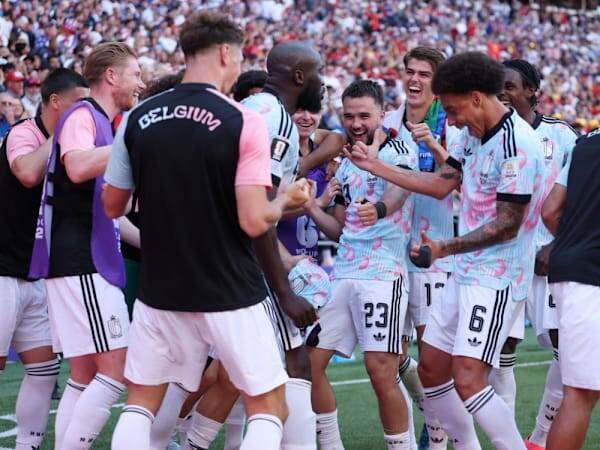
The night was supposed to be a redemption arc for the United States Men’s National Team — a chance to prove that grit, home‑crowd energy, and tactical discipline could overcome the turbulence that had shadowed them throughout the tournament. Instead, it became a spectacle of anguish, controversy, and Belgian brilliance, leaving supporters stunned and players visibly shaken.
A Match Played Under a Cloud
The tension began long before kickoff. Across the football world, debates raged over the controversial intervention attributed to President Donald Trump — an alleged push for FIFA to suspend the red‑card ban that would have sidelined Folarin Balogun. Many analysts, commentators, and supporters questioned the legality and ethics of such interference. Even though Balogun ultimately did not feature, the controversy cast a long shadow over the American camp.
The absence of Balogun — the team’s sharpest forward — became a talking point as soon as Belgium seized control. Fans argued that his presence might have changed the rhythm, the confidence, or at least the psychological balance of the match. But football, as destiny often reminds us, does not bend to hypotheticals.
Belgium’s Ruthless Superiority
Belgium arrived in Seattle not to participate, but to dominate. And they did so with a cold, clinical precision that silenced the stadium.
Charles De Ketelaere — the young maestro — delivered a performance that will be remembered in Belgian football folklore. He came out swinging, scoring twice with the composure of a veteran and assisting the remaining goals with an elegance that dismantled the American defensive structure. His movement, vision, and confidence were the embodiment of a team that refused to be intimidated by the home crowd or the stakes.
Every Belgian attack felt like a lesson. Every American mistake felt like a wound.
USA’s Collapse and the Emotional Fallout
The United States conceded four goals — each one deepening the frustration of supporters who had dreamed of a historic run on home soil. Defensive lapses, miscommunication, and visible panic turned the second half into a nightmare.
By the final whistle, the anger was palpable. Social media erupted with criticism directed at players, coaches, and federation officials. Many supporters felt humiliated, not just by the scoreline, but by the sense that the team had lost its identity under pressure.
The players, for their part, looked devastated. Shoulders slumped. Eyes downcast. A team that had fought hard throughout the tournament now stood at the center of a storm of disappointment.
A Night That Will Shape the Future
Belgium’s triumph was not just a victory — it was a statement. The USA’s defeat was not just a loss — it was a reckoning.
Football is a narrative of nations, emotions, and moments. On this night, Belgium wrote a chapter of superiority, discipline, and brilliance. The United States wrote one of heartbreak, controversy, and lessons painfully learned.
But as history shows, nations rise from nights like these. The USA will rebuild. The supporters will heal. And the story of this match — raw, dramatic, and unforgettable — will become part of the tapestry of American soccer’s evolution.
Kylian Mbappé and the Global Wound of Racism: A Cameroon‑Born Son of France Speaks Back
By Dr. Thompson Akwo Ntuba Chief Editor & Publisher, HealthNDevelopment Magazine (USA)
Kylian Mbappé and the Global Wound of Racism: A Cameroon‑Born Son of France Speaks Back
By Dr. Thompson Akwo Ntuba Chief Editor & Publisher, HealthNDevelopment Magazine (USA)
A Storm After Victory
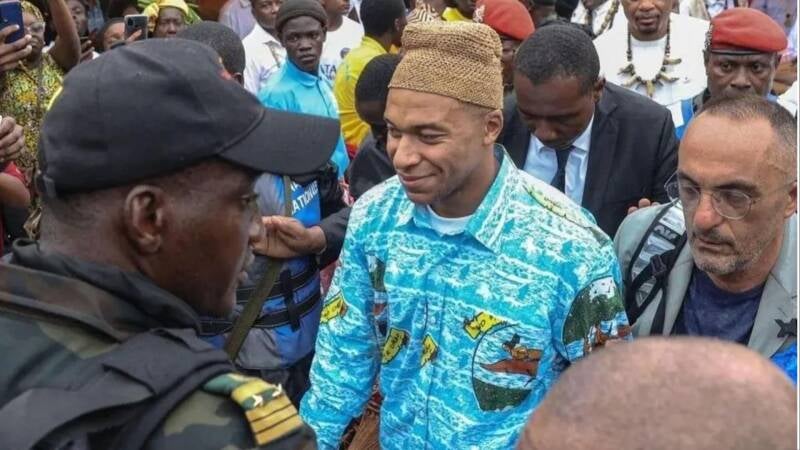
France’s 2026 World Cup victory over Paraguay should have been a moment of pure celebration for the French national team and its captain, Kylian Mbappé — a young man whose brilliance has already reshaped modern football. Instead, the aftermath erupted into a global conversation about racism, identity, and the complicated journeys of African‑born athletes who rise to represent nations beyond their birth.
The controversy began when Paraguayan senator Celeste Amarilla launched a series of racist attacks on Mbappé, calling him a “colonised Cameroonian” and questioning his legitimacy as captain of France. Her remarks were not only offensive — they were historically ignorant, politically reckless, and morally corrosive.
Mbappé responded swiftly and firmly, calling her a “despicable woman” and condemning her comments as racist, a stance echoed by French prosecutors who have opened an investigation into the insults.
A Son of Cameroon, A Captain of France
For many Africans — especially Cameroonians — the attack struck a deeper nerve. Mbappé’s father is from Cameroon’s Littoral region, the same cultural and geographic heritage as my own mother. His story mirrors that of millions in the diaspora: born of African roots, raised in Europe, and carrying the weight of two continents on his shoulders.
To call him “colonised” is to weaponize history against the very people who have transcended it.
It is also a dangerous attempt to delegitimize African‑born athletes who choose to represent nations where they grew up, trained, and built their lives. This is not a new debate — but Amarilla’s comments poured gasoline on a fire that has long burned beneath global football.
The Larger Debate: Who Gets to Belong?
The senator’s remarks attempted to ignite a global conversation about why African‑born players often represent European nations — France, Belgium, England, Germany — and help them win World Cups. But this argument collapses under scrutiny.
If one follows her logic, then the United States — a nation built from former British colonies — should not celebrate players like Folarin Balogun, who himself was born in England to Nigerian parents and now represents the USA. The same could be said of countless American athletes whose families came from colonized lands.
Identity in modern football is not a colonial inheritance — it is a lived reality shaped by birthplace, upbringing, opportunity, and personal choice.
Mbappé’s Response: Strong, But Is It Enough?
Mbappé’s condemnation was sharp and dignified. He refused to be silent, refused to normalize racism, and refused to allow a public official to demean his heritage.
But many observers argue that his response, while powerful, should be followed by formal apologies from the senator and the Paraguayan government. Racism from a public official is not a private insult — it is a national embarrassment.
France has already taken legal action, and global football institutions are watching closely.
A Moment That Echoes Beyond Football
This incident is not just about Mbappé. It is about every African‑born child who grows up in Europe. It is about every diaspora family navigating identity across continents. It is about every athlete who carries the weight of two homelands.
Mbappé’s story — Cameroon‑born roots, French national pride — is a symbol of the modern world. His excellence challenges old prejudices. His leadership exposes outdated political rhetoric. His voice forces nations to confront uncomfortable truths.
And his refusal to bow to racism is a reminder that dignity is not negotiable.
A Call for Accountability and Healing
As Chief Editor of HealthNDevelopment Magazine, I have chronicled global governance, diaspora identity, and the intersections of race and public life. This moment demands more than outrage — it demands accountability, education, and a commitment to dismantling the structures that allow racism to flourish.
Mbappé stood firm. Now the world must stand with him.
🌍 Africa’s Rise Without Cameroon: A Story of Unity and Triumph
🌍 Africa’s Rise Without Cameroon: A Story of Unity and Triumph
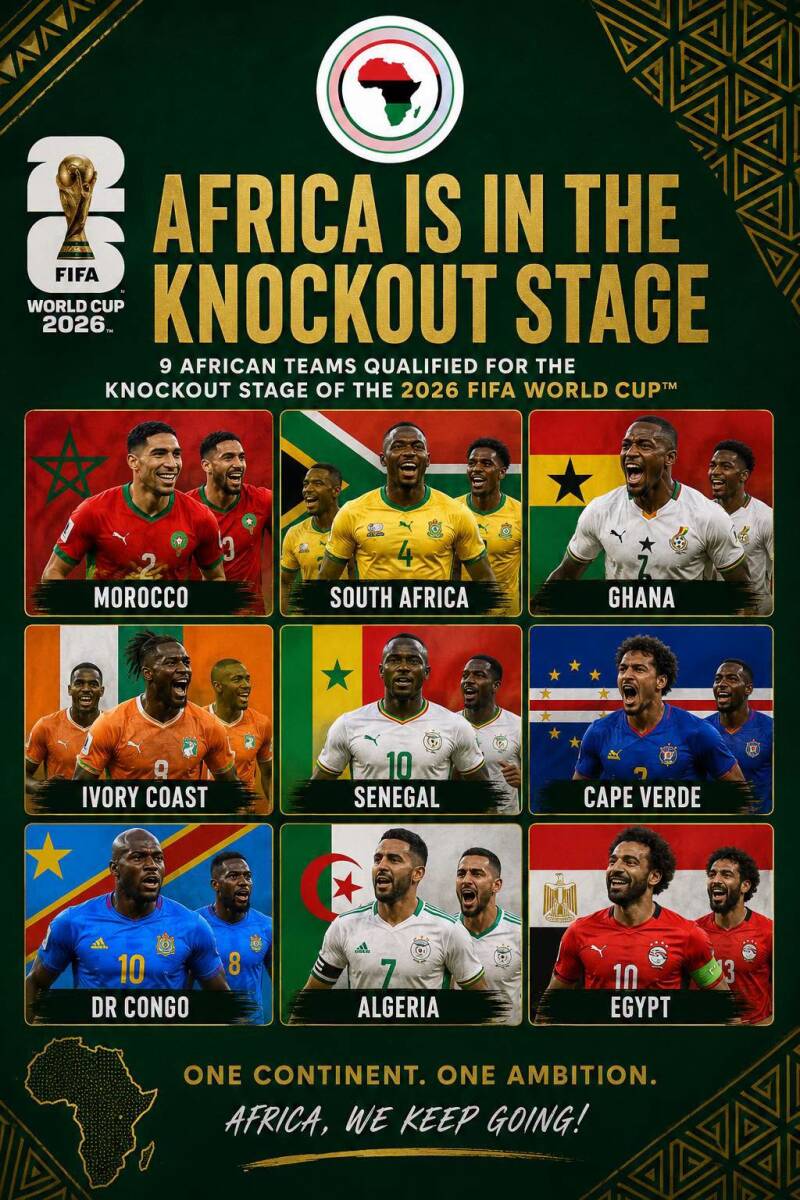
When the 2026 FIFA World Cup reached its knockout stage, the African continent stood taller than ever before. Nine nations—Morocco, South Africa, Ghana, Ivory Coast, Senegal, Cape Verde, DR Congo, Algeria, and Egypt—carried the hopes of millions, proving that Africa’s football spirit burns brighter than any shadow of doubt.
🇲🇦 Morocco, still riding the wave of their historic 2022 run, led the charge with tactical brilliance and fierce determination. 🇿🇦 South Africa brought flair and resilience, reminding the world of their golden era. 🇬🇭 Ghana danced with rhythm and precision, their midfield artistry mesmerizing fans. 🇨🇮 Ivory Coast and 🇸🇳 Senegal embodied strength and unity, their captains roaring like lions of the savannah. 🇨🇻 Cape Verde, the island nation, stunned giants with their fearless play. 🇩🇷 DR Congo showed that power and passion can overcome any obstacle. 🇩🇿 Algeria’s tactical discipline and 🇪🇬 Egypt’s legendary leadership completed the mosaic of African excellence.
But amid this celebration, one absence echoed loudly—Cameroon, once a symbol of African football pride. The nation that gave the world unforgettable legends found itself in turmoil, its football spirit dimmed by internal strife and mismanagement. The phrase “cursed Cameroon” became a painful metaphor, whispered by those who saw greatness buried under chaos. The people’s frustration grew so deep that, as the story goes, even “corpses say they run Cameroon”—a haunting image of stagnation and decay.
And then came His Eminence, Excellency Minister Dr. Ntuba, a voice of reason and renewal. In his first address after Africa’s historic qualification, he spoke not of blame but of rebirth. His words carried both sorrow and hope—acknowledging Cameroon’s fall while celebrating Africa’s collective rise. He reminded the continent that unity, discipline, and integrity are the true foundations of victory.
“Africa has shown that when we stand together, we rise beyond curses and divisions,” he declared. “Let Cameroon’s pain be our lesson, and let our triumph be our shared destiny.”
⚽ One continent. One ambition. Africa marched forward, proving that even in the absence of one, the strength of many can illuminate the world stage. The story of 2026 became not just about football—but about resilience, redemption, and the unstoppable rhythm of a continent that keeps going.
Concacaf

We offer a range of specialized services tailored to meet your individual needs.

We offer a range of specialized services tailored to meet your individual needs.

We offer a range of specialized services tailored to meet your individual needs.

We offer a range of specialized services tailored to meet your individual needs.
African Teams Doing Better Than Expected at the 2026 World Cup
African Teams Doing Better Than Expected at the 2026 World Cup
A short story inspired by real tournament events
The 2026 FIFA World Cup had barely begun, yet something unusual was already stirring across stadiums in North America. It wasn’t just the roar of crowds or the hum of vuvuzelas echoing from fan zones. It was a shift — subtle at first, then undeniable — in the balance of global football power.
For decades, African teams had arrived at World Cups with hope, talent, and passion, only to be met with skepticism from pundits and polite caution from bookmakers. But this time, from the very first whistle, the continent’s representatives stepped onto the pitch with a different aura: organised, fearless, and ready to rewrite expectations.
A New Dawn in the Opening Round
Cape Verde were the first to send shockwaves through the tournament. In their World Cup debut, they stood toe‑to‑toe with Spain — a former world champion — refusing to be overawed by the moment. Their 0–0 draw wasn’t just a result; it was a declaration. A tiny island nation had earned its first-ever World Cup point, and the football world took notice.
Hours later, DR Congo added another chapter to the unfolding story. Fifty‑two years after their last appearance, they returned to the global stage with a 1–1 draw against Portugal. The equaliser sent their fans into a frenzy, a celebration half a century in the making.
Then came Morocco, the team that had carried Africa to its first semi-final in 2022. Against Brazil — the five‑time champions — they showed the same grit that had made them legends. Their 1–1 draw felt less like survival and more like a reminder: We belong here.
Egypt followed suit, matching Belgium stride for stride in a disciplined 1–1 draw. And while some African sides stumbled early — Tunisia, Senegal, Algeria, and South Africa all fell in their openers — the continent’s overall performance was stronger than anyone had predicted.
Ivory Coast and Ghana didn’t settle for draws. They went for victory, and they got it. Their opening wins electrified fans from Abidjan to Accra, fueling belief that this World Cup might be different.
A Historic Moment for African Football
With ten African teams in the expanded 48‑team tournament — the largest CAF representation ever — the continent had more opportunities than before. But opportunity alone doesn’t earn points. Performance does. And Africa was performing.
Analysts who once spoke of “upsets” were now talking about “competitiveness.” Commentators who used to praise African teams for passion were now praising them for structure, discipline, and tactical maturity.
The group stage, usually predictable for Europe’s giants, suddenly felt open. Draws against Spain, Brazil, Belgium, and Portugal weren’t flukes — they were warnings.
Why It Matters
For African fans, these early results meant more than numbers on a table.
They meant validation. They meant progress. They meant possibility.
The 2026 World Cup was beginning to feel like a turning point — not just for one team, but for an entire continent. The dream of seeing an African nation lift the trophy no longer felt distant or romantic. It felt plausible.
And as the first round came to a close, one thing was clear: Africa had arrived not as guests, but as contenders.
Global Health, Sports Diplomacy, and the Safe Arrival of the Congolese World Cup Team.
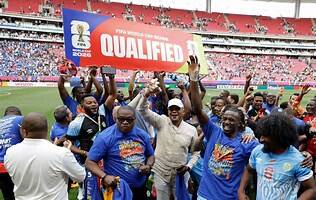
Global Health, Sports Diplomacy, and the Safe Arrival of the Congolese World Cup Team.
By Dr. Akwo Thompson Ntuba.
The 2026 FIFA World Cup, hosted across the United States, Canada, and Mexico, is not only a global sporting event—it is a global public‑health responsibility. With teams arriving from every continent, including nations currently managing infectious‑disease challenges, the coordination between FIFA, host governments, and international health experts has become essential.
This reality is clearly reflected in the case of the Congolese national team, which has now been officially cleared by FIFA and the North American host nations to travel for the tournament. Their journey will include a brief stay in Europe, where health authorities will continue monitoring the Ebola situation in the Democratic Republic of Congo. This step is not punitive; it is preventive. It ensures that athletes, staff, fans, and host communities remain safe while preserving the integrity of the competition.
The Congolese team had already selected Houston, Texas as its host city for training and accommodation during the tournament. Houston—one of the world’s leading hubs for medicine, global health, and emergency preparedness—is uniquely positioned to support safe participation. The city’s infrastructure, medical institutions, and international partnerships make it an ideal location for monitoring, prevention, and rapid response.
Global health experts, including Dr. Akwo Thompson Ntuba of Health Consulting International, have been closely involved in assessing the evolving Ebola situation and advising on safe travel protocols. Dr. Ntuba, a U.S.‑certified global health professional with extensive experience in outbreak response, sports medicine, and international health diplomacy, continues to work with U.S. authorities and global partners to ensure that no health risks accompany the team’s arrival.
This collaboration reflects a broader truth:Modern sports cannot be separated from global health. Large‑scale events like the World Cup require the same level of preparedness as international summits, humanitarian operations, or global trade missions. Infectious diseases do not respect borders, and neither does the responsibility to prevent them.
The 2026 World Cup will be one of the most widely covered sporting events in history. With major global media outlets headquartered in the United States—and additional networks arriving from Europe, Africa, Asia, and Latin America—the world will be watching not only the matches, but also the systems that make the event safe.
This is where global health professionals play a decisive role.
Dr. Ntuba and his colleagues continue to:
monitor outbreak data from Central Africa
coordinate with U.S. and international health agencies
advise on travel safety and screening
communicate emerging findings to the public
ensure that sports and health remain aligned rather than in conflict
Their work demonstrates that health security is now a pillar of sports governance. Without it, tournaments cannot proceed, fans cannot gather, and nations cannot participate confidently.
The safe arrival of the Congolese team is therefore more than a logistical achievement—it is a symbol of what coordinated global health leadership can accomplish. It shows that Africa can participate fully in global events even while managing outbreaks, provided that transparent systems, scientific guidance, and international cooperation are in place.
As the world prepares for the 2026 World Cup, the message is clear:Sports unite nations, but health protects them. And through continued vigilance, communication, and collaboration, experts like Dr. Akwo Thompson Ntuba will help ensure that the tournament remains both a celebration of football and a model of global health preparedness.
African Football, Merit, and the Silence of the Unqualified
Mbappé, Cameroon, and the Cost of Wasted African Talent
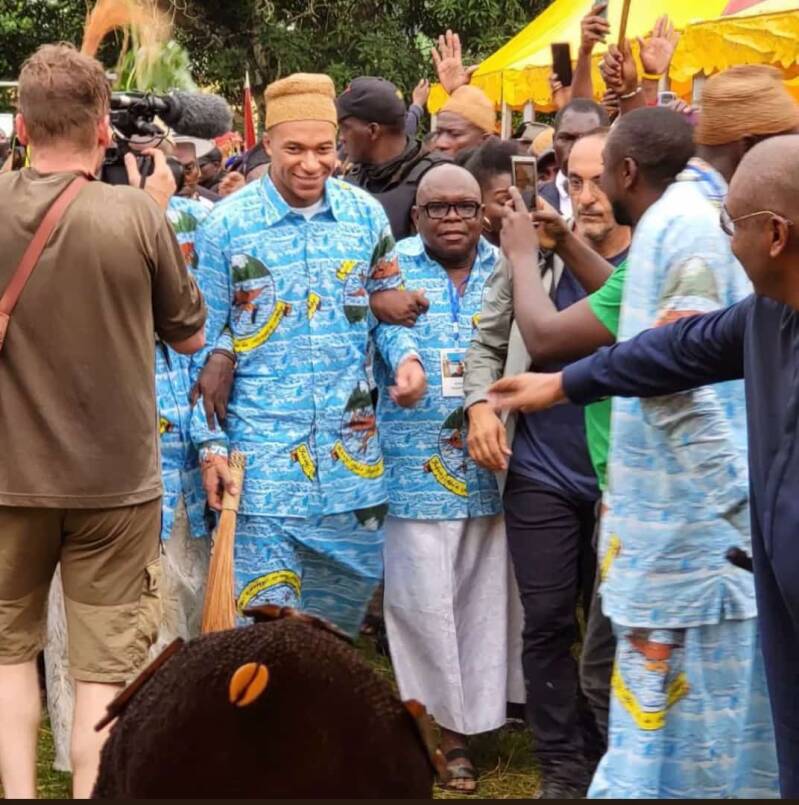
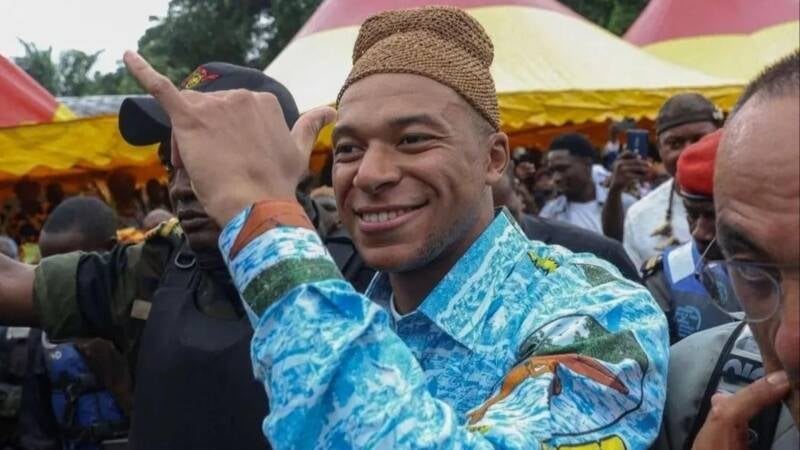
Mbappé, Cameroon, and the Cost of Wasted African Talent
By Dr. Akwo Thompson Ntuba (Please confirm political information with trusted sources.)
Kylian Mbappé, a French citizen of Cameroonian origin and a former World Cup champion, will take the field in North America during the 2026 FIFA World Cup wearing the blue jersey of France. His presence on that global stage is a reminder of both African brilliance and African loss. Mbappé proudly acknowledges his Cameroonian roots, yet he represents France—not Cameroon—because the systems that should have nurtured him at home were never built.
His story is not unique. It is the story of a continent that repeatedly loses its brightest talents to nations with stronger institutions, better governance, and clearer pathways for development. Africa’s problem is not a lack of gifted youth; it is the chronic failure to create environments where those gifts can flourish.
In Cameroon, this failure is tied to long-standing issues:
-
governance structures that prioritize political survival over national progress
-
tribal favoritism that undermines merit
-
life‑presidency politics that suffocate innovation
-
institutions weakened by corruption and mismanagement
-
a climate where speaking against wrongdoing can be dangerous
These conditions push many talented Cameroonians—athletes, scientists, doctors, engineers—to seek opportunities elsewhere. Mbappé is simply the most visible example.
When the 2026 World Cup unfolds across the United States, Canada, and Mexico, the world’s attention will be immense. Major global media outlets, including those headquartered in the United States, will broadcast every moment. Africa will watch its diaspora shine on foreign soil, while many African nations continue to struggle with the same governance failures that drive talent away.
As founder of a U.S.-based media and global health organization, I—Dr. Akwo Thompson Ntuba—am deeply involved in preparations for the 2026 World Cup. My work with U.S. authorities focuses on ensuring health security during the tournament, including monitoring outbreaks such as Ebola in the Democratic Republic of Congo and assessing any potential impact on international travel and sporting events. As an international physician engaged in sports medicine, public health, and nutrition, I continue to research the intersection of global health and global sports.
This work highlights a painful truth: Africa has the human capacity to lead, but it often lacks the governance to retain its own leaders.
Mbappé’s success is a celebration of African heritage, but it is also a mirror held up to the continent. It forces us to confront the reality that talent thrives where systems support it. Nations that fail to invest in youth, sports infrastructure, and transparent governance will continue to watch their brightest stars shine elsewhere.
The 2026 World Cup will be a global spectacle. It will showcase the best of football, the best of media, and the best of international cooperation. But it will also remind Africa of what it loses when it allows politics to overshadow development.
If Cameroon and other African nations want to keep their future Mbappés, they must build systems worthy of their children’s dreams. They must create environments where talent is nurtured, not wasted; where governance serves the people, not individuals; and where national pride is rooted in achievement, not ceremony.
Until then, the world will continue to celebrate African excellence—just not under African flags.
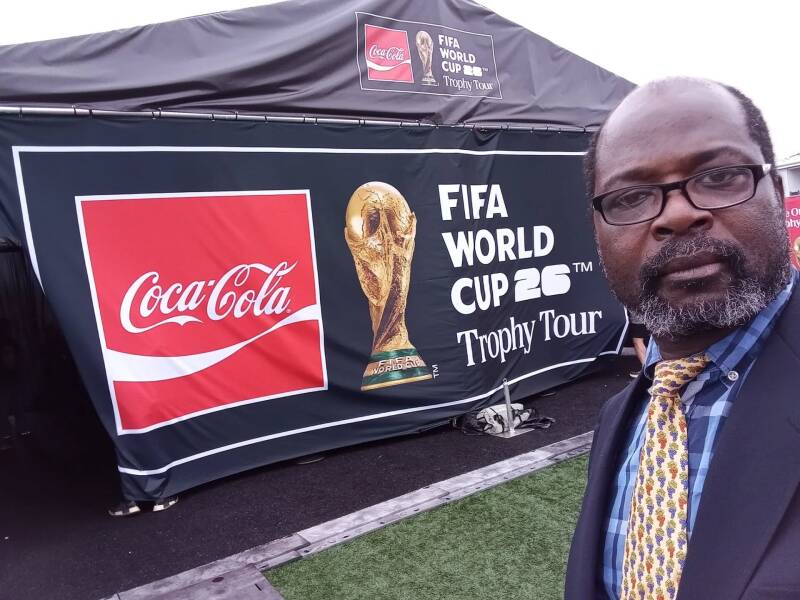
African Football, Merit, and the Silence of the Unqualified
by DR AKWO THOMPSON NTUBA
In global football, the World Cup is not a charity event. It is not a cultural festival where every nation receives a participation ribbon. It is the highest stage of competition, reserved for teams that have earned their place through discipline, strategy, and excellence. For that reason, any African country that failed to qualify has no moral standing to lecture, distract, or insert itself into the achievements of those who did. Silence is not humiliation—it is respect for merit.
Africa’s football heroes are the nations that fought through qualifiers, overcame adversity, and proved themselves on the pitch. These are the teams that carried the hopes of the continent with dignity. They deserve our full attention, our support, and our celebration. They do not need noise from the sidelines, especially from governments or federations that could not build competitive teams at home.
The truth is uncomfortable but necessary: If you did not qualify, you did not perform. And if you did not perform, you should not overshadow those who did.
This is not about shaming nations. It is about confronting the reality that African football suffers when mediocrity is tolerated. Too many countries invest more in political ceremonies than in youth development. Too many leaders prefer stadium speeches to actual sports infrastructure. Too many federations are run like private estates rather than professional institutions.
When such nations fail to qualify, the failure is not mysterious. It is predictable.
Meanwhile, the qualified teams—the true African heroes—represent something different. They show what is possible when talent is nurtured, when coaching is respected, and when football is treated as a national project rather than a political accessory. Their success is not accidental; it is earned.
This is why the unqualified must step aside. Not out of shame, but out of recognition that progress begins with humility.
Africa cannot rise in global sports if its own members refuse to acknowledge the gap between effort and outcome. The continent cannot demand respect from the world while refusing to respect the standards of competition. And it certainly cannot build a future of football excellence if it continues to reward noise over results.
Let the qualified teams carry the African flag. Let the continent rally behind them without distraction. Let the unqualified return home, reflect, rebuild, and prepare—not complain.
Because in football, as in life, achievement speaks louder than excuses.
And Africa deserves a future where its heroes are celebrated for their victories, not drowned out by the voices of those who did not earn a place on the world stage.
North American World Cup 2026 and the Expanding Ebola Threat from the DRC: A Physician‑Communicator’s Warning
North American World Cup 2026 and the Expanding Ebola Threat from the DRC: A Physician‑Communicator’s Warning.
As I participate in the 79th World Health Assembly and engage with global health leaders on the recent Ebola outbreak in the Democratic Republic of the Congo and its spread into neighboring countries, I am reminded once again that disease does not respect borders, politics, or the comfort of our assumptions. It moves according to biology, ecology, and human behavior. And in 2026, the world is preparing for one of the largest mass‑gathering events in modern history—the North American World Cup.
Millions will travel. Among them will be thousands of supporters from African nations, including those from regions where Ebola has historically emerged and where new cases are now being reported. This is not a call for fear. It is a call for preparedness—something the world has repeatedly failed to prioritize until crisis is already upon us.
I have spent years working at the intersection of global health, governance, and communication. My work with Health Consulting International, my engagements with the World Health Organization, and my field deployments across the United States during COVID‑19 have taught me a simple truth: preparedness is not an event; it is a culture. And right now, that culture is dangerously weak.
The United States remains partially disengaged from the WHO. Coordination between WHO and the CDC is fractured. USAID’s global health capacity has been weakened by years of political disruption. These gaps matter. They matter because Ebola is not a theoretical threat. It is a real virus with a real chain of transmission, and it thrives in environments where surveillance is weak, communication is poor, and political will is inconsistent.
In my work, I often speak of the Five Ds—a framework that helps leaders understand the full landscape of a health threat:
Disease – the pathogen itself, its biology, its behavior.
Determinants – the social, political, economic, and environmental factors that shape vulnerability.
Distributions – where the disease is, where it is moving, and who is most at risk.
Diagnosis – the systems that detect, confirm, and report cases.
Drugs (Treatments) – the tools we have to respond, from vaccines to therapeutics to supportive care.
Applied to the current Ebola situation, the Five Ds reveal a troubling picture.The disease remains deadly.The determinants—conflict, displacement, weak health systems—are worsening in parts of Central Africa.The distribution is expanding across borders.The diagnostic capacity in many regions remains fragile.And while treatments exist, they are not universally accessible.
Now add the World Cup: a global convergence of people, cultures, and mobility.Mass gatherings amplify risk—not because travelers bring disease intentionally, but because pathogens exploit opportunity.
The world cannot afford complacency.North America cannot assume distance equals safety.And global institutions cannot continue operating in silos.
We need coordinated surveillance at points of entry.We need harmonized WHO–CDC protocols.We need USAID fully restored to its global health mandate.We need communication strategies that reach communities—not just governments.And above all, we need political courage.
I have seen what happens when preparedness is strong.I have also seen what happens when it is not.The difference between the two is measured not only in lives lost but in trust broken.
As the world turns its eyes toward the 2026 World Cup, I urge leaders to remember that global health security is not a luxury. It is the foundation upon which safe societies—and safe celebrations—are built.
The virus does not wait.Neither should we.
— Dr. Ntuba Akwo Thompson Global Physician‑CommunicatorHealth Consulting InternationalWorld Health Assembly Delegate
Folarin Balogun — Who He Is on the USMNT
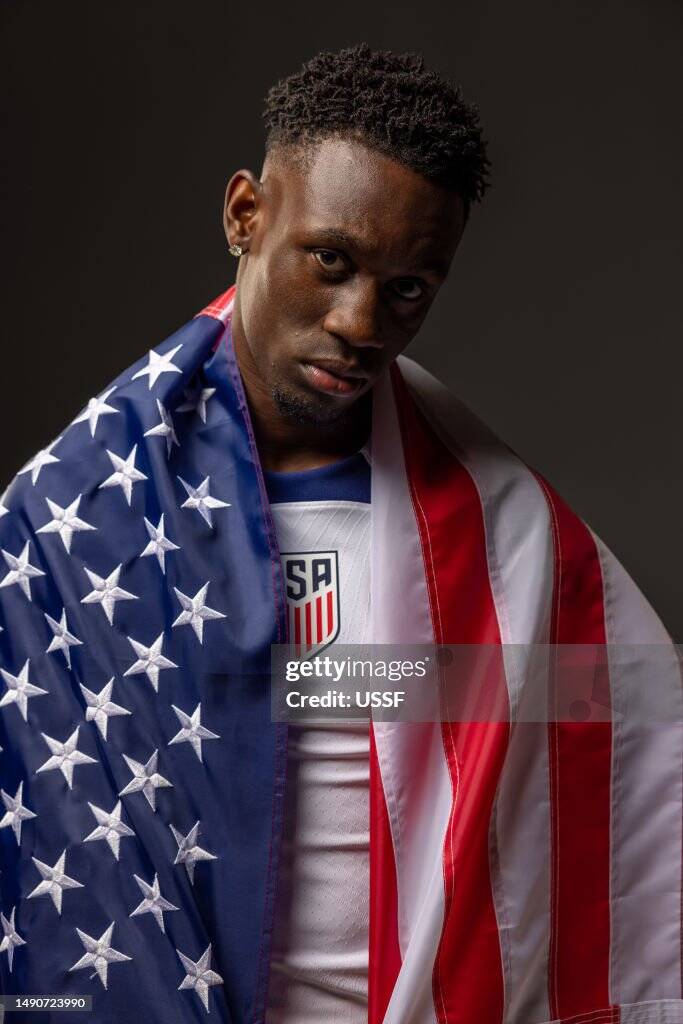
Folarin Balogun — Who He Is on the USMNT
Folarin Balogun is one of the United States Men’s National Team’s most important attacking players — a fast, clinical striker who gives the U.S. a true No. 9 threat.
⭐ Quick Profile
-
Full name: Folarin Jerry Balogun
-
Position: Striker (Center Forward)
-
Born: July 3, 2001 (New York City)
-
Raised: London, England
-
Club: AS Monaco (France)
-
National Team: United States (committed in 2023)
🔥 Why He’s a Big Deal for the USA
Balogun gives the U.S. something they’ve lacked for years: a natural goal‑scoring striker who can finish chances, run behind defenses, and create danger on his own.
His strengths:
-
Explosive acceleration
-
Sharp finishing with both feet
-
Smart movement in the box
-
Strong link‑up play
-
Fearless in 1v1 situations
🌎 International Impact
Balogun chose the USA over England and Nigeria — a massive win for the USMNT. Since joining, he’s become a centerpiece of the attack, especially in big tournaments like the 2026 World Cup.
In Week One of the tournament, he scored two goals against Paraguay, instantly becoming one of the standout performers.
⚽ Why You’ll Hear His Name All Tournament
He’s:
-
The USA’s most natural finisher
-
A rising global star
-
A player who thrives in high‑pressure moments
-
One of the faces of the USMNT’s new generation