

Leadership in a fragmented world
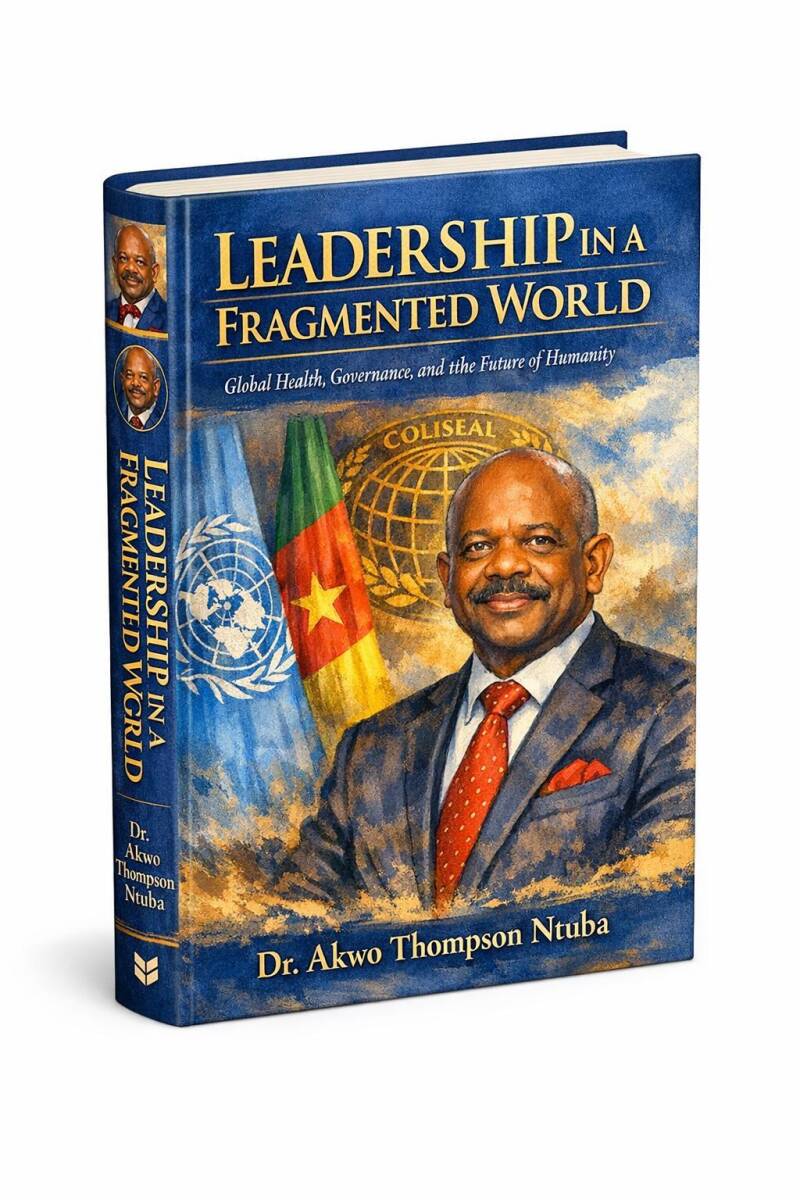
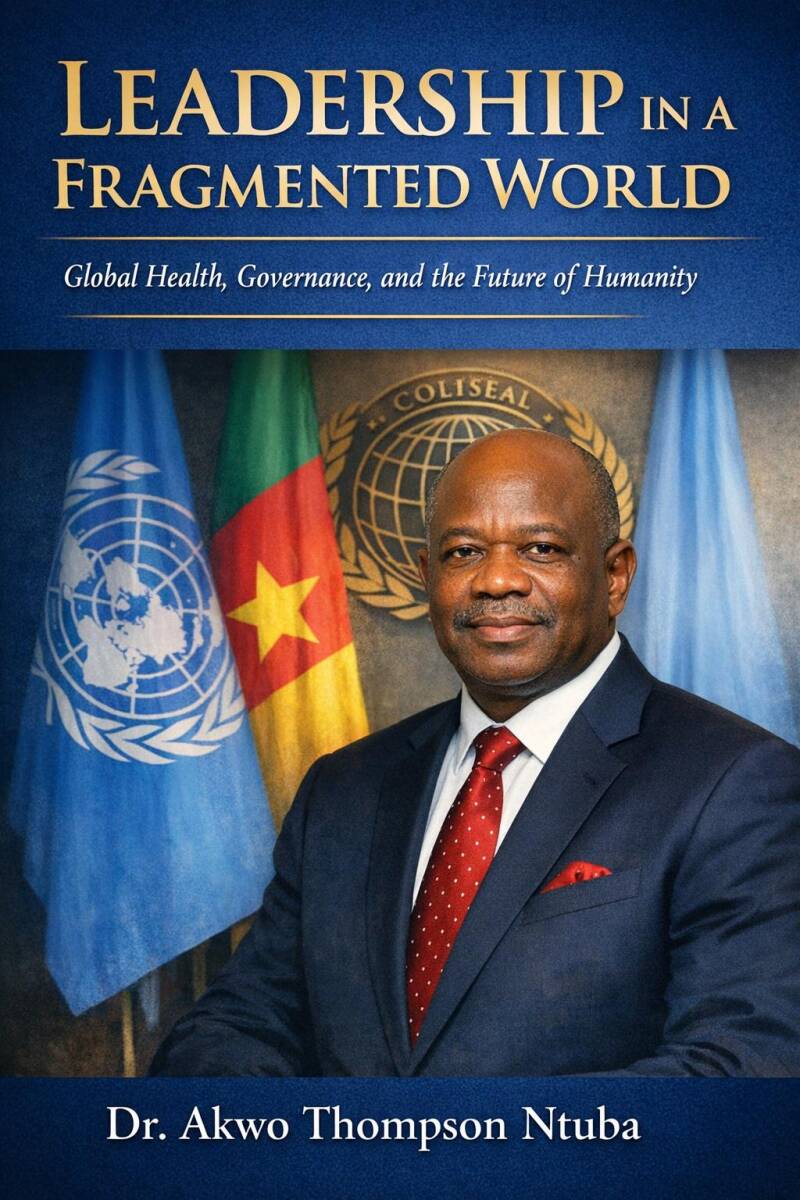
Explore the insights of Dr. Akwo Thompson Ntuba's book on United Nations fragmentation, WHO, World Bank finance, global health, and the future of humankind. This page aims to inspire a return to global cooperation and multilateralism.

Addressing global fragmentation
In a world increasingly marked by fragmentation and disruptive leadership, the need for global cooperation and multilateralism in tackling shared goals and global health issues has never been more critical. This page, inspired by Dr. Akwo Thompson Ntuba's work, highlights these pressing challenges.

Insights for a global community
This resource is designed for the global community, new managers, experienced executives, and small business owners alike. It encourages a deep dive into the complexities of international relations and health policies, fostering a collective understanding of our interconnected future.

HEALTHNDEVELOPMENT's unique perspective
HEALTHNDEVELOPMENT offers a unique solution by presenting resources gathered over many years from multilateral organizations and national leadership work. Our editorial pages and other sections, including energy, health, education, sports, and development, provide comprehensive insights into these global challenges.
Dedication
Acknowledgments
Foreword
Preface
Introduction
PART I — THE GUTERRES DECADE: A NEW ERA OF GLOBAL GOVERNANCE
Chapter 1 — The World in Transition
Chapter 2 — The UN’s Evolving Mandate
Chapter 3 — Leadership at the Global Level
Chapter 4 — Multilateralism Under Pressure
PART II — WHO IN THE 21ST CENTURY
Chapter 5 — WHO’s Mandate and Mission
Chapter 6 — Global Health Security Before COVID‑19
Chapter 7 — WHO’s Leadership in Crisis
Chapter 8 — COVID‑19: The Defining Global Health Crisis
Chapter 9 — Infodemic Management and Risk Communication
Chapter 10 — WHO Regional Governance
PART III — THE WORLD BANK AND GLOBAL HEALTH FINANCING
Chapter 11 — The World Bank’s Expanding Health Portfolio
Chapter 12 — Financing the Pandemic Response
Chapter 13 — The Human Capital Approach After COVID‑19
Chapter 14 — The World Bank’s Role in Global Health Security
Chapter 15 — Financing Resilient Health Systems
Chapter 16 — The Future of World Bank Health Financing
PART IV — THE FUTURE OF GLOBAL HEALTH GOVERNANCE
Chapter 17 — The Next Decade of Global Health Governance
Chapter 18 — The Role of Leadership in the Next Era
Chapter 19 — Cities as Global Health Actors
Chapter 20 — Principled Leadership in a Fragmented World
PART V — EPILOGUE
Epilogue — A World Rebuilt, A Future Reimagined
Appendices
Appendix A — Global Health Governance Timeline
Appendix B — Leadership Frameworks
Appendix C — Preparedness Tools
Appendix D — Visual Appendix (full narrative + diagrams)
Dedication
By Dr. Akwo Thompson Ntuba
This book is wholly and lovingly dedicated to Governor Walson Mboe Ntuba— the man who stood as a father to me, who shaped my destiny long before the world knew my name.
To the one who guided my early life with wisdom, who believed in my future when it was still fragile, who paid my school fees faithfully through my third year of medical school, until the Government of Cameroon awarded me a scholarship to continue my training.
To the one whose leadership journey—from India to the United Kingdom, from Europe to the World Bank, from national service to global influence— became a living textbook for me, a model of excellence, discipline, humility, and global statesmanship.
To the one whose example taught me that leadership is service, service is sacrifice, and sacrifice is love.
To the one whose life opened doors for me, whose counsel steadied me, whose generosity carried me, and whose global vision inspired my own.
To Governor Walson Mboe Ntuba— my father in every way that matters, my mentor, my compass, my foundation.
This book is your legacy as much as mine.
Foreword
By Dr. Akwo Thompson Ntuba
We are living through an era defined by fragmentation—political, social, economic, environmental, and moral. The systems built after World War II are straining under the weight of pandemics, climate change, geopolitical rivalry, misinformation, and declining trust. Yet in every crisis, I have witnessed extraordinary resilience, innovation, and leadership.
This book is my attempt to document the lessons of a lifetime spent working across continents, institutions, and crises. It is a reflection on what I have seen—from the halls of the United Nations to the streets of Kumba, from WHO briefings in Geneva to emergency rooms in Houston, from climate summits to city council chambers.
It is also a call to action.
The next era of global health governance will not be shaped by institutions alone. It will be shaped by leaders—leaders who are principled, courageous, compassionate, and committed to justice. Leaders who understand that cities are now global actors. Leaders who recognize that climate change is the defining health challenge of our time. Leaders who believe that communication is diplomacy, and that trust is the currency of governance.
This book is written for those leaders.
May it serve as a guide, a mirror, and an invitation to imagine a world rebuilt and a future reimagined.
Preface
By Dr. Akwo Thompson Ntuba
For more than thirty years, I have worked at the intersection of global health, governance, communication, and development. My journey has taken me from Africa to Europe to the United States, from city halls to global summits, from community clinics to international institutions.
Along the way, I have learned that leadership is the most powerful determinant of global health outcomes. Systems matter. Financing matters. Institutions matter. But leadership—principled, ethical, courageous leadership—is what determines whether societies rise or fall.
This book was born out of that conviction.
It brings together the lessons of my work with:
-
Cities across Africa, Europe, and the United States
-
WHO, during the most consequential pandemic in a century
-
The World Bank, under transformative leadership
-
The United Nations, during a period of global fragmentation
-
Democratic transitions in Africa and Latin America
-
Climate‑health diplomacy, especially through C40 Cities
-
Urban governance, where global challenges become local realities
-
Global health communication, where trust is built or broken
It is also shaped by my own leadership philosophy, articulated in Dominion Recovery, which argues that leadership must be rooted in restoration, stewardship, responsibility, service, and moral courage.
This book is not simply an analysis of global health governance. It is a roadmap for the future. A future that must be reimagined. A world that must be rebuilt. A leadership that must be renewed.
I offer it with humility, gratitude, and hope.
Introduction
By Dr. Akwo Thompson Ntuba
The world stands at a crossroads. The systems that once held nations together—global health institutions, multilateral alliances, democratic norms, and shared commitments to human dignity—are straining under the weight of pandemics, climate emergencies, geopolitical rivalry, misinformation, and declining trust. Yet in the midst of this fragmentation, I have witnessed extraordinary resilience, innovation, and leadership across continents.
This book is the story of that world—its fractures, its possibilities, and its future. It is also the story of my own journey through global health, governance, communication, and development over more than three decades. From the classrooms of Cameroon to the hospitals of Nigeria, from the streets of Paris and Milan to the city halls of Houston and New Orleans, from WHO briefings in Geneva to World Bank consultations in Washington, from democratic transitions in Africa to climate‑health diplomacy in Europe and the United States—I have lived inside the systems that shape global health governance.
This book is also a tribute to the man who made that journey possible: Governor Walson Mboe Ntuba, who stood as a father to me, guided my early life, paid my school fees through my third year of medical school, and whose global leadership—from India to the United Kingdom, from Europe to the World Bank—became the foundation of my own. His example taught me that leadership is service, service is sacrifice, and sacrifice is love. His life is woven into every page of this work.
A World in Fragmentation
The world I have observed is increasingly fragmented. I witnessed fragmentation when:
-
The United States withdrew from the World Health Organization under President Donald Trump, and the U.S. flag was symbolically lowered in Geneva.
-
The Russia–Ukraine war fractured global consensus and redirected resources away from health and development.
-
China and Russia asserted new forms of global influence, reshaping multilateral institutions.
-
Democratic transitions in Africa and Latin America revealed both hope and fragility.
-
The WHO Pandemic Accord negotiations exposed deep divisions over sovereignty, equity, and global solidarity.
-
Climate change accelerated health emergencies across cities and continents.
Fragmentation is not an academic concept—it is a lived reality that affects health, governance, peace, and human dignity.
The Rise of Cities as Global Actors
My work across cities—from Lagos, Douala, and Kumba to Paris, Milan, Frankfurt, New York, Washington, D.C., Houston, San Francisco, Seattle, Minneapolis, and New Orleans—has shown me that cities are now the frontline of global governance.
During COVID‑19, cities acted while nations debated. During climate emergencies, cities innovated while global systems stalled. During democratic transitions, cities became centers of civic leadership.
Cities are where global challenges become local realities—and where local solutions become global models.
This book argues that the future of global health governance will be urban, climate‑aware, community‑centered, and communication‑driven.
Leadership as the Decisive Force
Across every crisis I have witnessed, one truth has remained constant:
Leadership determines outcomes.
Systems matter. Financing matters. Institutions matter. But leadership—principled, ethical, courageous leadership—is what determines whether societies rise or fall.
In my book Dominion Recovery, I articulated a leadership philosophy rooted in:
-
Restoration
-
Responsibility
-
Stewardship
-
Service
-
Moral courage
These principles form the backbone of this book. They are the antidote to fragmentation.
The Architecture of This Book
This book is organized into five major parts, each reflecting a dimension of global health governance as I have lived and observed it.
Part I — Foundations of a Fragmented World
Examines the forces reshaping global governance: pandemics, climate change, geopolitical rivalry, and declining trust.
Part II — The Evolution of Global Health Governance
Traces the history of WHO, the World Bank, the UN, and the rise of new global health actors.
Part III — Cities as Global Health Governors
Explores how cities have become central to global health, climate resilience, and governance.
Part IV — The Future of Global Leadership
Analyzes the leadership qualities needed in the next era, including the upcoming UN Secretary‑General transition.
Part V — Epilogue: A World Rebuilt, A Future Reimagined
Offers a vision for a principled, resilient, and united world.
The appendices provide tools, frameworks, diagrams, and case studies for leaders, students, policymakers, and practitioners.
Why This Book Matters Now
The world is entering a decade of uncertainty. Pandemics will return. Climate shocks will intensify. Cities will grow. Geopolitical tensions will deepen. Multilateral institutions will be tested.
But uncertainty is not destiny.
This book argues that the next era of global health governance can be stronger, more just, and more resilient—if leadership is principled, if cities are empowered, if communication is trusted, and if multilateralism is renewed.
A Personal Invitation
This book is not simply an analysis. It is a call to action.
To leaders: lead with principle. To cities: rise with courage. To institutions: reform with humility. To communities: demand justice. To the next generation: imagine boldly.
The world can be rebuilt. The future can be reimagined. Leadership can be renewed.
This is the work of our time. And it begins here.
CHAPTER 1 — THE WORLD IN TRANSITION
Essay by Dr. Akwo Thompson Ntuba
The world of the early twenty‑first century is defined by transition—rapid, multidimensional, and often disorienting. Nations, institutions, and communities find themselves navigating a landscape shaped by unprecedented interdependence and equally unprecedented fragmentation. As a physician, global health and development expert, and advocate for the science of communication, I see this transition not merely as a geopolitical shift but as a profound transformation in how humanity understands itself, organizes its systems, and confronts shared vulnerabilities.
This chapter explores the contours of this transition: the forces reshaping global governance, the crises revealing systemic weaknesses, and the opportunities emerging for a more cooperative and humane world order.
1. A Multipolar World Without a Shared Compass
The post–Cold War assumption of a stable, unipolar world has dissolved. Power is now distributed across multiple centers—economic, technological, military, and ideological. Yet this multipolarity has not produced balance; instead, it has generated uncertainty.
-
Traditional alliances are strained
-
Emerging powers seek recognition and influence
-
Global institutions struggle to adapt
-
Citizens question the legitimacy of governance structures
This transition is not simply about who holds power, but about how power is exercised and whether it serves the collective good. The absence of a shared global compass has made cooperation more difficult at precisely the moment when it is most needed.
2. Crises as Catalysts for Transformation
The defining crises of our time—pandemics, climate change, forced migration, economic inequality, and digital disruption—are not isolated events. They are interconnected manifestations of deeper structural weaknesses.
The COVID‑19 pandemic, in particular, exposed the fragility of global systems. It revealed:
-
The limits of nationalistic approaches to global threats
-
The consequences of underinvesting in public health
-
The dangers of misinformation and communication failures
-
The inequities that determine who lives and who dies
As I have long argued, health is the mirror of society. When health systems fail, it is because governance, communication, and social structures have failed. Crises, therefore, become catalysts—forcing societies to confront uncomfortable truths and compelling institutions to evolve.
3. The Communication Revolution and the Battle for Truth
One of the most profound transitions of our era is the transformation of communication. Information now moves faster than institutions can respond. The democratization of communication has empowered millions, but it has also created new vulnerabilities.
We face:
-
An erosion of trust in public institutions
-
The weaponization of misinformation
-
The rise of polarized digital communities
-
A crisis of credibility in science and governance
For global health and development, this is a defining challenge. No policy, no vaccine, no intervention succeeds without trust. The science of communication—clear, culturally grounded, evidence‑based messaging—has become a strategic necessity for global governance.
In this transition, communication is not a tool; it is infrastructure. It shapes perception, influences behavior, and determines whether societies can mobilize in times of crisis.
4. Inequality as the Central Fault Line
Despite technological progress and economic growth, inequality remains the central fault line of the global transition. It manifests in:
-
Access to healthcare
-
Educational opportunities
-
Digital connectivity
-
Climate vulnerability
-
Political representation
The pandemic revealed a world where some nations secured surplus vaccines while others waited for basic supplies. Climate change disproportionately affects those who contributed least to the problem. Digital divides determine who participates in the global economy and who is left behind.
A world in transition must confront the moral and practical implications of inequality. Without equity, global stability is impossible.
5. The Rise of Human Security as a Global Priority
Traditional notions of security—focused on borders and military strength—are giving way to a broader understanding of human security. This transition reflects a recognition that threats to well‑being are increasingly non‑military:
-
Disease outbreaks
-
Environmental degradation
-
Food insecurity
-
Economic shocks
-
Social fragmentation
Human security places individuals and communities at the center of governance. It aligns with my long-standing belief that development must be people‑centered, rights‑based, and grounded in dignity. This shift represents one of the most hopeful aspects of the global transition.
6. Toward a New Architecture of Global Cooperation
The world in transition demands a new architecture of cooperation—one that is inclusive, networked, and adaptive. The old model of top‑down multilateralism is insufficient for the complexity of modern challenges.
The future requires:
-
Stronger regional institutions
-
Partnerships between governments, civil society, and the private sector
-
Integration of scientific expertise into policymaking
-
Investment in communication systems that build trust
-
Governance frameworks that prioritize equity and resilience
This transition is not merely institutional; it is philosophical. It calls for a renewed commitment to shared humanity and collective responsibility.
Conclusion: Navigating the Transition with Purpose
The world in transition is a world of uncertainty, but also a world of possibility. The forces reshaping global governance, health, and development present both risks and opportunities. Whether this transition leads to fragmentation or renewal depends on the choices we make today.
As we move forward, we must embrace communication as a science, equity as a principle, and cooperation as a necessity. The transition is not something happening to us—it is something we must shape with intention, wisdom, and courage.
This chapter sets the stage for a deeper exploration of the systems, institutions, and leadership models required to guide humanity through this transformative era.
CHAPTER 2 — THE UN’S EVOLVING MANDATE
By Dr. Akwo Thompson Ntuba
The United Nations was born out of the ashes of war, but it now operates in the turbulence of a world transformed. As someone who has worked across global health, development, and communication systems, I have witnessed firsthand how the UN’s mandate has expanded, stretched, and adapted to meet the demands of a rapidly changing world. The UN of today is not the UN of 1945, nor should it be. Its mandate evolves because humanity evolves, and the challenges we face require institutions capable of learning, listening, and leading.
The UN’s evolving mandate is not merely institutional; it is moral. It reflects the shifting expectations of a global population that increasingly understands its interconnectedness. Pandemics, climate change, migration, digital disruption, and widening inequalities have forced the world to rethink what global governance must look like. In this chapter, I explore how the UN’s mandate has transformed—and must continue to transform—to remain relevant in a world defined by complexity and interdependence.
1. From Peacekeeping to People‑Centered Governance
The UN’s original mandate centered on preventing war and maintaining peace. But peace today is not only the absence of conflict; it is the presence of justice, health, dignity, and opportunity. As a physician, I have seen how instability manifests in the human body—through malnutrition, disease, trauma, and despair. Peacekeeping without people‑centered development is an incomplete mission.
Over the decades, the UN has expanded its work to include:
-
Human rights
-
Sustainable development
-
Public health
-
Climate action
-
Humanitarian response
-
Gender equality
This expansion is not mission creep; it is mission clarity. The UN has come to understand that peace is impossible without development, and development is impossible without health. This integrated approach reflects the realities of the communities I have served, where health outcomes are inseparable from political, economic, and social conditions.
2. The Rise of Global Health as a Core Mandate
My own professional journey has shown me how global health has moved from the periphery of international affairs to the center of global security. The COVID‑19 pandemic made this shift undeniable. Health is now recognized as a pillar of global governance, not a technical sector.
The UN’s evolving mandate includes:
-
Coordinating global pandemic preparedness
-
Strengthening health systems
-
Supporting universal health coverage
-
Addressing misinformation and communication failures
-
Ensuring equitable access to vaccines and therapeutics
These responsibilities reflect a truth I have long emphasized: health is the foundation of human security. Without healthy populations, no nation can achieve stability or prosperity. The UN’s mandate has evolved to reflect this reality, integrating health into peacebuilding, humanitarian response, and sustainable development.
3. Communication as a Strategic Mandate
One of the most significant shifts in the UN’s mandate—though often overlooked—is the recognition of communication as a strategic function of governance. In my work across continents, I have seen how communication determines whether policies succeed or fail. The UN has increasingly embraced communication as a tool for:
-
Countering misinformation
-
Building trust in institutions
-
Mobilizing communities
-
Supporting behavior change
-
Facilitating diplomacy
The pandemic revealed that the world does not suffer from a lack of information, but from a lack of trusted, culturally grounded communication. The UN’s evolving mandate must continue to prioritize communication science, ensuring that global messages resonate with local realities.
4. Multilateralism in a Fragmented World
The UN’s mandate is evolving in a world where multilateralism is under strain. Geopolitical tensions, economic rivalries, and ideological divisions threaten the spirit of cooperation that the UN was built upon. Yet, paradoxically, global challenges have never required cooperation more urgently.
The UN now operates as:
-
A convener of diverse actors
-
A mediator in polarized environments
-
A platform for scientific and technical collaboration
-
A guardian of global norms and values
This expanded role requires agility, humility, and innovation. It also requires the UN to listen—to governments, to civil society, to youth, and to communities whose voices have historically been marginalized. The evolving mandate is not only about doing more; it is about doing differently.
5. Equity as the Moral Core of the UN’s Mandate
If there is one theme that defines the UN’s evolution, it is equity. The world has become more unequal, and inequality has become more visible. The UN’s mandate increasingly centers on correcting structural injustices that undermine global stability.
This includes:
-
Climate justice
-
Vaccine equity
-
Fair economic systems
-
Protection of vulnerable populations
-
Gender and racial equality
In my work, I have seen how inequity manifests in health outcomes, educational opportunities, and access to information. The UN’s evolving mandate must continue to confront these disparities with courage and clarity.
6. A Mandate for the Future: Adaptive, Inclusive, and Human‑Centered
The UN’s future mandate must be adaptive—capable of responding to emerging threats such as artificial intelligence misuse, cyber insecurity, and new forms of conflict. It must be inclusive—bringing in voices from the Global South, indigenous communities, and youth movements. And it must be human‑centered—grounded in dignity, rights, and the lived experiences of people around the world.
The UN’s evolving mandate is not a departure from its founding principles; it is their fulfillment. The world has changed, and the UN must change with it. But its core mission remains the same: to safeguard humanity, promote peace, and advance the well‑being of all people.
Conclusion: The Mandate of Shared Humanity
As I reflect on my experiences in global health and development, I see the UN’s evolving mandate as a reflection of humanity’s evolving needs. The challenges we face today are interconnected, and so must be our responses. The UN’s mandate is no longer confined to diplomacy and conflict resolution; it now encompasses the full spectrum of human security.
The evolution of the UN’s mandate is a testament to the resilience of multilateralism and the enduring belief that we are stronger together than apart. In this new era, the UN must continue to lead—not with power, but with purpose; not with authority, but with empathy; not with rigidity, but with vision.