

Understanding the World Health Assembly 2026
Discover the vital role of the World Health Assembly (WHA), the main decision-making body of the World Health Organization (WHO). Learn about its annual meetings in Geneva and the global health issues that affect us all.

The global forum for health decisions
The World Health Assembly brings together delegations from all member states in Geneva every May. This critical gathering serves as the principal decision-making body of the World Health Organization. Here, nations unite to discuss and shape global health policies that impact billions worldwide.

Addressing pressing global health issues
The WHA tackles critical global health issues, including the pandemic accord, disaster work of the WHO, epidemics, pandemics, chronic diseases, and infectious diseases. These discussions lead to resolutions and strategies that protect and promote the health of all people.

A holistic view of well-being
We aim to reach the general global public interested in health as a complete state of physical, social, mental, and spiritual well-being. These are considered the determinants of health, and the WHA's work directly impacts these crucial aspects of human life.
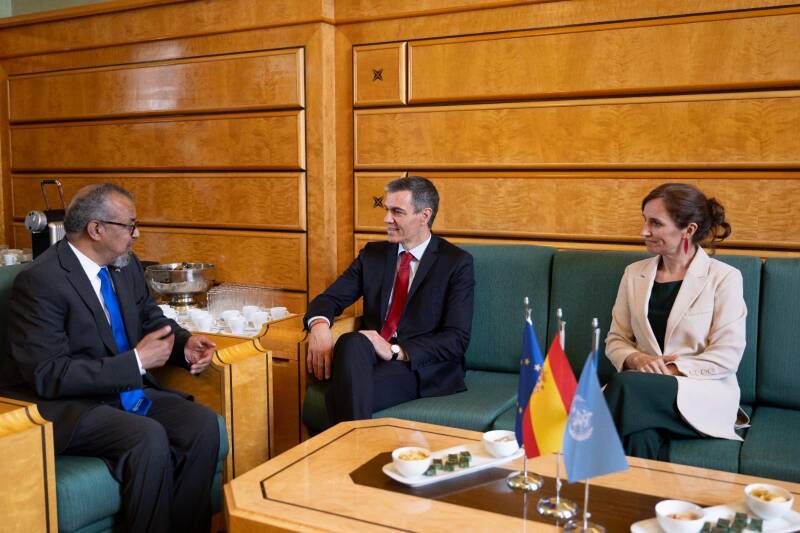
Director-General presents Award for Global Health to four distinguished leaders
Geneva, 18 May 2026 -- At the Seventy-ninth World Health Assembly in Geneva, WHO Director-General Dr Tedros Adhanom Ghebreyesus has presented four distinguished leaders with the Award for Global Health, recognizing their lifetime achievements and exceptional contributions to improving the health and well-being of communities worldwide.
This year’s laureates are Dr Tore Godal, Dr Merceline Dahl-Regis, Dr Mike Ryan and Dr Heba El Sewedy. They were celebrated during the High-Level Welcome of the World Health Assembly (WHA), held this year under the theme “Reshaping global health: a shared responsibility.”
Established in 2019, the Director-General’s Awards for Global Health recognize individuals whose leadership and commitment have delivered tangible improvements in health outcomes around the world.
“I am honoured to present the Global Health Leaders Awards to four individuals who have made outstanding lifetime contributions to global health,” said Dr Tedros.
Dr Tore Godal was recognized for his transformative leadership in immunization and infectious diseases. Throughout his distinguished career, he played a pivotal role in elevating vaccines as a global development priority and helped establish major initiatives including Gavi, the Vaccine Alliance, Roll Back Malaria and CEPI, the Coalition for Epidemic Preparedness Innovations. He also played a pivotal role in the fight against neglected diseases when leading WHO’s Tropical Diseases Programme, and expanding work on leprosy and malaria. He helped expand community-based ivermectin distribution and onchocerciasis control efforts, which contributed to protecting large populations from river blindness. Dr Godal’s work has translated scientific research into large-scale public health action, protecting millions of lives.
Dr Merceline Dahl-Regis was recognized for her lifelong commitment in expanding immunization and disease elimination in the Region of the Americas and beyond. Her contributions were instrumental in achieving the elimination of measles and rubella in the Americas—the first region in the world to reach this milestone. Her advocacy and support of the regional Dual Elimination Initiative also supported the elimination of mother-to-child transmission of syphilis and HIV in the Americas. Through research, community engagement and regional collaboration, she has advanced a holistic approach to health and development and had a profound impact on the lives of many people in the Americas and globally.
Dr Mike Ryan was honoured for his leadership in strengthening global preparedness for and response to health emergencies. A founder of the Global Outbreak Alert and Response Network (GOARN), he has shaped international systems for detecting and responding to epidemics, and ―when serving as the Executive Director of WHO’s Health Emergencies Programme―led operational responses to SARS, cholera, Ebola, polio and COVID-19. His leadership during major outbreaks and humanitarian crises working in some of the most challenging environments has demonstrated an unwavering commitment to protecting vulnerable communities and advancing global health security.
Dr Heba Elsewedy received the award for her dedication to humanitarian action and social justice. Through the Ahl Masr Foundation, which she founded in 2013, she has pioneered comprehensive approaches to the prevention and treatment of trauma and burn injuries, while promoting awareness, dignity and the reintegration of survivors. Dr Heba Elsewedy's foundation has been instrumental in providing medical and psychological support to burn victims, as well as humanitarian aid to those affected by the Gaza conflict. Her work has transformed lives and stands as a model of compassionate, people-centred care, and a source of inspiration for many young public health advocates.
From steering large-public health actions, to leading scientific innovations, engaging with communities and protecting people against emergencies and infectious diseases, the 2026 awardees reflect the diversity of approaches needed to achieve the highest possible level of health for all. Their achievements serve as a source of inspiration for current and future generations working for a healthier, safer and more equitable world for all.

WHO Director-General's closing remarks at the 79th World Health Assembly – 23 May 2026
23 May - Geneva
Honourable President of the World Health Assembly, Dr Victor Atallah,
Excellencies, Honourable ministers, dear colleagues and friends,
Mr President, I offer my deep gratitude for your leadership of the 79th World Health Assembly.
I have very much appreciated the way you have led this Health Assembly with wisdom, a steady hand, good grace, a dose of humour and Dominican style.
It gives me great pleasure to present you with the ceremonial gavel as a token of our appreciation. Thank you once again for your leadership.
[THE DIRECTOR-GENERAL PRESENTED MINISTER ATALLAH WITH THE CEREMONIAL GAVEL]
I would also like to offer my sincere thanks to the Chairs of Committees A and B:
First, Dr Timur Sultangaziyev, the First Deputy Minister of Health of Kazakhstan, for your leadership as Chair of Committee A.
You managed a large agenda reflecting the huge range of WHO’s work.
I invite you to come forward to receive the ceremonial gavel as a token of our appreciation. Thank you again for your leadership. Rakhmet.
[THE DIRECTOR-GENERAL PRESENTED DR SULTANGAZIYEV WITH THE CEREMONIAL GAVEL]
Second, I thank Honourable Mintah Akandoh, Minister of Health of Ghana, for your leadership as Chair of Committee B.
You also managed a very large and diverse agenda, covering a range of important technical, political and administrative issues.
I invite you to come forward to receive the ceremonial gavel as a token of our appreciation. Thank you again for your leadership.
[THE DIRECTOR-GENERAL PRESENTED MINISTER AKANDOH WITH THE CEREMONIAL GAVEL]
I would also like to use this opportunity to thank the EB Chair Mr Blair Comley of Australia and the PBAC Chair, Dr Aspect Maunganidze of Zimbabwe.
Please join me once again in thanking everyone who has contributed to the success of this Assembly.
===
Mr President, Excellencies, dear colleagues and friends,
We have come to the close of this year’s World Health Assembly.
As always, it has been a demanding week, with long days and difficult negotiations.
I would especially like to thank President Mahama of Ghana and Prime Minister Sánchez of Spain for honouring us with their presence this week.
I also thank President Al-Sharaa of Syria, Prime Minister Mottley of Barbados and UN Secretary-General António Guterres for the video messages they sent.
At the President’s reception on Tuesday night, I used a Dominican expression I learned this week:
De poquito a poquito se llega lejos.
Mr President, I hope you will forgive my pronunciation, but I have a daughter who speaks excellent Spanish.
It means step by step, you go far.
That’s what the World Health Assembly is about.
We haven’t solved every problem this week. That’s not the point.
But on each one, we have taken a step forward.
You have adopted resolutions and decisions on key health issues:
Diagnostic imaging; emergency, critical and operative care; haemophilia and other bleeding disorders; NTDs; pharmacovigilance; precision medicine; radiation; steatotic liver disease; stroke; transplantation; tuberculosis – and more.
You also agreed to reform the global health architecture through a Member State-led, WHO-hosted joint process.
As President Mahama said in his address on Monday, "We are witnessing the end of an era, and we must have the courage to build the next one. An order defined by agency, not aid, and by partnership, not paternalism.”
Every resolution you adopt, every agreement you reach, only has value when it changes what happens in a clinic, in a community, or in a household;
When a health worker has what they need to do their job; when a child is vaccinated;
When a mother survives childbirth; when an outbreak is contained before it spreads.
That is now the task before us.
What has been agreed here must be implemented, country by country, system by system.
It will require political commitment, sustained financing, and continued cooperation between Member States, partners and communities.
This Assembly has shown that progress is still possible, even when the wider context is difficult.
You have met this week against a backdrop of outbreaks, conflict, division, uncertainty and constrained resources.
That is exactly the point of multilateralism: not to pretend the difficulties of our world are not there, but to address them together;
Not to erase divisions, but to transcend them;
Not to supercede national sovereignty, but to reinforce it.
Because every nation is healthier and safer when all nations are healthier and safer.
Many of you represent countries under immense pressure. And yet, throughout this week, you have found ways to work through differences, and to reach common decisions.
That is not automatic. It is a choice:
A choice to prioritize health;
A choice to recognise that no country can address today’s health challenges alone;
A choice to work through WHO, not only as an institution, but as a shared platform for shared action.
I thank you for that choice.
And I thank all delegations – ambassadors, ministers, negotiators, technical experts and support teams – for the preparation and discipline that made this week possible.
Behind every intervention, every draft, every compromise, there has been a great deal of work. I’m so proud to witness that.
That work is often not visible, but it is essential.
I would also like to acknowledge my WHO colleagues, whose expertise and dedication underpin everything this Organization does;
From supporting this Assembly in Geneva, to fighting hantavirus and Ebola on the ground, and to strengthening the foundations of health systems in so many of your countries.
For the women and men all around the world, who like me are proud to be WHO, I ask you to show your appreciation.
===
Mr President, Excellencies, dear colleagues and friends,
As you return home, the real work resumes: translating global agreements into national policies, aligning resources, engaging communities, and ensuring that health services reach those who need them most.
The Secretariat stands ready to support you in that work.
Although the work of this Health Assembly is ending, there is still one outstanding agenda item that demands your full attention. I know you guess what that is: finalizing the PABS annex.
Four and a half years ago, you committed to negotiating a landmark international agreement, based on the painful lessons the COVID-19 pandemic taught us.
The adoption of the Pandemic Agreement last year was a monumental achievement. It was a proud moment.
But without the PABS annex, the world is not truly ready for the next pandemic.
The current outbreaks of Ebola and hantavirus remind us why the world needs the Pandemic Agreement;
And why the task of finalizing the PABS annex – the last piece of the puzzle – is so urgent.
The coming months are the time to bring all of your hard work to fruition.
I know there are obstacles to overcome, but I have every confidence that you will overcome them.
So I have a simple ask: please, get this done, because you can.
I told you a story in my speech earlier about “Malaysia boleh boleh.” So I say to all Member States, boleh boleh. You can do this.
President Mahama also liked it, and he said, “Ghana boleh boleh.”
As Prime Minister Sanchez said this week:
“The COVID-19 pandemic left us with an impossible lesson to ignore: we cannot protect health within our borders if we are incapable of protecting it beyond them. Because viruses do not understand borders, flags, or passports.”
===
This week, you have proved why the world needs a strong, empowered, independent and sustainably financed WHO.
The work you have given the Secretariat to do is essential, and its impacts are enormous.
They affect the health of individuals, families, communities, societies, economies and nations.
Over the past nine years, we have transformed the Organization to make it the WHO that the world needs and deserves.
And over the past year, we have restructured it to make it able, stable and sustainable.
This is not an Organization in crisis. Far from it. This is an Organization that is moving forward with confidence and purpose.
But our work is not done. Our commitment to you is that we will continue to change; we will continue to transform. I have said it many times: change is a constant for us.
To sharpen our focus on our core mandate, and to continue our journey towards being an Organization that is leaner, more effective and more efficient. This is what we’re doing, based on your guidance.
I ask Member States to support us on that journey. It’s only together that we can have the best outcome.
The best way you can do that is by honouring your commitment to approving the three remaining increases in assessed contributions, starting with the next increase at this Assembly next year.
I should thank you for the first two, in May 2023 and May 2025.
They helped to cushion the impact of last year’s shock;
They show why the journey we started nine years ago, and the destination we set was the right one, and why we must continue down the same road.
It’s a journey that we can only make together, as Secretariat and Member States, walking side by side, with our eyes fixed on our destination:
A world in which all people enjoy the highest possible standard of health, not as a luxury, but as a right.
Thank you once again for your commitment to that vision.
Safe travels, and hasta la próxima.
Thank you so much.
Day 6 of the 79th World Health Assembly

Saturday, 23 May 2026
WHA Highlights for Media
Day 6 of the 79th World Health Assembly
The Seventy-ninth session of the World Health Assembly (WHA79) enters its final day today, 23 May, as it meets in Committee A at the WHO Headquarters (HQ) and Committee B at the Palais des Nations. The closing Plenary will be held at the Palais des Nations.
The detailed programme of work can be found in Daily Journal N°6, available in six languages of the United Nations (UN).
The public meetings will be webcast live on the WHO website. Simultaneous interpretation will be available in Arabic, Chinese, English, French, Russian and Spanish.
Highlights of the day:
Committee A:
- Primary health care, including draft decision on the WHO Global Code of Practice on the International Recruitment of Health Personnel
- Consideration of the draft decision on the updated global action plan on antimicrobial resistance and the decision on radiation and health
Committee B:
- Outcome of the WHO Commission on Social Connection (A79/5) and draft decision on strategy on the economics of health for all
Plenary:
- Reports of the main committees, including decisions and resolutions adopted to date (details in the daily journal)
- Closing
Media resources:
- WHA79 agenda, documents, preliminary daily table (tentative programme of work for the entire WHA79), daily journal (detailed programme of work for the day), and the list of participants
- WHA79 media corner: news, speeches and daily updates (recap of the discussions in WHA79). Daily media highlights, prepared in the morning, will be sent to the WHO media list (subscribe here)
- WHA79 live webcast (the recordings of past meetings available here as well)
- Photos for media use available via the WHO Photo Library - please address questions to photos@who.int
- The list of WHA79 official side events is available here.
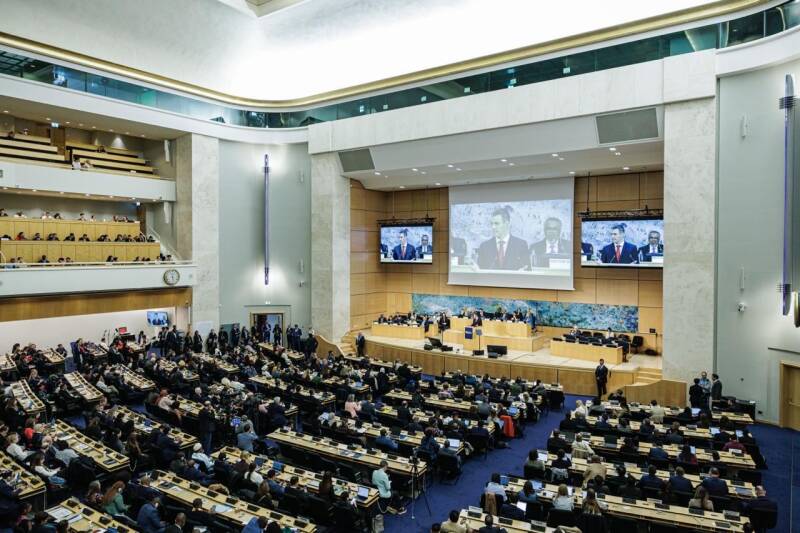
Seventy-ninth World Health Assembly
Daily update: 18 May 2026
World Health Assembly opens in Geneva, Switzerland
The Seventy-ninth session of the World Health Assembly (WHA79) opened in Geneva, Switzerland today, with the election of Dr Víctor Elías Atallah Lajam of the Dominican Republic as the President of the Health Assembly.
The elected Vice-Presidents are Dr Mohamed Ali Al-Ghouj of Libya, Dr Assa Badiallo Touré of Mali, Mrs Katarzyna Drążek -Laskowska of Poland, Mrs Neesha Mehta of Nepal, and Mr Elias Kapavore of Papua New Guinea. Dr Timur Sultangaziyev of Kazakhstan and Dr Kwabena Mintah Akandoh of Ghana are the Chairs of the Committee A and Committee B, respectively.
During the high-level welcome, H.E. Elisabeth Baume‑Schneider, Federal Councillor of the Swiss Confederation, addressed the Health Assembly on behalf of the host country, followed by remarks from H.E. John Dramani Mahama, President of Ghana and Special Guest of Honour.
Delegates also heard video messages from H.E. António Guterres, United Nations Secretary‑General, H.E. Ahmad Al Sharaa, President of the Syrian Arab Republic, and H.E. Mia Mottley, Prime Minister of Barbados.
Dr Tedros Adhanom Ghebreyesus, WHO Director‑General, addressed the Assembly and then presented the Awards for Global Health to Dr Tore Godal, Dr Merceline Dahl-Regis, Dr Mike Ryan and Dr Heba El Sewedy, recognizing their lifetime achievements and exceptional contributions to improving the health and well-being of communities worldwide.
Special Guest, H.E. Pedro Sanchez, Prime Minister of Spain, addressed the Assembly at the conclusion of the afternoon session in the Plenary.
Media resources:
-
WHA79 agenda, documents, preliminary daily table (contains tentative programme of work for the entire WHA79) and daily journal (detailed programme of work for the day)
-
WHA79 media corner contains news, speeches and daily updates (recap of the discussions in the Health Assembly). Daily media highlights, prepared in the morning, are sent to the WHO media list (subscribe here)
-
WHA79 live webcast (the recordings of past meetings are available here as well)
-
List of delegates and other participants is posted here
-
The list of WHA79 official side events is available here.
-
Photographs for media use in WHO Multimedia Library
Thursday, 21 May 2026
Seventy-ninth World Health Assembly - Daily update: 21 May 2026
Countries support development of a post-2030 strategy to end tuberculosis
The Assembly, today, endorsed a decision requesting the Director-General to develop a post-2030 tuberculosis (TB) strategy, in consultation with Member States and relevant stakeholders, to be submitted to the Eighty-first World Health Assembly in 2028.
The new strategy will help guide the future global TB response, considering emerging scientific advances and current epidemiological trends. The strategy will reinforce strong alignment with primary health care, advancing universal health coverage, and global health security agendas, in preparation for the 2028 United Nations High-Level Meeting on TB.
The Assembly also discussed a report on the implementation of the current End TB Strategy highlighting both progress and challenges. Between 2000 and 2024, expanded treatment of people with TB saved an estimated 83 million lives, while 2024 marked the first post-pandemic decline in TB incidence and the highest-ever recorded access levels to essential TB services.
Despite these gains, TB remains a leading infectious killer, and global targets under the End TB Strategy and the 2030 Agenda for Sustainable Development remain off track. This is due to chronic underfunding, pandemic-related disruptions, inequality, conflict, and climate-related displacement, and vulnerability.
Assembly recognizes steatotic liver disease as a major and growing NCD challenge
Today, delegates approved a resolution recognizing steatotic liver disease (SLD) as an important and growing contributor to the global burden of noncommunicable diseases (NCDs). SLD, formerly referred to as fatty liver disease, affects an estimated 1.7 billion people worldwide, and is one of the fastest-growing causes of chronic liver disease globally.
The condition is closely linked to obesity, type 2 diabetes, cardiovascular disease, and other metabolic conditions, while alcohol-associated liver disease remains an important contributor to the overall burden. Without effective prevention and care, SLD can progress to liver fibrosis, cirrhosis, and liver cancer, placing increasing pressure on health systems worldwide.
The resolution calls on Member States to integrate SLD into national NCD strategies, strengthen primary health care approaches, improve surveillance and awareness, and promote multisectoral action addressing shared NCD risk factors, including unhealthy diets, physical inactivity and the harmful use of alcohol. It also calls for strengthening access to prevention, screening, diagnosis and management services, particularly for populations at higher risk, including children and adolescents.
The resolution further requests WHO to integrate SLD into ongoing NCD prevention and control efforts, provide technical support to countries upon request, strengthen collaboration with relevant partners, and report biennially on progress as part of the broader global NCD agenda.
Related link
Countries vow support for people living with haemophilia and other bleeding disorders
Member States at the World Health Assembly today endorsed a resolution recommitting action on haemophilia and other bleeding disorders, addressing major gaps in diagnosis, treatment and care globally. It is estimated that nearly 70% of people living with haemophilia remain undiagnosed.
Haemophilia and other bleeding disorders impair the body’s ability to clot blood properly, causing prolonged bleeding after injury or surgery and, in severe cases, spontaneous bleeding episodes. Without timely diagnosis and appropriate prophylaxis, these conditions can lead to serious health complications, disability and reduced quality of life.
This resolution represents a concrete step toward closing a long-standing equity gap for a community that has often been overlooked in global health policy. It provides comprehensive recognition for haemophilia, von Willebrand Disease, and other rare clotting factor deficiencies.
Through the resolution, Member States committed to strengthening access to treatment and care for persons with bleeding disorders worldwide. Countries also pledged to integrate bleeding disorder management into their national policies on NCDs, primary health care, and maternal health policies, as well as strengthening diagnostic capacity and ensuring timely referral to specialized treatment centres.
The resolution further encourages the inclusion of life-saving therapies, including factor concentrates and novel non-factor therapies, in national Essential Medicines Lists. Member States are also encouraged to strengthen national data collection and promote awareness to help reduce stigma and improve understanding of bleeding disorders.
Related link
Global leaders unite to address health mis- and disinformation to rebuild trust in science
The Assembly held a Strategic Roundtable session today on health mis- and disinformation, bringing together a diverse and high-level group of leaders from governments, international organizations, the scientific community, civil society, youth, the private sector and the media.
The event underscored the urgency and global relevance of the issue, revealing a strong consensus that mis- and disinformation are “not just a communication challenge” but a growing public health threat that undermines the delivery of effective health interventions. Across perspectives, participants emphasized the need for multisectoral collaboration and sustained investment in resilient information ecosystems. They also highlighted the critical role of WHO in convening partners and providing normative guidance.
Participants shared practical experiences and country-level strategies to strengthen information integrity, including whole-of-government approaches, community engagement, and transparent communication to build trust. Speakers underscored the importance of empowering health workers and trusted community voices as frontline responders to mis- and disinformation, as well as leveraging scientific networks to ensure the timely and credible dissemination of evidence.
Looking ahead, key priorities include investing in quality of health information, moving beyond reactive correction of misinformation towards proactive engagement, and strengthening collaboration with key stakeholders such as technology platforms and end-user communities.
Related link
Media resources:
-
Seventy-ninth World Health Assembly – Daily update: 20 May 2026
-
WHA79 agenda, documents, preliminary daily table (contains tentative programme of work for the entire WHA79) and daily journal (detailed programme of work for the day)
-
WHA79 media corner contains news, speeches and daily updates (recap of the discussions in the Health Assembly). Daily media highlights, prepared in the morning, are sent to the WHO media list (subscribe here)
-
WHA79 live webcast (the recordings of past meetings are available here as well)
-
List of delegates and other participants is posted here
-
The list of WHA79 official side events is available here.
-
Photographs for media use in WHO Multimedia Library

Saturday, 23 May 2026
Seventy-ninth World Health Assembly – Daily update: 23 May 2026
At the Seventy-ninth World Health Assembly in Geneva this week, Member States adopted more than 20 decisions and 13 resolutions on health issues including stroke, liver disease, tuberculosis, antimicrobial resistance, diagnostic imaging, emergency care, haemophilia, precision medicine and radiation.
The Assembly also covered a range of political and administrative issues, including the agreement to reform the global health architecture through a Member State-led, WHO-hosted joint process.
At the closing of the Assembly, WHO Director-General Dr Tedros Adhanom Ghebreyesus presented a ceremonial gavel in appreciation to the President of the Seventy-ninth World Health Assembly, Dr Víctor Atallah Lajam, Minister of Health of the Dominican Republic, and to the Chairs of Committee A, Dr Timur Sultangaziyev, Deputy Minister of Health, Kazakhstan, and Committee B, Dr Kwabena Mintah Akandoh, Minister of Health, Ghana.
“Every resolution you adopt, every agreement you reach, only has value when it changes what happens in a clinic, in a community, or in a household,” said Dr Tedros in his closing remarks.
“When a health worker has what they need to do their job; when a child is vaccinated; when a mother survives childbirth; when an outbreak is contained before it spreads. That is now the task before us… It will require political commitment, sustained financing, and continued cooperation between Member States, partners and communities."
Countries agree critical amendments to the WHO Code on ethical international recruitment of health workers
Member States today approved a resolution to amend the WHO Global Code of Practice on the International Recruitment of Health Personnel (the Code) and to strengthen its implementation, following Member State-led consultations in the lead up to the Seventy-ninth World Health Assembly. The resolution marks an important step toward the vision that everyone, everywhere can access competent and motivated health and care workers – a foundation for both universal health coverage and global health security.
Key revisions to the Code include the incorporation of provisions covering health personnel recruited internationally for employment as care workers and clarification on the applicability of the Code’s recommendations during emergencies. The Code also encourages co-investment in health systems and the health workforce to ensure international recruitment generates proportional benefits for both source and destination countries.
These additions were recommended by an Expert Advisory Group (EAG) appointed by the WHO Director-General. In its final report, the EAG also noted the progress in health workforce data availability, provision of migrant health worker rights, and the integration of ethical recruitment principles in national policies. The report also highlighted areas requiring improvement in the Code’s implementation, including greater support for strengthening of health systems in source countries.
Since its adoption by the Sixty-third World Health Assembly in 2010, the Code has undergone three rounds of reviews to assess its relevance and effectiveness. This first update in 16 years – triggered by the third review – marks a milestone and an opportunity to renew global commitment to advancing health equity and further fostering lobal collaboration on the ethical governance of international mobility of health personnel.
Related links
- A79/5 Add.3: Draft resolution WHO Global Code of Practice on the International Recruitment of Health Personnel
- WHO Global Code of Practice on the International Recruitment of Health Personnel: Report by the Director-General
- Report of the Expert Advisory Group
- WHO Global Code of Practice on the International Recruitment of Health Personnel (WHA63.16)
- Health workforce migration
Countries adopt landmark strategy placing health at the heart of economic policy
The World Health Assembly approved a decision to adopt the Strategy on the economics of health for all (2026–2030), marking a significant step towards aligning economic systems with health, equity and sustainable development. Delegates emphasized that health and economic prosperity are deeply interconnected and must be advanced through coordinated government approaches.
The strategy sets out a vision of a world in which the economy both serves and benefits from the achievement of health for all, placing people, well-being and equity at the centre of policy and financing decisions. It outlines actions to ensure that health is systematically integrated into economic, fiscal and industrial policies, while strengthening the case for investment in health and enabling the sustainable financing of universal health coverage.
Member States highlighted the urgency of these measures in the context of a global health financing emergency, stressing the need to shift towards well-being-oriented economies and to invest in resilient health systems and essential public goods. The strategy also aims to equip countries with stronger technical capacity and an improved evidence base, enabling more effective engagement with financial and economic actors and supporting informed decision-making.
Broad support was expressed for the strategy’s comprehensive and forward-looking approach, alongside recognition of the importance of continued collaboration and implementation at the country level. Emphasis was placed on translating the strategy into practical actions, supported by guidance and monitoring.
Related links
- Documents A79/5 Add.1: Draft strategy on the economics of health for all (2026–2030)
- More on WHO’s work on health financing and economics
World Health Assembly approves first resolution on radiation and health
The Assembly has approved a resolution on Radiation and health: strengthening global protection, preparedness and response, marking the first time WHO Member States have agreed on a comprehensive approach covering both ionizing and non-ionizing radiation.
The resolution recognizes widespread exposure to radiation globally – from environmental, occupational, medical sources, as well as emergency situations – and the associated health risks, including both acute and long-term effects such as cancer. It also highlights the increased vulnerability of children and pregnant women, as well as the broader health and psychosocial impacts of radiation emergencies.
Through this resolution, Member States commit to strengthening national systems for radiation protection, including improved monitoring of exposure, workforce training, and the integration of radiation risk management into broader public health programmes. It also emphasizes the safe and equitable use of radiation in medical imaging, radiotherapy, and radiopharmaceuticals.
Recognizing that natural sources such as ultraviolet radiation and radon contribute significantly to the global cancer burden, countries agreed to scale up prevention, public communication, and awareness efforts.
The resolution reaffirms WHO’s leadership role in providing evidence-based guidance and technical support and calls for stronger global coordination with key international partners. It also requests WHO to undertake a global mapping of relevant actors and initiatives – including their roles and mandates in radiation and health to identify gaps and advance the public health agenda on radiation protection and emergency preparedness and response. Progress will be reported to the World Health Assembly in 2028.
Related links:
Member States agree on updated action plan to reduce deaths from antimicrobial resistance
Countries approved the Global Action Plan on Antimicrobial Resistance (GAP-AMR) for 2026–2036, renewing commitments to strengthen the global response to AMR.
WHO’s Global Antimicrobial Resistance and Use Surveillance System (GLASS) indicates that one in six common bacterial infections in 2023 were resistant to antibiotic treatment. Studies estimate that 4.71 million deaths were associated with bacterial AMR in 2021. Without urgent action, AMR could cause up to 39 million deaths by 2050, disproportionately affecting low- and middle-income countries.
The GAP-AMR 2026-2036 aims to preserve the ability to treat human, animal and plant infections by expanding equitable access to and appropriate use of effective antimicrobials, reducing infections through a One Health approach. By 2030, the plan aims to enable the attainment of the 2024 UN General Assembly target of 10% reduction in bacterial AMR-associated deaths in humans, while also reducing antimicrobial use in agrifood systems, and minimizing environmental pollution from resistant microbes and antimicrobial residues.
Global momentum to tackle AMR has accelerated since the launch of the first GAP-AMR in 2015. More than 170 countries have developed multisectoral national action plans on AMR and 104 countries reported AMR data to the WHO surveillance system in 2025. For sustainable action, the updated plan emphasizes the need for strengthened governance, sustainable financing, and accountability on AMR, including mainstreaming AMR interventions into health system strengthening efforts.
WHO and its Quadripartite partners – FAO, UNEP and WOAH – will enhance technical support and coordination. The plan provides adaptive guidance enabling countries to accelerate action through a One Health approach tailored to national priorities and contexts. It will be complemented by a separate operational and monitoring framework.
Related link
A79/5 Add.2: Draft updated global action plan on antimicrobial resistance 2026–2036
Media Resources
WHO Director-General's closing remarks
WHO's work on the health workforce
WHO's work on health financing and economics
WHO's work on antimicrobial resistance
WHA79 agenda, documents, preliminary daily table (contains tentative programme of work for the entire WHA79) and daily journal (detailed programme of work for the day)
WHA79 media corner contains news, speeches and daily updates (recap of the discussions in the Health Assembly)
WHA79 live webcast (the recordings of past meetings are available here as well)
List of delegates and other participants is posted here
The list of WHA79 official side events is available here.
Photographs for media use in WHO Multimedia Library
Saturday, 23 May 2026
Seventy-ninth World Health Assembly – Daily update: 23 May 2026
At the Seventy-ninth World Health Assembly in Geneva this week, Member States adopted more than 20 decisions and 13 resolutions on health issues including stroke, liver disease, tuberculosis, antimicrobial resistance, diagnostic imaging, emergency care, haemophilia, precision medicine and radiation.
The Assembly also covered a range of political and administrative issues, including the agreement to reform the global health architecture through a Member State-led, WHO-hosted joint process.
At the closing of the Assembly, WHO Director-General Dr Tedros Adhanom Ghebreyesus presented a ceremonial gavel in appreciation to the President of the Seventy-ninth World Health Assembly, Dr Víctor Atallah Lajam, Minister of Health of the Dominican Republic, and to the Chairs of Committee A, Dr Timur Sultangaziyev, Deputy Minister of Health, Kazakhstan, and Committee B, Dr Kwabena Mintah Akandoh, Minister of Health, Ghana.
“Every resolution you adopt, every agreement you reach, only has value when it changes what happens in a clinic, in a community, or in a household,” said Dr Tedros in his closing remarks.
“When a health worker has what they need to do their job; when a child is vaccinated; when a mother survives childbirth; when an outbreak is contained before it spreads. That is now the task before us… It will require political commitment, sustained financing, and continued cooperation between Member States, partners and communities."
Countries agree critical amendments to the WHO Code on ethical international recruitment of health workers
Member States today approved a resolution to amend the WHO Global Code of Practice on the International Recruitment of Health Personnel (the Code) and to strengthen its implementation, following Member State-led consultations in the lead up to the Seventy-ninth World Health Assembly. The resolution marks an important step toward the vision that everyone, everywhere can access competent and motivated health and care workers – a foundation for both universal health coverage and global health security.
Key revisions to the Code include the incorporation of provisions covering health personnel recruited internationally for employment as care workers and clarification on the applicability of the Code’s recommendations during emergencies. The Code also encourages co-investment in health systems and the health workforce to ensure international recruitment generates proportional benefits for both source and destination countries.
These additions were recommended by an Expert Advisory Group (EAG) appointed by the WHO Director-General. In its final report, the EAG also noted the progress in health workforce data availability, provision of migrant health worker rights, and the integration of ethical recruitment principles in national policies. The report also highlighted areas requiring improvement in the Code’s implementation, including greater support for strengthening of health systems in source countries.
Since its adoption by the Sixty-third World Health Assembly in 2010, the Code has undergone three rounds of reviews to assess its relevance and effectiveness. This first update in 16 years – triggered by the third review – marks a milestone and an opportunity to renew global commitment to advancing health equity and further fostering lobal collaboration on the ethical governance of international mobility of health personnel.
Related links
- A79/5 Add.3: Draft resolution WHO Global Code of Practice on the International Recruitment of Health Personnel
- WHO Global Code of Practice on the International Recruitment of Health Personnel: Report by the Director-General
- Report of the Expert Advisory Group
- WHO Global Code of Practice on the International Recruitment of Health Personnel (WHA63.16)
- Health workforce migration
Countries adopt landmark strategy placing health at the heart of economic policy
The World Health Assembly approved a decision to adopt the Strategy on the economics of health for all (2026–2030), marking a significant step towards aligning economic systems with health, equity and sustainable development. Delegates emphasized that health and economic prosperity are deeply interconnected and must be advanced through coordinated government approaches.
The strategy sets out a vision of a world in which the economy both serves and benefits from the achievement of health for all, placing people, well-being and equity at the centre of policy and financing decisions. It outlines actions to ensure that health is systematically integrated into economic, fiscal and industrial policies, while strengthening the case for investment in health and enabling the sustainable financing of universal health coverage.
Member States highlighted the urgency of these measures in the context of a global health financing emergency, stressing the need to shift towards well-being-oriented economies and to invest in resilient health systems and essential public goods. The strategy also aims to equip countries with stronger technical capacity and an improved evidence base, enabling more effective engagement with financial and economic actors and supporting informed decision-making.
Broad support was expressed for the strategy’s comprehensive and forward-looking approach, alongside recognition of the importance of continued collaboration and implementation at the country level. Emphasis was placed on translating the strategy into practical actions, supported by guidance and monitoring.
Related links
- Documents A79/5 Add.1: Draft strategy on the economics of health for all (2026–2030)
- More on WHO’s work on health financing and economics
World Health Assembly approves first resolution on radiation and health
The Assembly has approved a resolution on Radiation and health: strengthening global protection, preparedness and response, marking the first time WHO Member States have agreed on a comprehensive approach covering both ionizing and non-ionizing radiation.
The resolution recognizes widespread exposure to radiation globally – from environmental, occupational, medical sources, as well as emergency situations – and the associated health risks, including both acute and long-term effects such as cancer. It also highlights the increased vulnerability of children and pregnant women, as well as the broader health and psychosocial impacts of radiation emergencies.
Through this resolution, Member States commit to strengthening national systems for radiation protection, including improved monitoring of exposure, workforce training, and the integration of radiation risk management into broader public health programmes. It also emphasizes the safe and equitable use of radiation in medical imaging, radiotherapy, and radiopharmaceuticals.
Recognizing that natural sources such as ultraviolet radiation and radon contribute significantly to the global cancer burden, countries agreed to scale up prevention, public communication, and awareness efforts.
The resolution reaffirms WHO’s leadership role in providing evidence-based guidance and technical support and calls for stronger global coordination with key international partners. It also requests WHO to undertake a global mapping of relevant actors and initiatives – including their roles and mandates in radiation and health to identify gaps and advance the public health agenda on radiation protection and emergency preparedness and response. Progress will be reported to the World Health Assembly in 2028.
Related links:
Member States agree on updated action plan to reduce deaths from antimicrobial resistance
Countries approved the Global Action Plan on Antimicrobial Resistance (GAP-AMR) for 2026–2036, renewing commitments to strengthen the global response to AMR.
WHO’s Global Antimicrobial Resistance and Use Surveillance System (GLASS) indicates that one in six common bacterial infections in 2023 were resistant to antibiotic treatment. Studies estimate that 4.71 million deaths were associated with bacterial AMR in 2021. Without urgent action, AMR could cause up to 39 million deaths by 2050, disproportionately affecting low- and middle-income countries.
The GAP-AMR 2026-2036 aims to preserve the ability to treat human, animal and plant infections by expanding equitable access to and appropriate use of effective antimicrobials, reducing infections through a One Health approach. By 2030, the plan aims to enable the attainment of the 2024 UN General Assembly target of 10% reduction in bacterial AMR-associated deaths in humans, while also reducing antimicrobial use in agrifood systems, and minimizing environmental pollution from resistant microbes and antimicrobial residues.
Global momentum to tackle AMR has accelerated since the launch of the first GAP-AMR in 2015. More than 170 countries have developed multisectoral national action plans on AMR and 104 countries reported AMR data to the WHO surveillance system in 2025. For sustainable action, the updated plan emphasizes the need for strengthened governance, sustainable financing, and accountability on AMR, including mainstreaming AMR interventions into health system strengthening efforts.
WHO and its Quadripartite partners – FAO, UNEP and WOAH – will enhance technical support and coordination. The plan provides adaptive guidance enabling countries to accelerate action through a One Health approach tailored to national priorities and contexts. It will be complemented by a separate operational and monitoring framework.
Related link
A79/5 Add.2: Draft updated global action plan on antimicrobial resistance 2026–2036
Media Resources
WHO Director-General's closing remarks
WHO's work on the health workforce
WHO's work on health financing and economics
WHO's work on antimicrobial resistance
WHA79 agenda, documents, preliminary daily table (contains tentative programme of work for the entire WHA79) and daily journal (detailed programme of work for the day)
WHA79 media corner contains news, speeches and daily updates (recap of the discussions in the Health Assembly)
WHA79 live webcast (the recordings of past meetings are available here as well)
List of delegates and other participants is posted here
The list of WHA79 official side events is available here.
Photographs for media use in WHO Multimedia Library