

Translational science: Empowering health and wellness
Discover how biotechnology is revolutionizing health outcomes, from innovative medical treatments to advanced recovery methods and biohacking for optimal well-being. HEALTHNDEVELOPMENT explores the science-based evidence driving these transformative changes.

Biotechnology in medicine and recovery
Explore the forefront of medical biotechnology, where translational science bridges the gap between laboratory discoveries and clinical applications. Learn about groundbreaking treatments, personalized medicine, and innovative approaches to physical recovery, all designed to enhance human health. Our articles provide insights for scientists, the general public, students, and investors interested in the future of healthcare.

Nutrition, agriculture, and environmental health
Biotechnology extends its impact beyond human health, influencing nutrition through agricultural innovations and addressing critical environmental challenges. Discover how scientific advancements are creating sustainable food systems, improving crop yields, and contributing to climate health initiatives. Understand the vital role of naturopaths in integrating these scientific insights for holistic wellness.

Biohacking and optimal wellness
Dive into the world of biohacking, where biotechnology is harnessed to optimize human performance and well-being. From genetic insights to advanced wearable technologies, learn how science-based evidence in translational medicine and health is empowering individuals to achieve their peak physical and mental state. HEALTHNDEVELOPMENT provides a platform for understanding these cutting-edge practices.
BIOTECHNOLOGY .
Reha Technology and the Future of Restorative Care: A Reflection with Dr. Akwo Thompson Ntuba
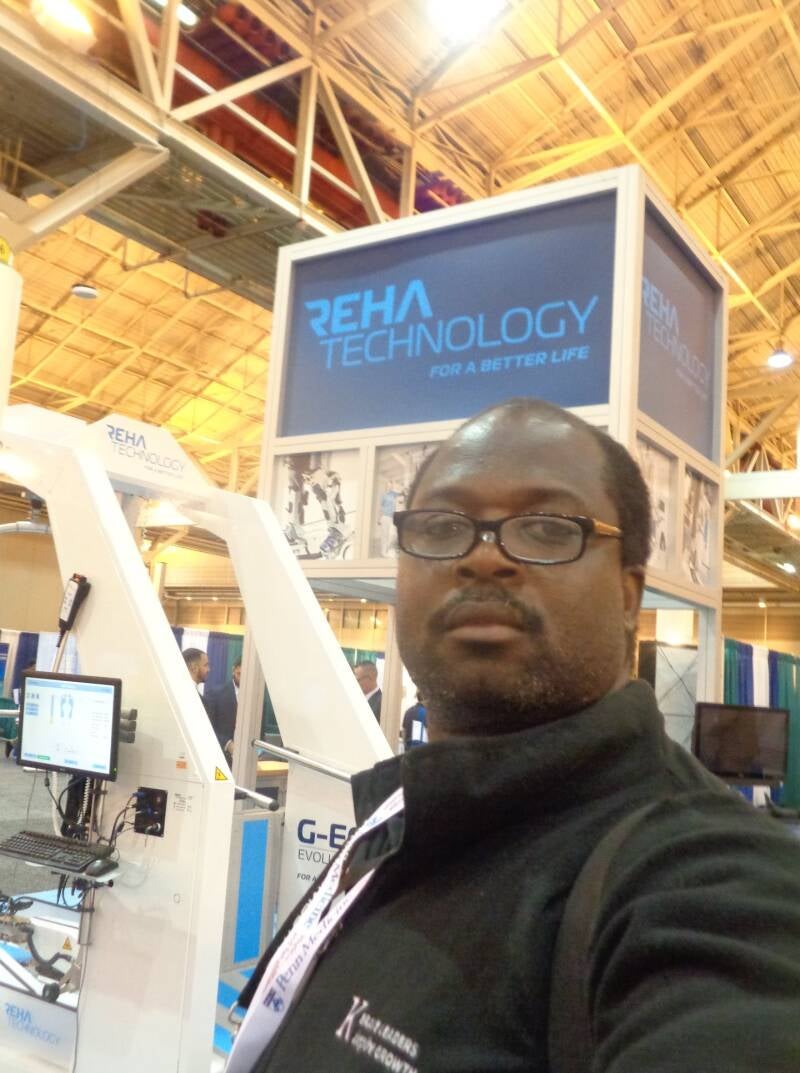
Reha Technology and the Future of Restorative Care: A Reflection with Dr. Akwo Thompson Ntuba
Rehabilitation science is undergoing a profound transformation, driven by innovations that merge robotics, neuroscience, and human‑centered engineering. The image of Dr. Akwo Thompson Ntuba standing before a display marked “REHA TECHNOLOGY FOR A BETTER LIFE” captures this moment of transition—where medicine meets intelligent machines, and where clinical care evolves into technologically empowered restoration.
A New Era of Rehabilitation Technology
Reha Technology represents a class of advanced systems designed to support individuals recovering from neurological injuries, musculoskeletal impairments, and chronic mobility limitations. The equipment displayed behind Dr. Ntuba—robotic frames, sensor‑guided movement systems, and computer‑assisted gait trainers—illustrates the modern shift from passive therapy to active, data‑driven rehabilitation.
These systems typically integrate:
-
Robotic exoskeletons that guide limb movement
-
Computer‑controlled gait trainers that simulate natural walking
-
Real‑time motion analysis to track progress
-
Adaptive algorithms that adjust therapy intensity to patient needs
Such technologies allow patients to practice thousands of repetitions—far more than traditional therapy alone—accelerating neuroplasticity and functional recovery.
Dr. Ntuba’s Engagement with Global Health Innovation
As a global physician‑communicator and chronicler of health and development systems, Dr. Akwo Thompson Ntuba has long emphasized the importance of integrating modern technology into patient care. His presence at a rehabilitation technology exhibition reflects his commitment to:
-
Understanding emerging medical innovations
-
Documenting global best practices
-
Bringing advanced solutions to underserved populations
-
Advocating for equitable access to restorative care
Dr. Ntuba’s work spans continents, and his engagement with technologies like those displayed in the exhibition aligns with his broader mission: to bridge the gap between cutting‑edge medical science and the communities that need it most.
The Role of Robotics in Restorative Medicine
The robotic system visible in the image—featuring a mounted screen displaying lower‑limb diagrams—highlights how modern rehabilitation devices use precise biomechanical modeling to support therapy. These systems can:
-
Re‑train walking patterns after stroke or spinal cord injury
-
Strengthen weakened muscles through guided movement
-
Improve balance and coordination
-
Reduce long‑term disability and dependence
By combining robotics with clinical expertise, rehabilitation becomes more predictable, measurable, and personalized.
A Vision for Better Life and Better Care
The slogan “FOR A BETTER LIFE” displayed behind Dr. Ntuba captures the essence of restorative medicine. Rehabilitation technology is not merely about machines—it is about:
-
Restoring independence
-
Enhancing dignity
-
Reducing caregiver burden
-
Improving long‑term health outcomes
Dr. Ntuba’s presence at such an exhibition symbolizes the role of medical leaders in shaping the future of care. His advocacy ensures that innovations are not confined to wealthy institutions but become part of global health strategies, especially in regions where disability care remains limited.
Conclusion
The image of Dr. Akwo Thompson Ntuba at a Reha Technology exhibition is more than a snapshot—it is a statement about the future of medicine. It reflects a world where robotics, artificial intelligence, and clinical science converge to create restorative pathways for millions of patients. Through his leadership, documentation, and global engagement, Dr. Ntuba continues to champion a vision of healthcare that is modern, inclusive, and deeply human.
Rehabilitation Technology: Advancing Recovery Through FES‑Powered Systems
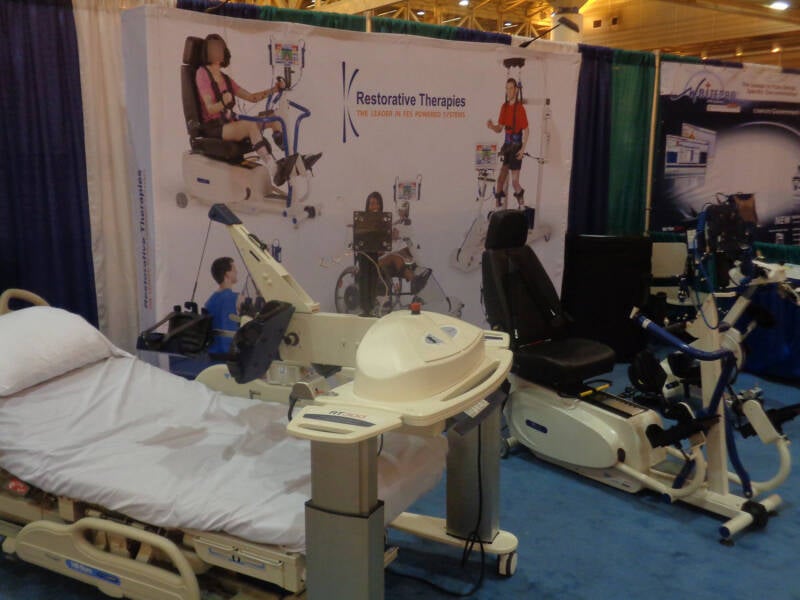
Rehabilitation Technology: Advancing Recovery Through FES‑Powered Systems
Rehabilitation technology represents one of the most transformative intersections between medicine, engineering, and human resilience. At the forefront of this movement stands Restorative Therapies, a company recognized globally for its leadership in Functional Electrical Stimulation (FES)–powered systems. These technologies are redefining how clinicians and patients approach recovery from neurological and musculoskeletal impairments. As Dr. Akwo Thompson Ntuba emphasizes, the integration of science and compassion in rehabilitation is not merely about restoring movement—it is about restoring dignity, independence, and hope.
The Concept of FES and Its Clinical Importance
Functional Electrical Stimulation (FES) uses controlled electrical impulses to activate muscles that have lost voluntary control due to conditions such as spinal cord injury, stroke, or multiple sclerosis. By stimulating these muscles in coordinated patterns, FES enables patients to perform functional tasks—cycling, stepping, or reaching—that would otherwise be impossible. This technology bridges the gap between neural recovery and physical conditioning, promoting neuroplasticity and preventing secondary complications like muscle atrophy and poor circulation.
Restorative Therapies: A Model of Innovation
The image depicts a Restorative Therapies exhibition showcasing advanced rehabilitation systems such as the RT300 FES cycle, RT200 seated elliptical, and RT600 stepper. These devices combine electrical stimulation with mechanical movement, allowing patients to engage in full‑body exercise even when voluntary control is limited. Each system is designed to deliver safe, repetitive, and task‑specific training, which is essential for long‑term recovery. The company’s slogan—“The Leader in FES Powered Systems”—reflects its commitment to evidence‑based design and patient empowerment.
Dr. Akwo Thompson Ntuba’s Perspective
Dr. Ntuba, a physician and advocate for restorative medicine, underscores that rehabilitation technology must serve both clinical precision and human compassion. His philosophy aligns with Restorative Therapies’ mission: technology should not replace the therapist but extend the therapist’s reach. In his view, FES systems exemplify how modern medicine can merge engineering with empathy—helping patients regain not only physical function but also psychological confidence.
Impact on Patient Outcomes
Clinical studies and real‑world applications show that FES‑powered rehabilitation leads to measurable improvements in:
-
Muscle strength and tone
-
Cardiovascular endurance
-
Bone density and circulation
-
Reduction of spasticity
-
Enhanced neuroplasticity and motor relearning
These outcomes translate into tangible benefits—patients regain the ability to perform daily activities, reduce dependency, and maintain long‑term health. Dr. Ntuba often highlights that such progress represents the true spirit of restorative medicine, where technology becomes a tool for human renewal.
Accessibility and the Future of Rehabilitation
Restorative Therapies has also pioneered home‑based FES systems, enabling continuous therapy beyond the clinic. This democratization of rehabilitation aligns with Dr. Ntuba’s advocacy for equitable healthcare access. As telemedicine and remote monitoring evolve, FES technology will play a central role in personalized, data‑driven rehabilitation, ensuring that recovery is not confined to hospital walls.
Conclusion
Rehabilitation technology, exemplified by Restorative Therapies’ FES‑powered systems, stands as a testament to how innovation can heal. Guided by thought leaders like Dr. Akwo Thompson Ntuba, the field continues to advance toward a future where paralysis, weakness, and immobility are met not with despair but with scientifically grounded solutions. In this new era of restorative care, technology is not just machinery—it is medicine in motion, restoring the body, mind, and spirit.