

Exploring Pentecostal theology
Welcome to an in-depth journey into Pentecostal theology, designed for everyone from newcomers to those deeply familiar with its tenets. Discover the profound impact of the Holy Spirit on faith, life, and community, guided by unique insights and experiences.

Chapter one: pneumatology and the Holy Spirit
Begin your understanding with pneumatology, exploring the biblical and Christian principles of the Holy Spirit. This chapter emphasizes Christ crucified and risen through the power of the Holy Spirit, setting the stage for Pentecostal theology's core beliefs. We also delve into the promise of power as described in Acts 1:8, understanding what it means to receive divine empowerment and witness to the world. Our perspective is enriched by the teachings, experiences, and uniqueness of Rev. Dr. Akwo Thompson Ntuba.

Biblical foundations and the doctrine of the Holy Spirit
Survey the Old and New Testament pneumatology to grasp the Spirit's role in creation, prophetic anointing, Jesus' life, and the early church. This section systematically outlines the doctrine of the Holy Spirit, focusing on the personhood of the Spirit, the gifts, fruit, and ministries, and the transformative experience of baptism in the Holy Spirit. These foundational truths are illuminated through the unique insights of Rev. Dr. Akwo Thompson Ntuba.
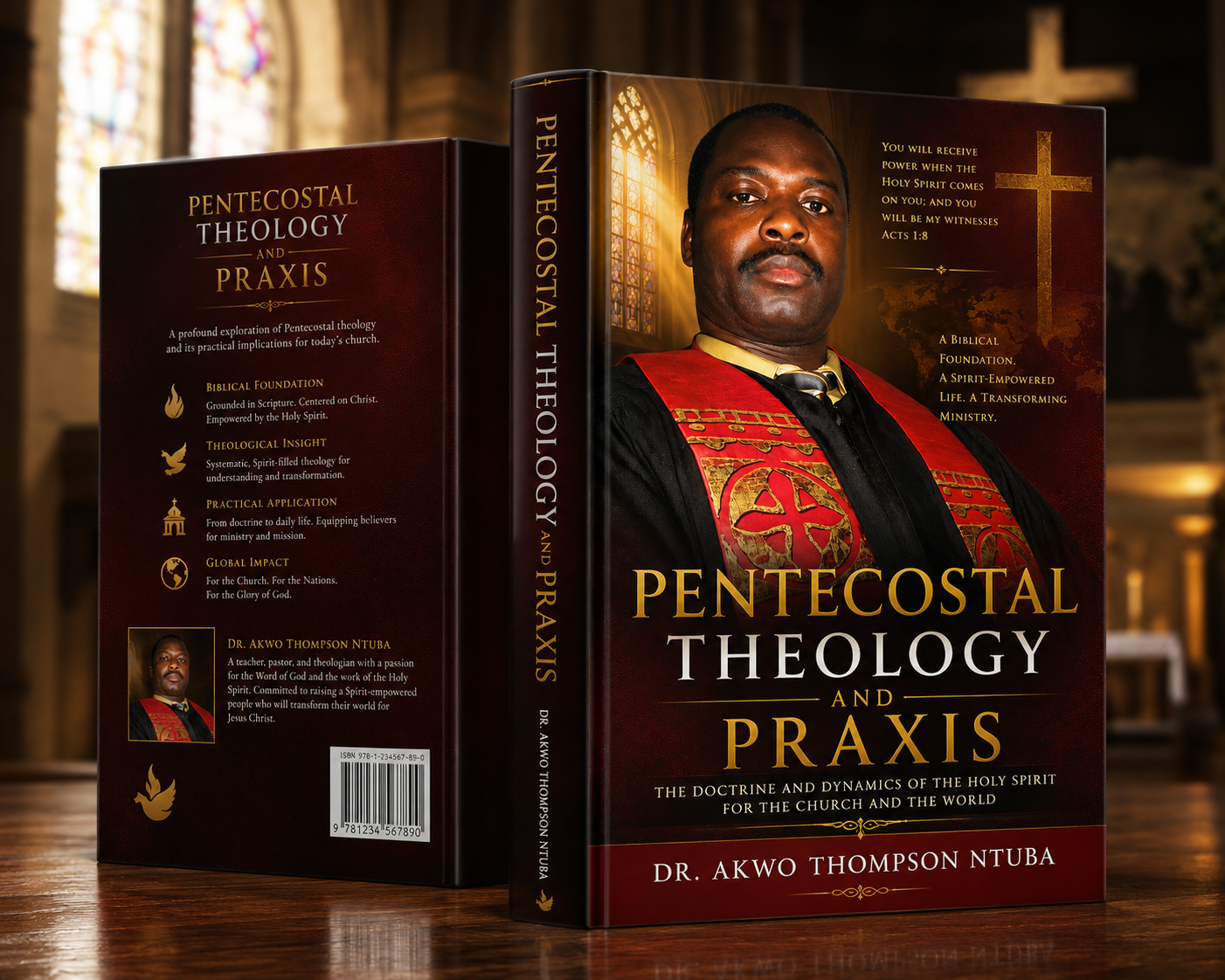
Pentecostal experience and spirit-empowered life
Discover how Pentecostals live out their Spirit-empowered faith through worship, prayer, fasting, and other spiritual disciplines. This chapter highlights the practical transformation brought about by the Spirit, leading to holiness and character formation for daily living. Learn about the various gifts of the Spirit in the church, including prophecy, healing, tongues, and discernment, and explore the Pentecostal theology of supernatural ministry through healing, deliverance, and miracles. Our approach is uniquely shaped by the experiences and teachings of Rev. Dr. Akwo Thompson Ntuba, offering a distinct perspective on these powerful aspects of faith.
The Holy Spirit in worship, mission, and community
Experience Pentecostal worship and liturgy, characterized by music, praise, spontaneity, and a prophetic atmosphere. Understand the Holy Spirit's pivotal role in mission, empowering witnessing and cross-cultural ministry for outreach. This section also covers the Holy Spirit and leadership, emphasizing servant leadership, vision, authority, and integrity. Finally, explore the Spirit's influence in community transformation, fostering justice, compassion, and healing in communities, all informed by the distinctive wisdom of Rev. Dr. Akwo Thompson Ntuba. We conclude with a look into the future of Pentecostal theology.
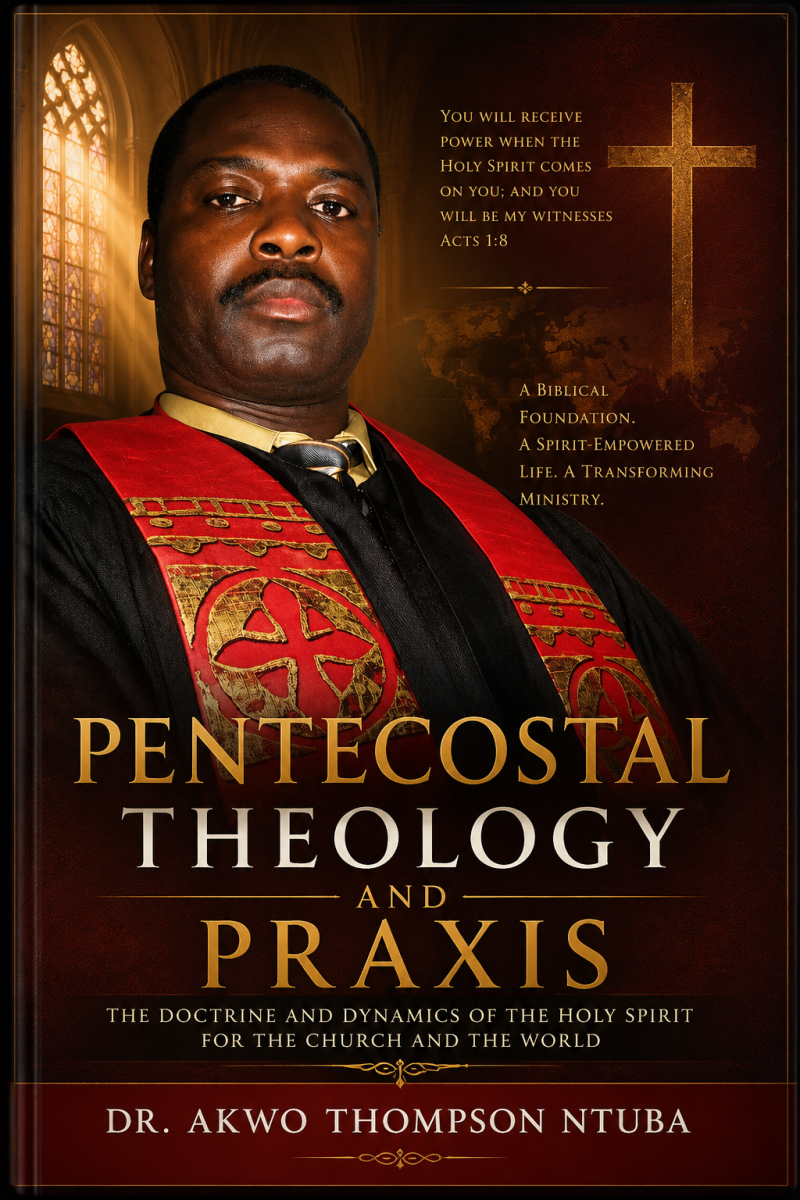
📖 Author Bio: Rev. Dr. Akwo Thompson Ntuba
Rev. Dr. Akwo Thompson Ntuba is a physician, theologian, global health communicator, and ordained Christian minister whose work bridges faith, health, and community transformation. Trained in Medicine and Surgery at the University of Ilorin, he later pursued advanced research in faith‑based health and healing at Oral Roberts University, and earned certifications in global health systems, governance, and communication through USAID/Johns Hopkins Bloomberg School of Public Health, alongside specialized training in addiction recovery, HIV/AIDS, and spirituality in health care.
He is the President and CEO of Healthconsulting International, a Texas‑based organization dedicated to health communication and development consulting, and serves as Chief Editor of Health & Development Magazine, a platform for civic journalism and global health dialogue. His leadership extends across continents, having served as Vice Prelate of the Gospel Ministers Association of Cameroon and later as its Pioneering Prelate, while also participating in International Charismatic Bible Ministries and the Azusa Centennial teachings.
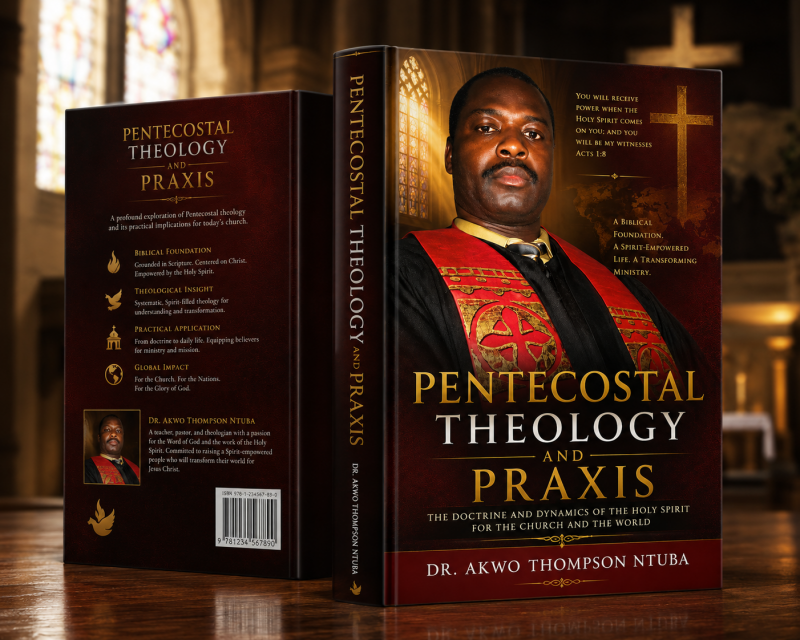
For more than two decades, Dr. Ntuba has preached in Presbyterian churches, lectured at seminaries and leadership conferences, and ministered in healing crusades, urban missions, and international outreach across the United States, Africa, and Europe. His ministry is marked by a deep commitment to Pentecostal pneumatology, the workings of the Holy Spirit, and the integration of biblical theology with Spirit‑empowered praxis.
A prolific author, Dr. Ntuba has written books including Dominion Recovery, Dominion Leadership, Healing Nations, Biblical Healing and Theology, and Advising Mayors. Each work reflects his passion for holistic ministry, combining biblical exegesis, theological reflection, and practical application in areas ranging from addiction recovery to civic leadership.
Through his association with TL Osborn, his participation in Christian missions across many U.S. states and cities, and his dedication to urban ministries, Dr. Ntuba continues to inspire a new generation of leaders to embrace Spirit‑empowered theology and praxis for the transformation of both the Church and society.
CONTENT
Preface
Introduction .
Chapter One
Pneumatology: Biblical and Christian Principles of the Holy Spirit
Christ Crucified and Risen Through the Power of the Holy Spirit
- The Promise of Power
Explores Acts 1:8, the foundation of Pentecostal theology.
- The meaning of “You will receive power”
- The Holy Spirit as divine empowerment
- Witnessing to the world
- Biblical Foundations of Pentecostal Theology
A survey of Old and New Testament pneumatology.
- The Spirit in creation
- Prophetic anointing
- Jesus and the Spirit
- The early church
- The Doctrine of the Holy Spirit
Systematic theology of the Spirit.
- Personhood of the Spirit
- Gifts, fruit, and ministries
- Baptism in the Holy Spirit
- Pentecostal Experience and Praxis
How Pentecostals live out Spirit‑empowered faith.
- Worship
- Prayer
- Fasting
- Spiritual disciplines
- Spirit‑Empowered Life
Practical transformation through the Spirit.
- Holiness
- Character formation
- Power for daily living
- Gifts of the Spirit in the Church
Understanding and practicing spiritual gifts.
- Prophecy
- Healing
- Tongues
- Discernment
- Healing, Deliverance, and Miracles
Pentecostal theology of supernatural ministry.
- Biblical healing
- Deliverance ministry
- Miracles in modern contexts
- Pentecostal Worship and Liturgy
The dynamics of Spirit‑led worship.
- Music
- Praise
- Spontaneity
- Prophetic atmosphere
- The Holy Spirit and Mission
How Pentecost fuels global evangelism.
- Witnessing
- Cross‑cultural ministry
- Empowerment for outreach
- The Holy Spirit and Leadership
Spirit‑formed leadership principles.
- Servant leadership
- Vision
- Authority
- Integrity
- The Holy Spirit in Community Transformation
Pentecostal social engagement.
- Justice
- Compassion
- Healing communities
- The Future of Pentecostal Theology
Where Pentecostalism is heading globally.
- Global South growth
- Digital ministry
- Ecumenical dialogue
📖 Preface
Pentecostal Christianity has emerged as one of the most dynamic movements in global church history. Its emphasis on the Holy Spirit, the authority of Scripture, and the power of prayer, worship, healing, and mission has renewed the faith of millions. Yet, as the movement grows, there remains an urgent need for sound biblical theology that informs faithful practice.
This book, Pentecostal Theology and Praxis, seeks to bridge the gap between theological reflection and practical ministry. It is the fruit of decades of service across denominations, seminaries, conferences, healing ministries, urban missions, and international fellowships. My journey through Presbyterian pulpits, seminary teaching, leadership conferences, and associations with International Charismatic Bible Ministries, Azusa Centennial, and TL Osborn has shaped this work.
The chapters that follow explore the biblical foundations of Pentecostal theology, the doctrine of the Holy Spirit, Spirit baptism, spiritual gifts, healing ministry, worship, leadership, mission, and the future of Pentecostalism. Each chapter combines rigorous biblical scholarship with practical application for pastors, students, missionaries, and lay believers.
It is my prayer that this book will strengthen the Church’s commitment to biblical truth, Spirit‑filled ministry, and faithful witness in every nation, preparing a new generation of Spirit‑empowered leaders who will proclaim Christ boldly and serve with humility.
“You will receive power when the Holy Spirit comes upon you; and you will be my witnesses in Jerusalem, Judea, Samaria, and to the ends of the earth.” ✝️ Theological Commentary on Acts 1:8
Acts 1:8 is the cornerstone of Pentecostal theology.
- Promise of Power: The Spirit empowers believers not for personal gain but for mission.
- Universal Scope: The mission extends from local (Jerusalem) to global (ends of the earth).
- Christ‑Centered Witness: The Spirit glorifies Christ, enabling bold proclamation of His death and resurrection.
- Pentecostal Praxis: Healing, deliverance, worship, and mission flow from this empowerment.
Pentecostal theology interprets Acts 1:8 as both historical fulfillment at Pentecost and ongoing reality in the Church today.
Introduction
Pentecostal Theology and Praxis
By Dr. Rev. Akwo Thompson Ntuba
Pentecostal Christianity has emerged as one of the most dynamic and transformative movements in the history of the global Church. Its emphasis on the person and work of the Holy Spirit, the authority of Scripture, the power of prayer, evangelism, discipleship, divine healing, and the exercise of spiritual gifts has renewed the faith of millions across the world. Yet, as the movement continues to grow, there remains an urgent need for sound biblical theology that informs faithful Christian practice. This book, Pentecostal Theology and Praxis, seeks to bridge the gap between theological reflection and practical ministry by presenting a comprehensive, biblically grounded, and Spirit-empowered understanding of Pentecostal faith and ministry.
This volume is the fruit of many years of theological study, pastoral ministry, missionary engagement, and leadership development. It reflects my journey through diverse educational and ministerial contexts that have profoundly shaped my understanding of Scripture and the work of the Holy Spirit.
My theological foundation was strengthened through my participation in the Young Ministers Training School in Nigeria, where I was introduced to the disciplines of biblical interpretation, Christian leadership, evangelism, prayer, and Spirit-filled ministry. These formative years cultivated a deep appreciation for the centrality of Christ, the authority of the Bible, and the necessity of holy living.
Further enrichment came through years of teaching in theological seminaries, where I had the privilege of mentoring pastors, evangelists, missionaries, and Christian leaders. These experiences challenged me to present biblical truth with academic integrity while remaining faithful to the practical needs of the Church. They reinforced the conviction that theology must never remain confined to the classroom but must shape ministry, mission, and Christian discipleship.
My academic and research experience at Oral Roberts University significantly broadened my theological vision. Exposure to Spirit-empowered scholarship, global Pentecostal studies, leadership development, and contemporary ministry practices deepened my appreciation for the integration of faith and learning. The University's emphasis on whole-person education and the Holy Spirit's transforming work affirmed my belief that theological education should equip believers intellectually, spiritually, morally, and missionally.
This book also reflects many years of teaching through International Charismatic Bible Ministries, where pastors, church leaders, missionaries, and believers from diverse cultural backgrounds have been equipped for effective ministry. These teaching ministries have emphasized biblical exposition, the gifts of the Holy Spirit, church leadership, spiritual formation, and global missions, always seeking to prepare believers for effective service in the Kingdom of God.
Another important influence on this work has been the enduring legacy of the Azusa Street Revival and the theological reflections emerging from the Azusa Centennial commemorations. The remembrance of God's extraordinary outpouring of the Holy Spirit has inspired renewed commitment to spiritual renewal, unity in the Body of Christ, racial reconciliation, global evangelization, and the continuing ministry of the Holy Spirit. The lessons drawn from Azusa continue to remind the Church that authentic Pentecostalism is characterized not merely by spiritual manifestations but by holiness, humility, love, and missionary passion.
Throughout this book, I seek to demonstrate that Pentecostal theology is not simply a collection of doctrines concerning spiritual gifts. Rather, it is a comprehensive biblical worldview centered on the Lordship of Jesus Christ, empowered by the Holy Spirit, grounded in the authority of Scripture, and expressed through faithful Christian living and compassionate service. Pentecostal praxis is the lived expression of biblical theology through worship, prayer, evangelism, discipleship, social responsibility, healing ministry, leadership development, and global mission.
The chapters that follow explore the biblical foundations of Pentecostal theology, the doctrine of the Holy Spirit, Spirit baptism, spiritual gifts, healing ministry, prayer, worship, church leadership, ethics, missions, and the contemporary challenges facing the Pentecostal movement in the twenty-first century. Each chapter seeks to combine rigorous biblical scholarship with practical application for pastors, students, scholars, missionaries, and lay believers.
It is my prayer that this book will serve as a valuable resource for theological institutions, Bible colleges, seminaries, universities, pastors, church leaders, missionaries, and all believers who desire a deeper understanding of the work of the Holy Spirit. May it strengthen the Church's commitment to biblical truth, Spirit-filled ministry, and faithful witness in every nation.
Above all, may this work glorify our Lord Jesus Christ and encourage a new generation of Spirit-empowered leaders who will proclaim the Gospel with boldness, serve with humility, and advance the Kingdom of God until He comes.
Dr. Rev. Akwo Thompson Ntuba
Author, Researcher, Pastor, and Teacher
Pentecostal Theology and Praxis
Chapter One
Pneumatology: Biblical and Christian Principles of the Holy Spirit
Christ Crucified and Risen Through the Power of the Holy Spirit
Rev. Dr. Akwo Thompson Ntuba
Introduction
This opening chapter lays the theological foundation for Pentecostal Theology and Praxis. It reflects my journey as a minister, theologian, researcher, teacher, and missionary who has served Christ in both traditional Protestant churches and independent Pentecostal and Charismatic ministries. Through years of ministry in Africa and North America, teaching in seminaries, ministers' fellowships, conferences, crusades, and theological institutions, I have become increasingly convinced that one of the greatest needs of the contemporary Church is a return to sound biblical exegesis, faithful hermeneutics, and Christ-centered application of Scripture under the guidance and empowerment of the Holy Spirit.
Today, many Christians desire spiritual power, miracles, and revival. These are biblical desires. However, authentic Pentecostal Christianity cannot be sustained by experience alone. Every genuine work of the Holy Spirit must remain rooted in the written Word of God and centered upon the person and saving work of Jesus Christ. The Holy Spirit never glorifies Himself independently; His ministry is always to reveal Christ, convict the world of sin, lead believers into truth, empower the Church for mission, and build up the body of Christ.
For this reason, I begin this book not with Pentecost itself but with Christ. Pentecost has meaning only because of the incarnation, crucifixion, resurrection, ascension, and exaltation of Jesus Christ. The Church exists because Christ died for our sins and rose again according to the Scriptures. The coming of the Holy Spirit on the Day of Pentecost fulfilled Christ's promise to His disciples and empowered them to proclaim this Gospel boldly to the nations.
Acts chapter 2 records the fulfillment of Jesus' promise. The apostles were filled with the Holy Spirit and immediately proclaimed Christ crucified and risen. Peter's sermon demonstrates that the first evidence of Spirit baptism was not merely speaking in tongues but the bold proclamation of Jesus as both Lord and Messiah. The Holy Spirit empowered the apostles to bear witness to Christ, resulting in repentance, conversion, baptism, fellowship, discipleship, worship, and the birth of the New Testament Church.
Yet it would be a serious theological error to assume that the Holy Spirit first appeared on the Day of Pentecost. The Holy Spirit has been active throughout the entire biblical narrative. From Genesis onward, the Spirit of God was present in creation, revelation, leadership, prophecy, wisdom, craftsmanship, judgment, and redemption. The Spirit empowered Moses, Joshua, the judges, kings such as David, prophets such as Isaiah, Jeremiah, and Ezekiel, and numerous servants of God who accomplished extraordinary assignments under divine enablement. Pentecost therefore represents not the beginning of the Holy Spirit's existence or activity but the inauguration of a new covenant ministry in which the Spirit is poured out upon all believers as foretold by the prophets.
Likewise, the ministry of the Holy Spirit did not end with the apostles. Christ continues to build His Church through the Holy Spirit. Throughout church history, the Spirit has continued to call believers out of the world into the ekklesia—the assembly of God's redeemed people. The Holy Spirit continues to regenerate sinners, sanctify believers, distribute spiritual gifts, empower evangelism, raise leaders, inspire missions, strengthen churches, and prepare the Bride of Christ for His return.
As one who has ministered within both traditional denominations and independent Pentecostal and Charismatic fellowships, I have witnessed the strengths and weaknesses of each tradition. Every movement of God has contributed something valuable to the universal Church. Throughout history, various denominations have emphasized particular biblical truths. Baptist traditions emphasized believer's baptism and biblical authority. Holiness movements stressed sanctification and holy living. Faith movements emphasized trusting God's promises. Healing ministries highlighted divine healing. Charismatic renewal restored awareness of the gifts of the Spirit. Each emphasis has enriched the Church, although each movement has also faced the danger of emphasizing one doctrine at the expense of the whole counsel of God.
My understanding of Pentecostal theology has been shaped through theological education, pastoral ministry, academic research, and international teaching. During my institutional studies, I examined biblical and theological anthropology, including the biblical understanding of the human person as body (soma), soul (psyche), and spirit (pneuma). These studies helped me appreciate the holistic nature of God's redemption, which transforms the entire person through the work of the Holy Spirit.
My ministry has also been enriched through theological training, research, and teaching in several contexts. My early ministerial formation in the Young Ministers Training School in Nigeria laid a foundation for biblical preaching and Spirit-filled ministry. Years of teaching in seminaries and theological institutions deepened my appreciation for careful biblical scholarship. Research and theological formation at Oral Roberts University broadened my understanding of Spirit-empowered Christianity within a global context. My work through International Charismatic Bible Ministries (ICBM), participation in Azusa Centennial teachings, and ministry experiences in North America further exposed me to the rich diversity of Pentecostal theology and practice across cultures.
Before relocating to North America, I also had the privilege of serving as Vice Prelate of the Gospel Ministers Association of Cameroon and later as the pioneering Prelate of the Gospel Ministers Association (GMA) Cameroon. Through ministers' fellowships, leadership conferences, revival meetings, and crusades, I taught biblical doctrines concerning the Holy Spirit, the Church, evangelism, discipleship, leadership, and Christian ministry. Those experiences reinforced my conviction that ministers need more than enthusiasm—they need sound theology grounded in Scripture and applied faithfully through the power of the Holy Spirit.
One concern that motivates this book is the growing tendency among some Pentecostal and Charismatic believers to separate spiritual experience from biblical doctrine. There are ministries that rely heavily upon personal revelations, prophetic utterances, miracles, or spiritual manifestations without adequate biblical examination. Scripture warns against such imbalance. The Holy Spirit never contradicts the Word of God because He is the divine Author who inspired it. Genuine spiritual experiences will always agree with biblical revelation and exalt Jesus Christ.
At the same time, it is important to distinguish between false teachers who intentionally deceive others and sincere believers who may simply lack sound theological instruction. Many errors within Pentecostal and Charismatic circles arise not from rebellion but from inadequate biblical training. The solution is not to reject the work of the Holy Spirit but to provide faithful teaching that combines biblical truth with Spirit-filled ministry.
Therefore, the theology of Pentecostalism must never be reduced merely to the doctrine of Spirit baptism or the gifts of the Spirit. Pneumatology—the doctrine of the Holy Spirit—is only one major component of Christian theology. Authentic Pentecostal theology embraces the whole counsel of God: the Triune God, creation, the fall, the person and work of Christ, salvation, sanctification, the Holy Spirit, the Church, mission, discipleship, ethics, worship, the ordinances, and the hope of Christ's return. It recognizes that the New Testament fulfills the promises of the Old Testament and that the same Holy Spirit works throughout the entire biblical story.
True Pentecostal theology is therefore much more than the events of Pentecost recorded in Acts chapter 2. Pentecost inaugurated a Spirit-empowered mission that continued through evangelization, church planting, Christian fellowship, discipleship, worship, leadership development, missionary expansion, and faithful adherence to apostolic doctrine. The apostolic Church serves as our primary biblical model because its beliefs and practices were shaped directly by Christ and His apostles under the guidance of the Holy Spirit.
This book therefore calls the Church back to apostolic Christianity. Our ultimate authority is neither denominational traditions nor contemporary personalities but Jesus Christ, the Head of the Church, whose apostles faithfully transmitted His teaching under the inspiration of the Holy Spirit. Every doctrine, every spiritual gift, every ministry, and every expression of Christian practice must ultimately be measured by Scripture and directed toward the glory of Christ.
As this chapter unfolds, my emphasis is not simply on Pentecost as an historical event but on the crucified, risen, ascended, and reigning Christ who continues to build His Church through the ministry of the Holy Spirit. The Holy Spirit is the divine Paraclete, the Comforter and Helper promised by Christ. His ministry is always Christ-centered, Scripture-centered, mission-centered, and Church-centered.
It is my prayer that readers will approach this study with both intellectual humility and spiritual openness. Sound exegesis, faithful interpretation, and practical obedience to God's Word, under the illumination of the Holy Spirit, remain essential for the renewal of the Church in every generation. Only then can Pentecostal theology become authentic Pentecostal praxis—a life and ministry that faithfully proclaims Christ crucified and risen, empowered by the Holy Spirit, for the glory of God and the salvation of the nations.