

Dual realities
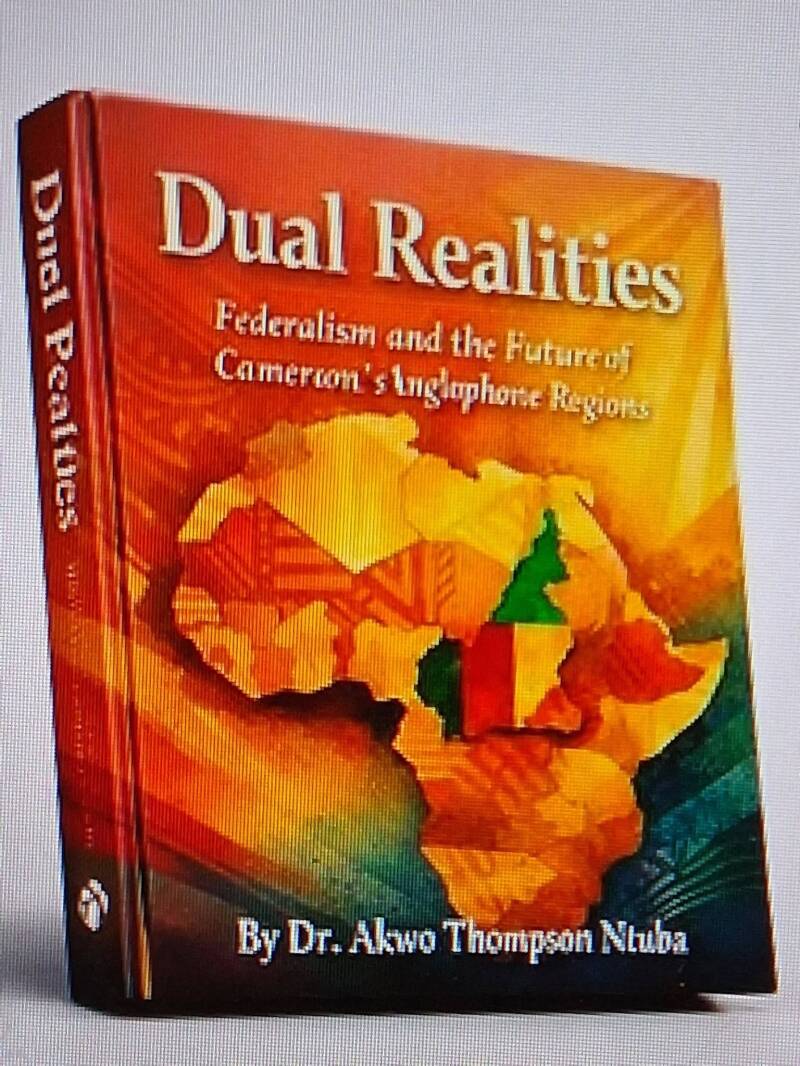
Federalism and the future of Cameroon's Anglophone regions: Dr. Akwo Thompson Ntuba examining the distinct historical, political, and cultural realities of a complex nation.

Understanding a divided heritage
Cameroon is a country whose history cannot be fully understood without examining the different realities that brought its people, territories, cultures, political experiences, and colonial histories together into one nation. The story of Cameroon is not simply the story of independence. It encompasses discovery, territorial formation, colonial occupation, resistance, and international trusteeship across two distinct colonial administrations.

Reunification and constitutional shifts
I call this history Dual Realities because Cameroon emerged from different historical, linguistic, political, and administrative traditions that were eventually brought together under one national structure. From early reunification to constitutional transformation and ongoing political centralization, understanding these foundations remains essential to addressing current institutional tensions.

The search for equitable governance
At the heart of this work is the continuing search for a governance arrangement in which diverse peoples can coexist with dignity, equality, justice, and a shared national purpose. Federalism offers a crucial lens through which sustainable health, development, and social cohesion can be re-imagined for the Anglophone regions and the country as a whole.
"Cameroon emerged from different historical, linguistic, political, and administrative experiences that must be reconciled with dignity, equality, and justice."
Dr. Akwo Thompson Ntuba, author and founder of HEALTHNDEVELOPMENT
DUAL REALITIES
DUAL REALITIES
Federalism and the Future of Cameroon's Anglophone Regions
Introduction
By Dr. Akwo Thompson Ntuba
Cameroon is a country whose history cannot be fully understood without examining the different realities that brought its people, territories, cultures, political experiences, and colonial histories together into one nation. The story of Cameroon is not simply the story of independence. It is the story of discovery, territorial formation, colonial occupation, resistance, international trusteeship, two distinct colonial administrations, reunification, constitutional transformation, political centralization, and the continuing search for a governance arrangement in which its diverse peoples can coexist with dignity, equality, justice, and a shared national purpose.
I call this history Dual Realities because Cameroon emerged from different historical, linguistic, political, and administrative experiences that were eventually brought together under one national identity, but not always reconciled in their expectations of how that nation should be governed.
The Cameroon we know today was not created in a single moment. Its historical formation began along the Atlantic coast, around the estuary that became associated with the name Cameroon, through the arrival of European explorers and traders, the development of colonial interests, and eventually the establishment of German Kamerun. The territory was home to many peoples, communities, kingdoms, chiefdoms, languages, cultures, and political systems long before European colonial rule. Its ethnic and cultural diversity was not a colonial invention; it was part of the reality of the land and its people.
The Portuguese encounter with the coastal region, particularly around the Wouri estuary, introduced the name associated with Cameroon into European geographical and commercial records. Subsequent European competition and German colonial expansion led to the establishment of Kamerun as a German colonial territory. Under German rule, territories and communities with different histories and identities were brought under a colonial administration, creating the foundations of a territorial entity that would later undergo further transformation following Germany's defeat in the First World War.
The defeat of Germany changed the political destiny of Kamerun. German colonial possessions were redistributed under the international arrangements that followed the war, and Cameroon was divided between French administration in the larger eastern territory and British administration in the western territories. This division created two colonial experiences within the former German Kamerun: French Cameroun and British Cameroons. Although they shared a historical territorial connection under German rule, their subsequent experiences differed significantly in administration, language, education, legal systems, political development, and institutional orientation.
The eastern territory under French administration moved toward independence and became the Republic of Cameroon in 1960, recognized internationally as a sovereign state. The western British-administered territories, however, remained under United Nations trusteeship, administered by Britain, and faced a different political question regarding their future. The United Nations plebiscite presented the people of British Southern Cameroons with the choice of joining independent Nigeria or joining the Republic of Cameroon. The option of establishing a separate independent state was not offered on the ballot.
That decision became one of the defining historical questions in the formation of modern Cameroon. The political future of the British Southern Cameroons was determined through a process of international trusteeship, plebiscite, and reunification rather than through the emergence of a separate independent state. The choice to reunite with the Republic of Cameroon brought two territories with different colonial histories, institutional experiences, political expectations, and linguistic identities into a federal arrangement.
The Federal Republic of Cameroon emerged in 1961, under President Ahmadou Ahidjo and Vice President John Ngu Foncha, as an attempt to bring the two territories together while retaining a federal constitutional structure. For many, federalism represented the political framework through which the two realities could coexist—preserving their respective identities and institutions while building a common nation.
However, the subsequent political transformations, including the Foumban constitutional conference and the evolution of the federation, became central to debates about the nature of reunification, the distribution of authority, institutional autonomy, and the future of the federal arrangement. Over time, changes in the country's constitutional and administrative structure increasingly reshaped the relationship between the former federated territories.
The historical debates surrounding federalism, reunification, the transition to a unitary state, and the concentration of political authority continue to influence how Cameroonians understand their country today. These debates are not simply about constitutional terminology. They concern identity, representation, trust, political participation, the relationship between communities and the central government, and the promises associated with reunification.
The present Anglophone crisis must therefore be examined within this longer history. The ongoing conflict, the calls for cessation by some, the demand for federal restructuring by others, and the different proposals for restoring political confidence are connected to the historical experiences that shaped the country. There are Anglophone voices advocating separation and the creation of an independent state. There are others who advocate a return to federalism. Within the federalist debate itself, there are different proposals, including a return to a two-state federal arrangement and alternative models of federal restructuring.
My own advocacy has been shaped by this history and by the conviction that Cameroon must confront its constitutional and governance challenges through serious national dialogue, institutional reform, political accommodation, and a recognition of the historical realities of its constituent communities.
I have advocated a return to federalism and have explored a ten-state federal proposal for Cameroon, including the question of how the Southwest might exercise meaningful political and administrative authority within a restructured federation. I recognize, too, that other perspectives exist, including those advocating a return to the original two-state federal arrangement and those who believe that independence is the only solution to the Anglophone question.
I do not approach these competing positions as though the history is simple or the solution can be imposed through slogans. The purpose of this book is to examine the realities behind the debate—to understand where Cameroon came from, how its political institutions evolved, what was promised by reunification, what changed over time, and why the future of federalism remains an important national conversation.
Dual Realities is therefore both a historical exploration and a governance argument. It is an attempt to revisit the formation of Cameroon, the experiences of its peoples under different colonial administrations, the political choices made at independence and reunification, and the constitutional transformations that continue to shape the country. It is also an effort to examine the future: how a country with diverse histories and identities can build a political system that is trusted, inclusive, accountable, and responsive to its people.
I write this as a Cameroonian whose personal, professional, political, community, and development experiences have shaped my interest in governance and the future of our nation. I write as a physician and development practitioner who believes that the health of a nation is inseparable from the quality of its institutions, the fairness of its governance, the peace of its communities, and the opportunities available to its citizens.
Cameroon must not only remember the history that brought it together. It must also confront the realities that continue to challenge its unity.
The dual realities of our history do not have to become permanent divisions of our future. They can become the basis for a more honest national understanding, a more responsive political system, and a renewed commitment to building a country in which every community feels that it belongs.
That is the question at the heart of this book: How can Cameroon reconcile its historical realities, preserve its diversity, restore trust, and build a federal or otherwise inclusive governance system capable of sustaining peace, justice, and national development?
Precolonial Cameroon: Diverse peoples, kingdoms, chiefdoms, political systems, cultures, and communities existed before European colonial boundaries.
-
Portuguese encounter and naming: Portuguese navigators reached the Wouri estuary in the 15th century, contributing the European name associated with the Cameroon River.
-
German Kamerun (1884–1916): Germany established colonial rule over Kamerun, consolidating a colonial territory that included many different communities.
-
Partition after the First World War: German Kamerun was divided between French and British administration under the international mandate system.
-
French Cameroun: The eastern territory proceeded toward independence in 1960.
-
British Cameroons: The British-administered territories remained under international supervision, and their political future was decided through the UN plebiscite process of 1961.
-
Reunification and federation: The Southern Cameroons joined the Republic of Cameroon in October 1961, forming the Federal Republic of Cameroon under President Ahmadou Ahidjo and Vice President John Ngu Foncha.
-
The Foumban constitutional arrangements and subsequent political changes: The evolution of the federation, the transition toward a unitary state, and the changing constitutional relationship between the former federated states.
-
The contemporary Anglophone crisis: The continuing debate over federalism, decentralization, autonomy, separation, national unity, constitutional reform, and the future political structure of Cameroon.
These historical distinctions will make the book stronger because your argument for federalism will rest not only on political opinion but on the actual sequence of historical events, international decisions, reunification arrangements, and constitutional changes.
Book both a history of how Cameroon was formed and a personal argument about how Cameroon should be governed in the future.