

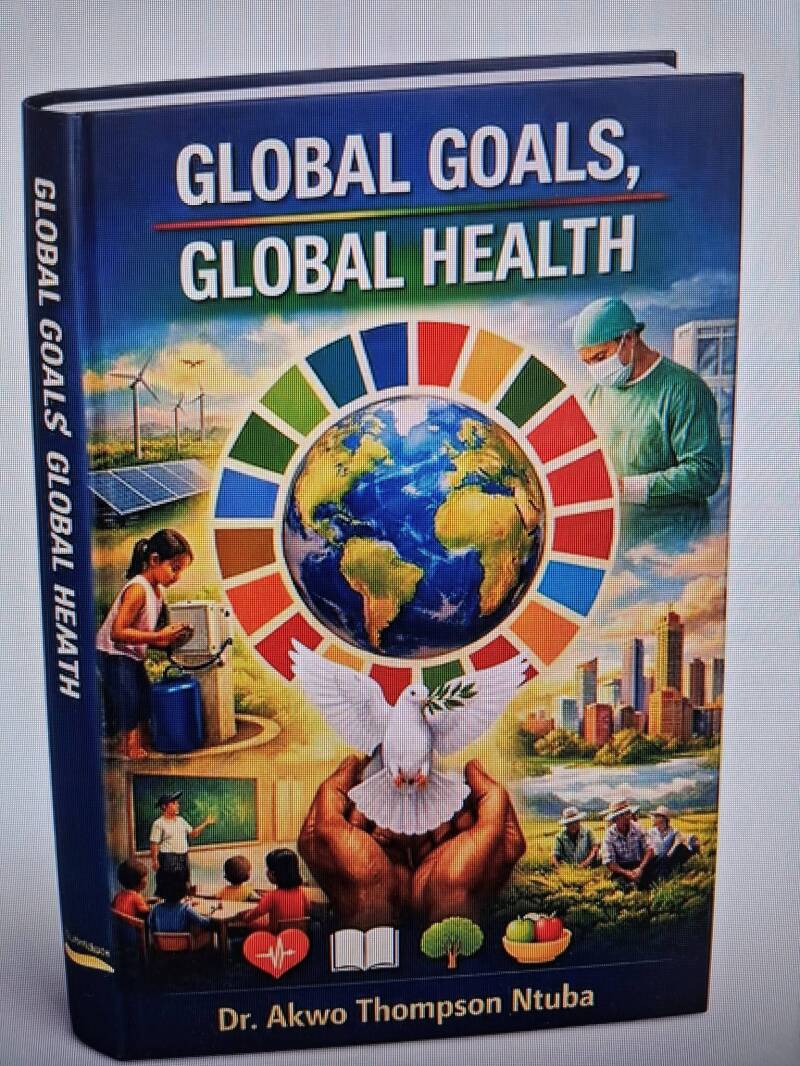
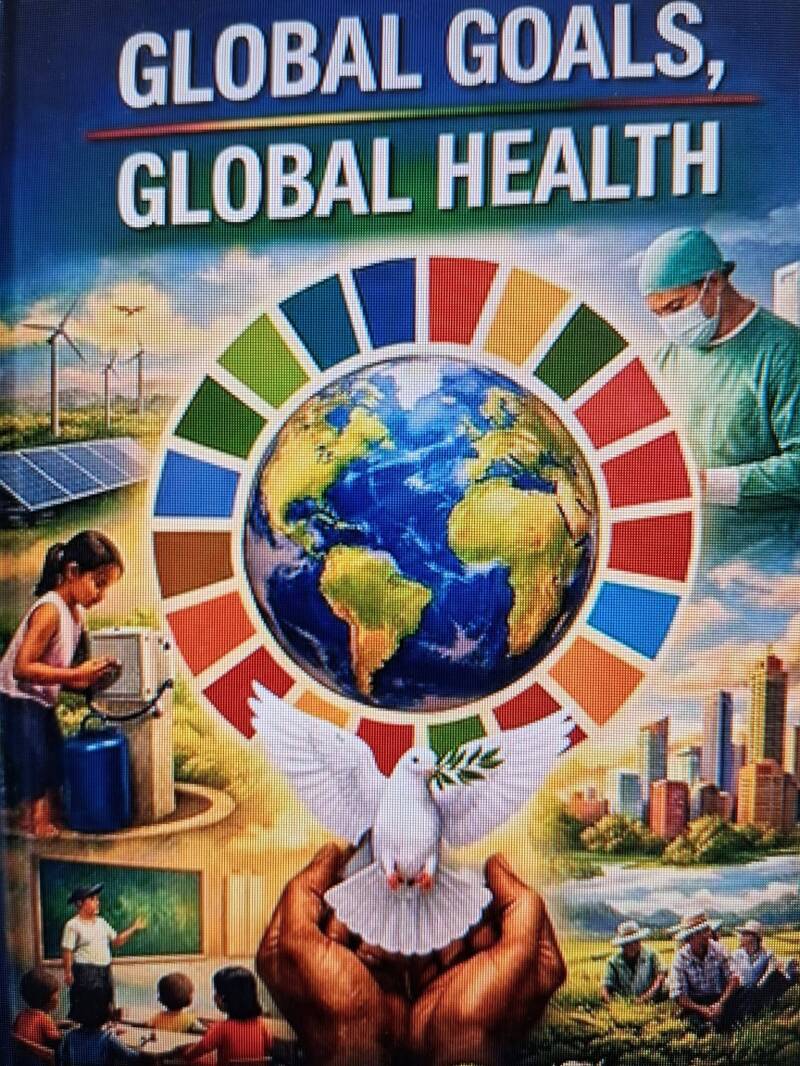
Global goals and global health
Discover authoritative analysis and strategic writing that position health as the vital backbone of national development and human dignity worldwide.
Strategic writing services
We bridge international policy frameworks with compelling, research-driven communication. Our specialized publication help organizations articulate sustainable development and health system priorities.

Policy briefs
Concise, evidence-based syntheses connecting the Sustainable Development Goals with actionable national health strategies.

Institutional monographs
In-depth manuscripts and chapters detailing health systems strengthening, institutional integrity, and leadership.

Advocacy reports
Persuasive publications tailored for global partners, multilateral agencies, and civic leaders driving human progress.
Health as the backbone of national development
The global development agenda cannot be achieved without healthy populations, robust institutions, responsible leadership, and an unwavering commitment to human dignity.

Uniting global aspirations with health reality
The Global Goals call for the elimination of poverty, clean water, climate resilience, and reduced inequalities. Without resilient health infrastructure, these interconnected goals remain out of reach. HEALTHNDEVELOPMENT translates complex global health agendas into clear, impactful documentation for policy leaders, researchers, and development organizations worldwide.
A lifetime commitment to human progress
Drawing from deep research and field experience, our team in San Antonio, Texas, crafts editorial pieces, treatises, and advocacy documents that empower stakeholders to build sustainable societies. Partner with us to document your development initiatives and advocate for global health parity.

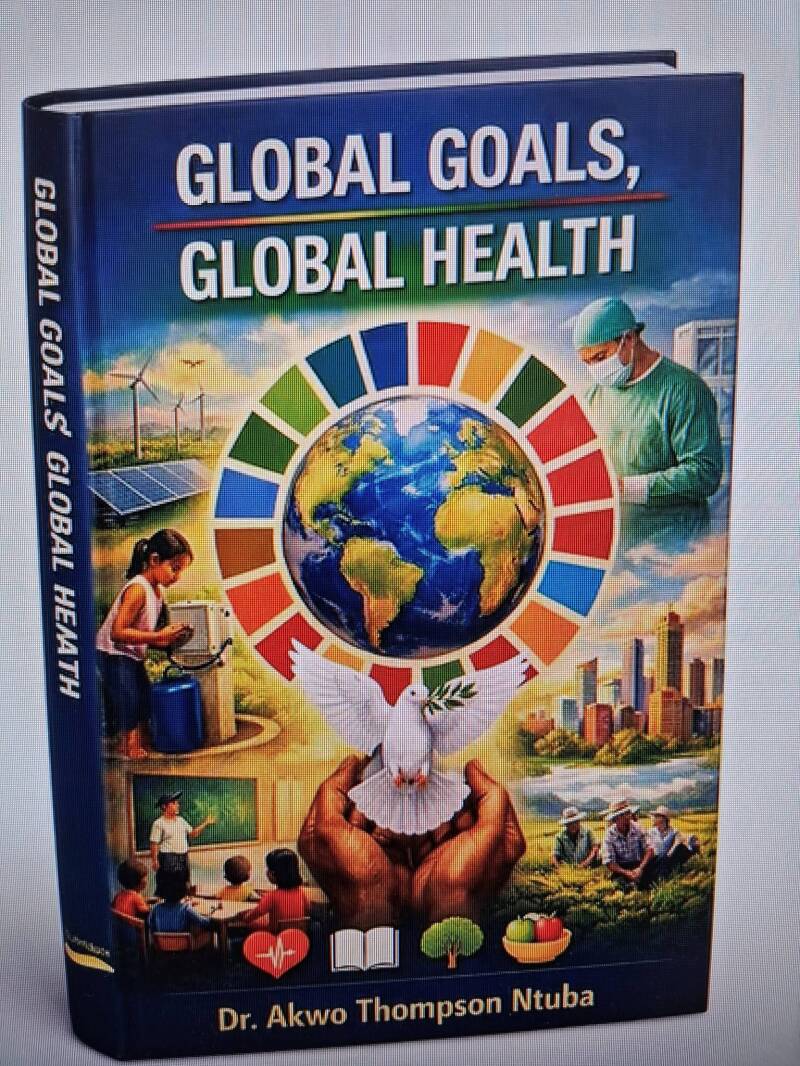
GLOBAL GOALS, GLOBAL HEALTH
HEALTH AS THE BACKBONE OF NATIONAL DEVELOPMENT
FINAL CONCLUSION
From Global Goals to Human Progress: A Lifetime Commitment to Health, Development, and Human Dignity
1. Bringing the Global Goals and Global Health Together
As I conclude this book, Global Goals, Global Health: Health as the Backbone of National Development, I return to the central argument that has guided my reflections, professional experiences, and examination of health and development: the global development agenda cannot be achieved without healthy people, strong health systems, responsible leadership, and institutions committed to human dignity.
The Global Goals represent humanity's collective aspirations for a better world. They call for the elimination of poverty and hunger, improved health and education, gender equality, clean water, sustainable energy, decent work, reduced inequalities, climate action, peace, justice, and international partnerships.
Global health gives these aspirations a practical human dimension.
Behind every development goal is a human being whose life, health, opportunities, and future are affected by decisions made in homes, communities, institutions, governments, and international organizations.
The Sustainable Development Goals cannot be treated as seventeen independent objectives. They are interconnected dimensions of one development process. Health is central to that process because it influences and is influenced by almost every other development sector.
A healthy child is better positioned to learn. A healthy adult is better positioned to work and contribute to the economy. A healthy mother is better positioned to care for her family. A healthy community is better positioned to participate in development. A healthy population strengthens the productive and social capacity of a nation.
This is why I have consistently argued that health is not simply a consequence of development. Health is one of its foundations, instruments, and measures of success.
2. The Six Parts: One Integrated Development Philosophy
The six parts of this book have taken the reader through the major dimensions of this argument.
Part I — Understanding Health as the Foundation of National Development
I established the conceptual and historical foundation for understanding health as a human right, a public responsibility, and a national development investment. This part explained why the health of a population must be considered central to the strength and future of a nation.
Part II — Health Systems, Policy, and the Institutions of Service
I examined the systems, financing arrangements, policies, infrastructure, information, workforce, and services required to translate health commitments into practical results. I emphasized that strong health systems require planning, leadership, competent personnel, sustainable financing, and accountability.
Part III — Systems That Shape Health
I expanded the discussion beyond healthcare institutions to examine the social, economic, educational, nutritional, agricultural, water, sanitation, energy, and environmental conditions that influence health. This part demonstrated that the causes of illness and the foundations of well-being extend far beyond the hospital.
Part IV — Civic Leadership, Human Rights, and Community Development
I explored the responsibilities of governments, civic institutions, community leaders, and citizens in protecting health and human dignity. I emphasized that good governance, human rights, community participation, and accountable institutions are essential to sustainable development.
Part V — Global Health, International Cooperation, and the Future of Development
I connected national development to the international environment, examining global health cooperation, technology, diplomacy, equity, and the shared challenges confronting humanity. I emphasized that no country can independently resolve every challenge of our interconnected world.
Part VI — Legacy, Leadership, and the Global Future
I concluded by considering the responsibility of the present generation to build institutions, prepare future leaders, preserve knowledge, promote peace, strengthen partnerships, and protect planetary health.
Together, these six parts establish one integrated proposition:
Global goals require global health action, and global health action must be translated into national institutions, community participation, professional service, and measurable improvements in human life.
3. My Professional Journey: The Experiences Behind the Argument
The ideas presented in this book are informed by my professional journey and my continuing interest in the relationship between medicine, public health, development, communication, governance, and human dignity.
My journey began with medical education and community-based experiences and services in Africa. These early experiences helped me understand that health cannot be separated from the conditions in which people live. Community health is influenced by education, household circumstances, nutrition, sanitation, cultural practices, economic opportunity, and the availability of essential services.
Over the years, my professional interests expanded into global health communication, journalism, publishing, consulting, evaluation, environmental and development issues, and community engagement.
My work as an independent global health communicator and journalist has reinforced the importance of making health information accessible and understandable. International public health developments, including the COVID-19 experience, demonstrated the importance of scientific communication, preparedness, institutional cooperation, public trust, and the responsible management of information.
Through Health Consulting International, I have pursued the practical dimensions of health systems strengthening, planning, research, training, evaluation, leadership, and institutional development.
Through HealthNDevelopment Magazine & Media, I have pursued health and development communication, publishing, journalism, professional engagement, public discussion, and documentation.
My engagement with environmental and social justice issues has strengthened my conviction that climate, energy, water, food systems, and environmental protection must be included in health and development planning.
My experiences in community and civic settings have also reinforced the importance of reaching vulnerable populations and understanding the human consequences of homelessness, addiction, poverty, social exclusion, and inadequate access to services.
These experiences have not all been the same, but they have contributed to a common understanding: professional knowledge acquires greater value when it is applied to human needs.
I have therefore approached global health not merely as a subject of academic interest but as an area of professional responsibility, public communication, institutional development, and service.
4. From Professional Knowledge to Institutional Contribution
One of the major lessons of my professional journey is that sustainable development cannot depend on individual effort alone.
Individuals may have ideas, qualifications, experience, and a desire to serve. However, lasting progress requires institutions that can organize knowledge, mobilize resources, develop people, deliver services, communicate information, and evaluate results.
This is why I have pursued different but complementary areas of work through HCI and HND.
My FISH model—Finance; Information and Infrastructure; Service Delivery; and Human Resources—reflects my interest in the practical organization of effective health systems.
It reminds us that a health facility cannot function effectively without financing, reliable information, infrastructure, essential supplies, competent personnel, and accessible services.
Likewise, health and development communication must be connected to evidence, public understanding, professional standards, and institutional accountability.
I also recognize the importance of preserving knowledge. Publications, photographs, videos, interviews, conference records, certificates, and other documentary materials can help future generations understand how health and development ideas evolved and how institutions responded to the needs of their communities.
The HealthNDevelopment heritage and documentation vision is part of this responsibility: to preserve professional and community experiences as resources for education, research, reflection, and future leadership.
5. The Global Goals Must Reach Ordinary People
The success of the Global Goals should not be determined only by international declarations, conferences, national strategies, or institutional reports.
Their success must ultimately be judged by what changes in people's lives.
A child must have an opportunity to survive, receive adequate nutrition, and obtain quality education.
A woman must be able to access safe maternal and reproductive healthcare.
A family must have clean water, adequate sanitation, nutritious food, and a safe place to live.
A person experiencing mental illness or substance-use difficulties must be able to access appropriate professional care and compassionate support.
A person living with a disability must have the opportunity to participate in society.
A community exposed to environmental hazards must have protection and access to justice.
A young person must have an opportunity to learn, work, innovate, and participate in leadership.
These are the practical meanings of global goals.
Development is not complete when policies are written. It becomes meaningful when the intended benefits reach the people for whom those policies were created.
6. A Shared Responsibility for the Future
The future of global health and national development requires cooperation across professions, institutions, and generations.
Governments must create policies and provide accountable leadership. Health professionals must deliver competent and ethical services. Universities must develop knowledge and prepare future leaders. Businesses must contribute responsibly to economic and technological progress. Journalists must communicate accurately and hold institutions accountable. Religious and community organizations must support human welfare and social solidarity. International organizations must strengthen cooperation and shared capacity.
Young people must be given opportunities to participate in shaping the future.
The next generation must understand that medicine, public health, economics, education, environmental science, engineering, communication, technology, and governance are interconnected.
The future physician must understand society. The future policymaker must understand health. The future journalist must understand evidence. The future entrepreneur must understand social responsibility. The future environmental leader must understand the health consequences of ecological decisions.
This is the kind of interdisciplinary and ethical leadership that the Global Goals require.
7. My Vision: Global Goals, Global Health, and a Shared Human Future
As I look toward 2050, I envision a world in which global development commitments are translated into practical improvements in human well-being.
I envision health systems that are accessible, resilient, and adequately financed; communities with clean water and sanitation; food systems that protect nutrition; education that develops responsible leaders; energy systems that support health and sustainability; and institutions that protect human rights and public trust.
I envision peaceful societies in which disagreements are addressed through dialogue, justice, diplomacy, and democratic participation.
I envision partnerships that respect national ownership, recognize local knowledge, and share responsibility for global challenges.
I envision scientific and technological advances that improve lives without compromising ethics, privacy, equity, or human dignity.
Above all, I envision a world in which the progress of nations is measured not only by economic growth and technological achievement but also by the health of their people, the quality of their institutions, the fairness of their opportunities, and the condition of the planet they will leave to future generations.
8. A Final Message to Practitioners, Policymakers, and Future Leaders
To the physician, remember that your responsibility extends beyond the treatment room to the health of the community.
To the public health practitioner, remember that prevention, evidence, communication, and community participation are essential to lasting progress.
To the policymaker, remember that every development decision can have consequences for human health.
To the educator, prepare people not only for employment but also for ethical leadership and responsible citizenship.
To the journalist and communicator, make knowledge accessible and protect the integrity of public information.
To the environmental professional, remember that protecting the planet is also protecting human health.
To the business leader, recognize that economic success must be compatible with social responsibility and environmental sustainability.
To the young leader, do not wait for a title before beginning to serve. Leadership begins with responsibility, competence, integrity, and the willingness to contribute.
9. Final Declaration
I have written this book with the conviction that the Global Goals and global health belong to one common human development agenda.
The Global Goals provide a shared framework for the future we seek. Global health reminds us that this future must be built around the lives, needs, rights, and dignity of people.
My professional experiences in medicine, community-based work, global health communication, consulting, journalism, publishing, environmental learning, and civic engagement have strengthened my belief that development requires knowledge translated into action and values expressed through service.
I offer this book as a contribution to the continuing work of health and development, and as an invitation to professionals, policymakers, institutions, communities, and future generations to take responsibility for a healthier and more equitable world.
Let us build health systems that protect life.
Let us build institutions that protect dignity.
Let us develop economies that create opportunity.
Let us strengthen partnerships that promote peace.
Let us protect the environment that sustains humanity.
Let us prepare leaders who understand that their greatest responsibility is service.
And let us ensure that the Global Goals become more than international commitments: let them become visible improvements in the lives of people everywhere.
GLOBAL GOALS. GLOBAL HEALTH. ONE HUMANITY. ONE SHARED RESPONSIBILITY.
Health is the backbone of national development. Human dignity is its purpose. Responsible leadership is its instrument. Partnership is its pathway. And the well-being of future generations is its enduring measure.
Dr. Akwo Thompson Ntuba
Physician | Global Health Practitioner | Health & Development Communicator | Evaluation Practitioner | Journalist | Publisher | Consultant | Educator
Faith in Action. Medicine in Service. Humanity in Development.
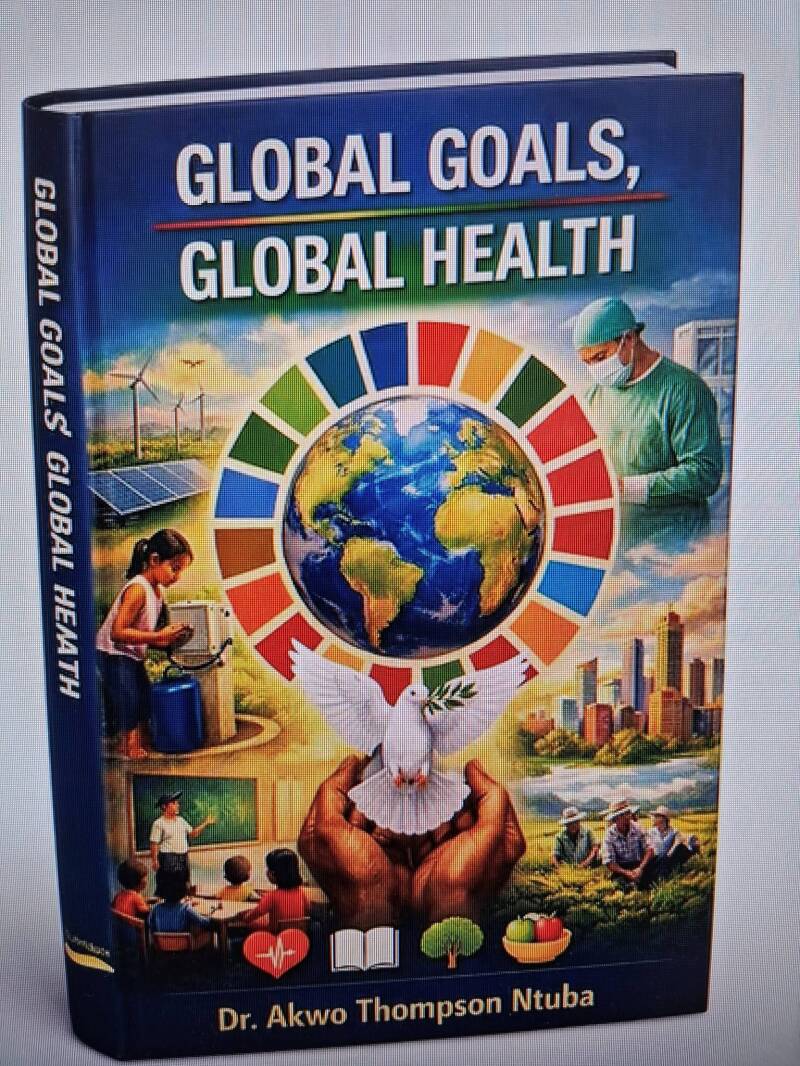
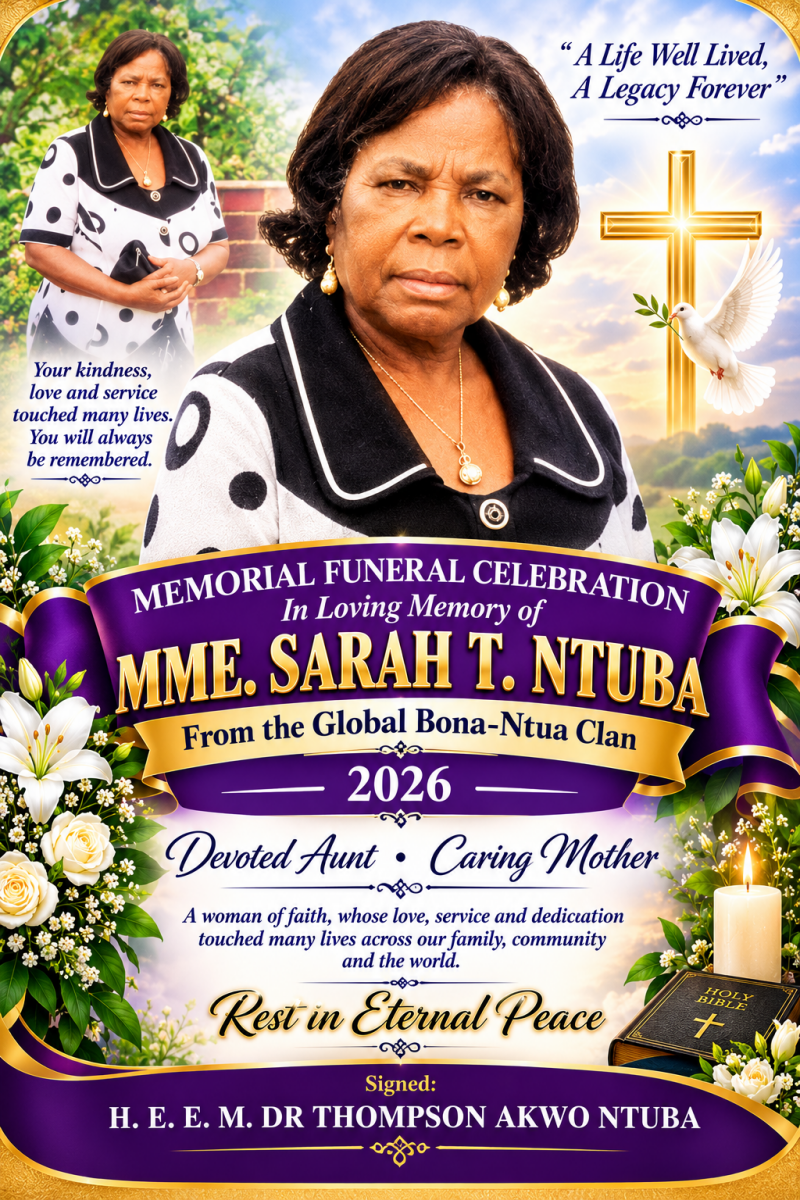
DEDICATION .To Auntie Sarah Tong Ntuba.
DEDICATION
To Auntie Sarah Tong Ntuba
A Woman Whose Love, Sacrifice, and Example Helped Shape My Journey
I dedicate this book, GLOBAL GOALS, GLOBAL HEALTH: HEALTH AS THE BACKBONE OF NATIONAL DEVELOPMENT, with profound gratitude, love, respect, and appreciation to Auntie Sarah Tong Ntuba, whose contribution to my upbringing, education, and personal development remains an important part of my life's story.
Some people influence our lives through public recognition, professional connections, or positions of authority. Others shape us quietly, through the everyday sacrifices they make, the care they provide, the advice they give, and the example they set. Auntie Sarah Tong Ntuba belongs to the latter category of people whose influence may not always be visible to the world but whose contribution remains deeply embedded in the lives of those they help raise.
As I reflect on my journey from childhood through education, medical training, professional development, and my subsequent engagement with global health and human development, I recognize that the foundations of my life were not built by my efforts alone. They were also shaped by the kindness, generosity, support, and sacrifices of people who believed in me and contributed to my upbringing.
Auntie Sarah Tong Ntuba was one of those people.
I remember and appreciate her contribution to my upbringing and the practical needs of my education. Her support included assistance with my schooling needs, the provision of food, personal care, advice, encouragement, and the example she offered through her conduct and way of life.
These contributions may appear simple when considered individually, but their significance in the life of a growing child cannot be overstated.
Food provides nourishment, but the person who ensures that a child is fed also provides care and reassurance. Assistance with school needs may involve material provisions, but it also communicates an important message: that a child's education matters and that someone is willing to make sacrifices to support that future.
Advice provides direction at moments when experience and judgment are still developing. Personal example teaches lessons that words alone cannot communicate.
Through these different expressions of care, Auntie Sarah contributed to the environment in which I grew, learned, and developed my aspirations.
I recognize that education is never an individual achievement in the fullest sense. Behind many educated men and women are people who provided encouragement, food, school materials, accommodation, guidance, emotional support, and opportunities at critical moments in their lives. Some contributions are formally acknowledged through institutions and awards; others remain within the memories and gratitude of those who benefited from them.
This dedication is my way of giving public recognition to one such contribution.
As a physician, global health practitioner, communicator, journalist, publisher, consultant, and educator, I have spent many years reflecting on the relationship between human development and the conditions that allow individuals to reach their potential.
I have written about health systems, education, poverty, nutrition, social protection, human dignity, community development, and the responsibilities of institutions. Yet these subjects also have a personal meaning for me. Before I could write about the importance of investing in human development, I was myself a young person whose development depended, in part, on the care and support of others.
Auntie Sarah's contribution reminds me that development begins long before a person enters a professional institution or assumes a leadership position. It begins in families, homes, communities, and relationships where people choose to care for one another.
Her support for my schooling needs represents an investment in education. Her provision of food represents an investment in well-being. Her advice represents an investment in character and judgment. Her personal example represents a form of teaching that continues beyond the moment in which it is given.
I am particularly grateful for the lessons that can be drawn from her example: that caring for another person is meaningful work; that practical assistance can change the direction of a life; that encouragement matters; and that the contribution of a person should not be measured only by wealth, titles, or public recognition.
As I look back on the many stages of my journey—from my formative years and medical education in Africa to my professional experiences in global health, development communication, consulting, journalism, publishing, and community service—I acknowledge with humility that the journey was supported by people whose contributions deserve remembrance.
Auntie Sarah Tong Ntuba is among those whom I wish to honor in this book.
This dedication is also a recognition of the countless women who contribute to the upbringing and education of children within families and communities. Their work is sometimes described simply as helping, assisting, feeding, or advising. But in the broader language of human development, these acts represent investment in human capital, the transmission of values, social protection, and the formation of future generations.
They may never appear in national development statistics, yet their contributions can influence the education, character, and achievements of people who later serve their communities and societies.
I therefore dedicate this book to Auntie Sarah not merely as a gesture of personal appreciation, but also as an acknowledgment that the development of individuals is often sustained by the generosity of people whose names deserve to be remembered.
Auntie Sarah Tong Ntuba, thank you for the food, the assistance with my school needs, the advice, the care, the encouragement, and the example. Thank you for being part of my upbringing and for contributing to the foundations upon which I have continued to build my life.
Whatever recognition this book may receive, and whatever contribution my professional work may make to health and development, I remain conscious that my story is connected to the kindness and sacrifices of others.
May this dedication preserve your contribution as part of my personal history and the wider story of my journey.
With enduring gratitude, affection, respect, and appreciation, I dedicate this book to you.
To Auntie Sarah Tong Ntuba: Your contribution to my upbringing became part of my foundation; your care helped nurture my journey; and your example remains worthy of remembrance.
Dr. Akwo Thompson Ntuba
GLOBAL GOALS. GLOBAL HEALTH. ONE HUMANITY. ONE SHARED RESPONSIBILITY.